Charles Parton

Charles Parton is a former UK diplomat who spent 22 years working in China. He is an associate fellow at the Royal United Services Institute and the Council on Geostrategy.

How the West can avoid Beijing’s propaganda trap

From our UK edition

This time next year the Winter Olympics will have drawn to a close. Beijing will have become the first city to have hosted both the summer and winter games. The Chinese Communist party’s (CCP) central propaganda department will have worked to ensure a gold medal performance in harnessing sport to bolster the party’s image (before we get too self-righteous about that, remember that all hosts use the games to boost soft power). Or maybe not. A year out, global momentum is gathering for an Olympic boycott in reaction to the genocide and crimes against humanity in Xinjiang. Former United Nations ambassador Nikki Haley has called on the Biden administration to pull the US out of the games to send a message to Beijing.


The truth about China’s genocide against the Uyghurs

From our UK edition

Last night, the BBC showed witnesses giving stomach-turning testimony about organised rape and torture inflicted upon Uyghurs in China’s far west region of Xinjiang. Victims and former guards, now abroad and willing to talk, spoke of electric batons inserted into women’s genitalia, gang rape by police, an organised rape in front of 100 other women forced to watch with those who looked away punished, and the forcible sterilisation of a 20-year-old. As one witness said: ‘Everyone who leaves the camps is finished.’ In January, both the outgoing and incoming American Secretaries of State confirmed their view that the Chinese Communist Party’s (CCP) treatment of Uyghurs constituted genocide. Not some analogous ‘cultural genocide’. Genocide.

How the UK can help Hong Kong

From our UK edition

Those of us who spent our formative China-watching years reading Chinese Communist party publications learnt early on that the word ‘basically’ was a synonym for ‘not’. ‘The party has basically succeeded in…’ meant that there was a problem. Hong Kong is basically an autonomous region. Xi Jinping is satirised by liberal Chinese as the ‘Accelerator-in-Chief’, whose policies are hurtling the CCP’s regime towards collapse. This could be wishful thinking on their part. Certainly, he has sped up the demise of the ‘one country, two systems’ concept.

The US is right to rethink its relationship with China

From our UK edition

Anyone who has worked in an office has fantasised about destroying it. As someone who has taken a sledgehammer to his office and fire to his papers – leaving the Libyan embassy in 2011 – I experienced a twinge of nostalgia on seeing Chinese diplomats burning papers after being given 72 hours to leave their consulate in Houston in July. Inevitably, the inevitable tit for diplomatic tat came, and American officials were sent packing from their consulate in Chengdu. Since then, relations between the US and China have deteriorated further, with Donald Trump pledging this week to ban the Chinese video app TikTok for national security reasons.

How Xi Jinping plans to crush Hong Kong

From our UK edition

The Hong Kong government has recently extended its Covid regulations banning gatherings of more than eight people until 4 June. How convenient. Last year, according to organisers, 180,000 people gathered to commemorate the anniversary of the Tiananmen massacre on 4 June 1989. In future, being an organiser may well land you in court under a new national security law, which Beijing announced last week at its annual National People’s Congress. Perhaps we should have expected it. After all, the Basic Law, Hong Kong’s ‘constitution’, lays down that the Hong Kong government should enact such a law, and the big party meeting in October told us that the ‘legal systems and implementation mechanisms for protecting national security’ would be set up.

Why we’ll regret the Huawei gamble

From our UK edition

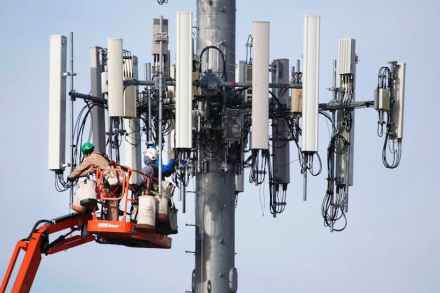
It is apparently fine for China to ban western technology from its telecommunications network but quite unacceptable for us to prioritise our national security. The decision to allow Huawei into the UK’s 5G network is the first of many tough choices in the new technological era. And we've flunked it. Why is it a new technological era? Because we no longer simply buy goods in return for money. Increasingly we pay not just in coin, but in data as well; not just in a one-off transaction, but in a perpetual transfer of bytes back to the vendor. And when it comes to 5G, since it will underpin so much more of our lives than 4G, you need to trust that vendor. Huawei has been designated a ‘high-risk vendor’. So it is.

Britain will regret doing business with Huawei

From our UK edition

Imagine the following medieval conversation: King: “We need to build a castle at Dover. ‘Tis the key to England.” Courtier: “Sire, the French build excellent castles at fantastic prices. Of course, we should not allow them anywhere near the keep, but no harm if they construct the moat and curtain walls.” Returning to the 21st century, 5G might be said to be the ‘key to England’. Many times faster than 4G, the network will be the technological foundation of our society for the next few decades. It will carry many of our communications, enable the operation of systems, including driverless cars, and be indispensable to our military and our security.

The fourth weapon

From our UK edition

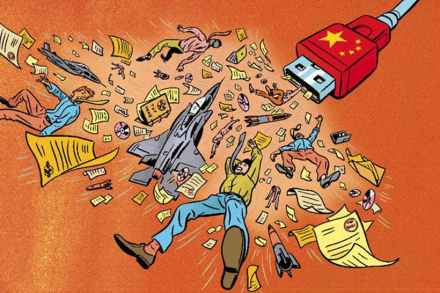
Chairman Mao talked of ‘three magic weapons’ for seizing power: the united front, the armed struggle and construction of the Communist party itself. Now the priority for China’s government is to remain in power. To ensure that, President Xi Jinping’s party is developing a fourth ‘magic weapon’. The social credit system is a part of this, but the ‘weapon’ also extends far beyond it. By combining big data, artificial intelligence, recognition technology and other police techniques, China’s government intends to create a comprehensive method of political and social control. It may not live up to everything that is promised: after all, government-implemented computer systems rarely work as well as intended.