Charles Moore

Charles Moore

Charles Moore is The Spectator’s chairman.

He is a former editor of the magazine, as well as the Sunday Telegraph and the Daily Telegraph. He became a non-affiliated peer in July 2020.

The genius of Barry Humphries

From our UK edition

At school in the 1970s, several of us were ardent fans of the Barry McKenzie strip in Private Eye. Barry, an uncouth Australian who arrives for adventures in Britain, was our role model. We even went on a special pilgrimage to a Hampstead pub which – uniquely, we thought – stocked Foster’s, Barry’s favourite ‘ice-cold tubes’. By the time I became editor of this paper in 1984, the strip had long ceased. It was my ambition to recreate it in The Spectator’s pages, in the harsher climate of Thatcher’s Britain, with an older but not, I hoped, wiser Barry, still trying and failing to ‘feature’ (defined in the McKenzie Australian glossary as ‘feature, see under naughty’) with girls.

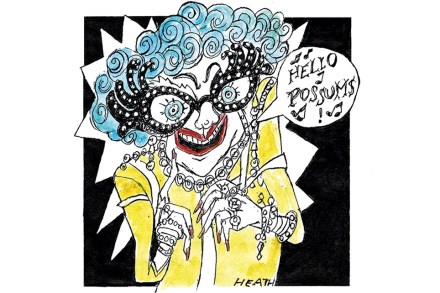
Dame Edna’s elusive origins

From our UK edition

On 25 October last year, Thérèse Coffey became Defra Secretary. On 2 November, Sir James Dyson wrote to her. The famed inventor, who is the biggest owner and active farmer of agricultural land in Britain, outlined the problems of producing food sustainably and profitably, inviting her to visit one of his farms and meet him. No reply. A week later, Sir James’s office contacted Ms Coffey’s office and were assured her reply would be sought. None came. On 8 February this year, his office tried again. Two days later, her special adviser told the Dyson team that the original letter had been lost. Sir James re-sent it. On 24 February, having received no reply, his office checked once more. Ministers would review the draft reply next week, they were told.

The common cause of Scottish Unionism

From our UK edition

Although it cannot be stated publicly, Labour and the Conservatives have much common cause in Scotland now. They won’t stand down in each other’s favour at the next election; but expect ‘paper’ candidates in constituencies where one is much stronger than the other and the Nationalist is vulnerable. Wavering SNP supporters can be divided into welfare drones (who have benefited under the SNP to the detriment of spending on health and schools), and ‘tartan Tories’, social conservatives who hoped that Kate Forbes would be SNP leader. Labour courts the former, the Tories the latter. Both parties pray that Humza Yousaf, the new First Minister, remains in office. He is the gift that keeps on giving.

The apotheosis of Starmerism

From our UK edition

To celebrate this week’s 25th anniversary of the Good Friday Agreement, the European Movement has launched a ‘powerful intergenerational film’ which, it says, ‘exposes Brexit as the biggest threat to peace since the 1994 ceasefire’. The film contains ‘true stories of how… Europe’s mission, commitment and hope for a peaceful future transformed Northern Ireland, changed the course of history and inspired the world’. Not a lot of people know that. Even fewer know that ‘the only organisation with the courage and commitment to… win the Battle for the Soul of our Country – is the European Movement.’ Mere raving? Such thoughts are not a million miles from EU/US orthodoxy.

Why Tony Blair was a Christian

From our UK edition

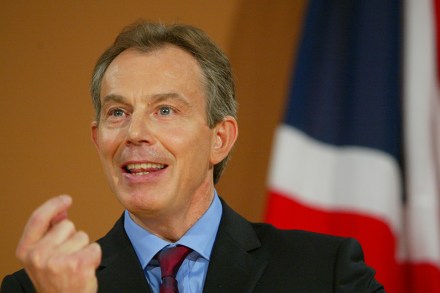
Easter Monday marks the 25th anniversary of the Good Friday Agreement. One of the most interesting things ever written by its most famous architect, Tony Blair, appeared (in the Sunday Telegraph) at Easter 1996, two years earlier. The piece, largely devoid of his vague boosterism, suggested he had thought about his subject. Under the title, ‘Why I am a Christian’, Blair wrote of Pontius Pilate: ‘The intriguing thing… is the degree to which he tried to do the good thing rather than the bad. He commands our moral attention not because he was a bad man but because he was so nearly a good man. One can imagine him agonising, seeing that Jesus had done nothing wrong, and wishing to release him.

The Guardian’s slavery dilemma

From our UK edition

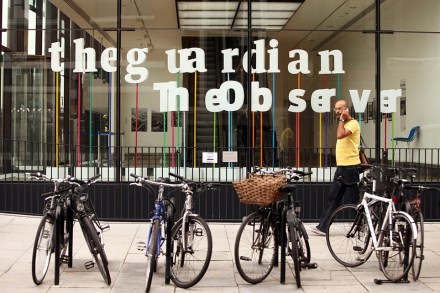
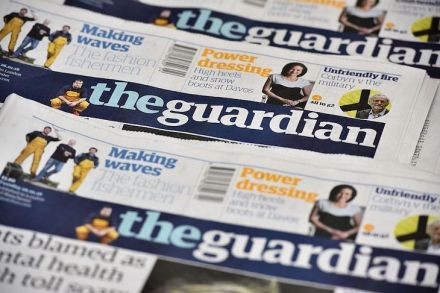
When you read the Guardian free online, a yellow notice appears asking you for money (‘Will you invest in the Guardian?’) to support its fearless journalism. But now arises a donor’s dilemma. After two years’ work, the paper has just produced a full report on and apology from its current owner for its founders’ involvement in slavery. The historian David Olusoga, part of the project, says that what the Guardian owes the descendants of slavery for this is ‘an unpayable debt’. The paper is attempting to pay it, however, setting aside £10 million for the purpose of restorative justice over ten years. So for the conscientious Guardian reader (is there any other kind?

Is the Guardian letting itself off lightly over its links to slavery?

From our UK edition

When you read the Guardian free online, a yellow notice appears asking you for money (‘Will you invest in the Guardian?’) to support its fearless journalism. But now arises a donor’s dilemma. After two years’ work, the paper has just produced a full report on and apology from its current owner for its founders’ involvement in slavery. The historian David Olusoga, part of the project, says that what the Guardian owes the descendants of slavery for this is ‘an unpayable debt’. The paper is attempting to pay it, however, setting aside £10 million for the purpose of restorative justice over ten years. So for the conscientious Guardian reader (is there any other kind?

Ofsted’s zealous overreach

From our UK edition

Obviously it is not the fault of Ofsted that a headteacher, Ruth Perry, killed herself after her school, formerly rated ‘outstanding’, was downgraded to ‘inadequate’ by its inspectors. Suicide is, by definition, the decision of the person committing it. It is also true that second-rate schools and teaching unions detest inspections precisely because they keep them up to the mark. Nevertheless, Ofsted does need to think carefully about the impact of that word ‘inadequate’ when linked, as it was in the case of Ms Perry’s school, with another word, ‘safeguarding’. I saw what happened when the same charge was laid against Ampleforth College. ‘Safeguarding’ is a word that contains many things.

Speak up for the unsung BBC Singers

From our UK edition

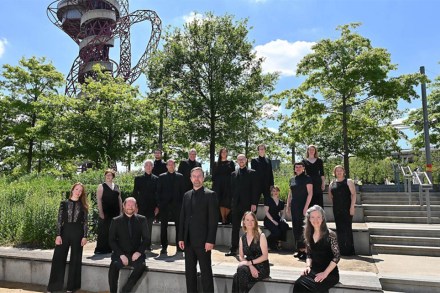
There are 20 BBC Singers and they cost less than one Gary Lineker. Unlike Lineker, they have broken no rules, but the BBC want to close them down. They have worked in a cave in Maida Vale for a hundred years and it is quite possible that top BBC executives, much too busy to listen to the Corporation’s own cultural output, know almost nothing about the Singers. They probably do not know, for instance, that the BBC Singers have a nice line in singing the Match of the Day theme tune. The Singers are a prime example of the sort of thing which justifies the BBC’s unique privilege of raising money through the licence fee. They are central to Britain’s musical ecology and keep our great choral tradition alive by commissioning new work in a way no commercial organisation could manage.

The perils of thinking you are good

From our UK edition

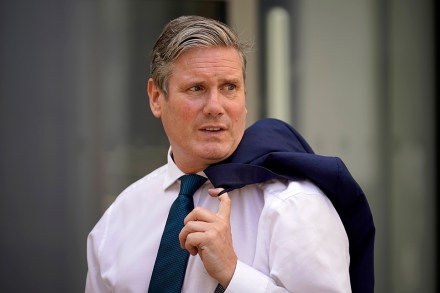
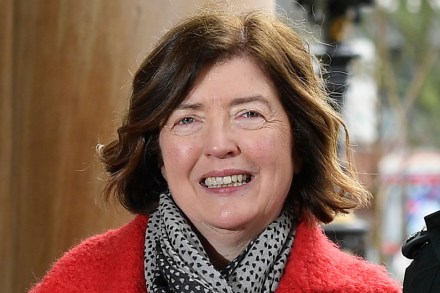
The Sue Gray phenomenon fascinates me as an example of the perils of thinking you are good. (A related case study is that of Sir Keir Starmer.) It strikes me again and again that the most self-deceiving people in modern public life are those who publicly set themselves on the side of virtue. You see this in senior civil servants, judges, university vice-chancellors, NHS administrators, green businesses, heads of big charities and aid organisations. ‘We do good, so we can do no wrong’ is the great non-sequitur of the age, and the proliferation of ‘standards in public life’, ‘propriety and ethics’ committees, experts on ESG, diversity, inclusion, decarbonisation, transparency etc only makes things worse.

Putin and the Almighty’s gender self-ID

From our UK edition

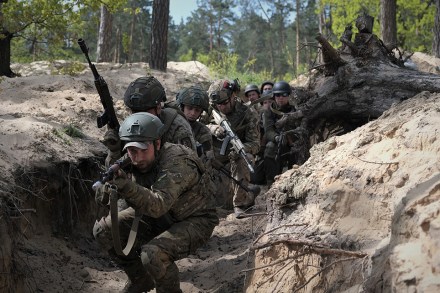
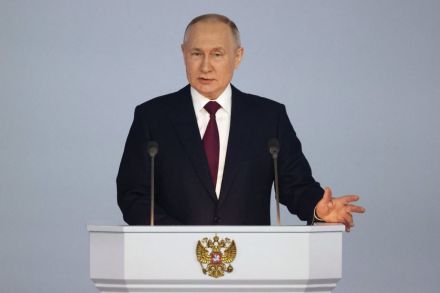
Vladimir Putin suffered a difficulty of his own making in his big anniversary speech on Tuesday. He was calling for something not far short of total war – a cluster of schemes to house, improve, offer therapy to and reconfigure the command of the armed services, to withdraw Russia and Russians from the global economy and to direct economic activity into areas most likely to defeat western technology. Yet he has always maintained that his country is not at war, and it does not sound very ringing to call (in the phrase which he first used a year ago and repeats today) for a total ‘special military operation’. He therefore likes to maximise the number of enemies and threats Russians must consider.

The fall of Sturgeon

From our UK edition

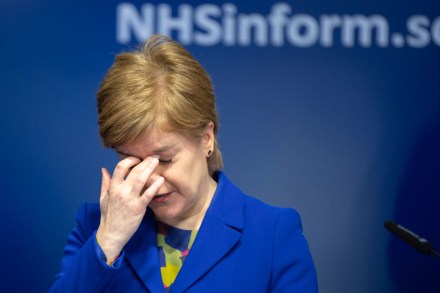
I don’t specially want Sir Keir Starmer to be prime minister, but if that is the eventual price of Nicola Sturgeon’s resignation, so be it. Although Ms Sturgeon’s political skills deserve respect, her rule in Scotland has been rigidly ideological and thus – by an apparent paradox – corrupt. If you believe you are the political version of Calvin’s elect, you can do no wrong. You therefore create a one-party state, police force, civil service etc staffed by your own supporters, and crush any dissenters. As a result, your country becomes divided and badly governed. Eventually, your righteousness traps you in extremist insanity – in this case, maintaining that a dangerous male rapist is a safe woman. You thought you were an angel, so you fall like Lucifer.

Heseltine’s great, misguided speech

From our UK edition

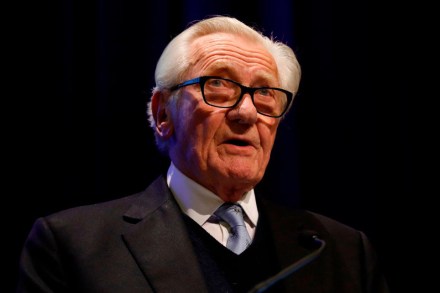
On Monday in the Lords, Michael Heseltine, 90 next month, orated (I employ that Welsh usage because it fits him so well) in favour of the European single market. He regarded its regulations as ‘one of the most successful concepts ever developed by humankind’. He deplored the fact that the government is trying, post-Brexit, to escape them. He attacked Rupert Murdoch and Conrad Black and compared Jacob Rees-Mogg to Robespierre. His stirring words reminded me of another great nonagenarian performance in the upper house – Harold Macmillan’s maiden speech as Earl of Stockton in November 1984, which I watched from the gallery.

The Ukrainian flag conundrum

From our UK edition

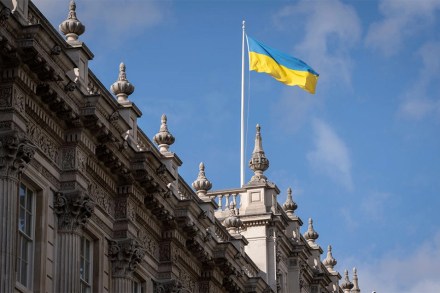
If you walk down Whitehall, you will see numerous Ukrainian flags on government buildings. I approve the sentiments. Like many all over the country, we fly the Ukrainian flag in our garden. But is it right that the flag should be flown by HMG? On what basis, and by whom, is such a decision made? Just now, of course, the interests of the United Kingdom and of Ukraine are closely allied; but it is a basic principle of foreign policy that British interests may sometimes clash even with those of close allies. Suppose we fall out with Ukraine while the war continues. Would we keep the flags flying, thus looking hypocritical, or take them down, thus looking disloyal?

The curious tale of Lady Hale

From our UK edition

Has the German leopard at last changed its spots, now that it says it will release the tanks of that name? The Germany/Ukraine story has so far been another example of the former’s long-proclaimed desire to create a European Germany rather than a German Europe. In fact, however, the two phrases now amount to much the same thing. As with the single currency and with energy, so with war materiel: German power exceeds that of all continental rivals. But, by speaking about being so European, Germany has probably gained dominance more easily than if it had been more national in tone. It might now be more honest – and safer for Ukraine – if Germany were to follow the logic of its leadership and help Zelensky as fast, rather than as slowly, as possible.

Paul Johnson’s great mind

From our UK edition

Obituaries of Paul Johnson, who died last week, have captured his prodigious gifts of exposition, wide range of knowledge and formidable power of attack. All true, but there are good things to be added, which I saw as his editor at this paper in the 1980s, and as a friend. Despite his reputation for uncertain temper – Jonathan Miller said he ‘looked like an explosion in a pubic hair factory’ – Paul was a most reliable and easy contributor. His copy was self-starting, to length, on time. It hardly needed editing (except that he was, like Evelyn Waugh, surprisingly bad at spelling). Given that he lived entirely on what he wrote, I was touched that he never once complained about The Spectator’s fee for his weekly contribution, which was tiny (£90, I think).

Harry shouldn’t be invited to the coronation

From our UK edition

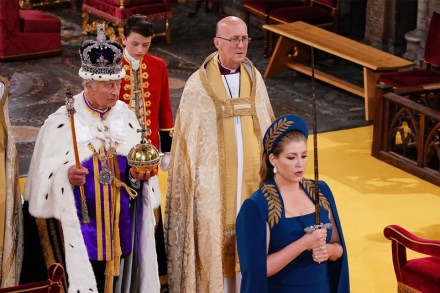
The Duke of Sussex says that he and his wife can never return to live in the United Kingdom. They will never again perform royal duties. By the same token, surely, they should not be invited to the coronation in May. There has to be a price for publicly attacking the King, the Queen Consort and the heir to the throne, attacks in which he gave accounts of private occasions when he must know that the people he condemns can never give their version of the events. If the Sussexes were invited, that would imply that their behaviour was condoned, which would in turn imply that the manner and content of their criticisms were justified. If they accepted, their presence would disrupt the ceremony. If they refused, they would also grab attention.

What Ladybird Books taught me about history

From our UK edition

Visiting my family’s house, now inhabited by my sister, the other day, I dug out the heart of my childhood library, my Ladybird Books. They were the only books I bought with my pocket money when I was a small boy. Each short, well-produced hardback cost half a crown (12.5p). I got one old penny for each year of my age. So when I stopped buying Ladybirds at the age of 12, I was laying out two and a half weeks’ earnings on them. Rereading them now, I see how much they excited my imagination. Perhaps because of their link with childhood, they read well at Christmas. There were many different types of Ladybird books – ones about the farm, or travel, for instance – but the ones I liked the best were called ‘Adventures from history’.

The error of involving Gordon Brown

From our UK edition

Sir Keir Starmer says the House of Lords is ‘indefensible’. It is an odd thing to say about an institution which has lasted more than 700 years. It is slightly like saying the common law is indefensible, and extremely like saying that the monarchy is indefensible (which is, I think we know, what Sir Keir does actually believe). There are several defences to be made for the Lords. They are just not, strictly speaking, democratic ones. But I must stick to my rule (see last week) of avoiding the subject of House of Lords reform. The funniest bit of Sir Keir’s constitutional plans is that he chooses to justify them in economic terms. Apparently, his new layer of elected regional non-Lords will bring new prosperity to the United Kingdom.

It is harder to run a dictatorship than a democracy

From our UK edition

Things are currently so bad in the western democracies that we tend to ignore how much worse they are in what one could politely call ‘non-democracies’. China’s policy of developing Covid in a lab, and then covering up its leak, seemed to work at the time. Western scientists, some corrupted by their links with China, helped persuade many that Beijing had the best policy for infection control. But it is increasingly clear that Chinese people themselves do not believe this and are rebelling. In Russia, Putin’s policy of war has isolated his country, humiliated his armed forces and bound his democratic enemies more closely even than did anti-Soviet feeling in the Cold War. In Iran, more than 300 people have been killed in riots against the oppression of women.