Charles Moore

Charles Moore

Charles Moore is The Spectator’s chairman.

He is a former editor of the magazine, as well as the Sunday Telegraph and the Daily Telegraph. He became a non-affiliated peer in July 2020.

My dinner with a glamorous Taiwanese MP

From our UK edition

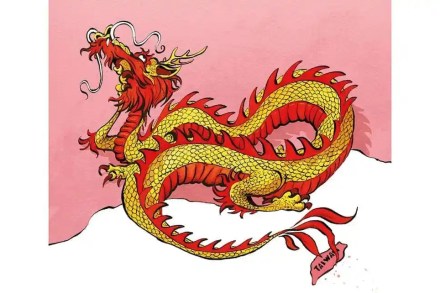
Taipei I arrive here shortly after Taiwan National Day, which is 10 October. The day might seem strangely chosen, because the date commemorates the Wuhan Uprising in 1911, the spark for the revolution which overthrew China’s last imperial dynasty and created the Republic of China. At that time, the island of Taiwan did not benefit. It had been ruled since 1895 by Japan and continued thus until Japan’s surrender in 1945. The reason 10 October is the National Day is because the ‘nation’ referred to is the whole of China, not Taiwan. When Chiang Kai-Shek, the Kuo Min Tang (KMT) generalissimo, was defeated by the communist revolution in 1949, he fled to Taiwan.

The timeless sophistication of the Beano

From our UK edition

The pattern of Israeli/Palestinian conflicts is always forced by coverage into what people call a ‘narrative arc’. The attacks are usually started by Palestinians. They are briefly condemned across the world, but in terms which allow the Israeli response later to be characterised as ‘overreaction’. Thus a sighing Lyse Doucet, for the BBC, edging away from the utter barbarity of the Hamas attacks, said on Tuesday that ‘the rules [of war] are being broken [by Israel in Gaza] in ways they have never seen before’. Is there any other country which, when its civilians – many old or very young – had been massacred or kidnapped in their hundreds at home, would not respond as fiercely as it could? Not to see this is not ‘neutrality’, but moral blindness.

The National Theatre underestimates its patrons

From our UK edition

It was a story that Rishi Sunak was not saying what he would decide about the future of HS2. But was it the story? The BBC thought so. On Tuesday, Today’s reporting of the Conservative party conference consisted chiefly of Nick Robinson and Chris Mason gleefully commenting on how the Prime Minister was avoiding their HS2 questions. The explanation, which they chose not to recognise, was that he would have been idiotic to pre-empt his own conference speech on Wednesday. There he did announce his big HS2 change. The only other thing that interested Today, especially Robinson, who specialises in this theme, was that ‘the Tory right’ were being supported at the conference by GB News, partly in the form of its presenter Nigel Farage.

In praise of Rupert Murdoch

From our UK edition

In March last year, when the bosses of Jesus College, Cambridge, lost their legal battle for a ‘faculty’ to take down the 17th-century memorial of the college’s benefactor, Tobias Rustat, because of slavery connections, from their college chapel, they did not appeal against the verdict of the ecclesiastical court. They knew they would not have won. But, as I mentioned at the time (26 March 2022), the Church of England high-ups, angry at their own heritage law, are not giving up. The latest biannual report of the Archbishops’ Commission for Racial Justice backs attempts to change the church’s faculty jurisdiction rules and promotes the 47 recommendations of From Lament to Action, by the commission’s anti-racism taskforce.

Why wasn’t Russell Brand cancelled in his prime?

From our UK edition

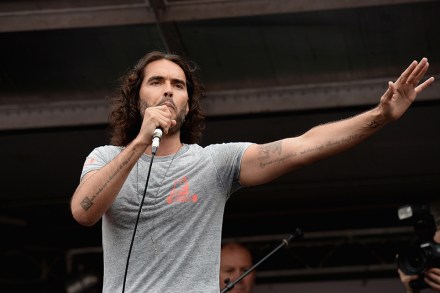
In 2014, Rolf Harris was convicted of sexual offences against girls. I wrote in this space that this would have represented more of a cultural change in the treatment of celebrities if he had been unmasked at the height of his fame. Current stars, I suggested, are much more rarely denounced: ‘I would not dream of suggesting that Russell Brand is a sex criminal, but we know, from his own account, that he has slept with a great many women.’ He had even, on his infamous Radio 2 show, boasted of sleeping with Andrew Sachs’s grand-daughter, yet ‘the BBC broadcast this as comedy’. ‘If the celebrity wheel of fortune ever went against Brand,’ I went on, ‘would it be surprising if some of the women decided to accuse him of “inappropriate” acts?

Bring back the dog licence

From our UK edition

China is so obviously a ‘potential risk to UK safety or interests’ that if there is an ‘enhanced’ tier under our Foreign Influence Registration Scheme, China should be on it. We keep re-learning, but then forgetting, that China is always using covert means to extend its power over western countries, thereby undermining trust. Our government still cannot find the right words to express the problem because it is itself conflicted. This week, following the announcement of a possible infiltration of parliament, ministers tied themselves in knots over the difference between a ‘threat’ and a ‘challenge’. The truth is that China is both, and this should be officially said. Why, for example, does the government not tell us how Beijing’s United Front Work Department operates?

My prediction for the next general election

From our UK edition

My long-standing theory of British general election results is that they are all deserved. This is true not just of big victories e.g. Labour in 1945 and 1997, the Conservatives in 1979 and 2019, but also of no-score draws, such as the two elections of 1974. In our system (though first-past-the-past sometimes exaggerates) the voters are, collectively, always right. Dare I turn this retrospective rule into a prediction? If I did, I would say that the Tories now deserve to lose, but that Labour does not deserve to win. Logic therefore demands a Labour lead but no overall majority. Small British charities and voluntary groups are doing such good work in Ukraine, but being discouraged, and sometimes refused charitable status, by the Charity Commission.

How do you solve a problem like Rod Liddle?

From our UK edition

‘We must never hide anything,’ declared the director of the British Museum, Hartwig Fischer, three years ago, when criticised for disrespecting its greatest founding genius, Sir Hans Sloane, because, through marriage, he had profited from slave labour. Sloane’s Rysbrack bust was now to be presented, he said, ‘in the exploitative context of the British Empire’. So it would take a heart of stone not to laugh now that Dr Fischer has been forced to resign for failing to raise the alarm – even with his chairman, George Osborne – that hundreds of objects have disappeared from the museum’s collections through a long-standing inside job. He disparaged the exterior expert who had warned him of the thefts.

Will the Online Safety Bill target moths?

From our UK edition

As is now well-known, Ulez (the ultra-low emission zone) will expand from 29 August, taking in suburban parts of Kent, Surrey, Essex, Herts. This fact gave Richard Lofthouse, an editor and motoring journalist, an idea. He has done much to help car4Ukraine.com, a volunteer group within Ukraine which seeks gifts of 4x4 pickups abroad and repurposes them to help the war effort. Some are armour-plated, for instance, and fitted with a gun turret at the back. Others can be turned into field ambulances, and so on. There is an endless need for wheels in Ukraine, the life of each pick-up ‘in theatre’ being a matter of weeks. As I write, nearly 300 such vehicles have been contributed, well over half from British donors.

Will Keir Starmer condemn Greenpeace?

From our UK edition

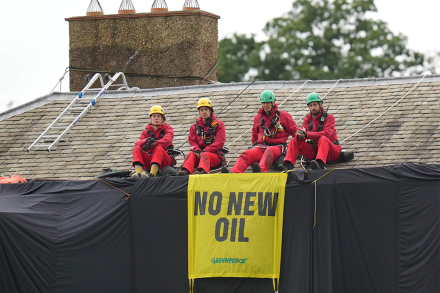
Sir Keir Starmer’s piece in the Times on Monday was presumably constructed round the front-page headline Labour wanted – ‘Just Stop Oil tactics are contemptible, says Starmer’. Behind the headline, and therefore unnoticed, was his argument that the Tories are wrong to allow new drilling for oil and gas in the North Sea, and Labour is right to allow only old drilling. This wedge between the two main parties is relatively trivial, since both are still committed to getting rid of all new petrol and diesel cars by 2030 and therefore on course to create what Sir Keir, speaking of Just Stop Oil, calls ‘chaos for working people’.  Will Sir Keir also condemn Greenpeace’s invasion of Rishi Sunak’s house in Yorkshire last week?

In praise of Barbie

From our UK edition

For the last time, on Saturday, I stuck the head of the late Queen, without a barcode, on an envelope and posted it. I have kept the two remaining stamps of my sheet as souvenirs. Stamps survive, of course, under the new King, but they are gradually becoming like cash – marginal and out of date. The letter is no longer a primary means of communication, just as notes and coin are no longer the primary means of purchase. I wonder how these changes will affect our view of monarchy. The head of the monarch, unnamed, has been the daily sight of virtually every citizen since the Penny Black arrived in 1840. The head of a monarch on coins, similarly visible to all, is more than two millennia old.

Coutts has forgotten what the job of a bank is

From our UK edition

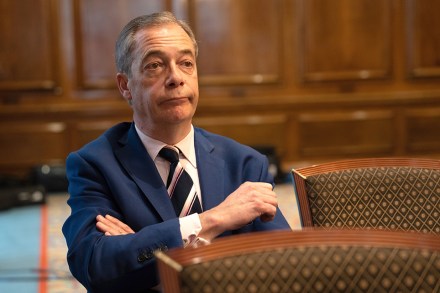
We now have a reluctant apology from Dame Alison Rose, followed by her even more reluctant resignation. Her departure is a major achievement, but the reluctance is a symptom of the problem. How could she possibly have thought she could stay after she was caught breaking a client’s confidentiality and spreading untruths about him (untruths which the BBC checked with her before publishing)? How could her chairman, Sir Howard Davies, have possibly thought that she could? And still we have nothing from Coutts, the bank that tried to trash Nigel Farage in the first place. Coutts is a B Corp, meaning a corporation which signs up to the commandments of current virtues, such as sustainability and inclusion.

The remarkable story of how Justin Welby discovered the truth about his father

From our UK edition

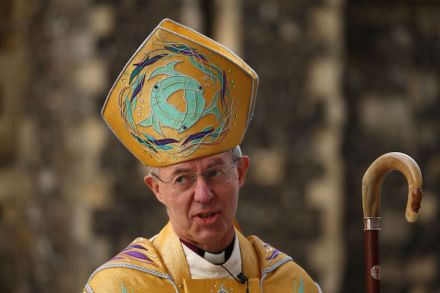
Jane Portal, as she was when she worked for Winston Churchill, died last week, aged 93. Lady Williams of Elvel, as she much later became, had an extraordinary life. I encountered her story by chance. In 2015, near us in Sussex, I was told that ‘of course’ (people love saying that when telling you a surprise) Jane Williams’s son, Justin Welby, the Archbishop of Canterbury, was not the offspring of Gavin Welby, as the Archbishop believed, but of Sir Anthony Montague Browne, Churchill’s last private secretary. Of course he wasn’t, I said. I made further inquiries, however, and saw letters and heard testimony which began to persuade me. I also noticed that, when the Archbishop took off his spectacles, he did look remarkably like Montague Browne.

The BBC and a 21st-century media madness

From our UK edition

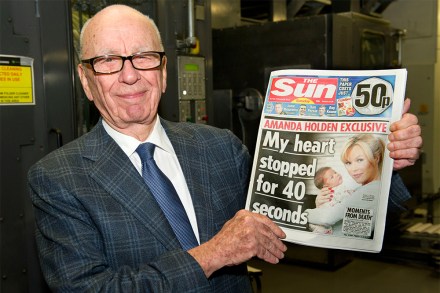
The story of the famous BBC television presenter who, at the time of writing, has still not been named, has all the elements of 21st-century-media madness – something allegedly sexual which may or not involve a person too young for such things; a desperate hue and cry to see who will dare to name the accused first; anonymous accusers; a clash between strong legal rules about the accused’s anonymity and the strong social media custom of ignoring them; a confusion as to whether the ‘victim’ is a victim or whether he/she even believes he/she is a victim; gabby lawyers; the Sun; an angry mum; a stepfather; ‘fresh allegations’; a ‘concerned’ government which does not exactly know what it is concerned about; show-off MPs who want to use parliamentary privilege to name the ac.

We’re finding out the price of net zero

From our UK edition

Now that the cost of net zero has become a pressing political matter, I have been re-reading the prescient words of Matt Ridley in the House of Lords when, in 2019, he was one of very few who opposed the government’s ‘net zero by 2050’ pledge. ‘I was genuinely shocked,’ he said, ‘by the casual way in which the other place [the Commons] nodded through this statutory instrument, committing future generations to vast expenditure to achieve a goal that we have no idea how to reach technologically without ruining the British economy and the British landscape. We are assured without any evidence that this measure will have, “no significant… impact on business” – but where is the cost-benefit analysis on which this claim is based? Where is the impact assessment?

I feel sorry for Nadine Dorries

From our UK edition

When Boris Johnson’s resignation from parliament was announced, we were in the audience for Glyndebourne’s production of Don Giovanni. Controversially, this includes a vast cake which is part of the bacchanals and then reappears, in rotting form, as the statue of the Commendatore approaches to take the antihero to his eternal damnation. Don Giovanni sprawls in the gap left by the removal of a giant slice, cramming putrescent crumbs into his mouth and necking a bottle. The news must have given great satisfaction to the director because the production’s take on the opera is, as the programme knowingly explains, the problem of ‘trying to have your cake and eat it’. Don G equals Boris. Mozart himself was against Brexit!

Why Russia blew up the Kakhovka dam

From our UK edition

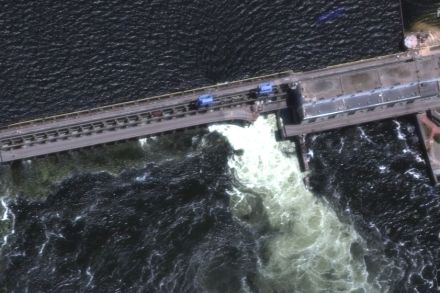
When I first heard that the Russians had blown up the Kakhovka dam, I assumed that this was an effective tactic to frustrate the Ukrainian counteroffensive. It will surely slow it. But a Ukrainian friend raises an additional possibility – that these are the scorched-earth tactics the Germans used in much the same places 80 years ago. Writing from Kyiv, she quotes a letter from Himmler to the SS commander in Ukraine in September 1943: ‘It is necessary to make sure that when retreating from Ukraine, not a single person, not a single animal, not a single gram of grain, not a single metre of railway track is there, so that not a single house survives… The enemy must be a totally burned and devastated country.

A dispatch from Ukraine

From our UK edition

Last week, I visited Ukraine – Lviv, Kyiv, Kharkiv, Kramatorsk. Impressions crowded in. Here are a few: Air-raid sirens sound every night at present. Almost no one goes to the shelters until actual explosions start. It is the repeated disturbance of sleep, more than risk of death, which frays people’s nerves. And not only people’s. A woman I met for breakfast brought along her poor toy poodle, frightened after a noisy night. Courage is visible in so many one meets; but a notable branch of it is those who admit they are scared of fighting. I met two such men, so far not summoned. Both have family responsibilities and do valuable work for their country and yet, they tell me, they feel ashamed. A friend showed me the result of his online Airbnb searches in Kharkiv.

The power of Penny Mordaunt

From our UK edition

The police have said sorry for arresting anti-monarchy protestors under the wrong legal rubric on Coronation Day, but is that really a lead news story, as it was on Tuesday’s Today programme? If the police had failed to contain the mini-mob and a couple of them had, as they intended, obstructed the processional route, there would have been a huge and justified outcry. Coverage like that of Today makes no allowance for the fact that these protestors are not ordinary citizens. Protest is their full-time job, as is making a monkey of the law. Every week, I receive notice in my inbox of protests by this coalition of organisations which explicitly promises trouble. As I write, I am looking at one which says, ‘Animal Rising Declares Intention To Disrupt The Derby Festival’.

What do we expect of a modern king?

From our UK edition

Perhaps we have not focused enough on the fact that we are crowning a king, rather than a queen, as monarch. It is nearly 90 years since this last happened, so no one alive today has an adult memory of what was expected. There is a further difficulty, in that the coronation of Charles III occurs in circumstances almost diametrically different from those of the coronation of George VI. In 1937, what was happening had not been foreseen before December of the previous year. It was Edward VIII’s coronation that everyone had been expecting, and although those in the know were aware of Edward’s inadequacies, these had been kept from a public most of whom found him very glamorous. With the shock of Edward’s abdication came the arrival of the shy Duke of York, George VI.