Charles Moore

Charles Moore

Charles Moore is The Spectator’s chairman.

He is a former editor of the magazine, as well as the Sunday Telegraph and the Daily Telegraph. He became a non-affiliated peer in July 2020.

Does Chuck Blazer actually exist?

From our UK edition

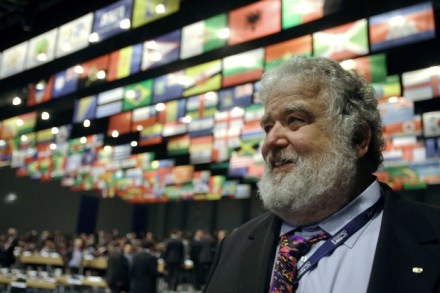
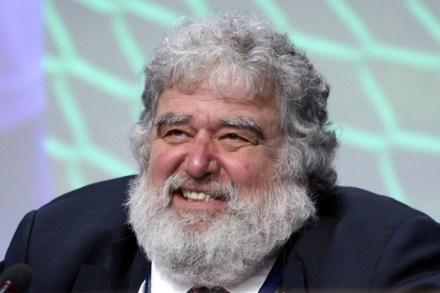
We in the West all hate Sepp Blatter, so we pay too little attention to the manner in which the Fifa executives were arrested. For what reason, other than for maximum drama, were they all ensnared in a dawn raid on their hotel in Zurich? Are we really satisfied, if we think about it, that the US authorities should behave in this way outside their jurisdiction? Can we be confident that this very fat man called Chuck Blazer really exists, or has he been invented by Hollywood? In America, lawyers are more like political players or business entrepreneurs than the sub-fusc professionals of the English tradition. Should we welcome their global reach? Since the Fifa story is an example of the West versus the rest, however, we in the Anglosphere must stick together.

Is gay marriage just a fad?

From our UK edition

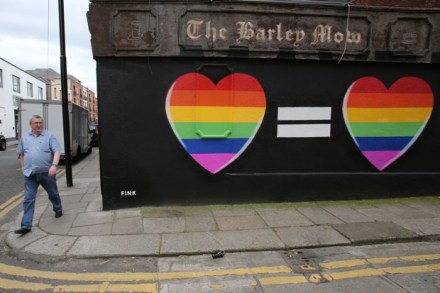
Now that Ireland has voted Yes to same-sex marriage, it will be widely believed that this trend is unstoppable and those who oppose it will end up looking like people who supported the slave trade. It is possible. But in fact history has many examples of admired ideas which look like the future for a bit and then run out of steam — high-rise housing, nationalisation, asbestos, Esperanto, communism. The obsession with gay rights and identity, and especially with homosexual marriage, seems to be characteristic of societies with low birth rates and declining global importance. Rising societies with growing populations see marriage as the key to the future of humanity, so they think it must be between a man and a woman.

The Spectator’s Notes | 28 May 2015

From our UK edition

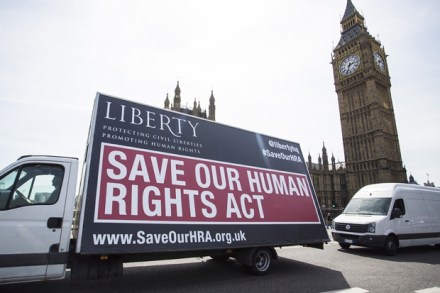
Amnesty International and others have placed a large newspaper advertisement telling Michael Gove ‘Don’t Scrap Our Human Rights’. The ad asserts that ‘A government cannot give human rights or take them away’, which, if true, makes one wonder how it can scrap them. Human rights are philosophically a confused idea; but their political power consists in the fact that anyone questioning them can be made to look nasty. People who love making new laws — particularly new laws that cost money — therefore like to present these laws as human rights. Article 29 of the EU’s Charter of Fundamental Rights, for example, says ‘Everyone has the right of access to a free placement service’.

A display of cowardice at Leon Brittan’s funeral

From our UK edition

Leon Brittan’s memorial service on Tuesday packed the West London Synagogue, but there were some notable absentees. We in the congregation were informed that the government was represented by Lord Howe (the Earl Howe, not Geoffrey). He is an estimable man, but well below Cabinet level. Since Brittan had been Home Secretary, it would normally be customary for the present holder of the office, Theresa May, to attend. Was she absent because of the accusations against Brittan, among others, about ‘establishment’ cover-ups of child abuse in the 1980s? If so, it was cowardly. Absolutely nothing has been proved. Unless it is, ministers should stand up for those who have served government in the past instead of running before the wind.

The Spectator’s Notes | 21 May 2015

From our UK edition

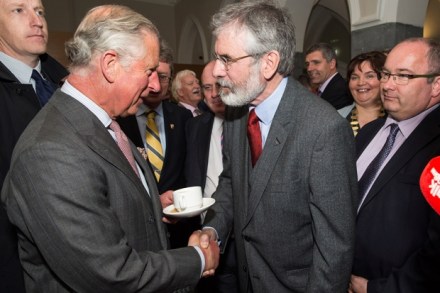
Who benefits from Prince Charles’s handshake with Gerry Adams? Not the victims of IRA violence, including the 18 soldiers who died at Warrenpoint on the same day as Lord Mountbatten was murdered. Not the moderate parties in Ireland, north or south, who never blew up anybody and so can get no kudos for pretending to be sorry about it afterwards. Only Adams (who was a senior IRA commander at the time of the killings) and Sinn Fein. His party has thus been relieved of current unpopularity in the Republic caused by long-running rape accusations, and is suddenly made to look good in the run-up to the centenary of the Easter Rising. I gather the bright idea to involve the royal family in this tasteless choreography came from our own Foreign Office.

The Spectator’s notes | 14 May 2015

From our UK edition

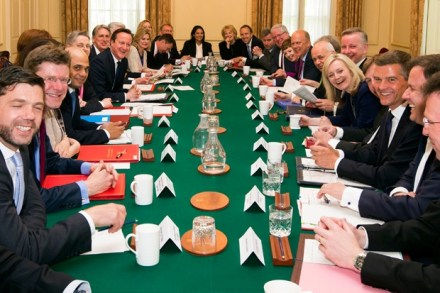
David Cameron is taking a bit of trouble to unite his parliamentary party. Having built a coalition outside it last time, he knows he must now build one within. The best way to do this lies to hand. It is to return to the pre-Blair custom of having Prime Minister’s Questions twice a week. Advisers always tell prime ministers not to do this, on the grounds that it is a waste of time and can only expose them to added risk. But in fact it has two good effects. It makes MPs feel much happier, and so discourages plotting. It also makes the Prime Minister the master of every area of policy and every nuance of parliamentary opinion. It literally doubles his power to govern successfully through the House of Commons.

Cameron has one chance to abolish the licence fee and this is it

From our UK edition

As the news of John Whittingdale’s appointment as Culture Secretary came through, I happened to be sorting my pile of threatening letters from TV Licensing. It was taking me a bit of time, as there are 34 of them, accumulated over the past two years or so. Faithful readers of this column may remember that in my flat in London I do not have a television. TV Licensing, which collects on behalf of the BBC, works on the insulting assumption that everyone has a television and therefore accuses me of licence evasion, telling me that it will take me to court.

Did Mrs Thatcher ‘do’ God? Denis thought so, and he should know, says Charles Moore

From our UK edition

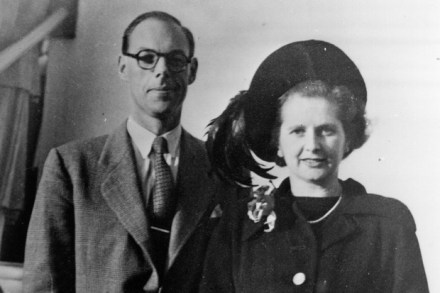
As I swink in the field of Thatcher studies, this book brings refreshment. It is a welcome and rare. Far too many writers attitudinise about Margaret Thatcher (for and against) rather than studying her. I doubt the author likes Thatcher much, but all the more credit to her that she makes a fair-minded effort to understand what she believed about God, and how she succeeded and failed in applying her beliefs. Not all who knew Mrs Thatcher agree that she was religious. In a way, they are right. She was not churchy or denominational, which is good. She was not sacramental (she once told me that her twins were baptised but ‘didn’t have the water’) or spiritual, which is not so good. But Denis thought she had a serious Christian faith, and I think he would know.

Daring to be a Daniel

From our UK edition

As I swink in the field of Thatcher studies, this book brings refreshment. It is a welcome and rare. Far too many writers attitudinise about Margaret Thatcher (for and against) rather than studying her. I doubt the author likes Thatcher much, but all the more credit to her that she makes a fair-minded effort to understand what she believed about God, and how she succeeded and failed in applying her beliefs. Not all who knew Mrs Thatcher agree that she was religious. In a way, they are right. She was not churchy or denominational, which is good. She was not sacramental (she once told me that her twins were baptised but ‘didn’t have the water’) or spiritual, which is not so good. But Denis thought she had a serious Christian faith, and I think he would know.

Charles Moore’s notes: A matched pair of popes, and a patronising judge

From our UK edition

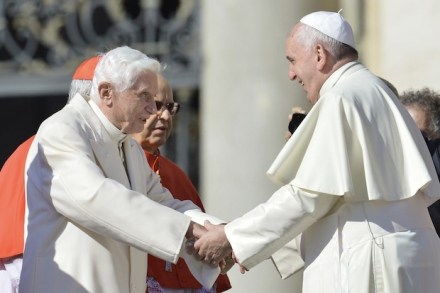
Pope Francis is favourably compared to Pope Benedict in the media. I hope it is not being slavishly papist to admire both of them. For Francis, the chalice is half-full. For Benedict, it was half-empty. But one attitude is not superior to the other. The Church needs both, like Christmas after Advent, Easter after Lent. Things are, in the Christian view, very bad, yet all shall be well. Put the two men together, and you have most of what you need. In paragraph 135 of his judgment in the Andrew Mitchell ‘Plebgate’ case, Mr Justice Mitting says that P.C.

The Plebgate judge thought PC Rowland was a pleb

From our UK edition

In paragraph 135 of his judgment in the Andrew Mitchell ‘Plebgate’ case, Mr Justice Mitting says that P.C. Rowland, the police officer whom Mr Mitchell was suing for libel, is ‘not the sort of man who would have the wit, imagination or inclination to invent on the spur of the moment an account of what a senior politician had said to him in a temper’. In paragraph 174, however, the judge says that Mr Rowland did give a false account of how members of the public reacted to the incident. He goes on: ‘Embellishment of a true account by a police officer on the defensive is, of course, not acceptable, but it is understandable if done for that purpose.

The great David Ekserdjian deserves a museum of his own

From our UK edition

Ever since Mr Blair’s New Dawn of 1997, the dominant idea in public policy towards public collections has been ‘access’. The doctrine is more than half-right: art, antiquities etc paid for by the public are not doing their work unless we can see them. But it has promoted the heresy that the person chosen to run every museum must be a communicator rather than a scholar. Actually, both is best. True, some learned persons are interested only in objects and cannot communicate with the human race, but the best evangelisers for a museum or gallery are the people who really know its contents. The best-known current example is Neil Macgregor, at the British Museum.

A fitting exit for the self-publicising Lady Warsi

From our UK edition

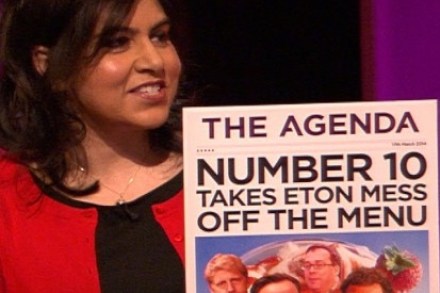
[audioplayer src="http://traffic.libsyn.com/spectator/TheViewFrom22_07_August_2014_v4.mp3" title="Douglas Murray and Tim Stanley discuss Baroness Warsi's resignation" startat=462] Listen [/audioplayer]At the impressive Westminster Abbey vigil to mark the centenary of the first world war on Monday night, there was one big candle for each quarter of the Abbey, and one dignitary assigned to each candle. At different points in the service, each dignitary would extinguish his or her candle. Then the rest of us in the relevant area, all equipped with candles, would follow suit. The lamps went out, as it were, all over Europe. One thing niggled. I was in the South Transept, and our big-candle snuffer was Lady Warsi, Minister of State at the Foreign Office.

How long before self-publicising Baroness Warsi pops up in another party?

From our UK edition

At the impressive Westminster Abbey vigil to mark the centenary of the first world war on Monday night, there was one big candle for each quarter of the Abbey, and one dignitary assigned to each candle. At different points in the service, each dignitary would extinguish his or her candle. Then the rest of us in the relevant area, all equipped with candles, would follow suit. The lamps went out, as it were, all over Europe. One thing niggled. I was in the South Transept, and our big-candle snuffer was Lady Warsi, Minister of State at the Foreign Office. I complained to friends that her prominence fell below the level of events. She was always a self-publicising minister — an Asian Edwina Currie — and she is notably sectarian.

4th August 1914 – my grandfather and his brother, aged 20, go to war

From our UK edition

This is the second part of Charles Moore's notes. You can read the first part here. On Tuesday 4 August, NM rang his London house: ‘Roberta our house-maid said that “Master Gilla had got a commission in the Army & Master Alan was to be appointed a surgeon in the navy”.’ Gilla sent a telegram saying ‘sorry cannot return shove off this evening’. NM read and admired the Commons speeches of the Foreign Secretary Sir Edward Grey and the moderate Irish nationalist leader John Redmond in the Times. Ethel Portal wired: ‘Ultimatum sent to Germany respect Belgian Neutrality or we declare war at midnight.’ ‘Milicent & I dined,’ wrote NM, ‘a large bright moon visible through the glass door into the tennis lawn.

2nd August 1914 – my grandfather prepares for war

From our UK edition

This week’s issue is dated 2 August. On that date 100 years ago, my great-grandfather, Norman Moore (always known as ‘NM’), went to Sunday Mass. ‘Father Ryan,’ he noted in his diary, ‘seemed hardly to have thought of the war… I told [him] I felt uncertain whether August would be a good time for a mission to Protestants but I gave him the £5 I had promised.’ Later, he and his wife Milicent went to tea with their Sussex neighbours, Lord and Lady Ashton, who ‘seemed very little informed of the gravity of the situation’. Back at home, a telegram arrived from NM’s friend, Ethel Portal: ‘Germany occupied Luxembourg Reported repulse of Germans by French near Nancy unofficial.

The Spectator’s Notes: My grandfather’s dire omen on the eve of war

From our UK edition

This week’s issue is dated 2 August. On that date 100 years ago, my great-grandfather, Norman Moore (always known as ‘NM’), went to Sunday Mass. ‘Father Ryan,’ he noted in his diary, ‘seemed hardly to have thought of the war... I told [him] I felt uncertain whether August would be a good time for a mission to Protestants but I gave him the £5 I had promised.’ Later, he and his wife Milicent went to tea with their Sussex neighbours, Lord and Lady Ashton, who ‘seemed very little informed of the gravity of the situation’. Back at home, a telegram arrived from NM’s friend, Ethel Portal: ‘Germany occupied Luxembourg Reported repulse of Germans by French near Nancy unofficial.

Our spies have stopped chasing subversives. That’s why we’re in so much trouble

From our UK edition

Peter Clarke’s powerful report on the Trojan Horse affair in Birmingham schools is confirmation of the weakness of David Cameron in demoting Michael Gove. When Mr Gove appointed Mr Clarke to conduct the inquiry, there was execration — even from the local police chief — about how wickedly provocative it was to put a policeman with counter-terrorism experience into the role. But Mr Clarke was just the man and his inquiry has swiftly and efficiently uncovered serious problems of Islamist bullying and infiltration. Too late to reap a political reward, Mr Gove is vindicated. The next time this problem arises — and there undoubtedly will be a next time in another British city — what minister will have the courage to do what he did?

The Trojan Horse affair is about subversion, and only Gove understood this

From our UK edition

Peter Clarke’s powerful report on the Trojan Horse affair in Birmingham schools is confirmation of the weakness of David Cameron in demoting Michael Gove. When Mr Gove appointed Mr Clarke to conduct the inquiry, there was execration — even from the local police chief — about how wickedly provocative it was to put a policeman with counter-terrorism experience into the role. But Mr Clarke was just the man and his inquiry has swiftly and efficiently uncovered serious problems of Islamist bullying and infiltration. Too late to reap a political reward, Mr Gove is vindicated.

Forget about Assisted Dying: what about Assisted Living?

From our UK edition

By the time most readers see this, the House of Lords will have formed a view about Assisted Dying. Some Anglican bishops have got wonderfully on-the-one-hand/on-the-other about it. They seem to want dying assisted, but only a little bit. The Bishop of Carlisle feels that judges, rather than doctors, should decide whether someone has the right to be helped to take his or her own life. Thus do the most enlightened persons inadvertently advocate the return of the death penalty. I hope that when the bishop’s judges perform this task, they will be made to wear the traditional black cap. If I were in the House of Lords, I would bring in an Assisted Living Bill.