Charles Moore

Charles Moore

Charles Moore is The Spectator’s chairman.

He is a former editor of the magazine, as well as the Sunday Telegraph and the Daily Telegraph. He became a non-affiliated peer in July 2020.

The Spectator’s Notes | 6 August 2015

From our UK edition

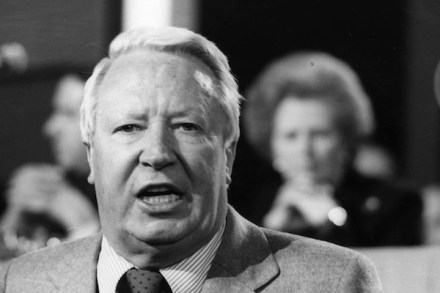
As someone who has rarely written a sentence in praise of the late Sir Edward Heath, I hope I can escape charges of ‘cover-up’: I don’t believe the accusations against him. Even the word ‘accusations’ is an exaggeration, actually, since the story so far seems to be Chinese whispers with nothing amounting to evidence, put out by the frightened police. When this fashion for airing unsupported claims of child abuse has finally run its course, we shall be collectively ashamed of it, and people like Tom Watson MP will be seen for the McCarthys they are. (This is true, by the way, even if some of the things Mr Watson alleges turn out to be the case: the same applied to McCarthy.) One should explain the culture of the period now under scrutiny.

Remembering Robert Conquest, 1917 – 2015

From our UK edition

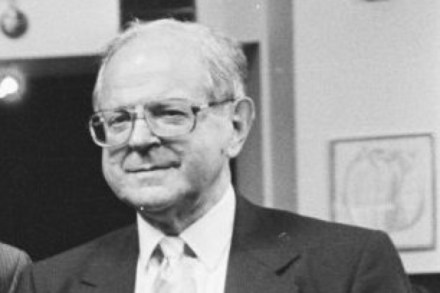
Last month, in Stanford, California, I had lunch with Robert Conquest, poet, historian, literary editor of this paper in the early 1960s, exposer of Soviet totalitarianism. After Conquest’s book The Great Terror (1968), it became impossible for all but the most crazed fanatic or fool to deny that Stalin had arranged the greatest system of mass murder in history (Hitler being at least his equal in iniquity, but a bit lower on the numbers). Bob turned 98 a week after I saw him. He was born just before the Bolsheviks he exposed came to power. His writing, and his advice to Margaret Thatcher, helped bring about the collapse of their horrible regime. On Monday, Bob died, cared for to the end by his wonderful wife Liddie (his fourth, and the one who lasted).

There’s nothing hip about Jeremy Corbyn’s beard

From our UK edition

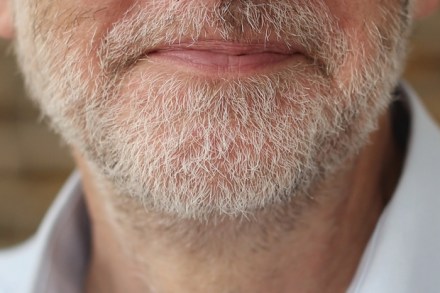
Mr Corbyn has a beard. If he becomes leader, he will be the first bearded leader of any main party since Keir Hardie. The beard as a fashion item is now back, generally in shaped and even waxed form. But Mr Corbyn’s one owes nothing to fashion. It is a 1960s political beard, already obsolete when he first brought it into the House of Commons in 1983. Like Lord Hailsham who, as Mrs Thatcher’s Lord Chancellor, continued to wear a bowler hat long after it had disappeared from everything but hunt puppy shows, Orange parades and A Clockwork Orange, Mr Corbyn is undaunted by the passage of time. I must try not to get sentimental about him. This is an extract from this week's Spectator. Subscribe here.

The Spectator’s Notes | 30 July 2015

From our UK edition

Obviously when one attends what the papers call ‘cocaine-fuelled orgies’, one expects to find several members of the peerage present, but I must confess that until all this trouble, I had not heard of Lord Sewel, beyond a vague apprehension that he was a misprint rather than a person. I now discover that he is a Blair peer — a specially ignominious category, rather like Lloyd George’s creations. But I still worry that he has ‘resigned’ from the House of Lords. If we continue to think that our second chamber should be unelected, it should be all but impossible to get rid of a peer once appointed.

Can my secretary marry her sister?

From our UK edition

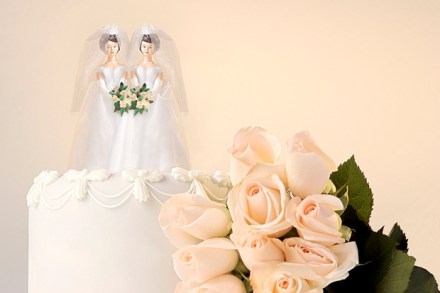
Virginia Utley, my secretary when I edited this paper, has written to Prime Minister and Chancellor, jointly. She asks, ‘Please could you tell me what a family is?’ Nowadays, she goes on, you teach us that a family can be made up of men who love men or women who love women, who must therefore be equally entitled to marry one another. ‘Now,’ she continues, her sister and she ‘both think boys are very nice but neither of us met one we quite liked enough to marry… So my sister and I have bought a house together and have lived happily there for years and years and years.’ So, ‘Please can my sister and I get married?

Euclid’s theorem of the Irish

From our UK edition

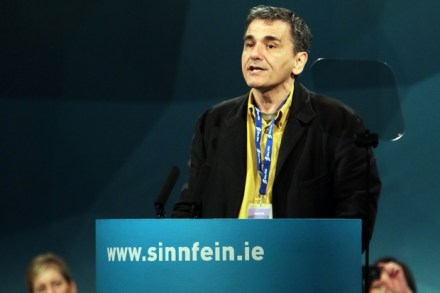
The excellently named Euclid Tsakalotos has become the Greek finance minister after the sacking (tsaking?) of Varoufakis. He was educated at St Paul’s in the 1970s, and went on to Oxford. This atrocious suffering made him, even at the time, a supporter of Irish republicanism. In March this year, he popped up at a Sinn Fein conference and began his speech by apologising for his English accent, adding that ‘in mitigating circumstances, I am married to a Celt’. Euclid’s theorem is that the Irish are ‘honorary southerners’, now forming an arc of leftist insurrection which runs from Dublin, through Podemos in Spain, to Athens. Given the horrors inflicted on these countries by the eurozone, one almost wishes it well.

The Spectator’s notes | 9 July 2015

From our UK edition

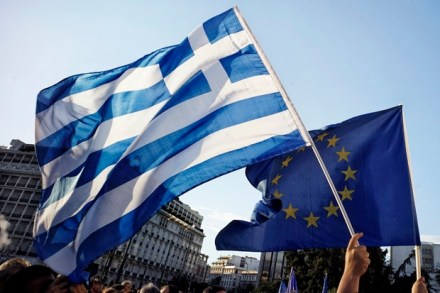
Even if everything goes wronger still, the Greek No vote is a great victory for the left. Until now, the left has not mounted a serious challenge to the claims of the EU. It is extraordinary how it has been cowed. The single currency, especially a single currency without a ‘social dimension’ and political union, is the classic ‘bankers’ ramp’ against which the left always used to inveigh. It is a huge collective device to put banks before workers, if necessary reducing the latter to poverty. Greece is an almost perfect example of this, with the rescue designed to save European banks, not Greek people.

Left-wing Eurosceptics are finally starting to reveal themselves

From our UK edition

Even if everything goes wronger still, the Greek No vote is a great victory for the left. Until now, the left has not mounted a serious challenge to the claims of the EU. It is extraordinary how it has been cowed. The single currency, especially a single currency without a ‘social dimension’ and political union, is the classic ‘bankers’ ramp’ against which the left always used to inveigh. It is a huge collective device to put banks before workers, if necessary reducing the latter to poverty. Greece is an almost perfect example of this, with the rescue designed to save European banks, not Greek people.

The IMF doesn’t need to be run by a European

From our UK edition

How much longer should the IMF be run by a European? The job of the fund is to assist any member country which is in trouble, not to advance the dream of European integration. So far, since it all began after the war, the IMF’s managing directors have been Europeans, most commonly French. The current one, Christine Lagarde, is a French former politician, as was her predecessor, the socialist sex-maniac Dominique Strauss-Kahn. In her opinion, the needs of the EU trump everything, but that is a political view, not a financial one. It must be annoying for the scores of poorer, non-European IMF members — e.g. the Philippines, Mexico, Jamaica — to be paying for this.

Does the EU want the Greeks to vote for Golden Dawn?

From our UK edition

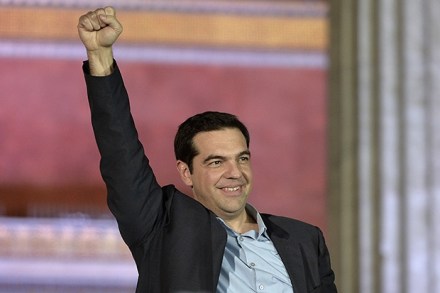
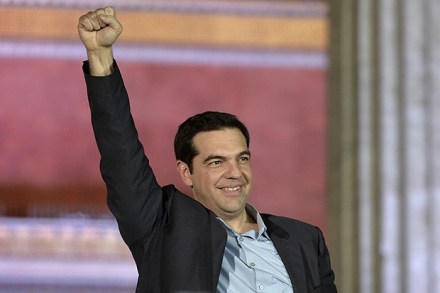
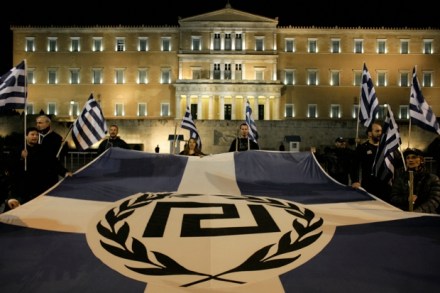
If Greece does vote Yes, and Mr Tsipras has to go, who is left to run the country? The voters have tried all the main parties, only to find them broken by the demands of the eurozone. The only category left is the extreme right, so there would be a sort of desperate logic in electing the repulsive Golden Dawn party. Otherwise, there really doesn’t seem any point in having any more votes at all. Greek citizens — or rather subjects — might as well invite the satraps of the troika formally to take up the reins of power, sit back, and see how they manage. If they do not like what happens next, they can reserve the right to riot. It will be like being under the Ottomans all over again. This is an extract from Charles Moore's Notes. You can read the full article here.

British culture can’t cope with a heatwave

From our UK edition

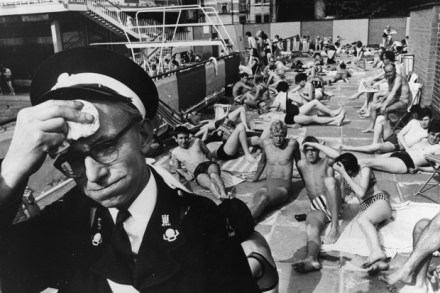
I find it almost frightening to be stuck in London in a heatwave. It is not just the bad air. It is also the sense that this is something that does not suit the British. White northern people have never discovered an elegant means of wearing little in public. We look dreadful and behave as if this is an occasion for having fun, although we secretly know that it is just something unpleasant to be got through. Our street life becomes everything contained in that grim word ‘vibrant’. All cultures are precarious. That of London works only between 0 and 21 degrees centigrade. This is an extract from Charles Moore's notes. The full article can be found here.

The Spectator’s notes | 2 July 2015

From our UK edition

‘The Greek people,’ the Financial Times leading article said on Monday, ‘would be well advised to listen closely to the words of Ms Merkel. The plebiscite will be a vote for the euro or the drachma, no less.’ It is interesting how menacing powerful ‘moderate’ institutions can become when popular feeling challenges them. In the eurozone theology to which the FT subscribes, its statement above cannot be true. It is not possible (see last week’s Notes) for a member state to leave the euro, any more than it is for Wales to renounce sterling. Eurozone membership, once achieved, is a condition of EU membership. So the Greeks cannot vote to leave the euro, unless they vote to leave the EU — which even the FT is not claiming is happening.

Why is the FT ordering Greece to do what Germany wants?

From our UK edition

‘The Greek people,’ the Financial Times leading article said on Monday, ‘would be well advised to listen closely to the words of Ms Merkel. The plebiscite will be a vote for the euro or the drachma, no less.’ It is interesting how menacing powerful ‘moderate’ institutions can become when popular feeling challenges them. In the eurozone theology to which the FT subscribes, its statement above cannot be true. It is not possible (see last week’s Notes) for a member state to leave the euro, any more than it is for Wales to renounce sterling. Eurozone membership, once achieved, is a condition of EU membership. So the Greeks cannot vote to leave the euro, unless they vote to leave the EU — which even the FT is not claiming is happening.

Is animal extinction really the end of the world?

From our UK edition

‘Each year sees the disappearance of thousands of plant and animal species which our children will never see’, says Pope Francis in his gloomy encyclicalLaudato si. Can this possibly be true? Over the past 500 years, 1.3 per cent of birds and mammals are known to have become extinct — 200 species out of 15,000. There are far, far more species of invertebrates and plants in existence of course. The latest ‘predicted number’ of species is 8.7 million, of which 7.7 million are animals. (The remaining million are plants, fungi and microbes.) If you assume — which the great Matt Ridley assures me is unlikely — that an equally high percentage of these has become extinct, it averages out at about 350 a year.

The Spectator’s notes | 25 June 2015

From our UK edition

People write about ‘Grexit’ and ‘Brexit’ as if they were the same, but they need not be. Grexit is about leaving the euro. Brexit is about leaving the EU. It seems, however, that the Greeks fear that leaving the euro would mean leaving the EU, and so feel paralysed. It simply is not clear what the true situation is. Although Britain has a specific opt-out (as does Denmark), for the other member states, euro-membership is, after a preparatory period is completed, an obligation. Does this mean that, once in the euro, an EU member state cannot leave it? If so, then William Hague’s famous phrase likening it to ‘being in a burning building with no exits’ is exact.

The Spectator’s Notes | 18 June 2015

From our UK edition

It is natural to assume that, if a majority votes No in the referendum on Britain’s EU membership, we shall then leave. It is not automatically so. After the vote, we would still be members. The government would then — morally at least — be mandated to negotiate Britain’s withdrawal. In theory, unlikely though it may currently seem, the EU could try to block this. Even assuming that it did not do so, the eventual terms of the withdrawal would not automatically be agreed by Parliament and would not necessarily correspond with the wishes of those who voted No. The context for our vote will be David Cameron’s presentation of a package secured with partners to persuade us to vote Yes. There is no negotiated package offered for those voting No.

If Cameron is deleting all No. 10 emails, who will write his history?

From our UK edition

This is an extract from Charles Moore's Notes in this week's Spectator, out tomorrow. Subscribe from just £1. In a few weeks, I shall have finished the second volume of my threepart biography of Margaret Thatcher. I am now at the checking and revising stage — 3,000 endnotes to be made shipshape, 2,000 quotations to be cleared with interviewees, 300,000 words to be re-imagined as if read fresh. This involves the exchange of scores of emails every day. The question arises, ‘How did enterprises of this kind ever happen before computers?’ The answer, I think, is that the sources used were much narrower than they are today. Authors were extremely dependent on where archives physically were. Interviews were a rarity.

The Spectator’s notes | 11 June 2015

From our UK edition

Two beautiful volumes in a cloth-bound case reach me. They are Speeches and Articles by HRH The Prince of Wales 1968-2012, published by University of Wales Press. The explanatory list of abbreviations and acronyms alone gives a charming sense of the range of subjects covered — ‘Foot and Mouth Disease, Foreign Press Association, Forest Stewardship Council … Myalgic Encephalopathy, Member of Parliament … Non-Commissioned Officer … Not In My Back Yard! … Roundtable for Sustainable Palm Oil’. Among the many speeches on the environment, however, I cannot find his speech in Rio de Janeiro in March 2009, entitled ‘Less Than 100 Months To Act’.

Why has David Cameron appointed his chum Ed Llewellyn to the Privy Council?

From our UK edition

After the general election, Edward Llewellyn, the Prime Minister’s chief of staff, was made a Privy Councillor. Any member of the Privy Council is addressed as ‘Right Honourable’ and these words well describe Llewellyn’s character, so there is no problem there. But why should an adviser be given this role? If you study the list (which, be warned, takes a long time), you will see that Privy Councillors are almost all MPs (or ex-MPs), peers or judges. This is because they are supposed to be, in some small way, powers in the land, people in their own right, rather than servants of the powerful.

Why change Westminster’s voting system? It’s unfair to parties, not to voters.

From our UK edition

Listening this week to someone from the Electoral Reform Society droning on about how we have just had the least representative election ever, I suddenly had an aperçu. Until now, I had argued that it was true that ‘first past the post’ was unfair, but this was a small price to pay for the way it usually produced a decisive national result. I now realise that this is to concede too much to the proportional representation case. The present system is unfair only to parties. It is not unfair to voters, unless one can prove that voters expect the system to represent their party preferences mathematically or wish that it would. This cannot be proved. Indeed, it was disproved in the referendum of 2011. The PR people ignore the fact that MPs represent all their constituents.