Charles Moore

Charles Moore

Charles Moore is The Spectator’s chairman.

He is a former editor of the magazine, as well as the Sunday Telegraph and the Daily Telegraph. He became a non-affiliated peer in July 2020.

The Spectator’s Notes | 3 December 2015

From our UK edition

Speaking on the Today programme on Monday, Sir David Attenborough, who wants a global agreement to control carbon emissions, pointed out that ‘Never in the history of humanity have all the people of the world got together to deal with a particular problem and agreed what the solution could be. Never, ever, ever.’ He is right. But he seemed to defy the logic of his own observation. They never have. Probably, since the truth is best arrived at through disagreement, they never should. The key point is that they never will. So it is a waste of time to try. When someone commits suicide, those close to that person naturally reproach themselves. In politics, and similarly contested areas of life, people reproach others too.

The Spectator’s notes | 26 November 2015

From our UK edition

Because, it says, of its ‘liberal values and respect for human dignity’, the Economist has put out a film about Emily, a 24-year-old Belgian woman, who wants assisted dying. She is physically healthy, and comes, the film assures us, from a happy family. She has suffered from severe depression since childhood, however. By her own account, her self-made video (two years ago), in which she says ‘I don’t want to live a lie’ and ‘It keeps feeling empty whatever I do’, made her feel empowered. It inspired her to seek death at the hands of doctors. Belgium is one of two countries in the world which permits assisted dying for psychiatric reasons.

The Economist’s assisted dying film is as crazy as a jihadi video

From our UK edition

Because, it says, of its ‘liberal values and respect for human dignity’, the Economist has put out a film about Emily, a 24-year-old Belgian woman, who wants assisted dying. She is physically healthy, and comes, the film assures us, from a happy family. She has suffered from severe depression since childhood, however. By her own account, her self-made video (two years ago), in which she says ‘I don’t want to live a lie’ and ‘It keeps feeling empty whatever I do’, made her feel empowered. It inspired her to seek death at the hands of doctors. Belgium is one of two countries in the world which permits assisted dying for psychiatric reasons.

Robert Halfon is many things, but he is not a cabinet minister

From our UK edition

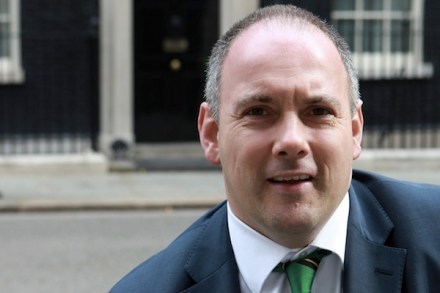
Robert Halfon, a Conservative MP, has been threatened with blackmail about some (hetero)sexual allegation. The press, reporting this story, described Mr Halfon as a cabinet minister. He is not. He is only a minister (in his case without portfolio) in the category invented, I think, by Tony Blair, called ‘attending cabinet’. This is a bad development, because it blurs the line between a cabinet minister’s individual authority and the subordinate role of all other ministers. It turns the word ‘cabinet’ into little more than a badge with a few privileges. It won’t be long now before people idly ask ‘What is this archaic thing known as the cabinet?

Is it really ‘grossly irresponsible’ to be critical of Islam?

From our UK edition

Hours before the Paris atrocities, Al Arabiya news reported a speech by David Anderson QC, the Independent Reviewer of Terrorism Legislation. In it, he said that because some mainstream media were ‘grossly irresponsible’ in their coverage of Muslim issues, Ipso, the press standards body, ought to consider making it possible for an entire religious group to bring a complaint about coverage. Mr Anderson is an able and distinguished lawyer. Surely he knows that the entire history of this subject is that mainstream Muslim bodies are constantly trying to criminalise hostile remarks about their religion. And surely he knows that if this were conceded, the chilling of free speech would be unprecedentedly severe.

Did the BBC really need to deploy Huw Edwards to Paris?

From our UK edition

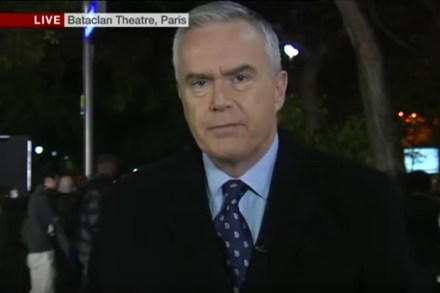
On Saturday morning, I watched BBC rolling news about the Paris atrocities. Then I spent the day hunting and switched on again at about half-past five. It was extraordinary how little the Corporation had advanced its coverage in the course of seven hours. It suffered from the curse of ‘big-footing’ — the custom of flying news ‘anchors’ from London to broadcast on the spot without knowing anything. No one needs Huw Edwards looking very serious in some boulevard and telling us again and again that ‘Paris is today a city in shock.

The Spectator’s Notes | 19 November 2015

From our UK edition

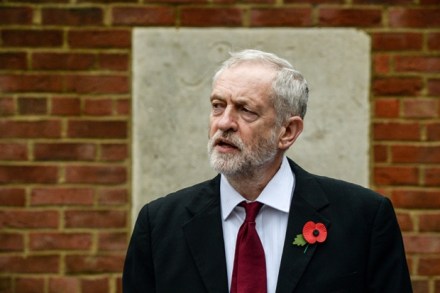
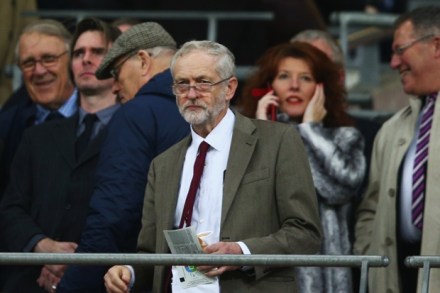
When Jeremy Corbyn says it is better to bring people to trial than to shoot them, he is right. So one might feel a little sorry for him as the critics attack his reaction to the Paris events. But in fact the critics are correct, for the wrong reason. It is not Mr Corbyn’s concern for restraint and due process which are the problem. It is the question of where his sympathies really lie, of what story he thinks all these things tell. Every single time that a terrorist act is committed (unless, of course, it be a right-wing one, like that of Anders Breivik), Mr Corbyn locates the ill as deriving from the behaviour of the West, especially the United States and Britain (and, where relevant, Israel).

Jeremy Corbyn is the political version of a creationist

From our UK edition

When Jeremy Corbyn says it is better to bring people to trial than to shoot them, he is right. So one might feel a little sorry for him as the critics attack his reaction to the Paris events. But in fact the critics are correct, for the wrong reason. It is not Mr Corbyn’s concern for restraint and due process which are the problem. It is the question of where his sympathies really lie, of what story he thinks all these things tell. Every single time that a terrorist act is committed (unless, of course, it be a right-wing one, like that of Anders Breivik), Mr Corbyn locates the ill as deriving from the behaviour of the West, especially the United States and Britain (and, where relevant, Israel).

Charles Moore’s Notes: Who’d be a diplomat now?

From our UK edition

The other day, a friend told me, he had been chatting to an old friend of his who has spent his life in diplomacy and international relations. The man, who will quite soon retire, has had a successful career, but he was full of gloom. Essentially, he said, the entire system of international relations has now been working very badly for 20 years, having worked much better in the previous 50 or so. No one — particularly no one in the West — can see a way through this, but the chancelleries and ministers are reluctant to confront this sad truth, and so a pointless merry-go-round of international conferences, bodies and negotiations consumes the energies of those foolish enough to stay in the game.

I’ve come up with the perfect way to deal with TV Licensing officers

From our UK edition

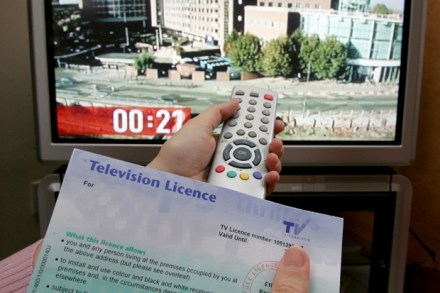
Faithful readers of this column will know that I do not have a television licence for my flat in London, because I do not have a television. As a result, I receive a couple of letters a month demanding that I prove my innocence, which I never answer because I do not see why I should. Indeed, they normally remain unopened. This week, however, I received one in a window envelope. Through the window, I could see the calendar for November and the 24th of the month circled in red. ‘We’re giving you ten days to get correctly licensed’, it said, and implied that if I did not do so it would send an ‘Enforcement Officer’ after me to start a ‘full investigation’. Such messages are wrong, and may be well be illegal.

The living have a duty to defend the reputation of the departed

From our UK edition

In this week's issue of The Spectator, Peter Hitchens defends the once-famous, once-sainted Bishop Bell of Chichester from the Church of England’s claim that he was guilty of child abuse. I do not know the facts of this case, but if Hitchens is right, the Bell case is yet another example of people’s readiness to say untrue things about the dead, secure in the knowledge that the libel law cannot go after them. Naturally, I am not arguing for the law to extend to the dead (think of the furious suits in support of the prophet Mohammed which would ensue), but all the more reason for the living to defend the reputation of the departed.

Why it’s important to ignore ‘international law’

From our UK edition

Last week, I wrote about the controversy caused by the government’s revision of the ministerial code which guides ministers’ conduct. In its Blair-era version, the code said that ministers had an overarching duty ‘to comply with the law including international law and treaty obligations’. The Cameron-era version has deleted the last six words, leaving simply ‘…to comply with the law’ . This has outraged lawyers who work in this field, but what the change exposes is that international law and treaties should never have been slipped into the rubric in the first place.

The Spectator’s notes | 5 November 2015

From our UK edition

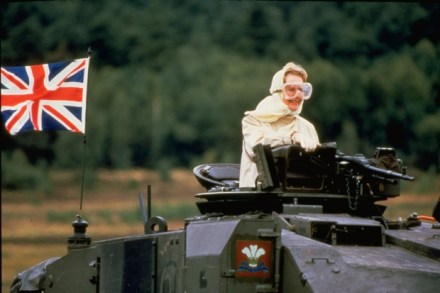
It is good to learn that the current management of the V&A want to reverse their predecessors’ lack of interest in Margaret Thatcher’s clothes. The museum’s original refusal showed a lack of imagination about how women have tried to gain greater power in a man’s world, and how clothes tell this story. Museums love to have suits of medieval armour. They reveal the amazing combination of defensive utility and elegant display which the age required. Even better if the armour was worn by a great warrior on a great occasion, like the Black Prince at Crecy. Mrs Thatcher’s clothes were her armour on her fields of battle — in Parliament, on television, in Moscow, at her party conference after the Brighton bomb. They helped her win.

The Imperial War Museum should consider accepting Margaret Thatcher’s wardrobe

From our UK edition

It is good to learn that the current management of the V&A want to reverse their predecessors’ lack of interest in Margaret Thatcher’s clothes. The museum’s original refusal showed a lack of imagination about how women have tried to gain greater power in a man’s world, and how clothes tell this story. Museums love to have suits of medieval armour. They reveal the amazing combination of defensive utility and elegant display which the age required. Even better if the armour was worn by a great warrior on a great occasion, like the Black Prince at Crecy. Mrs Thatcher’s clothes were her armour on her fields of battle — in Parliament, on television, in Moscow, at her party conference after the Brighton bomb. They helped her win.

I think I’ve found the perfect title for my Thatcher biographies

From our UK edition

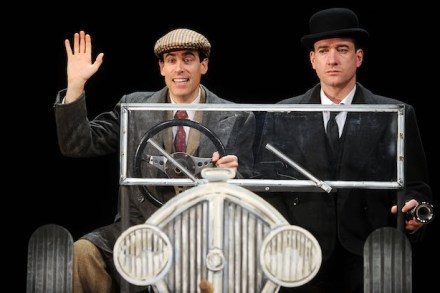
One of the best of P.G. Wodehouse’s works is The Inimitable Jeeves, which I have recently re-read. In order to impress his friend Bingo Little’s rich uncle, Lord Bittlesham, Bertie Wooster has to pretend that he is the romantic novelist Rosie M. Banks, whose writing Bittlesham greatly admires. The trick succeeds. Eventually, when Bingo wishes to marry a waitress without being cut out of his uncle’s money, he begs Bertie to go and plead with Lord Bittlesham on his behalf. He advises him to ‘start off by sending the old boy an autographed copy of your latest effort with a flattering inscription’. ‘What is my latest?’ asks Bertie, who is unfamiliar with the oeuvre whose authorship he claims.

The rule of law is being usurped by the rule of lawyers

From our UK edition

There is a row because the new edition of the ministerial code has removed explicit mention of the duty of ministers to conform to international law. Some will feel relief that the will of our own parliament is given greater prominence, and less deference is shown to those seeking to rule the world through universal and undemocratic legal doctrines, but one cannot blame ‘human rights’ lawyers for getting hot under their gowns. What did slightly shock me, however, was a letter in the Guardian from Sir Paul Jenkins, who was, until recently, the Treasury solicitor.

The Spectator’s notes | 29 October 2015

From our UK edition

An enjoyable aspect of parliamentary rules and conventions is that almost no one understands them. This has become acutely true in an age when the media no longer regularly reports proceedings in Parliament. So when the House of Lords threatened to derail the government tax credit cuts this week, no one, that I spotted, foresaw what actually happened. Knowing that the measure came forward as a statutory instrument, not a Bill, and was therefore (in both Houses) unamendable, its opponents in the Lords voted not to reject it but to delay considering it. They set conditions which had to be met before they would do so. Thus they defied the government without flatly breaking the conventions, which was clever, and unpredicted.

Why my book is no longer a bestseller at Eton

From our UK edition

After my experiences promoting volume one of my biography of Mrs Thatcher, I had focused on boarding schools for sales of volume two (just published). This was because I discovered that pupils liked to buy the book to give to their parents for Christmas, secure in the knowledge that they could put it on their parents’ extras bill. As a result, sales were brisk. So imagine my dismay, shortly before addressing the Eton Political Society recently, when I received an email informing me that the ‘Lower Man’ (not a term of abuse, but the Eton slang for what other schools would call the deputy head) had just banned this practice. About 120 boys turned up to hear me. It is a credit to them that they bought eight copies; but under the old dispensation, they would have bought 80.

Charles Moore’s Notes: If we want to save the elephant, we must legalise the ivory trade

From our UK edition

How good a deal for Britain is it that the president of China got a state visit and a nuclear power station and Prince William got the chance to go on Chinese television and complain about the ivory trade? The Prince was listened to politely, of course, but the Chinese will not give up their enthusiasm for the stuff. The elephant in the room, to misapply that expression, is that only a legal trade in ivory will save the species. Just as cows exist in any numbers only because we eat their flesh and drink their milk, so elephants have a future only if it is profitable to breed them. Throughout the commodity boom that has now ended, Africa has done very well out of China’s demand for raw materials.

Charles Moore’s Notes: Diane the Posh Goddess and Osborne’s mania

From our UK edition

When I arrived at Cambridge in 1975, a nervous freshman, I remember walking with a friend past Newnham and being introduced to a third-year undergraduate. She was attractive, witty, confident, well-connected, at home in the world of the ‘glittering prizes’ (the irritating phrase which gave its name to Frederick Raphael’s novel of that time). I envied her poise. Her name was Diane Abbott. Later, making many sacrifices for her career, she changed her accent, became ‘working-class’, and had a relationship with Jeremy Corbyn, but for me she will always be Diane, the posh goddess.