Charles Moore

Charles Moore

Charles Moore is The Spectator’s chairman.

He is a former editor of the magazine, as well as the Sunday Telegraph and the Daily Telegraph. He became a non-affiliated peer in July 2020.

The Spectator’s Notes | 18 February 2016

From our UK edition

In his authoritative biography of Pope John Paul II, George Weigel writes lucidly about the unlucid subject of phenomenology. It is a way of thinking which rejects the dry categories of empiricists and the abstractions of idealists, and concentrates instead on ‘the basic experiences of life as they come to us’. Weigel takes the example of ‘girl meets boy’: ‘An empiricist will analyse the brain chemistry of a young woman seeing, hearing and touching a handsome young man … an idealist may worry that the young woman’s commitment to the second categorical imperative [of Kant] (never use another person as a means) may be wavering in the face of other desires.

The next Tory leader will probably come from the Leave camp

From our UK edition

Here is a thought for all those Tory MPs calculating their personal advantage in the forthcoming EU referendum: unless the vote is an absolutely overwhelming Remain, the next leader of the Conservative party — whose day is no longer so far off — will come from the Leave camp. This will happen, obviously, if Leave wins, but also if Leave loses but does well, because most party supporters will only back someone who feels their pain and can reconcile them afterwards. Another thought: why would Nigel Farage want Britain to vote Leave? Then he would be redundant. Study him in the light of this thought and you will see that it explains his behaviour in the campaign. This is an extract from Charles Moore's Notes. The full article can be found here.

The Spectator’s notes | 11 February 2016

From our UK edition

Here is a thought for all those Tory MPs calculating their personal advantage in the forthcoming EU referendum: unless the vote is an absolutely overwhelming Remain, the next leader of the Conservative party — whose day is no longer so far off — will come from the Leave camp. This will happen, obviously, if Leave wins, but also if Leave loses but does well, because most party supporters will only back someone who feels their pain and can reconcile them afterwards. Another thought: why would Nigel Farage want Britain to vote Leave? Then he would be redundant. Study him in the light of this thought and you will see that it explains his behaviour in the campaign.

Charles Moore: Sorry, but Margaret Thatcher would not have voted to stay in the EU

From our UK edition

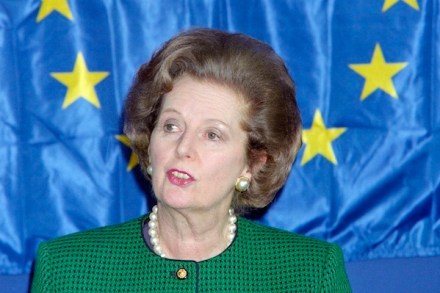
[audioplayer src="http://rss.acast.com/viewfrom22/fightingovercrumbs-euroscepticsandtheeudeal/media.mp3" title="James Forsyth and Vote Leave's Stephen Parkinson discuss Euroscepticsm"] Margaret Thatcher would have voted to stay in the European Union, her former foreign policy adviser Lord Powell writes in the Sunday Times today. Here, in an extract from his Spectator's Notes, Charles Moore, Lady Thatcher's official biographer, says she would have voted to Leave: On Tuesday night, at a Spectator readers’ evening, Andrew Neil interviewed me about my biography of Margaret Thatcher. He asked me if, after leaving office, Lady Thatcher had come to the view that Britain should leave the European Union.

Marco Rubio is the only candidate who understands America’s global role

From our UK edition

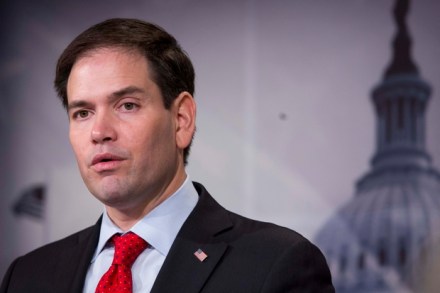
Last week, I was in the United States, where the media are even more subject to groupthink than their British equivalents. Fox News, supposedly the conservative voice, is really much more conformist than it pretends, and specialises in noisy opinion more than real news. The only person I met who got the Republican caucuses absolutely right was Chris Ruddy, founder and CEO of Newsmax, the conservative cable channel which claims to be in ‘42 million US homes’. He told me he thought Cruz would beat Trump and the real winner would be Marco Rubio. So it proves.

Is it Islamophobic to record ‘Christianophobic’ hate crimes?

From our UK edition

A freedom-of-information request by Sikhs has turned up some curious statistics from the Metropolitan Police. They show that of the more than 400 ‘Islamophobic hate crimes’ recorded in the first half of last year, 28 per cent were not attacks on Muslims at all. They were either attacks on people thought to be Muslims (often Sikhs) or attacks classified as Islamophobic because of the absurd criteria (invented by the Macpherson Report on the death of Stephen Lawrence) which define such incidents as ‘any offence which is perceived to be Islamophobic by the victim or any other person’.

The Spectator’s notes | 4 February 2016

From our UK edition

In 2000, the then Chancellor of the Exchequer, Gordon Brown, accused Magdalen College, Oxford, of class bias in failing to admit a student called Laura Spence, a pupil at a Tyneside comprehensive. This was grossly unfair — how could the Chancellor know the details of a particular case? It was also outrageous in principle: why should a politician tell a university whom to admit? This Sunday, David Cameron did much the same thing. In the middle of his EU negotiations, the migrant crisis and the other genuinely important things the Prime Minister must deal with, he found time to offer an article to the Sunday Times, headlined ‘Watch out, universities; I’m bringing the fight for equality to you’.

It’s depressing to see David Cameron engage in a culture war

From our UK edition

In 2000, the then Chancellor of the Exchequer, Gordon Brown, accused Magdalen College, Oxford, of class bias in failing to admit a student called Laura Spence, a pupil at a Tyneside comprehensive. This was grossly unfair — how could the Chancellor know the details of a particular case? It was also outrageous in principle: why should a politician tell a university whom to admit? This Sunday, David Cameron did much the same thing. In the middle of his EU negotiations, the migrant crisis and the other genuinely important things the Prime Minister must deal with, he found time to offer an article to the Sunday Times, headlined ‘Watch out, universities; I’m bringing the fight for equality to you’.

Cecil Parkinson: A man to remember

From our UK edition

Lord Cecil Parkinson, former Conservative Party chairman under Margaret Thatcher, has died at the age of 84. Parkinson was one of Thatcher's most trusted allies and served for 30 years in the Conservative front ranks. He was famously forced to resign in October 1983 when it emerged his secretary was pregnant with his child. Here, in an article written in August 1984 in the Spectator, Charles Moore pays tribute to Parkinson. Why not bring back Cecil Parkinson? it is asked. He may have been an erratic actor with a turbulent private life, but he brought a certain dash and glamour to the show which it now badly lacks. Constitutional experts point out that there are precedents for such a quick recovery from disgrace.

The Spectator’s Notes | 21 January 2016

From our UK edition

Many have rightly attacked the police for their handling of the demented accusations against Field Marshal Lord Bramall, now at last dropped. They ostentatiously descended on his village in huge numbers, chatted about the case in the pub and pointlessly searched his house for ten hours. But one needs to understand that their pursuit of Lord Bramall — though not their exact methods — is the result of the system. Because the doctrine has now been established that all ‘victims’ must be ‘believed’, the police must take seriously every sex abuse accusation made and record the accusation as a reported crime (hence the huge increase in sex abuse figures).

The police system for handling sex abuse accusations is absurd

From our UK edition

Many have rightly attacked the police for their handling of the demented accusations against Field Marshal Lord Bramall, now at last dropped. They ostentatiously descended on his village in huge numbers, chatted about the case in the pub and pointlessly searched his house for ten hours. But one needs to understand that their pursuit of Lord Bramall — though not their exact methods — is the result of the system. Because the doctrine has now been established that all ‘victims’ must be ‘believed’, the police must take seriously every sex abuse accusation made and record the accusation as a reported crime (hence the huge increase in sex abuse figures).

Survival advice for public sector workers

From our UK edition

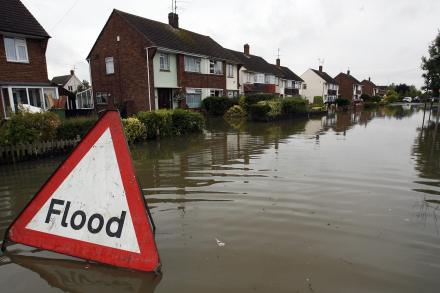
There should be a short booklet with a list of points for those about to take up public sector appointments — not the formal rules, which already exist, but certain informal tips for survival. One would be ‘Do not own — or at least visit in the winter — any house in a hot place abroad.’ The case of Sir Philip Dilley, the chairman of the Environment Agency, is in point. No doubt it would not have made the slightest practical difference if he had been around after Christmas to come and peer sympathetically at the victims of Cumbrian floods, but the idea that he was thousands of miles away — warm, rich, suntanned and wet only when he jumped into the Caribbean or his pool — was intolerable.

Forget Corbyn’s shambolic reshuffle: the Labour leader is winning

From our UK edition

No amount of reports in the press that Jeremy Corbyn’s shadow cabinet-making is farcical and his party is divided should distract us from the fact that he is winning. I don’t mean that he will become prime minister, or even (though this seems quite possible) that he will survive as leader until the general election. It is just that he is gradually bringing more and more of Labour under his control, and grinding down his opponents. Besides, his public positions are coherent — in the sense of being internally consistent — and he is quite accomplished at adhering to an undeviatingly hardline, left-wing ideology while sounding mild and decent.

The Spectator’s Notes | 14 January 2016

From our UK edition

No amount of reports in the press that Jeremy Corbyn’s shadow cabinet-making is farcical and his party is divided should distract us from the fact that he is winning. I don’t mean that he will become prime minister, or even (though this seems quite possible) that he will survive as leader until the general election. It is just that he is gradually bringing more and more of Labour under his control, and grinding down his opponents. Besides, his public positions are coherent — in the sense of being internally consistent — and he is quite accomplished at adhering to an undeviatingly hardline, left-wing ideology while sounding mild and decent.

If Britain votes to leave the EU, Scotland could vote to end Britain

From our UK edition

One of the things that worries me about a vote to leave the European Union (which I should like to cast) is that it might cause Scotland to vote to leave the United Kingdom. There’s not much point in ‘getting our country back’ if we then lose it, although I suppose English nationalists would not agree with my definition of ‘our country’. But the SNP threat needs thinking round carefully. First, a threat is not a fact. Second, it cannot be right to disaggregate the United Kingdom vote in a United Kingdom referendum. It will certainly be interesting to find out how Scots voted, but if they vote differently from England, this will not invalidate the overall result.

The Spectator’s Notes | 7 January 2016

From our UK edition

At the end of next week, a judge will decide whether the ‘trial of the facts’ can proceed now that its subject, Lord Janner, is dead. Janner was accused, on various occasions, of child abuse, though the Crown Prosecution Service, on three occasions, over more than 20 years, decided that there was no case to prosecute. The amazing Simon Danczuk, now himself accused of rape, used parliamentary privilege to accuse Janner of the same crime (plus torture). Last year, Janner was forced to appear in court, though senile. When his senility was upheld, his accusers resorted to a trial of the facts to get their day in court. They were pursuing this aim when Janner died last month. This procedure exists under the Insanity Act.

Charles Moore vs David Hare: a one-act play

From our UK edition

  Charles Moore and David Hare sit in the editor’s office at The Spectator, Hare on a brown leather chesterfield, Moore opposite him on the striped sofa once favoured by the former editor Boris Johnson for naps. Hare and Moore disagree on everything from God to Thatcher; capitalism to the Iraq war. But as Moore has recently noted in his column, both men grew up in the same place, near Bexhill on the East Sussex coast. They’re here for tea and to see if there’s anything on which they can agree.… Act I, Scene I CHARLES MOORE: In your book [The Blue Touch Paper] you describe the Bexhill I knew, but my feeling about it was completely different. I thought Bexhill was romantic. I liked the sort of thing that people criticise, like privet hedges and net curtains.

‘All he did done perfectly’

From our UK edition

In March 2006, I went looking for a hunter in Ireland. In a yard somewhere in Co. Limerick, I tried out a six-year-old bay and a five-year-old liver chestnut. ‘The bay had the better turn of speed,’ I recorded, ‘but was troublesome in the mouth. The build of the liver chestnut was also better. He jumped well… Apparently he won’t do banks, but that doesn’t matter in Sussex. Di was clear that the liver chestnut was the one.’ Di — Diana Grissell, Master of our hunt and carer of any horse I ride — is always right. So I bought the liver chestnut for £5,500. His Irish owner said, ‘He’s got a good lepp on him.

Why it is wrong for Christians to eat their wives

From our UK edition

In his column last week, Rod Liddle suggested that an alleged fatwa by a Saudi Arabian cleric had said it was permissible to eat one’s wife when suffering from ‘severe hunger’ gave him (Rod) the go-ahead to eat his own wife. Not so, surely. In the Christian religion and, indeed, the secular law of the United Kingdom, one can have only one wife at a time. If one has only one wife, it would be quite wrong to eat her. Under Islam, one can have up to four. Obviously this generous provision creates ‘spares’. Until recently, British marriage law was hidebound by tradition, but, before the last election, Parliament voted to abolish the previously general understanding that marriage has to be between a man and a woman.

The Tory leadership aren’t to blame for the death of Elliott Johnson

From our UK edition

When someone commits suicide, those close to that person naturally reproach themselves. In politics, and similarly contested areas of life, people reproach others too. So it is not surprising that when a 21-year-old Conservative party worker, Elliott Johnson, killed himself in September, accusations about Tory bullying arose. Judging from what is reported about Mark Clarke, the leader of the party’s campaign RoadTrip group, he should never have been in charge of any youth wing. But there are couple of other things to bear in mind. For some reason, it has not been reported, though it is widely said, that Mr Johnson had been in a relationship with a party colleague and that he had felt betrayed when the relationship was broken off.