Charles Moore

Charles Moore

Charles Moore is The Spectator’s chairman.

He is a former editor of the magazine, as well as the Sunday Telegraph and the Daily Telegraph. He became a non-affiliated peer in July 2020.

Channel 4 shouldn’t get to decide the next Archbishop

From our UK edition

Obviously, it is difficult to defend the leadership of the Church of England, and I am inexperienced in that art; but I do feel strongly that its episcopal appointments should not be controlled by Channel 4 News and Cathy Newman. This, in essence, is what is happening. First went Justin Welby, Archbishop of Canterbury, because Channel 4 News was determined to show that he had not reacted vigorously over the John Smyth scandal. (In my view, the Makin report failed to prove Welby’s culpability.) Next was the turn of the Bishop of Liverpool, John Perumbalath, forced out after Channel 4 News reported his alleged sexual assault against an unnamed woman and alleged sexual harassment of Bev Mason, the (female) Bishop of Warrington.

Trump is like Shakespeare’s Fool

From our UK edition

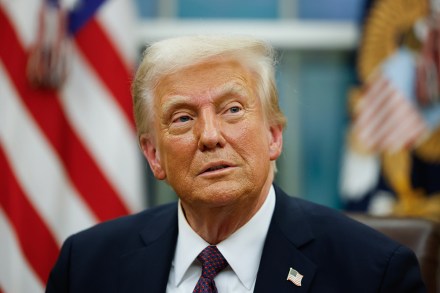
President Trump’s role in relation to other countries resembles that of the Fool in Shakespeare. He provides a sort of running satire on how rulers behave, and his antic wit expresses, amid the foolery, certain truths. In relation to Gaza, the prevailing idea of the ‘international community’ is that, because of the 7 October massacres and Israel’s subsequent decapitation of the Hamas leadership, the answer is ‘a two-state solution’. This orthodoxy is tragi-comic in its lack of reality. Mr Trump looks at the matter differently.

My message to the Trumpists

From our UK edition

Social media benefit from creating continuous belligerence in politics. For them, Donald Trump is the perfect politician. As I wrote last week, I think he is doing exciting things and I feel relieved that Kamala Harris lost. But it is impossible to support everything Mr Trump says or does. He never regards himself as bound by what he has previously said, so why should his followers seek to justify each piece of Trumpery? Since his victory in November, I have noticed several otherwise intelligent friends, all of them men, going crazy-culty about the dawning era – defending, for example, the removal of the security detail of Mike Pompeo, John Bolton and Brian Hook, or his pardon for all those convicted in the 6 January riots. It is nasty score-settling.

Will Trump remember his allies?

From our UK edition

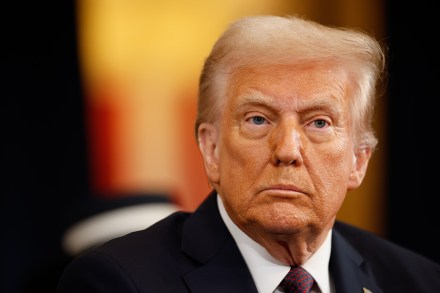
I had thought that having to be inaugurated indoors would have cramped Donald Trump’s style. Not so. The rhetoric with which he would have tried to fill the chilly air on the steps of the Capitol was even more exciting inside the crowded Rotunda. Only feet away from Trump, poor Joe Biden, Kamala Harris and behind them the Clintons shrank in their places, like captives paraded in ancient Rome after a military triumph. I experienced contradictory reactions.

The National Trust took the knee

From our UK edition

In a recent interview, Hilary McGrady, the director-general of the National Trust, complains that ‘The culture wars we’re trying to grapple with are never something I supported’. I do believe her: she is not a political warrior. But what she does not acknowledge – or possibly does not understand – is that it was the wokeists within the National Trust’s staff, and the outsiders they commissioned to help them, who started the fight. There would have been no unhappiness among members if, to improve historical understanding of Trust properties, more attention had been given to the origins – good, bad or something in between – of the money which built them.

We need safeguarding from safeguarders

From our UK edition

What does it mean, in practice, to say that reporting child abuse should be mandatory? It sounds appropriately severe, but it begs the question of what must be reported. It is rarely blindingly obvious that abuse has been committed or who has committed it: it is an iniquity that lives in the shadows. If the proposed law means that one must report every accusation or suspicion of child abuse, this would create an insane burden both on those who report and those – presumably chiefly the police – who must receive the report. Alexis Jay’s IICSA recommendations called for mandatory reporting of any child abuse ‘disclosure’; but surely personal judgment is needed about what, if anything, is being disclosed.

The joy of our village Christmas play

From our UK edition

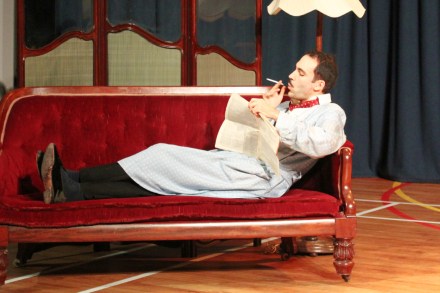
We are just recovering from the village play. This annual Christmas event was taken over last year by our son William, who writes it and acts in it, and his wife Hannah, who directs. Last year, it subverted the genre (as critics like to put it) of ghost stories. This year, it did a similar trick with whodunnits. It was entitled Death on the Dudwell, a reference to the trickle of a tributary which runs beside our fields. The play, set in 1935, opens with the idle would-be heir Arthur Prince (William) reading a contemporaneous Spectator on a sofa. It concerns the murder of his father, the unsavoury Lord Haremere (played by William’s former prep-school head, David Chaplin) who, though already dead before the play starts, has a good many lines.

The origin of The Spectator’s Parliamentarian of the Year Awards

From our UK edition

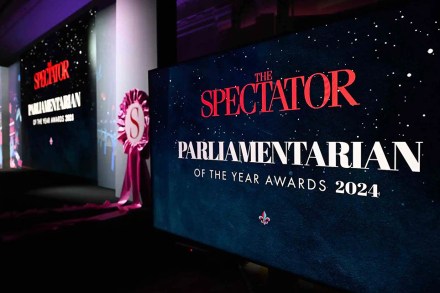
Forty years ago, a whisky company, Highland Park, which advertised its Famous Grouse in The Spectator, approached us with a sponsorship offer. It wanted a debating competition to gain attention among ‘opinion-formers’. I had just become the editor, and was interested, but thought that debating was already covered by rivals (e.g. the Observer Mace). How about awards for politicians, I suggested. That might get their attention. Obviously, the thing would work only if it were politically neutral, so the awards must be for parliamentary achievement alone, regardless of party. Highland Park liked this idea of crowding a chunk of what business likes to call ‘UK plc’ into one room. The Spectator Parliamentarian of the Year Awards were born and have continued annually except during Covid.

Farmers aren’t miners

From our UK edition

A parallel is being drawn between the Tories and the miners in the 1980s and Labour and the farmers today. On the left, there is an implied element of revenge: you screwed our people, so we’ll screw yours. It is true that the miners’ marches in London 40 years ago had much the same earthy atmosphere of ‘real people’ confronting authority as did the farmers’ rally this week. But in the end the comparison does not work. For the Conservatives, the miners themselves were not the enemy. The problem was the vast cost of uneconomic pits to the taxpayer and the declared determination of the NUM leader, Arthur Scargill, to bring down the government. Mrs Thatcher regarded the working miners, who refused to strike because Scargill would not allow them a strike ballot, as heroes.

Justin Welby shouldn’t have resigned

From our UK edition

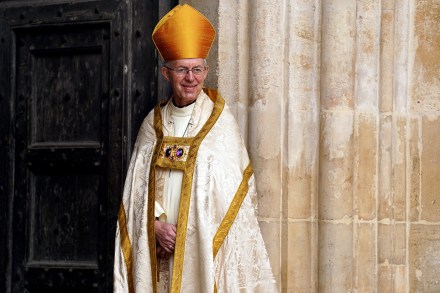
There is no proper reason for the resignation of the Archbishop of Canterbury, Justin Welby. No iniquity was proved against him. It has never been clear why, in the horrendous case of John Smyth, people thought the buck should stop with him. Smyth was never an Anglican priest (indeed, he was refused ordination), nor paid by the Church. When in England, he worked for the Iwerne Trust, an independent evangelical body. Most of the abuse Smyth perpetrated was when he took boys out from Winchester College to lunch with his family in the country nearby. In a hut in his garden, he beat the boys savagely, in the interests, he told them, of purifying them for God. The duty of care there was surely Winchester’s, not the C of E’s. That was all in the 1970s and 1980s.

The fascinating life of Sir Henry Keswick

From our UK edition

Sir Henry Keswick died on Tuesday, aged 86. Under his proprietorship, from 1975 to 1981, The Spectator recovered, and began the almost continuous growth in reputation and circulation it has enjoyed ever since. The key to his ownership was that he appointed the ideal editor, Alexander Chancellor, a friend from Eton and Cambridge, who was, Henry claimed, the only journalist he knew. Having done this, he sensibly did little more, other than cover the overdraft, which was bigger than the £75,000 price. He was the first-ever owner of the paper who was not also its editor. He gave it the freedom to flourish. The purchase of The Spectator was part of Henry’s programme for entering British politics.

Has the assisted dying lobby considered the guillotine?

From our UK edition

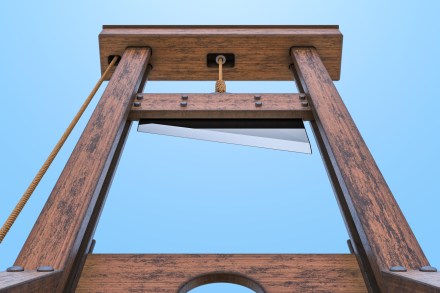
My young friend Dr Cajetan Skowkronski has helped me resolve a question that has been worrying me. Why do supporters of ‘assisted dying’ insist that the best method is a cocktail of pills (or intravenous injection)? Their prescription has an air of medical respectability, but this is not a medical process. The sole aim in assisting suicide is to achieve the quickest, least painful death. In a Twitter thread of Swiftian brilliance, Dr Skowkronski has the answer: ‘At the height of the French Revolution,’ he writes, ‘when large volumes of Assisted Deaths were taking place for the sake of noble aims, a compassionate physician, Dr Guillotin, felt that many of the prevailing methods were cruel.

The 38 candidates to be Oxford’s chancellor

From our UK edition

Being Cambridge, I thank God that we have no nonsense about electing our chancellor. We have had a blameless, unchallenged succession of eminent persons. Since 1900, three prime ministers (Balfour, Baldwin and Smuts), two military commanders, one royal Duke (Prince Philip), two great scientists (Lords Rayleigh and Adrian) and now that prince of commerce and philanthropy, Lord Sainsbury of Turville. Their presence has passed almost unnoticed, rightly so: a chancellor’s role is to be, not to do. Poor Oxford, however, has a form of democracy to choose its chancellor, and now has insanely extended its effective franchise by online voting. So there are 38 candidates, and pressure that they should stand for something or other, know how the university works and play a part in academic politics.

Why won’t David Lammy help Jimmy Lai?

From our UK edition

As I write, the Foreign Secretary, David Lammy, is flying to China. So I am only guessing when I say that I expect he will ‘raise’ the case of Jimmy Lai, the newspaper publisher, businessman and Democratic party supporter, a British citizen. Mr Lai has now been imprisoned in Hong Kong for four years with his numerous trials not yet completed. ‘Raise’, yes, but not as in ‘do anything about’ the situation. So far, the best the Foreign Office has done is to ‘request consular access’ to Mr Lai.

Who will dress Keir Starmer now?

From our UK edition

It is worth upholding the stuffy point which should have prevailed at the start. It was always improper and unethical for Sue Gray (formerly in charge of Propriety and Ethics in government) to leave the civil service to become Sir Keir Starmer’s chief of staff. In her beginning was her end. Carrying with her all her inside knowledge, she was almost a gamekeeper turned poacher, inspiring mistrust among career officials without winning the respect of the much rougher political crowd. To understand why she was unsuited to her job, one has only to imagine how the thing would look the other way round, with Morgan McSweeney being suddenly announced as, say, cabinet secretary.

The Tories’ Greek tragedy has reached its catharsis

From our UK edition

I write this as I leave the Tory conference in Birmingham. I have covered most of these events (and many Labour ones too) since the beginning of the 1980s. They do not lift the heart, but it is always interesting to watch the activity of the tribe. I attended the 1997 conference at Blackpool after the Tories had been broken by Tony Blair. William Hague had just become leader. The tribe was in a state of tongue-tied mourning. The party faithful were perplexed that the Conservatives had bequeathed extremely favourable economic conditions and public finances and yet had been utterly rejected. The trappings of power still hung about the agenda and the rituals, but Blair had ‘stolen hence the life of the building’. This time, though the defeat is even worse, the mood is far better.

Who’d be an MP now?

From our UK edition

Sir Keir Starmer offered a sausage to fortune when he let Lord Alli bankroll half the cabinet. One’s heart does not bleed for those ministers assailed for taking his gifts in cash and kind. They have spent the last few years being mercilessly sanctimonious. But their plight does confirm that being a Member of Parliament has become an ever more disagreeable life and is therefore pursued by people ever less representative of the population. The traditional compensation for MPs’ relatively low salaries was a) some freedom to earn money elsewhere and b) respect. Both have dramatically diminished. Deference meant, for example, that few dared disturb their MP at home at a weekend. Now constituents literally ring them up and demand they unblock their drains (I have been witness to this).

Do you have a ‘story’?

From our UK edition

As someone who worked full time in the office for 24 years and has now worked full time from home for nearly 21 – always, in both periods, on the staff – I can see both sides of the argument. But I do think the sequence matters. I would have had no idea how to work for my employers if I had begun at home. Indeed, the entire concept of a newspaper then – and even, to a large extent, now – depends on its collective capacity to find, write and edit news fast. Much of that stimulus comes from being in the same building. On Monday, Andy Jassy, the CEO of Amazon, wrote a longish letter to all employees about work methods. He praised his company’s ‘culture’, but asked whether it is best set up to ‘invent, collaborate, and be connected enough to each other’.

Rachel Reeves is right to cut the winter fuel payment

From our UK edition

Gordon Brown introduced the winter fuel payment shortly after becoming Chancellor of the Exchequer in 1997, following his party’s landslide victory. Rachel Reeves abolished the winter fuel payment shortly after becoming Chancellor in 2024, following her party’s landslide victory. Since others are shy of saying so, I want to point out that Mr Brown was wrong and Ms Reeves is right. The payment was a wasteful gimmick, addressing a problem better handled by the benefit system. If at least 80 per cent of the beneficiaries of something intended for the poor are not poor, the winter payment is ridiculous. Mr Brown loved such special devices because he instinctively liked to complicate welfare to create more dependency.

Starmer’s double standards

From our UK edition

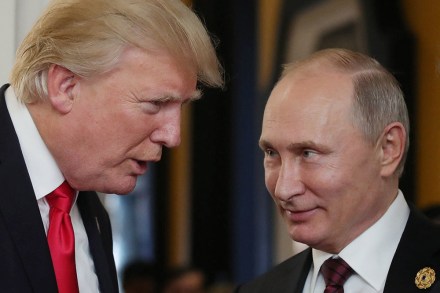
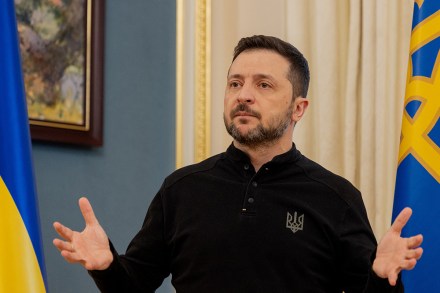
Sir Keir Starmer’s readiness to do ‘whatever it takes’ to support Ukraine seems to be qualified by his fear of offending the Biden administration. He wants to let Ukraine use British Storm Shadow missiles inside Russia but dares not, for fear of the White House. Surely if the special relationship were really strong, its junior partner would be confident enough to diverge occasionally. Think of Mrs Thatcher saying to George Bush senior, at the time of the first Gulf war, ‘This is no time to go wobbly’. In fact, however, Sir Keir is not even consistent: he is prepared to annoy the United States by making the worthless gesture of an embargo on tiny, selective arms-related sales to Israel, but not on missiles which could work decisively against Vladimir Putin.