Charles Moore

Charles Moore

Charles Moore is The Spectator’s chairman.

He is a former editor of the magazine, as well as the Sunday Telegraph and the Daily Telegraph. He became a non-affiliated peer in July 2020.

Revealed: Rodney Leach’s verdict on Brexit

From our UK edition

One of the most influential and learned figures in the British European debate is Rodney Leach. In the 1990s, he helped lead those of his fellow businessmen who became convinced that the abolition of the pound would be a disaster. He was a moving spirit in Business for Sterling and then in the ‘No’ campaign against the euro. This did much to persuade Gordon Brown, as Chancellor, to ditch euro entry plans in 2004. The following year, Lord Leach set up Open Europe, and continues as its chairman to this day. It is the most trusted think tank for research and debate on all EU questions, and is incredibly useful for the media because of its daily press digests, which enable us to follow the debate across the entire Continent.

If it’s forbidden to call a baby Cyanide, should Chardonnay be allowed?

From our UK edition

According to a recent law report in the Times, the Court of Appeal has just forbidden a mother to name her daughter Cyanide. The child was born to a schizophrenic woman, as the result of a rape. The girl is in local authority care. The mother’s lawyers argued that it is a statutory duty to register a child with a name and that the law has no provision to refuse offensive names. But Lady Justice King (itself a striking, though not offensive name) found that the choice of name was an act of ‘parental responsibility’. Because of the care order, this responsibility had devolved upon the local authority, which did not like the name Cyanide. So far, so good.

The Spectator’s Notes | 2 June 2016

From our UK edition

‘No one can seriously deny that European integration brought an end to Franco-German conflict and has settled the German question for good,’ wrote Niall Ferguson in the latest Sunday Times. I hesitate when confronted by such an assertion by such a learned professor. But I think I would seriously deny it, or at least seriously question it. Surely what brought an end to Franco-German conflict was the utter defeat of Nazi Germany. European integration was a symptom of that end, not its cause. As for settling the German question, isn’t it too early to say? The eurozone is the first large non-German area to have been dominated by Germany since 1945. It is a mess.

The Spectator’s notes | 26 May 2016

From our UK edition

Obviously there is no such thing as ‘Cameronism’, as there is ‘Thatcherism’; but once upon a time, David Cameron did have a project. It was called Tory modernisation, and his most imaginative adviser on the subject was Steve Hilton. At Policy Exchange, on Wednesday, Mr Hilton spoke, Mark Antony-like, over the dead body of Tory modernisation. On virtually every modernising count — localism, openness to the world, looking to the future, ignoring the interests of the rich — the EU is failing, he said. Yet Mr Cameron is staking his career on it. It is rather as if Mrs Thatcher, in her last years in office, were fighting flat out for nationalisation.

Jeremy Thorpe’s acquittal was a triumph for the jury system

From our UK edition

John Preston has just published a gripping account of the Jeremy Thorpe case, A Very English Scandal (Penguin). Sometimes the details make one laugh out loud or gasp with amazement at the tale of the shooting of Rinka, the Alsatian dog, and all that followed. But although I was completely carried along by the narrative, I found myself resisting the book’s implied conclusion that Thorpe’s acquittal of conspiracy to murder Norman Scott was a disgrace. Possibly I am biased, because my father worked for Thorpe over some of the period involved, writing his speeches and giving him political advice (luckily the personal and constituency sides of things never fell to him).

The Spectator’s notes | 12 May 2016

From our UK edition

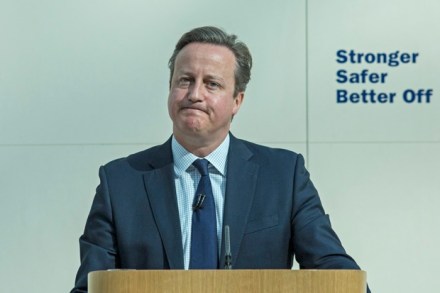
One of the many problems with David Cameron’s threat that leaving the European Union could plunge us into war is that it sits so strangely with how he spoke about the EU before he called a referendum. In those days, he was studiedly cool about the union: he had no sentimental attachment to it, he told us, just a pragmatic weighing of the advantages for Britain, depending on what he could obtain. His ‘deal’ for a ‘reformed Europe’, supposedly essential to recommending a Remain vote, contained no Tolstoyan themes at all, just stuff about when migrant EU workers could claim benefits and suchlike. When he now says, ‘By the way, if we leave we’re all going to die,’ one feels he should have thought of that earlier.

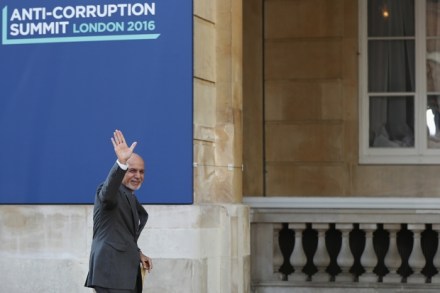
The anti-corruption lobby want to revive colonialism

From our UK edition

I am no tax expert, but when 300 economists, particularly if led by Jeffrey Sachs and Thomas Piketty, all agree about something — as 364 did that Mrs Thatcher, in 1981, was messing things up — one can be confident they are mistaken. The 300 want this week’s global anti-corruption meeting to clamp down on tax havens. This is, among other things, an attack on Britain, because they call on us and the United States to deal with ‘all countries for which they are responsible’. This ignores the fact that some such places — Jersey and Guernsey, for example — are not governed by Britain, though they share the same Queen; and that others, such as Bermuda, the British Virgin Islands or the Caymans, though colonies, have systems of self-government.

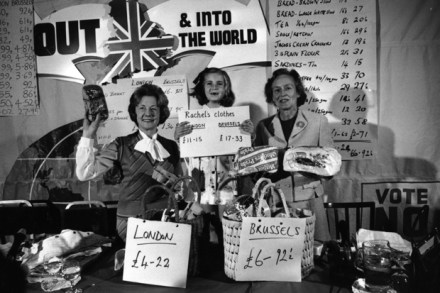
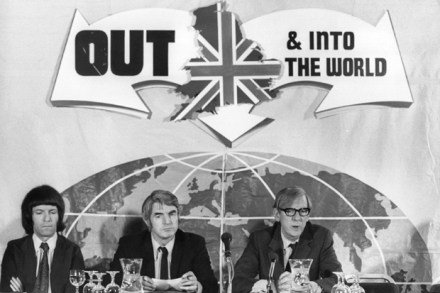
We didn’t have a real choice in the 1975 referendum. We do now

From our UK edition

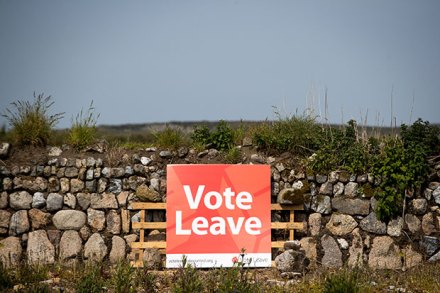
The comparison between the referendum questions — that asked in 1975 and the one which we shall be asked on 23 June — is interesting. In 1975, the question was ‘Do you think that the United Kingdom should remain part of the European Community (Common Market)?’ (Answer: Yes/No). Today, the question will be ‘Should the United Kingdom remain a member of European Union or leave the European Union?’ (Answer: Remain/Leave). The modern question is the fairer, and it also brings out how things have changed. In 1975, it seemed almost obvious that the answer was ‘yes’: even many who did not like EEC entry could see it was strange to leave only a couple of years after joining.

Why the FT’s Martin Wolf is wrong about the EU

From our UK edition

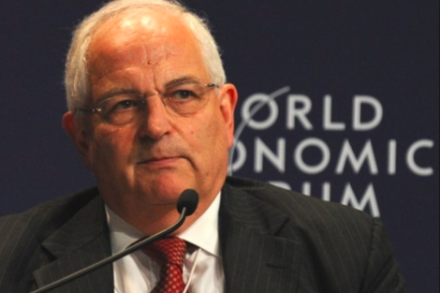
Last week, I wrote about the fevered state of mind of the Financial Times as British voters threaten to throw off their EU chains. Here is another example. Martin Wolf, usually the best columnist in the paper, wrote a column giving ten reasons to remain. He said: ‘Above all, those promoting departure ignore what the UK’s European partners think about the EU. Their political elites, particularly of Germany and France, regard the preservation of an integrated Europe as their highest national interests. They will want to make clear that departure carries a heavy price, which is likely to include attempts to drive euro-related financial markets out of London.’ Those who want to leave don’t ignore this at all!

The Spectator’s notes | 5 May 2016

From our UK edition

The comparison between the referendum questions — that asked in 1975 and the one which we shall be asked on 23 June — is interesting. In 1975, the question was ‘Do you think that the United Kingdom should remain part of the European Community (Common Market)?’ (Answer: Yes/No). Today, the question will be ‘Should the United Kingdom remain a member of European Union or leave the European Union?’ (Answer: Remain/Leave). The modern question is the fairer, and it also brings out how things have changed. In 1975, it seemed almost obvious that the answer was ‘yes’: even many who did not like EEC entry could see it was strange to leave only a couple of years after joining.

Sir Philip Green should not be stripped of his knighthood

From our UK edition

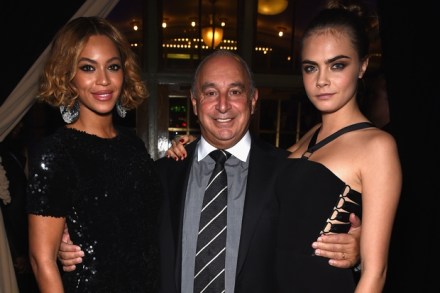
Possibly Sir Philip Green has behaved disgracefully in the matter of BHS. It does not follow that he should be stripped of his knighthood. Think of the consequences. At present, the promise of a knighthood can keep people who might otherwise be independent in line. But once a knighthood has been granted, it can hardly ever be revoked. This means the power of patronage dies. The recipient is no longer in the control of the patron. If knighthoods can be removed, then the power of patronage never goes away and people can be controlled by the government for the rest of their lives out of fear they might lose their title. This is an extract from Charles Moore's Notes. The full article can be found here.

Charles de Gaulle knew it: Britain does not belong in the EU

From our UK edition

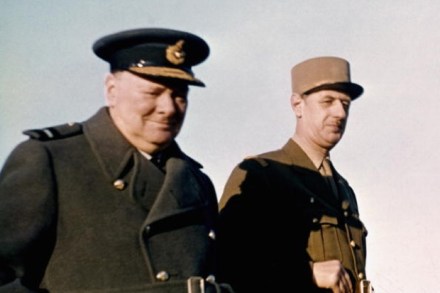
‘England in effect is insular, she is maritime, she is linked through her interactions, her markets and her supply lines to the most diverse and often the most distant countries; she pursues essentially industrial and commercial activities, and only slight agricultural ones. She has, in all her doings, very marked and very original habits and traditions.’ This classic Eurosceptic statement was made, as Daniel Hannan reminds us in his excellent book Why Vote Leave, by a great European, Charles de Gaulle. He was explaining why France was rejecting our attempt to join the EEC in 1963. The General understood what the European project was, and why Britain was not a natural part of it. More than 50 years on, is there much to add? This is an extract from Charles Moore's Notes.

The Spectator’s Notes | 28 April 2016

From our UK edition

‘England in effect is insular, she is maritime, she is linked through her interactions, her markets and her supply lines to the most diverse and often the most distant countries; she pursues essentially industrial and commercial activities, and only slight agricultural ones. She has, in all her doings, very marked and very original habits and traditions.’ This classic Eurosceptic statement was made, as Daniel Hannan reminds us in his excellent book Why Vote Leave, by a great European, Charles de Gaulle. He was explaining why France was rejecting our attempt to join the EEC in 1963. The General understood what the European project was, and why Britain was not a natural part of it. More than 50 years on, is there much to add?

The FT has become the Daily Mail of the Europhile elite

From our UK edition

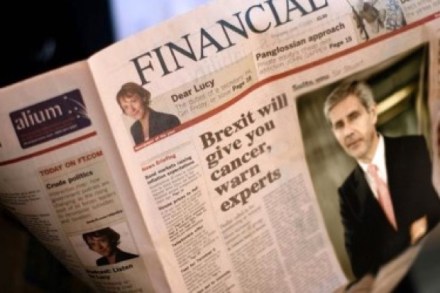
An enjoyable aspect of the EU referendum campaign is the nervous condition of the Financial Times. Unable to maintain its usual pretence at judicious balance under the strain, it has become the Daily Mail of the Europhile global elites, warning of the Seven Plagues which will afflict us if we vote to leave. Rather as the Mail loves the headline beginning ‘Just why…?’, so the FT all-purpose referendum headline begins ‘Fears mount…’ Its star columnists like Philip Stephens and Janan Ganesh pour withering scorn on Eurosceptic ‘nostalgists’ and bigots.

As Matt Ridley discovered, public appointments go to ‘green’ candidates

From our UK edition

In last Saturday’s Daily Telegraph, I mentioned how outside candidates for civil service and public appointments feel ill-used by the system. My piece prompted more correspondents. One tells me that little effort was made, when he applied for a permanent secretaryship, to give him the information about the post which was available to insiders but not to people like him. The question on which he had five minutes to speak was ‘The Secretary of State has set out a number of clear priorities for the Department, covering safety and wellbeing of children, educational excellence and preparing young people for adult life; as well as the equalities agenda. How would you lead the Department to deliver successfully on these priorities?

The Spectator’s notes | 21 April 2016

From our UK edition

The ‘remain’ campaign is having some success with the line that the ‘leave’ camp cannot say what Britain outside the EU would look like. (Nor can the ‘remain’ campaign, of course, though it doesn’t stop it trying.) But it is crucial to the ‘leave’ cause that it resist the temptation to set out a plan. ‘Remain’ wants it to fall into the SNP trap in the Scottish referendum of proposing something which can then be picked apart. There is a cast-iron reason why ‘leave’ cannot do this. Even if we vote to leave, the ‘leave’ campaign, unlike the SNP in the Scottish vote, will not form a government. It is a campaign in a referendum, not a party in or bidding for office.

Simon Danczuk’s ‘dark place’ excuse should be used more widely

From our UK edition

If you are caught doing something bad nowadays, what you are supposed to say (the latest exponent is Simon Danczuk MP, the anti-child abuse zealot, after ‘sexting’ a 17-year-old girl) is: ‘I was in a very dark place at the time.’ At present, the phrase is used to half-excuse sexual misbehaviour, drug-taking and the like. I hope it will extend more widely, as in ‘Mr Osborne, why did you create the Office of Budget Responsibility to make economic forecasting independent of the Treasury, and then use the Treasury to concoct an economic forecast to frighten people into voting to stay in the EU?’ A shamed Chancellor: ‘I was in a very dark place at the time.’ This is an extract from Charles Moore's Notes.

Why are we ignoring David Furnish?

From our UK edition

For some reason, possibly homophobic, the media just now is refusing to give any coverage to David Furnish, the spouse of Sir Elton John. I think they are trying to suppress an important argument that Mr Furnish made recently. He pointed out how discriminatory it was that, unlike the wife of a titled man, he derives no title from his knighted spouse. He was too modest to say what title he should be given — and I must say I cannot think of a solution, since ‘Lady John’ would make him sound like the wife of the younger son of a duke — but it is the principle of the thing which matters. Actually, Mr Furnish’s point goes wider than he recognises: the problem also afflicts the male spouses of titled women, such as Prince Philip.

The EU has become a victim of Obama’s Middle East policy

From our UK edition

A Middle Eastern friend put to me the other day a point so big that I felt silly for not having thought of it. Why are so many people fleeing from Syria and Iraq, and other parts of the region, beyond the huge, obvious reason that they fear for their lives? Because they believe that the Shias have gained the whip hand over the Sunnis. George Bush’s mishandling of Iraq after he conquered it opened the way for Iranian power. Barack Obama’s abandonment of Saudi Arabia, his refusal to restore order in Syria and his nuclear deal with Iran have erected this mistake into a policy. So one of this policy’s victims is the EU. This is an extract from Charles Moore's Notes. The full article is available here.

The Spectator’s notes | 14 April 2016

From our UK edition

I don’t think there is a Royal College of Public Relations, but if there were, it should teach a course based on a comparison between two stories last week. One concerned the Prime Minister and the other the Archbishop of Canterbury. Both arose from the paternity of the principals and, in both cases, the principals had not done anything wrong. Yet there the similarities end. David Cameron, and those working for him, spent the best part of a week fending off and then changing a story they found embarrassing. Justin Welby, and his much smaller staff, confirmed the truth of a potentially much more painful story in one go, bravely and clearly.