Charles Moore

Charles Moore

Charles Moore is The Spectator’s chairman.

He is a former editor of the magazine, as well as the Sunday Telegraph and the Daily Telegraph. He became a non-affiliated peer in July 2020.

The Spectator’s Notes | 13 October 2016

From our UK edition

Given all the outrageous things that Donald Trump has done and said already, why has he got into so much worse trouble for dirty remarks about women taped more than ten years ago? He gets away with dog whistle politics but not, seemingly, with wolf whistle ones. Some might say this is because of political correctness; or because his evangelical supporters, while not necessarily offended by his violent views, disapprove of his lewdness; or both. But my theory about sex scandals in politics is that they are not, strictly speaking, about morality. They are tests of how the accused man (or, much more rarely, woman) behaves when attacked. Does he seem odious or contrite, arrogant or charming? If he lies, does he do it beguilingly?
King Bhumibol’s death stops all the clocks in Thailand

From our UK edition

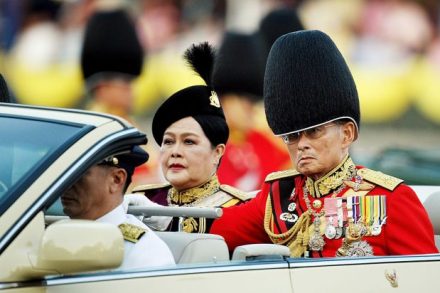
The sad news that King Bhumibol of Thailand is no longer of this world is causing considerable perplexity, because even when it became clear the King was ill, it was not possible for Thais to talk about his death. It seems that this is partly because it is a form of treason in Thailand to encompass the death of the sovereign, but also that, in Thai culture, the personal grief felt at his death will be so great that the thought of it is literally unspeakable. So foreign businesses, visitors, diplomats etc cannot find out what will actually happen when he dies, having reigned since 1946. Rumour suggests that there may be ten days of mourning so total that Bangkok airport will close down and no one will be able to leave the country.

Theresa May has helped Brexit seem doable

From our UK edition

People attack the whole business of having an EU referendum, but one of its pluses was that it invited millions of people who had never before been asked to form an opinion on the European question to do so. They responded thoughtfully — perhaps more thoughtfully than people do in general elections when a sizeable minority vote pretty much automatically for one party or another. We quickly developed a much more educated electorate. The idea, strongly touted immediately after the result, that the voters’ majority view could be set aside by Parliament because they didn’t know what they were talking about has almost completely vanished from political debate, with the noisy exception of interventions by Kenneth Clarke.

Theresa May’s plain style is a blessed relief

From our UK edition

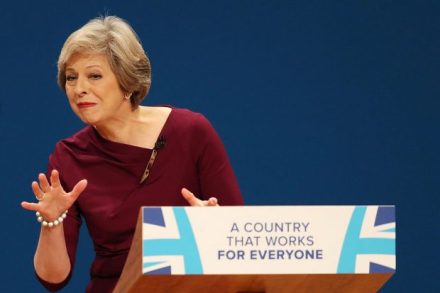
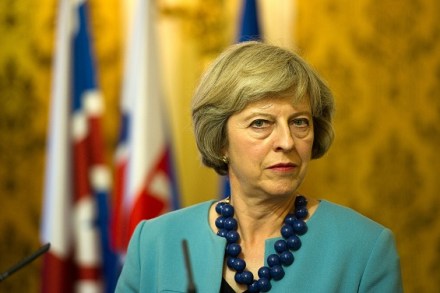
Mrs May’s plain style may well come to irritate people in a few months, but just now it is extremely popular. The lack of glamour, soundbites, smart clothes, and ministerial overclaiming is a blessed relief. I can’t pretend that I find Mrs May an endearing figure, but when she said in her speech that Britain should not go round saying ‘We are punching above our weight’ (a phrase beloved of the Foreign Office), I almost wanted to hug her. There isn’t even much party knockabout. In the old days, any speech which made some pathetic jibe against ‘the brothers last week in Blackpool’ could be guaranteed laughter and applause.

The Spectator’s Notes | 6 October 2016

From our UK edition

 Birmingham Checking in to my hotel room on the 18th floor, for the Conservative party conference here, I opened the door and bumped into a workman on a stepladder. ‘Sorry,’ he said, ‘They shouldn’t have let you in. All the water came through from the room upstairs.’ He was painting over the damage. Then he looked at me, recognised me and asked, ‘Hard or soft Brexit, then?’ I burbled slightly, not being happy with the distinction, but eventually said I thought ‘hard’ better described what was needed. The painter told me he read the Guardian and the Telegraph every day to ‘get both sides’. He reckoned ‘hard’, too: ‘It’s got to be divorce.

The science – and politics – of climate change

From our UK edition

Matt Ridley, well known to Spectator readers, is giving the Global Warming Policy Foundation’s Annual Lecture on 17 October, at the premises of the Royal Society. The venue has annoyed New Scientist magazine. How dare the great home of science give house room to ‘those who deny climate science’, asks the paper’s ‘biology features editor’, Michael le Page. He hates the ‘false balance’ which presents opposing views. Revealing his own opinions to be more political than scientific, he cites the example of the US presidential election, where ‘the media’s abject failure to tackle Trump has let him get within spitting distance of the presidency’.

Why I’d never wear red corduroys

From our UK edition

The Spectator Book of Wit, Humour and Mischief (Little, Brown) is just out, launched at a party at the paper’s offices where — wittily, humorously and mischievously — no copies were available. I have now procured one and can report that I laughed a lot when reading it. In his introduction, the book’s editor, Marcus Berkmann, describes how I appointed him the magazine’s one and only pop critic, a post he was to hold with distinction for 27 years. He alleges that when we first met I was sitting in The Spectator’s then offices in Doughty Street ‘wearing the brightest red corduroys I had ever seen’. ‘If a pair of trousers can ever be said to be intimidating,’ Marcus goes on, ‘these could.

Meet the German business giant who is excited about Brexit

From our UK edition

Mathias Döpfner, the extremely tall, extremely intelligent head of Axel Springer, is unusual in the generally conformist German business elite because he is not an unqualified believer in the German economic model. I have known him slightly for about 20 years and have always been interested by his questing, speculative mind. We have had conversations about the freer, Anglosphere model of economic life which he admires. Although he is not anti-EU — that is still almost against the law in Germany — he is sceptical of its direction. Now he has blasphemed in the EU’s main church in Britain — the Financial Times — by telling the paper that within three to five years he would expect Britain, as a result of Brexit, to be better off than its former EU partners.

The Spectator’s Notes | 29 September 2016

From our UK edition

Mathias Döpfner, the extremely tall, extremely intelligent head of Axel Springer, is unusual in the generally conformist German business elite because he is not an unqualified believer in the German economic model. I have known him slightly for about 20 years and have always been interested by his questing, speculative mind. We have had conversations about the freer, Anglosphere model of economic life which he admires. Although he is not anti-EU — that is still almost against the law in Germany — he is sceptical of its direction. Now he has blasphemed in the EU’s main church in Britain — the Financial Times — by telling the paper that within three to five years he would expect Britain, as a result of Brexit, to be better off than its former EU partners.

Trump fans should be proud to call themselves ‘the Deplorables’

From our UK edition

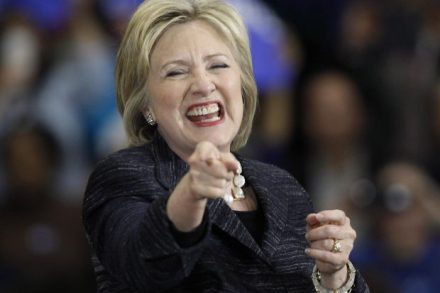
Hillary Clinton hazarded that half of Donald Trump’s supporters are a ‘basket of deplorables’. The Kaiser called the BEF a ‘contemptible little army’, Aneurin Bevan called the Tories ‘lower than vermin’ — and in both cases, those so named took up the insult as a badge of pride: the Old Contemptibles, the Vermin Club. I hope the Deplorables will organise as such, and march on Washington in their millions. This is an extract from Charles Moore’s Notes. The full article is available here.

Christian criticism of Israel is myopic

From our UK edition

A Methodist church in Hinde Street, London, is exhibiting ‘You cannot pass today: Life through a dividing wall’, a reconstruction of a border control point between Israel and the occupied territories. The purpose, needless to say, is not to show how to deal with a terrorist threat, but to attack Israel’s oppression of Palestinians. A Jewish human rights group which has written to protest has been told, soapily, by the minister, ‘I respect your passionate concern for these issues…This exhibition… has been carefully curated… to promote reflection and prayers for peace.’ I have noticed these wall protests popping up on campuses etc., and they never seem either reflective or prayerful. They are propaganda.

The V&A’s director is an accidental Bremoaner hero

From our UK edition

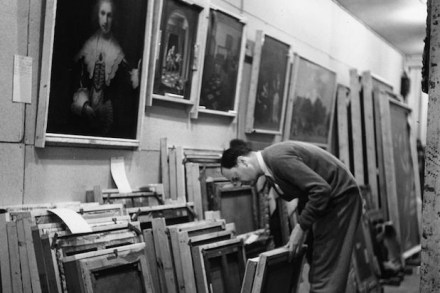
When I read that Martin Roth, the director of the V&A, was resigning from his job because of Brexit, I sensed it was not quite true. I did not doubt the sincerity of Dr Roth’s views: he has his German generation’s horror of anything which could be presented as ‘nationalism’. It was rather that it did not make sense as a motive for leaving his post. Brexit won’t actually happen until roughly the time when Dr Roth would have left anyway, so it could not have impeded his work. Besides, the collections of the V&A are not at the slightest risk of attack for being ‘decadent’ art under the May regime. My hunch seems to be right.

The Spectator’s Notes | 22 September 2016

From our UK edition

When I read that Martin Roth, the director of the V&A, was resigning from his job because of Brexit, I sensed it was not quite true. I did not doubt the sincerity of Dr Roth’s views: he has his German generation’s horror of anything which could be presented as ‘nationalism’. It was rather that it did not make sense as a motive for leaving his post. Brexit won’t actually happen until roughly the time when Dr Roth would have left anyway, so it could not have impeded his work. Besides, the collections of the V&A are not at the slightest risk of attack for being ‘decadent’ art under the May regime. My hunch seems to be right.

Why is the RSPB picking on grouse moors?

From our UK edition

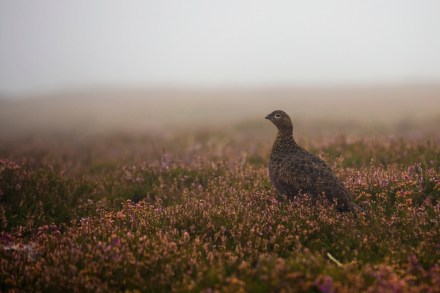
The Twelfth of August was heralded for me by an email from the RSPB. ‘RSPB warns driven grouse does not have a future without change’. Jeff Knott, the head of the society’s nature policy, goes on to say that ‘The illegal killing of birds of prey like the hen harrier must end, and sadly this tars the reputation of every grouse moor estate and every shooter.’ It would be wearisome (not least because Matt Ridley’s piece last week set it all out so well) to go through how most such accusations about the killing of hen harriers are false, how hen harriers do better on kept moors than on unkept ones, and how grouse moors do a great service to upland species diversity.

The 17.4 Million Committee must be launched, urgently

From our UK edition

When it was reported that Liam Fox and Boris Johnson are already squabbling about who should be in charge of what in relation to Brexit, this was taken by some to be a feather in Theresa May’s cap. Isn’t she clever to have set Leavers against one another, was the thought. Downing Street sources were quoted as saying that she took a dim view of these silly games. But if it is true that Cabinet ministers are already at loggerheads about their roles, might that not suggest that the Prime Minister who invented these roles — and entire new government departments — has not properly defined them?

The Spectator

From our UK edition

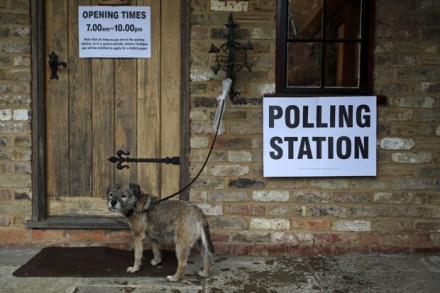
When you vote in Britain, there is a relaxed feeling in the polling stations. This is a long-established part of our culture, the atmosphere seems to say, and you are trusted to follow its rules. But, as Sir Eric Pickles’s review of electoral fraud suggests, the ballot is not nearly as secure as it should be. If that trend continues, the results will be called in doubt, and then democracy really is in trouble. For a long time, I have suspected the process and so, in the recent EU referendum, I tried a couple of experiments, helped by the fact that I am legally registered to vote in London as well as Sussex (though of course one may cast only one vote in a national election or referendum). In Sussex, I went to the polling station early.

Why was I able to ‘vote’ twice in the EU referendum?

From our UK edition

When you vote in Britain, there is a relaxed feeling in the polling stations. This is a long-established part of our culture, the atmosphere seems to say, and you are trusted to follow its rules. But, as Sir Eric Pickles’s review of electoral fraud suggests, the ballot is not nearly as secure as it should be. If that trend continues, the results will be called in doubt, and then democracy really is in trouble. For a long time, I have suspected the process and so, in the recent EU referendum, I tried a couple of experiments, helped by the fact that I am legally registered to vote in London as well as Sussex (though of course one may cast only one vote in a national election or referendum). In Sussex, I went to the polling station early.

The Spectator’s Notes | 11 August 2016

From our UK edition

Those who want to revive grammar schools are accused of ‘bring backery’ — the unthinking idea that the past was better. But many of their accusers suffer from the rigid mindset of which they complain. They say that grammar schools ‘condemned most children to failure at the age of 11’, and that, even at their peak, grammars catered for less than 20 per cent of the school population. Why assume that the return of grammars must re-create either of these things? Grammar schools grew up, historically, in different ways and at different times. Then, in the mid‑20th-century mania for uniformity, they were standardised and, in the later 20th-century mania for comprehensives, almost completely abolished.

The other Remainers who deserve the Légion d’Honneur

From our UK edition

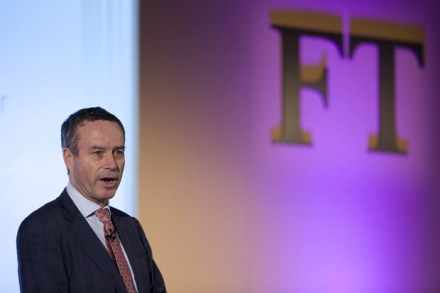
Congratulations to Lionel Barber, editor of the Financial Times, who accidentally revealed that he is to be awarded the French Légion d’Honneur for his ‘positive role in the European debate’. One’s only slight sadness is that Mr Barber has had to look abroad for such recognition. In his resignation list, David Cameron has showered honours on similarly ‘positive’ Remainers in his entourage, but ungratefully omitted the media.  So more Légions d’Honneur, please, for Katharine Viner, the editor of the Guardian, Zanny Minton Beddoes, the editor of the Economist, and the entire staff of the BBC. This is an extract from Charles Moore's Notes. The full article can be found here.

Brexit gives Theresa May the perfect excuse to stay in Britain

From our UK edition

Just now, Theresa May understandably feels the need to fly to a great many European countries to introduce herself to their leaders. But one of the eventual benefits of leaving the European Union ought to be that prime ministers can mostly stay at home. The number of leaders’ meetings that ‘Europe’ generates is terrifying. It takes heads of government out of their own country virtually every working week. Being a Type 1 diabetic, Mrs May is particularly vulnerable to funny hours, exhausting journeys and enormous banquets. With Britain out of the EU, she could flourish by staying here and — as good prime ministers used very successfully to do — dominating the House of Commons. This is an extract from Charles Moore's Notes. The full article can be found here.