Charles Moore

Charles Moore

Charles Moore is The Spectator’s chairman.

He is a former editor of the magazine, as well as the Sunday Telegraph and the Daily Telegraph. He became a non-affiliated peer in July 2020.

The Spectator’s Notes | 24 November 2016

From our UK edition

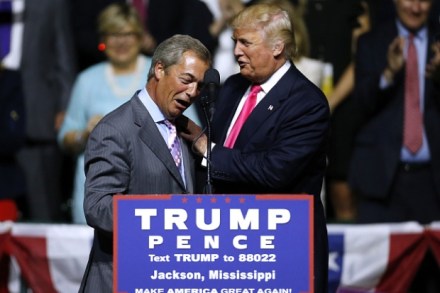
It is not self-evidently ridiculous that Nigel Farage should be the next British ambassador to the United States. The wishes of the president-elect should not automatically be discounted. John F. Kennedy’s wish that his friend David Ormsby-Gore (Lord Harlech) should be ambassador was granted. It is also not true that the post must be filled by a professional, or that the Prime Minister should not appoint a political rival to the post. Churchill gave the job to his main rival, Lord Halifax, from 1940. Certainly Mr Farage is not the conventional idea of a diplomat, but then Mr Trump is not the conventional idea of a president. Although its own leadership emerged from the same global convulsions, our government is slow to grab the advantages offered by this new world.

JFK picked his own British ambassador. Why shouldn’t Trump?

From our UK edition

It is not self-evidently ridiculous that Nigel Farage should be the next British ambassador to the United States. The wishes of the president-elect should not automatically be discounted. John F. Kennedy’s wish that his friend David Ormsby-Gore (Lord Harlech) should be ambassador was granted. It is also not true that the post must be filled by a professional, or that the Prime Minister should not appoint a political rival to the post. Churchill gave the job to his main rival, Lord Halifax, from 1940. Certainly Mr Farage is not the conventional idea of a diplomat, but then Mr Trump is not the conventional idea of a president. Although its own leadership emerged from the same global convulsions, our government is slow to grab the advantages offered by this new world.

Why Conrad Black was right about the genius of Trump

From our UK edition

At least two former Spectator figures understood things about the recent American contest which eluded most commentators. The first is our former proprietor, Conrad Black. Disagreeing with the anti-Trump conservative National Review, for which he writes, Conrad filed a powerful piece at the time of Trump’s nomination: ‘What the world has witnessed, but has not recognised it yet, has been a campaign of genius.’ He enumerated virtually every issue where Trump was nearer to the voters than Democrats, the media, and other Republicans. The second is Ambrose Evans-Pritchard, nowadays the Telegraph’s international business editor.

Why is this church offering diva pics and videos?

From our UK edition

In Northern Ireland recently, I sought out the Mass times of the local Church of the Immaculate Conception. Its website duly listed them, but I was surprised to find roughly half its web-page filled with a picture of a young woman’s all-but-naked torso and the invitation to click for more ‘Diva pics and videos’. I couldn’t tell whether this was a viral invasion or an Irish parish’s highly unimmaculate conception of how to make extra money for its good causes. When I met the priest, I was about to ask him, but he looked so young. I remembered that this is still the Year of Mercy, and stayed silent.

The Spectator’s Notes | 17 November 2016

From our UK edition

On a day when much fuss was being made about ‘false news’ on the net, it was amusing to study the Times splash of Tuesday, greedily repeated by the BBC. It concerned a ‘leaked’ memo, ‘prepared for the Cabinet Office’ and ‘seen and aided by senior civil servants’. The memo, from a Deloitte employee, was in fact unsolicited. It was not a bad summary of why the government’s Brexit plans are confused, but its status was merely that of journalism without an outlet. By the use of the single word ‘leaked’, a piece of analysis was turned into ‘news’ — false news. At least two former Spectator figures understood things about the recent American contest which eluded most commentators.

Will Trump produce merchandise for his ‘basket of deplorables’?

From our UK edition

When, in September, Mrs Clinton consigned ‘half’ of Mr Trump’s supporters to what she called the ‘basket of deplorables’, I reminded readers of how some people grab an insult from their opponent with pride (see Notes, 24 September). The ‘Iron Lady’ is a classic example — intended by Red Star newspaper to mock Margaret Thatcher. I mentioned the Vermin Club. This was a response to Aneurin Bevan’s claim that the Tories were ‘lower than vermin’, and quickly attracted a large membership among Conservatives in the late 1940s. A kind reader, Mr Philip Lewis, has just sent me the club’s badge. It is a handsome metal square, depicting a fat, recumbent rat with a long, well-curled tail, and the single word ‘VERMIN’.

Gillon Aitken: A great literary agent we all looked up to

From our UK edition

Gillon Aitken, the great literary agent, who has just died, was a reserved man. It is an admirable and brave thing to be in a culture which increasingly mistakes reserve for coldness. All Gillon’s communications, written or oral (I was one of his authors), were exact and economical. One could find this disconcerting, but what he said was what needed saying, and was conveyed with charm. He possessed no notebook, and would write minimal jottings on his cigarette packets. It used to puzzle me that such a literary man as Gillon was not a writer manqué sort of agent (though he translated Pushkin with great elegance): he dealt skilfully with money issues and never attempted to be ‘the midwife to genius’.

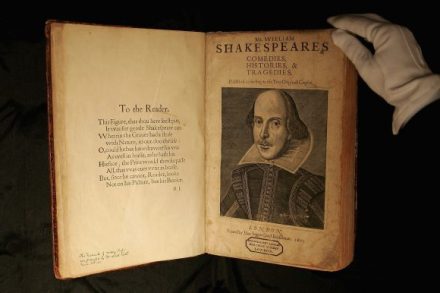
Larkin, Keats and Hardy can all be summed up in a word – but not Shakespeare

From our UK edition

What can be said in a word? A lot, if you are a poet. Poets annex familiar words and empower them. Sometimes a single word, as used by them, can provide a key to their whole work. Here are some examples. (In this game, I permit two words if one is a definite or indefinite article or a preposition.) Blake: ‘lamb’; Milton: ‘high’; Keats: ‘blushful’; Gray ‘in vain’; Cowper: ‘stricken’; Tennyson: ‘the deep’; Pope: ‘Man’ (not ‘man’); Housman: ‘lad’; Burns: ‘lass’; Herbert: ‘sweet’; Hardy: ‘darkling’; Larkin: ‘almost’; Betjeman (this a good suggestion by my wife): ‘Aldershot’. In the case of T.S.

The Spectator’s Notes | 3 November 2016

From our UK edition

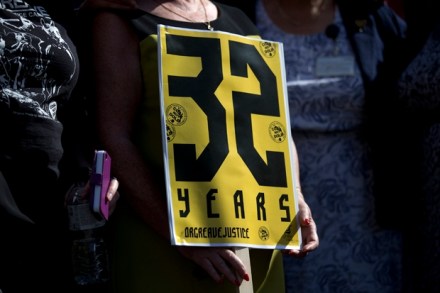
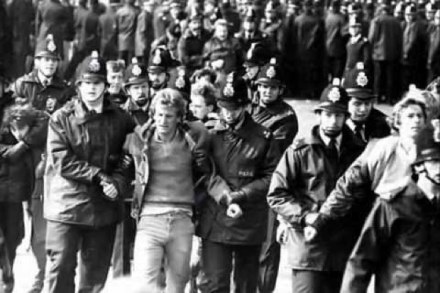
It is a great relief that there will be no inquiry into the ‘Battle of Orgreave’ in 1984. The weirdness is that Mrs May’s people ever entertained the thought in the first place. The push for an inquiry is a classic example of the attempt by the aggrieved, usually on the left, to turn history into a trial. If we were to inquire into the miners’ strike, more than 30 years on, it would be far more pertinent — though still a very bad, divisive idea — to establish the full facts about how Arthur Scargill got money from Gaddafi’s Libya and was promised it by the Soviet Union. The Independent Inquiry into Child Sexual Abuse is current proof of how retributive urges make a just process impossible.

Hillary Clinton’s bad luck with sex scandals

From our UK edition

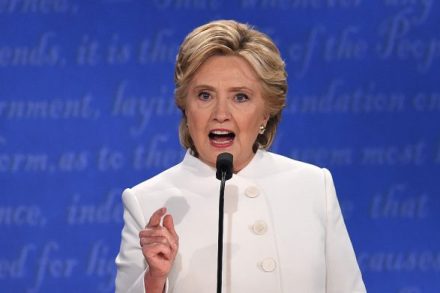
It is such bad luck for Mrs Clinton that her last-minute troubles have come upon her because of the curious 21st-century men’s habit of sending pictures of their genitals to people via social media (‘Dickileaks’, is what the New York Post calls the scandal). If only Anthony Weiner, ex-congressman and recently estranged husband of Mrs Clinton’s close assistant Huma Abedin, had refrained from this pastime, and from ‘sexting’ a 15-year-old girl, it seems unlikely that the FBI would have excavated the family computers. Then Mrs Clinton would have had a clearer run at the White House. It should be a major advantage of the woman candidate in any political race that she is, on average, much less likely than the male to be caught up in this sort of thing.

A ‘Battle of Orgreave’ inquiry would have been a complete travesty

From our UK edition

It is a great relief that there will be no inquiry into the ‘Battle of Orgreave’ in 1984. The weirdness is that Mrs May’s people ever entertained the thought in the first place. The push for an inquiry is a classic example of the attempt by the aggrieved, usually on the left, to turn history into a trial. If we were to inquire into the miners’ strike, more than 30 years on, it would be far more pertinent — though still a very bad, divisive idea — to establish the full facts about how Arthur Scargill got money from Gaddafi’s Libya and was promised it by the Soviet Union. The Independent Inquiry into Child Sexual Abuse is current proof of how retributive urges make a just process impossible.

Why I’d rather be called mate, sir or Mr Moore, than Charles

From our UK edition

Would you like to be called Charles or Mr Moore?’ my bank asked me when I rang with a query. In the past I have always responded ‘Charles’, because it sounds pompous to insist on one’s surname. But the truth is that I would much rather be called ‘Mr Moore’, or ‘sir’, or ‘mate’, than be addressed by my Christian name by people I have never met. So this time I plucked up courage and said, ‘Mr Moore, please.’ There was an intake of breath at the other end. I got the impression that no one says what I had just said: the only correct answers are ‘Charles’ or ‘I don’t mind’. My interlocutor could not bring herself to name me at all for the rest of the conversation.

The Spectator’s Notes | 27 October 2016

From our UK edition

World leaders are preoccupied nowadays with what is known as their ‘legacy’. In practice, this means being linked with moral-sounding projects, rather than embedding clear achievements. Barack Obama is even more obsessed with legacy than his predecessors. What might be his final way of showing this? Some suggest he will order the United States to abstain if France brings forward its planned UN Security Council resolution calling for a Palestinian state, thus permitting the resolution to pass. If so, he will bring no peace, but who cares? He will have signalled his virtue.

It’s not Alan Turing who needs an apology

From our UK edition

My invitation to the Pink News dinner (where David Cameron won an award) on Wednesday night promised ‘an inspirational evening’ which would be a ‘celebration of the contritions of politicians, businesses, and community groups’ after ‘another historic year for LGBT equality’. I assumed, at first, that ‘contritions’ was a misprint for ‘contributions’, but maybe not. Contrition for any deed committed or word spoken against gay people in the past is now compulsory for all who wish to take part in public life, rather as Catholics must be absolved before taking communion. I agree that the criminalisation of consenting, adult, private, homosexual acts was cruel madness. But I am suspicious of all this breast-beating.

We should be flattered not threatened by France’s bid to take on the City

From our UK edition

The French are trying to seduce the British to come and work in Paris. A video hymns the delights of La Defense, the Gallic Canary Wharf. It is a healthy Brexit effect that the French now feel that they can no longer fight the City of London solely by trying to regulate it, and must try persuasion instead. The prospect of British departure reawakens the spirit of competition in a continent which had largely replaced it with bureaucracy. By leaving, Britain ought to win first-mover advantage in this contest, but even if we don’t, we will have done a service to our neighbours which we could never have managed if we had voted to stay.

The Spectator’s notes | 20 October 2016

From our UK edition

Vote Leave was the most successful electoral campaign in British history. Against the opposition of all three political parties, it won, achieving the largest vote for anything in this country, ever. But voting to leave is only the essential start, not the fulfilment, and now there is no Vote Leave. After victory, the campaign’s leaders went their various ways. Some were lulled into a false sense of security by Mrs May’s clear declaration of Brexit intent, and by the fact that one of their top colleagues, Stephen Parkinson, is now installed in 10 Downing Street. Nick Timothy, now all-powerful in Mrs May’s counsels, was running the New Schools Network during the campaign.

Donald Trump has truly shown his nasty side

From our UK edition

Given all the outrageous things that Donald Trump has done and said already, why has he got into so much worse trouble for dirty remarks about women taped more than ten years ago? He gets away with dog whistle politics but not, seemingly, with wolf whistle ones. Some might say this is because of political correctness; or because his evangelical supporters, while not necessarily offended by his violent views, disapprove of his lewdness; or both. But my theory about sex scandals in politics is that they are not, strictly speaking, about morality. They are tests of how the accused man (or, much more rarely, woman) behaves when attacked. Does he seem odious or contrite, arrogant or charming? If he lies, does he do it beguilingly?

The Spectator’s Notes | 13 October 2016

From our UK edition

Given all the outrageous things that Donald Trump has done and said already, why has he got into so much worse trouble for dirty remarks about women taped more than ten years ago? He gets away with dog whistle politics but not, seemingly, with wolf whistle ones. Some might say this is because of political correctness; or because his evangelical supporters, while not necessarily offended by his violent views, disapprove of his lewdness; or both. But my theory about sex scandals in politics is that they are not, strictly speaking, about morality. They are tests of how the accused man (or, much more rarely, woman) behaves when attacked. Does he seem odious or contrite, arrogant or charming? If he lies, does he do it beguilingly?

King Bhumibol’s death stops all the clocks in Thailand

From our UK edition

The sad news that King Bhumibol of Thailand is no longer of this world is causing considerable perplexity, because even when it became clear the King was ill, it was not possible for Thais to talk about his death. It seems that this is partly because it is a form of treason in Thailand to encompass the death of the sovereign, but also that, in Thai culture, the personal grief felt at his death will be so great that the thought of it is literally unspeakable. So foreign businesses, visitors, diplomats etc cannot find out what will actually happen when he dies, having reigned since 1946. Rumour suggests that there may be ten days of mourning so total that Bangkok airport will close down and no one will be able to leave the country.

Theresa May has helped Brexit seem doable

From our UK edition

People attack the whole business of having an EU referendum, but one of its pluses was that it invited millions of people who had never before been asked to form an opinion on the European question to do so. They responded thoughtfully — perhaps more thoughtfully than people do in general elections when a sizeable minority vote pretty much automatically for one party or another. We quickly developed a much more educated electorate. The idea, strongly touted immediately after the result, that the voters’ majority view could be set aside by Parliament because they didn’t know what they were talking about has almost completely vanished from political debate, with the noisy exception of interventions by Kenneth Clarke.