Charles Moore

Charles Moore

Charles Moore is The Spectator’s chairman.

He is a former editor of the magazine, as well as the Sunday Telegraph and the Daily Telegraph. He became a non-affiliated peer in July 2020.

Too many Hoggs spoil it for Charlotte

From our UK edition

Charlotte Hogg forgot to tell the Bank of England, of which she had been appointed deputy governor, that her brother Quintin is director of strategy at Barclays bank. She has had to resign. There is something strange about this story. After all, if the Bank of England did not know already that her brother held this position, its knowledge of the banking world it is supposed to supervise must be thin indeed. You can see why Miss Hogg might have assumed that those appointing her knew already, and so have given it no thought, rather as Tony Blair and David Cameron probably never thought to put in the Register of Interests as lawmakers that their brothers are QCs.

The Spectator’s Notes | 16 March 2017

From our UK edition

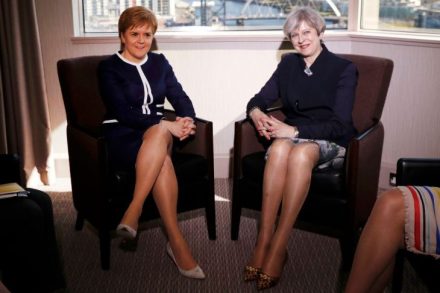
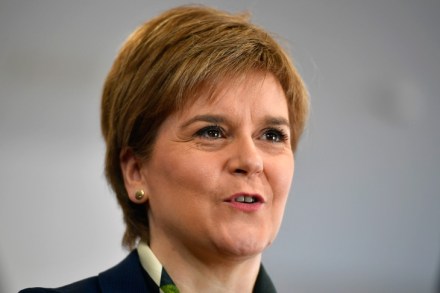
The great achievement of the Scottish Nationalists is to persuade people outside the borders of their own nation — including the London-based media — to equate them with the Scottish people. Obviously, they are their chief elected representatives just now, but the result of the referendum on Scottish independence quite clearly showed that the equation is false. So when Nicola Sturgeon says there has to be another referendum because of Brexit, the equation should be much more firmly challenged. There is no moral reason why the result of a declaredly UK-wide referendum should require another vote in part of the kingdom (next, UDI for London?). Nor is there a constitutional right.

Sturgeon’s great trick has been to convince us the SNP represent all Scots

From our UK edition

The great achievement of the Scottish Nationalists is to persuade people outside the borders of their own nation — including the London-based media — to equate them with the Scottish people. Obviously, they are their chief elected representatives just now, but the result of the referendum on Scottish independence quite clearly showed that the equation is false. So when Nicola Sturgeon says there has to be another referendum because of Brexit, the equation should be much more firmly challenged. There is no moral reason why the result of a declaredly UK-wide referendum should require another vote in part of the kingdom (next, UDI for London?). Nor is there a constitutional right.

Remembering Tristan Voorspuy, who was recently killed in Kenya

From our UK edition

After he left the Blues and Royals in 1981, the young Tristan Voorspuy drove a motorbike from London to Cape Town. Thus began his love of Africa. He also learnt to fly, and arranged to travel alone to Kenya from England in a single-engine aeroplane, using only a schoolboy atlas. Luckily, his brother Morvern, a professional pilot, heard of this plan and prevented it. But Tristan reached Kenya by other means, and became a Kenyan citizen. For 30 years, he was a leading conservationist there and set up and ran the accurately named firm Offbeat Safaris, which allows guests to ride among the great beasts of Africa.

The Spectator’s Notes | 9 March 2017

From our UK edition

After he left the Blues and Royals in 1981, the young Tristan Voorspuy drove a motorbike from London to Cape Town. Thus began his love of Africa. He also learnt to fly, and arranged to travel alone to Kenya from England in a single-engine aeroplane, using only a schoolboy atlas. Luckily, his brother Morvern, a professional pilot, heard of this plan and prevented it. But Tristan reached Kenya by other means, and became a Kenyan citizen. For 30 years, he was a leading conservationist there and set up and ran the accurately named firm Offbeat Safaris, which allows guests to ride among the great beasts of Africa.

In defence of Lord Heseltine

From our UK edition

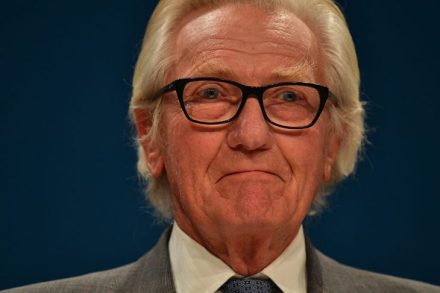
Lord Heseltine has been denounced because he says he will vote against the government over Brexit in the House of Lords. It seems terrifically unfair. Has there ever been an occasion, in his long political career, when he has not been in favour of British membership of the EU (or EEC)? Why should he change now, aged 83, from that honourably held, spiritedly asserted, if wrong, position? Can’t a few Europhiles, in the mirror-image of John Major’s Eurosceptic ‘bastards’, be bastards too? The only inconsistency in Hezza’s last stand is that this is the one time in his half-century stance on Europe when he has asserted the right of Parliament to decide anything.

Excusing a huge group of paedophiles isn’t the answer to tackling child abuse

From our UK edition

Chief Constable Simon Bailey, who heads Operation Hydrant, the police investigation of ‘non-recent’ child abuse cases, now says that paedophiles who view images of child abuse should not be prosecuted, because police cannot cope with the numbers involved. Mr Bailey is wedded to the doctrine that someone who says he is an abuse victim must automatically be believed. The result, said Sir Richard Henriques in his scathing report on Operation Midland, is that the criminal justice system totters: ‘Chief Constable Bailey’s argument ignores the consequences of false terminology.’ Another consequence is that the child abuse statistics, unchecked, explode.

The Spectator’s Notes | 2 March 2017

From our UK edition

Chief Constable Simon Bailey, who heads Operation Hydrant, the police investigation of ‘non-recent’ child abuse cases, now says that paedophiles who view images of child abuse should not be prosecuted, because police cannot cope with the numbers involved. Mr Bailey is wedded to the doctrine that someone who says he is an abuse victim must automatically be believed. The result, said Sir Richard Henriques in his scathing report on Operation Midland, is that the criminal justice system totters: ‘Chief Constable Bailey’s argument ignores the consequences of false terminology.’ Another consequence is that the child abuse statistics, unchecked, explode.

There’s a simple way of dealing with the BBC’s TV licence bullies

From our UK edition

Congratulations to the Daily Mail for exposing the unpleasant methods by which TV Licensing’s staff make people pay their television licence fees. Capita, the company that does the dirty work for the BBC, encourages its employees to use ‘ruthless and underhand tactics’ to collect the money, says the Mail. The paper offers painful examples of the victims — ‘RAF man with dementia, mum in a women’s refuge’. It could have added ‘veteran Spectator columnist’, since these activities were first exposed on this page in 2006, when I got fed up with being pursued by Capita to buy a TV licence for a flat without a television. The Mail correctly identifies the unpleasant incentive system, but it doesn’t get to the heart of the issue.

Is Michael Gove angling for a cabinet return?

From our UK edition

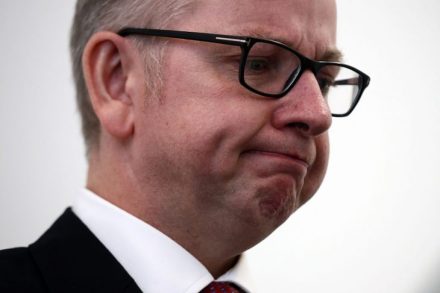
I never expected to be writing the following, since Michael Gove is, to me, one of the few heroic figures in modern politics. But he did write a very strange column in the Times last week, inciting the government to ‘Put VAT on school fees and soak the rich’. He seems to be outraged that what he calls ‘the education of the children of plutocrats and oligarchs’ is a charitable activity. Private schools get rate rebates, VAT exemptions and free uniforms, weapons etc for their cadet forces, he says. This is ‘egregious state support’. He also mocks the many bursaries provided by public schools, on the grounds that these have ‘left behind’ all those who do not receive them.

Saying sorry to Liverpool is a politician’s rite of passage

From our UK edition

As Paul Nuttall, the Ukip leader, has recently discovered, there usually comes a point in a British political career when you have to apologise to Liverpool. The origins of this custom are obscure, rather like the rule that the Cap of Maintenance must accompany the Sovereign to the State Opening of Parliament, but it must not be questioned. It is no good asking why Liverpool should receive more apologies than, for instance, Runcorn or Milton Keynes: you must just say sorry. Rather than having to stammer an inconvenient ‘mea culpa’ at a by- election it would be more sensible to get your apology in first.

The Spectator’s Notes | 23 February 2017

From our UK edition

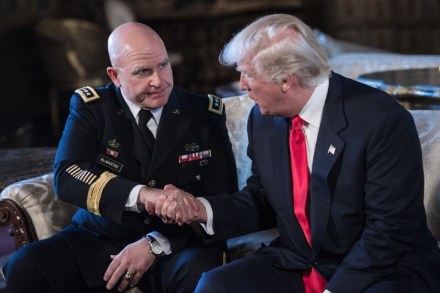
Last month, at Policy Exchange, I met a charming, quiet American general called H.R. McMaster. In conversation, I was struck by his zeal for Nato and his concern wherever the alliance is now weakest, as in Turkey. In his speech to the thinktank, he said clearly that Russia and China are attempting to ‘collapse’ the post-1945 and post-Cold War ‘political, economic and security order’, with unconventional forces hiding behind conventional ones, subversion, disinformation, propaganda, economic actions and ‘proxies’ such as organised crime networks. The situation had echoes of 1914, and the risk of a great-power war was the highest for 70 years.

George Osborne is to blame for the business rates fiasco

From our UK edition

It is almost always unwise to postpone the introduction of a big, scheduled tax change, but often tempting at the time. George Osborne, when Chancellor of the Exchequer in the coalition government, postponed the revaluation of business rates, when it was due two years ago, for obvious political reasons. So now it is happening, and it hurts worse than it would have then. The current rates are based on the rental value of business properties in 2010. Since then, the scene is transformed. The internet has called the whole concept of the ordinary, physical shop into question. Values have vastly altered and the political problem – as with the poll tax in the 1980s – is that losers are more vocal than gainers.

The obsession with diversity in theatre risks spoiling Shakespeare

From our UK edition

Twelfth Night launched at the National Theatre this week, with Malvolio turned into Malvolia. ‘We’ve definitely upped the gender-bendedness of the play,’ says Phoebe Fox, who is acting Olivia. Otiose, one might think, since the original is gender-bent to perfection. But Shakespeare did not have to wrestle with the strict controls now demanded in the subsidised theatre. In the same feature in which Phoebe Fox speaks, Ben Power, the deputy director of the National, tells the Sunday Times, ‘There are agendas we are aware of now, and we have targets in terms of gender and ethnicity, because we want to be as diverse as possible, speaking to our audiences, reflecting the nation to them.

What does Putin’s fascination with Eton tell us about him?

From our UK edition

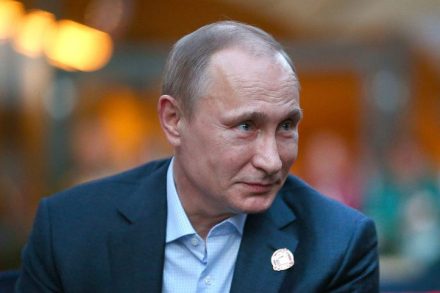
How does Vladimir Putin think about the world? It becomes dangerously important to know. I still have not seen a revealing speech by or discussion with him. I have found out a bit more, however, about the two-hour private interview conducted with him by several young Etonians last summer. One reason they got into the room, it seems, is that Mr Putin wanted to know about Eton and why it produced 19 prime ministers. The boys explained that one of the school’s great advantages was its societies — Political, Literary, Cheese etc. — largely organised by them, not by masters. They said these brought them into contact with a wide range of visiting speakers, broadening their minds.

The Spectator’s Notes | 16 February 2017

From our UK edition

How does Vladimir Putin think about the world? It becomes dangerously important to know. I still have not seen a revealing speech by or discussion with him. I have found out a bit more, however, about the two-hour private interview conducted with him by several young Etonians last summer. One reason they got into the room, it seems, is that Mr Putin wanted to know about Eton and why it produced 19 prime ministers. The boys explained that one of the school’s great advantages was its societies — Political, Literary, Cheese etc. — largely organised by them, not by masters. They said these brought them into contact with a wide range of visiting speakers, broadening their minds.

It’s no surprise that many Brexiteers are feeling anxious

From our UK edition

Although I started it, I apologise for prolonging an intercolumnar argument. Matthew Parris (4 February) is surely right that many Brexiteers in past months have been showing signs of anxiety. He attributes this to being ‘secretly, usually unconsciously, terrified that they’ve done the wrong thing’. This may be part of it — it would be a strange person, after making such a momentous decision, who felt no qualms — but I don’t think it is the chief explanation. Our real fear is that, having come so far, we might be cheated of what we thought we had achieved.

John Bercow’s Trump intervention was out of order

From our UK edition

As we have been reminded this week, the most famous words (apart from ‘Order, order’) ever uttered by a Speaker of the House of Commons were those of William Lenthall. When King Charles I entered Parliament in search of the ‘five birds’ in 1642, Lenthall knelt to the King but told him, ‘I have neither eyes to see, nor tongue to speak in this place but as the House is pleased to direct me.’ It is only on that basis that the Speaker speaks. As soon as John Bercow said — of the speculative possibility that Donald Trump should address both Houses of Parliament — ‘I feel very strongly that our opposition to racism and sexism’ meant that the speech should not take place, he was out of order.

The Spectator’s Notes | 9 February 2017

From our UK edition

As we have been reminded this week, the most famous words (apart from ‘Order, order’) ever uttered by a Speaker of the House of Commons were those of William Lenthall. When King Charles I entered Parliament in search of the ‘five birds’ in 1642, Lenthall knelt to the King but told him, ‘I have neither eyes to see, nor tongue to speak in this place but as the House is pleased to direct me.’ It is only on that basis that the Speaker speaks. As soon as John Bercow said — of the speculative possibility that Donald Trump should address both Houses of Parliament — ‘I feel very strongly that our opposition to racism and sexism’ meant that the speech should not take place, he was out of order.

The Spectator’s Notes | 2 February 2017

From our UK edition

As he left the editorship of The Spectator in March 1984, Alexander Chancellor wrote in this space: ‘When I joined the paper as editor in 1975, people were in the habit of asking me what my “policy” was going to be… How desperately uneasy this question made me. If there was a lavatory in the vicinity, I would lock myself inside it. I was sure I ought to have a “policy”… but I most certainly hadn’t got one.’ As his assistant editor, I witnessed the dismay on the faces of proprietors, advertisers and various big shots at Alexander’s answers to this sort of question.