Charles Moore

Charles Moore

Charles Moore is The Spectator’s chairman.

He is a former editor of the magazine, as well as the Sunday Telegraph and the Daily Telegraph. He became a non-affiliated peer in July 2020.

The Grenfell inquiry outcome must not be predetermined

From our UK edition

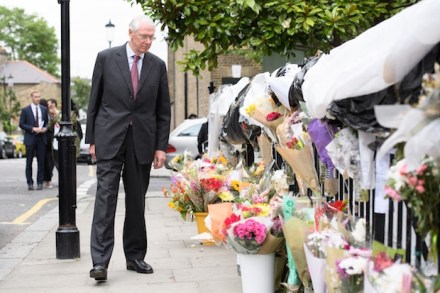
Having worked flat-out to defend judges over the Article 50 case in the Supreme Court, the BBC has gone the other way, in relation to the judiciary, over Grenfell Tower. Its news coverage is working hard to displace the retired judge Sir Martin Moore-Bick from his appointment to chair the inquiry into the fire. Groups purporting to speak for the Grenfell victims are given airtime to denounce him. The idea is that they and their activist lawyers are entitled to a veto on who runs any inquiry, thus attaining effective control of what it decides. Something similar led to the hopeless, expensive collapse of chairman after chairman in Theresa May’s misguided independent inquiry into child sexual abuse. This is not in the public interest.

The Spectator’s notes | 6 July 2017

From our UK edition

Having worked flat-out to defend judges over the Article 50 case in the Supreme Court, the BBC has gone the other way, in relation to the judiciary, over Grenfell Tower. Its news coverage is working hard to displace the retired judge Sir Martin Moore-Bick from his appointment to chair the inquiry into the fire. Groups purporting to speak for the Grenfell victims are given airtime to denounce him. The idea is that they and their activist lawyers are entitled to a veto on who runs any inquiry, thus attaining effective control of what it decides. Something similar led to the hopeless, expensive collapse of chairman after chairman in Theresa May’s misguided independent inquiry into child sexual abuse. This is not in the public interest.

The preposterous pomp of Emmanuel Macron

From our UK edition

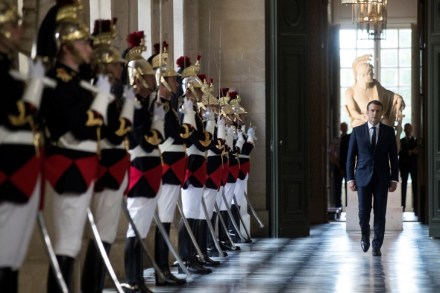
President Macron’s speech on Monday to the combined houses of parliament in the Palace of Versailles proved how stunningly different are the French from the British. Imagine our head of state promising to cut the size of parliament by a third. Imagine her, or even her prime minister, promising to renew the nation with ‘the spirit of conquest’, as M. Macron did. We are often accused of nostalgia for empire, but we would never say such a thing, or even think it. Imagine the ribaldry which would descend upon M. Macron’s equivalent — if our constitution could have such a phenomenon — for striding though the marble halls past a guard of honour holding their swords erect, and then dumping more than an hour of grandiloquence upon the assembly.

There’s a more dangerous Brexit ‘cliff-edge’ which is being ignored

From our UK edition

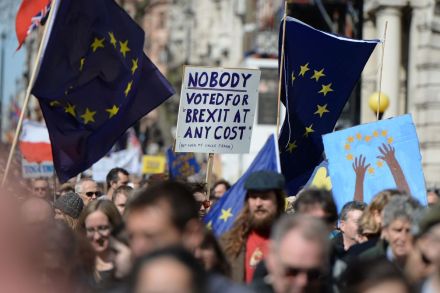
People like Philip Hammond say that we must at all costs avoid a ‘cliff-edge’ in the Brexit negotiations. But the more dangerous cliff-edge is the political one. If, having voted to Leave, we do so in name but not in fact, the elites will have frustrated the ballot box, and faith in the democratic process will plunge to its death. This is Holmes versus Moriarty at the Reichenbach Falls. Just now, Moriarty has the upper hand. But remember that Holmes survived, because Conan Doyle had to revive him — by popular demand.

The Spectator’s Notes | 29 June 2017

From our UK edition

At Guildhall on Tuesday, the Centre for Policy Studies held its Margaret Thatcher Conference on Security. Its title is an implied reproach to the way security is seen by current governments. You couldn’t have a Barack Obama Conference on Security, or a Donald Trump one, because neither cares about the subject. You could, I suppose, have a Theresa May Conference about Security, but that would have nothing to say about international institutions and alliances, the values of democracy, totalitarian ideology, and the needs of global defence. It would concern itself with second-order subjects like the surveillance of terrorist suspects and the state of deportation law. Many have complained that the Tory election campaign failed to preach any Conservative economics.

Brexit backsliding fears are stronger than ever

From our UK edition

In February, Matthew Parris wrote that Brexiteers seemed very anxious, despite having won. He thought this was because they were ‘secretly, usually unconsciously, terrified that they’ve done the wrong thing’. The following week, I suggested that our undoubted anxiety was more likely attributable to fear that ‘having come so far, we might be cheated of what we thought we had achieved’. Exactly a year after the referendum, this fear of being cheated is even stronger. Last week, the Chancellor of the Exchequer, Philip Hammond, came within an ace of saying in public that Britain must not leave the customs union, thereby undermining the negotiating position of the government in which he serves.

The Spectator’s Notes | 22 June 2017

From our UK edition

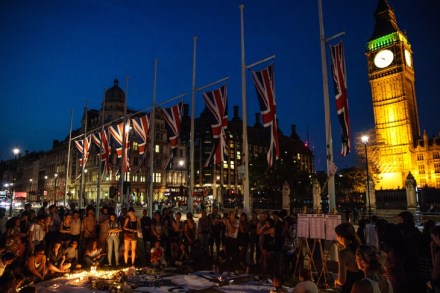
How much longer can it go on? Deaths caused by terrorism are always followed now by candlelit vigils, a minute’s silence, victims’ families/ government ministers/emergency services/clergy/imams all clustered together, walls of messages and flowers, flags at half-mast. Instinctively, I feel uneasy because the meaning of it all gradually suffers attrition, and also, perhaps, because it asserts a solidarity which isn’t quite there. Yet the fundamental cause of mourning is true and deep enough — it is first for the dead, then for a civilisation which may be dying. In these pages, on 4 February, Matthew Parris wrote that Brexiteers seemed very anxious, despite having won.

The Spectator’s Notes | 15 June 2017

From our UK edition

Before knowing the result of the election, I composed my Chairman’s message in the newsletter of the Rectory Society. In it, I noted that Theresa May was the third prime minister in a row to have been brought up in a parsonage house. The first was Gordon Brown, son of the Scottish manse. The second was David Cameron, inhabitant of an old rectory owned by his stockbroker father. And now there was Mrs May, only child of a High Anglican vicar in Oxfordshire. ‘Whatever our political views,’ I went on, ‘I feel we [in the Society] should be proud of the fact that the buildings we love continue to produce unusual people capable of leading our country’.

The Spectator’s Notes | 8 June 2017

From our UK edition

By the time you read this, the campaign will have drawn fractiously to its close, so here is a strong overall impression drawn from it, which stands whatever the result. Watching a large number of debates and question and answer sessions with party leaders and the public, I noticed, even more insistent than in the past, the righteous tone of the recipient (or would-be recipient) of state money. Whether it was a teacher or health worker, a person on benefits, a young woman wanting her tuition fees paid, or an old man sitting on a house worth (say) £750,000 and demanding that the state bear his putative long-term care needs so that he will not have to sell it, the speaker almost always seemed to possess an impermeable sense of being a virtuous, wronged person.

The Spectator’s Notes | 1 June 2017

From our UK edition

At Mass on Sunday, we were issued with a letter from the Catholic Bishops’ Conference, entitled ‘The General Election 2017’. It set out questions which Catholics should ask candidates. These included the ‘uncertain future’ of EU citizens in Britain and British citizens in the EU, rehabilitation in prisons, immigration, overseas aid, welfare services. All important issues, of course. But it was striking what we were not invited to raise. Nothing about how high spending and taxation might burden poorer taxpayers. No subject in which the interests of UK citizens (who, after all, are the people for whom any British election takes place) come first.

The Spectator’s notes | 25 May 2017

From our UK edition

In most parts of the world, we have now supped so full of terrorist horrors that the death of 22 people in such a terrible way does not feel decisively worse than what has gone before. You can tell this by the rather pro forma things that politicians say to condemn the attacks. Yet again, the attack is described as ‘cowardly’. This is simply untrue: it must require immense, though repellent, courage to blow yourself up. The other word to avoid is ‘innocent’. It is a word naturally, and rightly, applied to children, but it carries the dangerous implication that some terror attacks might be aimed at the ‘guilty’, and therefore be more forgivable.

The new Equalities Act only increases the risks for mental illness sufferers

From our UK edition

Mrs May promises to amend the Equalities Act to prevent employers from ‘unfairly’ dismissing those with mental disorders. It is a laudable aim, but imagine what would happen if businesses had to keep on a disturbed worker. Imagine what it would be like, not only for the employer, but for the other employees. In her speech on ‘the shared society’ in January, Mrs May pitched into the ‘burning injustice of mental health and inadequate treatment’. In doing so, she praised the ‘tremendous campaigning work by Black Mental Health UK’. Again, this was rash. Mental health is an over-politicised subject, and organisations like Black Mental Health UK help make it so.

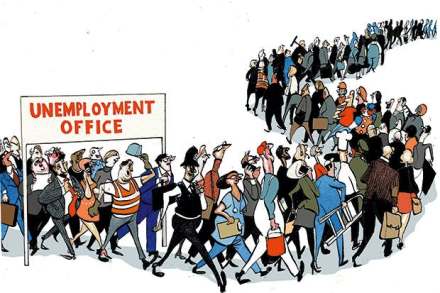
Do the Tories want to become the party of unemployment?

From our UK edition

‘Exclusive invitation: I want to hear from you, Charles’, it said in my inbox. Theresa May wanted me to take part in her ‘telephone town hall’, she told me, offering ‘an opportunity to voice your opinions and ask questions directly to me in a simple and open way’. Unfortunately, the line was open only between 7 and 8 on Tuesday night, and I was engaged elsewhere. One thing I might have asked was ‘Who do you listen to before you say something in public?’ Although Mrs May has a reputation for caution, she is capable of throwing out ideas which sound as if they have not been tested on the people they might affect.

The Spectator’s Notes | 18 May 2017

From our UK edition

‘Exclusive invitation: I want to hear from you, Charles’, it said in my inbox. Theresa May wanted me to take part in her ‘telephone town hall’, she told me, offering ‘an opportunity to voice your opinions and ask questions directly to me in a simple and open way’. Unfortunately, the line was open only between 7 and 8 on Tuesday night, and I was engaged elsewhere. One thing I might have asked was ‘Who do you listen to before you say something in public?’ Although Mrs May has a reputation for caution, she is capable of throwing out ideas which sound as if they have not been tested on the people they might affect.

Jeremy Corbyn, the new Worzel Gummidge

From our UK edition

Lord Ashcroft’s reports from his election focus groups give a flavour of attitudes. All group members were asked to name a fictional character whom each party leader most resembles. One suggested Worzel Gummidge, the scarecrow, for Jeremy Corbyn. That was what everyone called Michael Foot in 1983. I wonder if the group member was old enough to remember this, or whether the comparison just swam naturally into her mind. This is an extract from Charles Moore's Notes. The full article is available tomorrow.

To tax the rich, introduce a tax cut

From our UK edition

Jeremy Corbyn wants to put up income tax only for people who earn more than £80,000 a year, he says. Anyone below that figure is safe. This reminds me of John Smith’s ‘shadow Budget’ in the 1992 general election. Smith said that the top rate of income tax would rise to 50 per cent for everyone earning more than £36,375 a year (which would be just under £72,000 today). Most people earned much less than the sum chosen, but voters decided they did not like such a clear intention to damage the higher earnings they hoped they might one day achieve. The shadow Budget was said to have lost Labour the election. Perhaps bearing this in mind, Mr Corbyn has so far avoided a specific percentage and pitched the taxable sum a little higher, but the signal is similar.

Kelvin MacKenzie isn’t the one to blame in the Ross Barkley row

From our UK edition

I must protest at the Sun’s sacking of Kelvin MacKenzie. As shop steward for the small trade union of columnists who were once editors, I can state categorically that the editor, not the writer, is ultimately responsible for what is printed. In no way, shape or form will my members be scapegoated by the boss class. It is irrelevant how offensive MacKenzie’s column was (unless, which no one has suggested, he was concealing material facts from his editor). The editor published it. If writers are to be made to swing for editorial decisions or inattentions, there soon won’t be any writers left.

The Spectator’s Notes | 11 May 2017

From our UK edition

Jeremy Corbyn wants to put up income tax only for people who earn more than £80,000 a year, he says. Anyone below that figure is safe. This reminds me of John Smith’s ‘shadow Budget’ in the 1992 general election. Smith said that the top rate of income tax would rise to 50 per cent for everyone earning more than £36,375 a year (which would be just under £72,000 today). Most people earned much less than the sum chosen, but voters decided they did not like such a clear intention to damage the higher earnings they hoped they might one day achieve. The shadow Budget was said to have lost Labour the election.

Le Pen – the female champion of the excluded – trumps Europe’s shouty men

From our UK edition

Pierre Poujade was a French shopkeeper who, in the mid-1950s, led quite a powerful right-wing revolt in favour of the little man against the elites. The leader of his party’s youth branch was Jean-Marie Le Pen. The word ‘Poujadiste’ is not usually intended as a compliment in France or here, and the late Christopher Soames did not intend it as such — though he served in her cabinet — when he privately described Mrs Thatcher as ‘Poujade with tits’. But if, as seems quite likely, Marine Le Pen wins 40 per cent of the votes in the French presidential election on Sunday (let alone if she wins a majority), something like Poujadism will have gained a strength way beyond that of its founder.

The EU’s leaders are flummoxed by democracy

From our UK edition

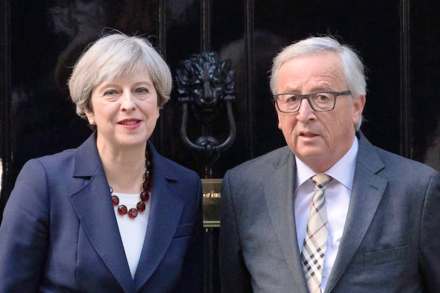
Guy Verhofstadt, the European Parliament’s main Brexit negotiator, tweeted on Monday: ‘Any #Brexit deal requires a strong & stable understanding of the complex issues involved. The clock is ticking — it’s time to get real.’ This was on the same day as media reports — allegedly leaked by associates of Jean-Claude Juncker, the European Commission president — criticised Theresa May for her naivety about Brexit talks at the dinner she gave Mr Juncker last week. These tactics are intended to affect our general election. By throwing Mrs May’s campaign slogan adjectives ‘strong and stable’ back in her face, Mr Verhofstadt was goading her at the decisive moment of her political career. So were the friends of Mr Juncker.