Charles Moore

Charles Moore

Charles Moore is The Spectator’s chairman.

He is a former editor of the magazine, as well as the Sunday Telegraph and the Daily Telegraph. He became a non-affiliated peer in July 2020.

Justin Welby’s Citizens’ Assembly will not bring the reconciliation he seeks

From our UK edition

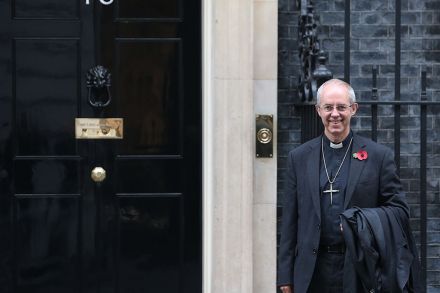
We do not yet know which 100 citizens will make it to the ‘Citizens’ Assembly’ to be chaired by the Archbishop of Canterbury, which will look at ways of preventing a no-deal Brexit. So we cannot yet judge whether the organisers have come up with a system of selection which improves on the representative powers of parliament. But really we do not need to, because we know already that they will not be able to bring the ‘reconciliation at a time of national emergency’ which the Archbishop seeks. This is because the idea that a no-deal Brexit must be prevented is not an irenic proposition around which people can unite, but an intensely political one over which they inevitably divide.

What would George Orwell make of Brexit?

From our UK edition

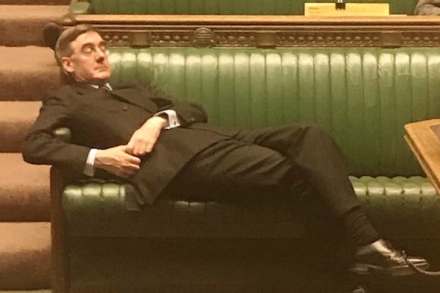
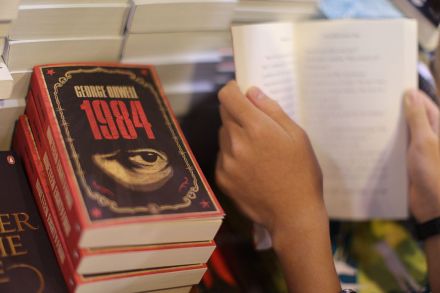
In the London Review of Books this month, James Meek wrote a long article about Jacob Rees-Mogg and his ‘curious duality’ in being both a high Catholic, fogey Brexiteer and a founder of Somerset Capital Management, which the author sees as globalist and ruthless. The piece is elegantly done, but entirely sneery. It makes not the slightest attempt to enter into the Mogg’s (or any Brexiteer’s) mind with any sympathy. I was thinking about this because the LRB’s publicity emphasised that Meek is an Orwell Prize winner. How we need an Orwell on the subject of Brexit.

The royals should embody virtue – not signal it

From our UK edition

ONE should not be censorious if the Duke and Duchess of Sussex fly in private jets to their holidays, though one cannot help laughing when they combine this with exhortations to save the planet. There is, sadly, no royal yacht nowadays (a new one would be a good make-work scheme post-Brexit), and we are not a civilised enough country to leave them and their baby alone if they were to travel on public transport. But they are making two mistakes. The first is to go somewhere hot, sunny and celebrity-filled for their break. One of the secrets of the Queen’s popularity is that she has almost never been seen sunbathing with the rich and famous. The worm of public envy never stirs when she spends her summers in Scotland. Her Balmorality is impregnable.

Give Hong Kongers real security: a British passport

From our UK edition

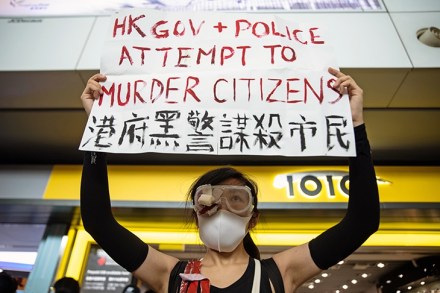
We seem to be building up to a second Tiananmen Square, 30 years after the first. This time the venue is Hong Kong. As then, the Chinese government longs to kill protestors, but it hesitates because it fears global reaction. It therefore matters greatly that the ‘rules-based international order’ strongly assert that breaking the 1984 Sino-British Agreement would put China beyond the pale. No international discussion of Brexit is complete without a reverent invocation of the Good Friday Agreement (which in fact has almost nothing to do with EU membership). The Hong Kong Agreement should command such reverence, and its pledge of ‘One country: two systems’ should be the test of whether China is a law-abiding international partner.

The Spectator’s Notes | 15 August 2019

From our UK edition

We seem to be building up to a second Tiananmen Square, 30 years after the first. This time the venue is Hong Kong. As then, the Chinese government longs to kill protestors, but it hesitates because it fears global reaction. It therefore matters greatly that the ‘rules-based international order’ strongly assert that breaking the 1984 Sino-British Agreement would put China beyond the pale. No international discussion of Brexit is complete without a reverent invocation of the Good Friday Agreement (which in fact has almost nothing to do with EU membership). The Hong Kong Agreement should command such reverence, and its pledge of ‘One country: two systems’ should be the test of whether China is a law-abiding international partner.

Dominic Grieve’s Cummings-induced delirium

From our UK edition

It is a good tactic of Dominic Cummings to make fearful but off-the-record noises about how a Johnson government might handle parliament in the next few weeks. He smokes out the ever more extreme notions of the other side without actually committing the government to any course other than leaving on 31 October. A tendency to drag the Queen into these conversations is a well-known sign of madness. Poor Dominic Grieve is clearly in a Cummings-induced state of delirium. This article is an extract from Charles Moore's Spectator Notes, available in this week's magazine.

The Spectator’s Notes | 8 August 2019

From our UK edition

Who wrote ‘Our lifestyle is destroying the environment of our country … creating a massive burden for future generations. Corporations are heading the destruction of our environment by shamelessly over-harvesting resources … the next logical step is to decrease the number of people in America using resources. If we can get rid of enough people, then our way of life can become more sustainable’? The answer, if media reports are accurate, is Patrick Crusius, the man accused of the El Paso massacre. The words appeared in his testament, entitled (in homage to Al Gore?) The Inconvenient Truth, which he seems to have put online before decreasing the number of people in America by 22.

The inconvenient truth about the El Paso shooter

From our UK edition

Who wrote ‘Our lifestyle is destroying the environment of our country… creating a massive burden for future generations. Corporations are heading the destruction of our environment by shamelessly over-harvesting resources… the next logical step is to decrease the number of people in America using resources. If we can get rid of enough people, then our way of life can become more sustainable’? The answer, if media reports are accurate, is Patrick Crusius, the man accused of the El Paso massacre. The words appeared in his testament, entitled (in homage to Al Gore?) The Inconvenient Truth, which he seems to have put online before decreasing the number of people in America by 22.

The ambiguity of the woke businessman

From our UK edition

The woke businessman, like the woke prince and princess, is an ambiguous figure. Being woke, after all, involves a contempt for profits and big business, as for social hierarchy. I first noticed this uneasy phenomenon many years ago when I attended a lunch in the City at which Paul Polman, the then chief executive of Unilever, read us a moralistic lecture about European integration, greenery and how ‘I agree with Mahatma Gandhi: you must be the change you want to see in the world’. I found it intensely annoying to be told how to be good by someone much richer than myself. Last year, the change Mr Polman wanted to see of moving Unilever’s HQ from London to Rotterdam failed, and he was out. Now his successor, Alan Jope, is using a similar patter.

The Spectator’s Notes | 1 August 2019

From our UK edition

In his very long letter to Jeremy Corbyn about why, after all, he will stay out of the Labour party instead of fighting his expulsion, Alastair Campbell complains that Britain has been the victim of a ‘right-wing coup’. Boris Johnson’s government has no ‘real democratic mandate’, he says, and Mr Corbyn should be fighting it much harder. You hear this argument a lot — we have a new prime minister and so we must have a general election. In my lifetime (born 1956), seven prime ministers — Macmillan, Douglas-Home, Callaghan, Major, Brown, May and Johnson — have come into office without a general election before or immediately ensuing; in that sense, without a democratic mandate.

Who are the real swivel-eyed loons in the Tory party?

From our UK edition

‘No great surprise’ headlined the BBC television news on Tuesday lunchtime. The BBC does not admit it now, but it has been extremely surprised by Boris’s success, as have most senior Conservatives. They wrote him off at least twice — first when Michael Gove stabbed him after the referendum; second, when he resigned from Mrs May’s Cabinet. His triumph confounds mainstream conventions about how to get on in Tory politics. It is partly to do with his personal qualities — his charisma, and even more, the attribute, visible in all the top-rankers, of mental and physical resilience. Over the years, I have often known Boris waver and hem and haw his way out of trouble, but I have come to understand that this is essentially tactical.

The Spectator’s notes | 25 July 2019

From our UK edition

‘No great surprise’ headlined the BBC television news on Tuesday lunchtime. The BBC does not admit it now, but it has been extremely surprised by Boris’s success, as have most senior Conservatives. They wrote him off at least twice — first when Michael Gove stabbed him after the referendum; second, when he resigned from Mrs May’s cabinet. His triumph confounds mainstream conventions about how to get on in Tory politics. It is partly to do with his personal qualities — his charisma, and even more, the attribute, visible in all the top-rankers, of mental and physical resilience. Over the years, I have often known Boris waver and hem and haw his way out of trouble, but I have come to understand that this is essentially tactical.

The Spectator’s Notes | 18 July 2019

From our UK edition

Seventy-five years ago on Saturday, the July plot failed. Claus Schenk Graf von Stauffenberg placed a bomb in a briefcase next to Hitler in the conference room of the Wolf’s Lair, but someone moved the briefcase a little. When the bomb detonated, the heavy conference table shielded Hitler from the blast. Stauffenberg and many other conspirators were caught. He was executed early the next morning. This Friday, in Christ Church, Oxford, a special service will commemorate the plot and all those who resisted Nazism in Germany. It will centre on the altar dedicated to George Bell, Bishop of Chichester, and the main external supporter of German Christian resistance to Hitler.

The Spectator’s Notes | 11 July 2019

From our UK edition

When I last talked to Sir Kim Darroch, he was a slim young private secretary, so it was a long time ago; but I can categorically state that President Trump is wrong to call him ‘wacky and a very stupid guy’. His particular sort of mandarin ‘Rolls-Royce mind’ intelligence does, however, amount to a form of stupidity when confronted with Mr Trump. Intellects like Sir Kim’s are slower than those of ordinary mortals to spot Trump’s communicative genius. They cannot see that it keeps him ahead of the game. It is really remarkable that a 73-year-old man can be such a master of forms of social media which did not exist until his sixth and in some cases his seventh decade.

Sir Kim Darroch failed to recognise Trump’s communicative genius

From our UK edition

When I last talked to Sir Kim Darroch, he was a slim young private secretary, so it was a long time ago; but I can categorically state that President Trump is wrong to call him ‘wacky and a very stupid guy’. His particular sort of mandarin ‘Rolls-Royce mind’ intelligence does, however, amount to a form of stupidity when confronted with Mr Trump. Intellects like Sir Kim’s are slower than those of ordinary mortals to spot Trump’s communicative genius. They cannot see that it keeps him ahead of the game. It is really remarkable that a 73-year-old man can be such a master of forms of social media which did not exist until his sixth and in some cases his seventh decade.

The Spectator’s Notes | 4 July 2019

From our UK edition

The Cabinet Secretary, Sir Mark Sedwill, is offering to meet Jeremy Corbyn about the Times story last week which reported that senior civil servants were worried Mr Corbyn was ‘too frail and is losing his memory’. As usual with such stories, one cannot know their exact truth, but there is a general trend in the civil service to be looser-tongued. A recent column by Rachel Sylvester, also in the Times, contained a long string of insults of Boris Johnson from unnamed officials. Sir Mark did not offer to meet Mr Johnson about that. Before and after the Brexit referendum, government officials, especially at the Treasury, repeatedly briefed views hostile to Brexit. A Remainer, Olly Robbins, took charge of the Brexit negotiations.

Why are civil servants so hostile to Brexit?

From our UK edition

The Cabinet Secretary, Sir Mark Sedwill, is offering to meet Jeremy Corbyn about the Times story last week which reported that senior civil servants were worried Mr Corbyn was ‘too frail and is losing his memory’. As usual with such stories, one cannot know their exact truth, but there is a general trend in the civil service to be looser-tongued. A recent column by Rachel Sylvester, also in the Times, contained a long string of insults of Boris Johnson from unnamed officials. Sir Mark did not offer to meet Mr Johnson about that. Before and after the Brexit referendum, government officials, especially at the Treasury, repeatedly briefed views hostile to Brexit. A Remainer, Olly Robbins, took charge of the Brexit negotiations.

The Spectator’s Notes | 20 June 2019

From our UK edition

Boris and his team made a mistake by agreeing to take part in Tuesday’s BBC leadership debate. In such decisions, candidates must be absolutely ruthless. It does not matter whether one is accused of ‘running away’ if one does not take part. The only question is, ‘Will going on X improve the candidate’s chances with the relevant electorate?’ The relevant electorate in the Tory leadership campaign is 1. MPs and 2. party members. Nobody else matters, except inasmuch as wider opinions affect those who vote. Boris could easily have reached MPs without going on the BBC debate. He can less easily reach party members, but even then, he can find more suitable platforms later.

Mufti Patel and the problem with the BBC’s leadership debate

From our UK edition

As Boris’s team should have predicted, the BBC, via Emily Maitlis, attacked Boris throughout the Tory leadership debate. So did its coverage the following morning. ‘Words are actions,’ said Nick Robinson on Today, sententiously editorialising. ‘Again and again Boris Johnson gets his words wrong.’ Up duly pop Nazanin Zaghari-Ratcliffe’s husband, Heathrow airport expansion and the precise wording of the promise to leave on 31 October — all licensed to do so by the weak decision to let Boris go on. Such debates are structured against Conservatives and conservatism.

Losing the TV licence will empower the over-75s

From our UK edition

Although people over 75 will naturally be annoyed to have to pay their television licence fee once more — unless they are poor enough to qualify for pension credit — the decision will, in fact, empower them. Gordon Brown should never have let them off payment in the first place since they are the greatest users of television and radio in the country and are mostly not the poorest either. So long as they were getting the services free, they had no power over their content. They have had to endure ever more abasement before the young, propaganda for women’s football, preaching about Greta Thunberg, and the removal of people of their age from the screen. Now that they will have to pay £154.