Charles Moore

Charles Moore

Charles Moore is The Spectator’s chairman.

He is a former editor of the magazine, as well as the Sunday Telegraph and the Daily Telegraph. He became a non-affiliated peer in July 2020.

Should I wear a burka in the House of Lords?

From our UK edition

On Advent Sunday, our grandson Christian became a Christian. He was baptised, sleeping, in the font of our parish church. On the whiteboard in the maternity ward, the newborn’s name beneath his was Mohamed. As is usual (and, in my view, preferable) nowadays, he was christened in the middle of the communion rather than separately. As is less usual, the rite was that of the Book of Common Prayer, ‘The Ministration of Publick Baptism of Infants’. It is tougher than the modern version. The godparents, in the name of the child, had to ‘renounce the devil and all his works, the vain pomp and glory of the world, with all covetous desires of the same, and the carnal desires of the flesh’, but managed with perfect equanimity to drink champagne afterwards.

The conservatism of Tom Stoppard

From our UK edition

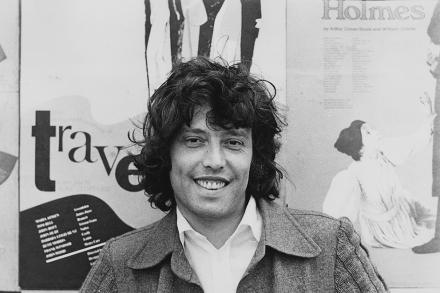
Sir Tom Stoppard, who died last week, never wrote a memoir, but he did sort of speak one. Just over ten years ago, he told me that he and his new wife, Sabrina Guinness, had become tenants of an old rectory in Dorset. I asked him if he would therefore speak as guest of honour at the AGM of the Rectory Society, a fan club for existing and former clergy houses which I invented in 2005. The AGM always takes place in a central London church, and in 2015, the year I invited Tom, it was held in the Queen’s Chapel beside St James’s Palace. Beyond expressing a tepid wish that speakers make some small reference to the society and its purposes, I never specify their subject.

What my pyjamas taught me about China

From our UK edition

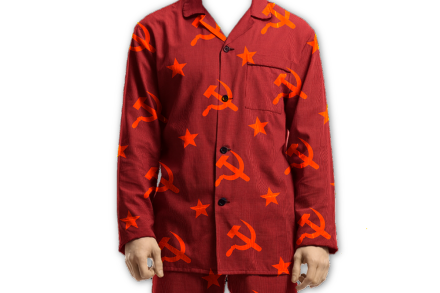
About seven years ago, I bought two pairs of pyjamas, one British, the other Chinese. At the time, they seemed of roughly similar quality, the important difference being that the Chinese ones were half the price of the British. Given that they have the same ‘lived experience’, I can make a direct comparison. The British ones, by Peter Christian (‘gentlemen’s outfitters’ accompanied by an image of two hares boxing), show few signs of the passing years. Their reddish colour with green and yellow stripes holds fast. There is very little wear and no tear at all. The Chinese pair (labelled ‘sleepwear’) tells a different story – the drawstring disappeared, the elasticated waist (which the British one wisely eschews) decayed, the blue checks faded, the cotton thinned.

The true cost of the Chagos deal

From our UK edition

When the BBC denies ‘systemic bias’, it denies the main, the crucial thing exposed by Michael Prescott’s now-famous leaked internal memo. Prescott was not presenting a ragbag of mistakes, but examples from many different areas of subjects where an institutional view prevailed – against Donald Trump, pro-trans, pro-immigration etc, all of them defensible views but none of them following rules of impartiality or accuracy. For this reason, the Prescott material about Israel/Gaza coverage is the most important by a long way, though less expensive for the BBC than its doctoring of Trump’s words.

The rudeness of Reform

From our UK edition

Critics see Rachel Reeves as betraying her election manifesto tax promises; but she may well be trying ‘The Lady’s Not for Turning’ gambit. Her speech from Downing Street delivered before the markets opened on Tuesday, resembled – in content, if not in style – Margaret Thatcher’s 1980 party conference speech. In both cases, the incoming government had failed to get public spending and borrowing under control. (Indeed, government borrowing costs then were 6 per cent of GDP, compared with a mere 5.1 per cent today.) Also in both cases, the government sought simultaneously to go against earlier promises not to raise taxes, yet to do so in the name of long-term consistency. Both faced what was then called ‘a funding crisis’ in the bond market.

Minimum wage was a mistake

From our UK edition

As others, including Nigel Farage, were quick to point out, Sarah Pochin got it wrong. She uttered words which, shorn of their context (as they obviously would be), made her sound racist. But the almost compulsory use of persons of colour to promote products and services is a bit of a wonder of the world. Modernisers often speak of the need for institutions to ‘look like Britain as it is’ (depressing thought), but this seems not to apply on screen. In the style of Ambrose Bierce’s Devil’s Dictionary, I offer a definition of the phrase ‘television ads’, as follows: ‘Short filmic fictions about the blissful and virtuous lives of persons of mixed race or with non-white skin.

How did faith shape Thatcher?

From our UK edition

38 min listen

How did faith shape Margaret Thatcher’s politics? To mark the centenary month of Margaret Thatcher’s birth, Damian Thompson introduces a conversation between the Spectator’s Natasha Feroze, Thatcher’s biographer Lord Moore and Bishop Chartres who delivered the eulogy at her funeral. They discuss her relationship with faith, how both her family background and her training as a scientist influenced her beliefs and her understanding of the relationship between wealth and society based on Jesus’s parables. Plus – what would Thatcher have made of the much talked about ‘Christian revival’ in the West? Produced by Patrick Gibbons and Natasha Feroze.

Thatcher & Reagan’s special relationship

From our UK edition

40 min listen

To mark the centenary of Thatcher’s birth, Michael Gove is joined by Charles Moore, her biographer, and Peggy Noonan, speechwriter to Ronald Reagan, to reflect on the chemistry that bound the two conservative leaders. Both outsiders turned reformers, they shared not only ideology but temperament – ‘They were partners in crime,’ says Peggy. Yet it wasn’t all harmony. As Charles notes, the pair weathered serious rifts – over nuclear weapons, Grenada and the Falklands. Even in disagreement, they ‘wanted the same thing … to defeat the Soviet Union without fighting’. How did they navigate their differences? And what lessons can we learn from their special relationship? Produced by Natasha Feroze and Oscar Edmondson.

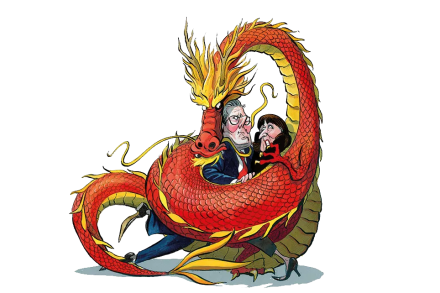
The government is too concerned for the tender feelings of China

From our UK edition

Poor old Hamas, losing all those dead Jews. The BBC reports that Hamas ‘could not locate the remaining hostages’ bodies’, of which there are 28. One can understand the problem. When you have been starving and torturing so many for so long, you may not necessarily remember where you left them when they died. In the words of the Balliol student who called for it this week, you have ‘put the Zios in the ground’. Why do more? Don’t your critics know there is (or was) a war on?

The frustrations of the Tory mindset

From our UK edition

‘The facts of life are Conservative.’ This sentence is often attributed to Margaret Thatcher, whose centenary falls next week. The exact words are ‘The facts of life invariably do turn out to be Tory’ and were not hers. They appeared in the first major policy document produced under her leadership, ‘The Right Approach’ (1976). The author was probably Chris Patten, the document’s drafter and more of a ‘wordsmith’ – her coinage – than she. (There might even have been a deliberate Patten double-entendre of the sort that always escaped Mrs T since, in those days, the phrase ‘the facts of life’ meant the sex lessons given by embarrassed parents and teachers to children.) The operative phrase in the sentence is ‘turn out to be’.

Sir Tony’s doomed crusade in the Holy Land

From our UK edition

It amuses me that the two main parties most averse to the idea of honours, monarchy, chivalry etc are led by knights – Labour by Sir Keir Starmer and the Liberal Democrats by Sir Ed Davey. This is entirely fitting, since they accurately reflect the dominant Blob establishment world-view and so were rewarded by being made Sir rather than staying plain Mr Blobby. But I wonder if the title has electoral disadvantages. Some voters must be subliminally more annoyed by Sir Somebody telling them to be radical, make sacrifices, save the planet and not to be racist than they would be by an untitled politician. On the other hand, it looks as though Sir Tony Blair, a Knight of the Garter, may soon be ruling in Gaza, at the orders of the Emperor Donald.

Pine martens for Palestine

From our UK edition

How can the nature sector respond to the genocide in Gaza? These are not my words. They appear in the subject box of an email which has been sent to members of the Wildlife and Countryside Link (WCL), though not, I think, by the WCL itself. It invites recipients to an ‘open forum for discussion and support’ on Zoom on 30 September. It seems that the Mammal Society, which supports pine martens, dormice etc, is involved. A sane answer to the subject box question would be a) that there is no genocide in Gaza and b) that the ‘nature sector’ has other duties. But the email tries to answer its own question: ‘At first glance the actions of Israel… are issues far outside the purview of any conservation or climate-focused organisation.

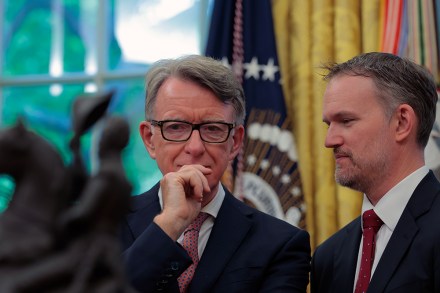
Don’t rule out a Mandelson comeback

From our UK edition

Daniel Kruger is a good and thoughtful man, whom I used to employ as a leader writer before he left for the higher calling of improving prisons. His choices in life have always been influenced by his sense of Christian purpose. That is what will have driven him to defect from the Tories to Reform. The trouble is that this sort of pilgrimage can lead to political misjudgments. There was a time, for instance, when Danny supported the leadership bid of Suella Braverman – a woman of blazing sincerity but not a good political navigator. Commentators are saying that Danny’s defection will make career-minded Tory MPs think they have a better future with Reform than with the Conservatives. That may be their calculation, but they should not base it on Danny’s example.

Reform’s success is far from set in stone

From our UK edition

The current ‘Britain is on a knife edge’ mood is understandable. Our discontents are great and Sir Keir Starmer’s government is even more incompetent and divided than we critics expected. But do not forget how the British system works. We are not like France, paralysed because its executive president can, constitutionally, hold out until 2027, even though his governments last only for months. The tired phrase ‘overwhelming majority’ has meaning. Labour can overwhelm all parliamentary opposition. It may find it harder to overwhelm internal opposition, but an early general election remains most unlikely, since MPs do not demand an election if they think they will lose their seats.

Where have all the upper-class Tories gone?

From our UK edition

A currently fashionable conservatism is militantly against Ukraine and, by more cautious implication, pro-Russia. We who disagree are, I quote Matthew Parris in these pages last week, ‘prey to the illusion that the second world war was a template for future conflict, and Hitler a template for Putin’. Others put it more unkindly, speaking of ‘Ukraine brain’ as a mental affliction among the Cold War generations. One should not project the entire second world war on to now, but some similarities with the 1930s are undeniable.

Who still supports Keir Starmer?

From our UK edition

Successful political leaders hold in their minds some idea of what Mrs Thatcher called ‘Our People’. In this context, I do not mean the whole population of the country they seek to lead, or the core of the party they belong to. I mean that group of people with whose aspirations they most wish to identify. In making that identification, they combine direct self-interest – getting their floating vote – with a wider view about who are most important for the nation’s future prosperity and good order. In the Thatcher era, such people were the famous C2s, first-generation home-buyers, millions who could expect not only to earn but also to own. In Tony Blair’s time, the group was not so different, but a bit softer, as one expects when growth has seemed secure for many years.

The problem with experts

From our UK edition

Danny Kruger’s brave defence of Christianity in the history of this country, which he recently delivered to an empty House of Commons, has won much praise. His words reminded me of when the same thing happened the other way round. As fourth-century Rome was Christianised by imperial decree, the distinguished senator Symmachus spoke up for the old pagan religion which had been degraded by the removal of the Altar of Victory from the Senate. He expressed his thoughts in the voice of the city herself, thus (Gibbon’s translation): ‘Pity and respect my age, which has hitherto flowed in an uninterrupted course of piety. Since I do not repent, permit me to continue in the practice of my ancient rites. Since I am born free, allow me to enjoy my domestic institutions.

What the media doesn’t tell us about Gaza

From our UK edition

Sir Keir Starmer’s apparent justification for threatening to recognise a Palestinian state by September is pictures. ‘I think people are revolted at what they are seeing on their screen,’ he said on Monday. On Tuesday, he spoke of ‘starving babies, children too weak to stand, images that will stay with us for a lifetime’. Pictures, however grim, seem a weak basis for a massive constitutional change. Sir Keir is also assuming that the pictures in question are ‘true’. Yet pictures, precisely because of their emotional impact, often undergo less editorial scrutiny than words and are frequently reproduced by other media unchecked.

The best deer deterrent? Radio 4

From our UK edition

Behind the latest push for recognition of a Palestinian state – even though there is no agreement of what it is that might be recognised – is a sort of impersonation of the story of Israel. Palestinian activists want their own Balfour Declaration. President Macron wants France and Britain to come up with their own Sykes-Picot agreement, but pro-Palestinian. You might think that the clamour would have been shamed into silence by the massacres and hostage-taking committed by Hamas on 7 October 2023. On the contrary, these have somehow empowered the mimicry in wilder and more horrible ways. The genocide, we are now told, is being committed not by Hamas, but by Israel’s response. The ‘concentration camps’ are being set up by Israel in Gaza.

What I’ll miss about Norman Tebbit

From our UK edition

This column comes to you from Auckland Castle, former palace and hunting lodge of the Prince Bishops of Durham. We, the Rectory Society, are here by kind permission of its saviour, Jonathan Ruffer, celebrating our 20th anniversary. Jonathan rescued the castle not from the heathen but from the Church of England. The last Anglican bishop to inhabit it was Justin Welby, in his brief year at Durham before being translated to Canterbury, but it had been run down for many years before that. Bishop Auckland is in one of the poorest parts of England but it did not occur to the Church authorities to use the heritage of this astonishing place to minister to the poor.