Charles Moore

Charles Moore

Charles Moore is The Spectator’s chairman.

He is a former editor of the magazine, as well as the Sunday Telegraph and the Daily Telegraph. He became a non-affiliated peer in July 2020.

Every violent crime is motivated by ‘hate’

From our UK edition

In the early hours of Sunday, a man walked round central Birmingham stabbing people. He killed a 23-year-old man, inflicted critical injuries on two other people and wounded five more. The police were accused of hanging about nervously in cars instead of getting out and tackling the man. Later, Supt Steve Graham gave a press conference. He could not yet say much, he warned, but he could confidently assert that there was ‘absolutely no suggestion at this point that this was in any way, shape or form, motivated by hate’.  The stabbings had not been aimed at gay people, but had been ‘random’. So that’s all right. Supt Graham seemed to be proffering a new category — deliberate, fatal attacks which are not motivated by hate.

Are we seeing the last push against Brexit?

From our UK edition

Large parts of the senior civil service regard Brexit as almost illegal. Some of them regard loyalty to the EU as a higher duty than to the elected government they are paid to serve. They feel this most strongly in relation to the Good Friday Agreement in Northern Ireland which they believe — with no textual evidence — is indissolubly linked with the EU. Some of the top mandarins now leaving their jobs prematurely think this way, perhaps none more so than Sir Jonathan Jones, the government’s chief legal adviser. On Tuesday, Lord Adonis, the most Remainery Remainer there is, tweeted: ‘We are going to hear a lot more about Sir Jonathan Jones, the government’s chief legal adviser, who has resigned rather than be a party to breaking international treaties.

Boris needs to do more to fight back in the culture war

From our UK edition

As one battles on, a reluctant volunteer in the culture war which the left is fighting on every front with enviable efficiency, it is frustrating that the millions who hate what is happening are not being properly led. On the whole, government responses are reactive rather than proactive, and late at that.  Boris Johnson said the right things about BLM supporters’ defacing of the statue of Churchill, but almost a week after the event. In the row about ‘Rule, Britannia’ at the last night of the Proms, Sir Keir Starmer actually got in before Boris, backing the traditional last night, in a soft-focus way, as being ‘a staple of the British summer’. Only then did the Prime Minister rather breathlessly enter the fray.

In defence of Hans Sloane

From our UK edition

‘The British Museum stands in solidarity with the British Black community, with the African American community, with the Black community throughout the world. We are aligned with the spirit and soul of Black Lives Matter everywhere.’ So blogged the director of the British Museum, Hartwig Fischer, shortly after the death of George Floyd. Many such messages were rushed out by institutions, colleges and businesses at the time. It was never really clear why. Why did one cruel death, above all the other cruel deaths always happening in the world, require this collective response? What led Dr Fischer to assume that ‘the British Black community’ must be at one with the aims of Black Lives Matter?

Why did Charles Moore get suspended by Twitter?

From our UK edition

The week before last, I started tweeting. Actually, that is not true, but @1CharlesHMoore, bearing my photograph and brief CV, got going, advancing opinions in my name. The first tweets seemed harmless enough. ‘Charles Moore’ commented in support of the Lincoln Project (Never Trump Republicans), for example. But one had the feeling that once the reader had been lulled into a false sense of security, they could only get worse. At first, I did not know this was happening, but an alert colleague noticed and contacted Twitter on my behalf. They acted quickly and ‘my’ account now says ‘Account suspended. Twitter suspends accounts which violate the Twitter Rules’, which makes it sound as if I have done something revolting, such as making a joke.

Without Black Wednesday there would have been no Brexit

From our UK edition

Last Sunday, BBC Radio 4’s The Reunion devoted 40 minutes to ‘Black Wednesday’, as our exit from the ERM was mistakenly called. No one mentioned that the underlying aim behind the ERM was to help create the conditions for a European single currency, and that our falling out ensured that Britain would not join.  Only in the 39th minute of the programme, did anyone — Kenneth Clarke — point out that ‘Europe’ was at the heart of the matter. If Black Wednesday had not exposed in one day’s trading the folly of the euro project for Britain, there would almost certainly have been no Brexit. No one came near to discussing this — a feat comparable to remembering Dunkirk without noting that it was followed by the Battle of Britain.

Should Gavin Williamson resign as a career move?

From our UK edition

Amid all the puzzlement and recrimination about why the government got into this mess about A-level and GCSE results, one factor has been missed — the effect of Covid-19. I do not mean the obvious fact that none of this would have happened without the disease. I mean the less obvious one that our governmental and political system works very badly without the close human contact which Covid forbids. In normal times, MPs meet their constituents. Ministers meet fellow MPs in the Members’ Lobby and hear from them about constituents’ worries, such as their children losing university places. In Whitehall corridors, civil servants bump into one another and notice upcoming problems.

Coronavirus and the BBC’s anti-American bias

From our UK edition

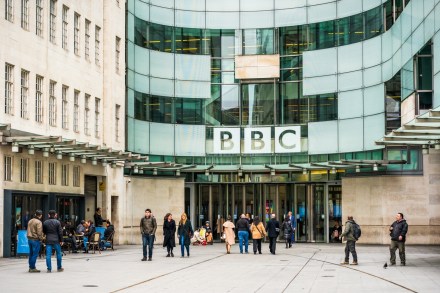
One keeps hearing, particularly on the BBC, that the United States is ‘the worst in the world’ for coronavirus, stated as fact. The next worse, by the same BBC measure, is Brazil. Not coincidentally, the BBC hates the presidents of both those countries. Statistically, this is fiction, although neither Trump nor Bolsanaro has done well. It is true that the US has more known cases than any other country, but comparisons are hard since figures in countries like China and Iran are highly unreliable.  Besides, the key measure is proportion, not overall size. The most telling Covid-19 statistic is deaths per million of population. Currently, the United States stands at 498, Brazil at 485. The United Kingdom, however, comes in at 699. Belgium is the world-beater, at 864.

Is Chris Packham finally facing facts on shooting?

From our UK edition

Chris Packham is widely seen as the most extreme of well-known animal rights activists. His obsessions against hunting and shooting forfeit the impartiality required of a television nature presenter. So it is bold of the excellent new magazine, Fieldsports Journal, to give Mr Packham lots of space in its issue designed for the start of the grouse season this week. Photographed in a butt, Mr Packham not only grants an interview, but also contributes his own article, which begins with his almost lyrical description of holding a rifle (‘I lift the fore-end and feel its weight on the bulb of my left thumb…’). Not strictly relevant, since grouse are dispatched by shotgun, but his tone sounds conciliatory.

Will HSBC protect its pro-democracy staff in Hong Kong?

From our UK edition

Noel Quinn, the chief executive of HSBC, declines to say whether his bank will disown pro-democracy staff who fall foul of China’s draconian new security law for Hong Kong. The bank, he says, follows the law of every country in which it operates: it will treat the issue case by case.  What he may not have digested is that the new security law claims universal jurisdiction. Any Hong Kong person making secessionist, terrorist, seditious etc statements (as defined by China) anywhere in the world commits a crime, just as if he makes similar statements from Victoria Peak, Hong Kong. If I were a pro-democracy Hong Kong citizen working at HSBC’s headquarters in London, I would ask Mr Quinn whether he will protect me when the Chinese authorities drop in to demand my extradition.

Why poetry matters

From our UK edition

Juan Carlos, ex-King of Spain, behaved foolishly in relation to money and sex, and so his decision to leave Spain is sad, but justified. That seems to be the view of most moderate people outside Spain who are not ill-disposed to the monarchy. But it is it right? Certainly Juan Carlos’s foolishness was real, but his imposed exile (it is not really voluntary) to the Dominican Republic is not a punishment for a crime: there has never been any legal process. It is a partisan political act which is bad for the unity of Spain. Juan Carlos’s exile was forced on the current King, his son Felipe VI, by a weak prime minister, the Socialist Pedro Sanchez.

The thinning of the Spanish monarchy

Juan Carlos, ex-King of Spain, behaved foolishly in relation to money and sex, and so his decision to leave Spain is sad, but justified. That seems to be the view of most moderate people outside Spain who are not ill-disposed to the monarchy. But is it right? Certainly Juan Carlos’s foolishness was real, but his imposed exile (it is not really voluntary) to the Dominican Republic is not a punishment for a crime: there has never been any legal process. It is a partisan political act which is bad for the unity of Spain. Juan Carlos’s exile was forced on the current King, his son Felipe VI, by a weak prime minister, the Socialist Pedro Sanchez.

spanish monarchy

There is nothing inherently wrong with selling up to pay for care

From our UK edition

I recently heard on the radio that last year an average of 14 pensioners a day had to sell their house to pay for their care. This was supposed to shock us. Actually, the figure seems remarkably low (a little over 5,000 a year) and, in principle, reasonable.  Rather like home ownership itself, care in old age is a likely, though not certain, cost in an average British life. Many people with enough money to buy a house are also in a position to make some provision for that care. By the time they need care, significant numbers find themselves in houses too big and expensive for their needs.  It is not automatically wrong for such people to downsize or even to sell up to cover care costs.

Jesus College’s China problem

From our UK edition

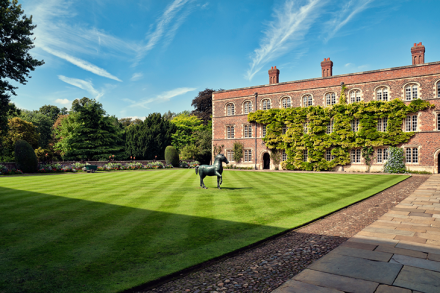
Although Stephen Toope, vice-chancellor of Cambridge University, is committed to openness, it is a struggle to get information out of him about his university’s dealings with the Chinese Communist party. He has declined an interview, and when I raised questions about Jesus College’s China Centre and other China links, which he has publicly backed, he replied that ‘You cited one very specific initiative, organised by one of our 31 colleges, with a very narrow thematic focus’. I wrote back with further questions, but he says he is ‘not able to add anything to my earlier remark about Jesus College’.

Do ‘Somewheres’ and ‘Anywheres’ have to fall out?

From our UK edition

I think Anne Applebaum is a friend of mine. I certainly hope so, since I have always admired her writing, her dignified charm and her un-English readiness to be serious. Her new book Twilight of Democracy is subtitled ‘The Failure of Politics and the Parting of Friends’. Quite a large number of friends, several associated (as was she) with this paper, she now names as ex-friends, so I feel relieved not to have been so identified.  As a matter of historical fact, Anne is right: lots of friends have fallen out about issues relating to globalisation, identity, ‘Somewheres’ and ‘Anywheres’, Brexit, Trump etc. Anne seems to see this as inevitable, once people understand how much they differ. But is it?

The politics of email sign-offs

From our UK edition

I think Anne Applebaum is a friend of mine. I certainly hope so, since I have always admired her writing, her dignified charm and her un-English readiness to be serious. Her new book Twilight of Democracy is subtitled ‘The Failure of Politics and the Parting of Friends’. Quite a large number of friends, several associated (as was she) with this paper, she now names as ex-friends, so I feel relieved not to have been so identified. As a matter of historical fact, Anne is right: lots of friends have fallen out about issues relating to globalisation, identity, ‘Somewheres’ and ‘Anywheres’, Brexit, Trump etc. Anne seems to see this as inevitable, once people understand how much they differ. But is it?

Why our statues need protecting

From our UK edition

The Black Lives Matter frenzy against statues may have passed its peak. The issue has been co-opted by the bureaucracies in government, Church, universities, etc. As their various committees study lists of allegedly offensive monuments, they should remember something which has hardly been mentioned: localism.  Most statues are erected not because of a general national sentiment, but because of the wishes of a particular community — a borough, parish, college, profession, business or regiment. They were not put up, like those colossal statues of Lenin in the former Eastern Bloc, by order of a remote tyranny. The reason that Edward Colston’s statue stayed up so long in Bristol was that many Bristolians admired his munificent legacy to the city.

The ruthlessness of Huawei

From our UK edition

Huawei’s 5G path is blocked. In a few months’ time, Huawei may no longer see the point of paying six-figure sums to Lord B and his attendant knights,’ I wrote in this space on 20 June. I underrated its ruthlessness. It took only a few weeks. Lord Browne, its UK chairman, is out. Sir Ken Olisa has followed.  How much longer for the arch-Remainers Sir Andrew Cahn, who thinks Huawei is ‘the John Lewis of China’, and the ex-CBI Sir Mike Rake, who joined as recently as April? All this could have been avoided if, before taking the six-figure salary, these gentlemen had asked: ‘Who ultimately controls this company’s destiny?’ The answer is the Chinese Communist party.

Why did we not ban Huawei earlier?

From our UK edition

‘Just rejoice’, as Mrs Thatcher once said about something else. The government’s decision to debug our national security by getting rid of Huawei is the right one (although seven years is much too long). The puzzle is why it did not happen earlier. At the end of January, I interviewed the US Secretary of State, Mike Pompeo, when he came over here. We knew by then everything we needed to know about the Chinese government’s control of Huawei and the lack of trust this must engender. The British government also heard clearly from Mr Pompeo — and from Australia — that its preference for Huawei 5G threatened the deep trust of the Five Eyes intelligence partnership. Yet it sent him away empty-handed.

Will Cambridge stand up for free speech in China?

From our UK edition

Last month, Dr Priyamvada Gopal, of Churchill College, Cambridge University, tweeted ‘White Lives Don’t Matter’. She was abused online and received threats of violence. Cambridge issued a statement: ‘The university defends the right of its academics to express their own lawful opinions, which others might find controversial… [It] deplores in the strongest terms abuse and personal attacks.’ Dr Gopal was promptly promoted to a professorship. Perhaps professorial chairs should not be handed out as prizes because the person promoted has expressed apparently racist sentiments, but the university was surely correct to defend Dr Gopal’s free-speech rights.