Charles Moore

Charles Moore

Charles Moore is The Spectator’s chairman.

He is a former editor of the magazine, as well as the Sunday Telegraph and the Daily Telegraph. He became a non-affiliated peer in July 2020.

A tree is for centuries, not just for COP26

From our UK edition

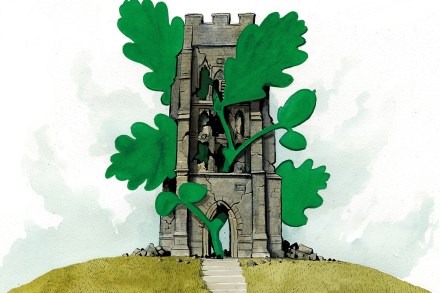
We are being urged — and, in some cases, paid — by the government to plant more trees. Actually, this happens most years. I can even remember ‘Plant a tree in ’73. Plant one more in ’74’. It is a bit like saying ‘Have more babies’, without any provision for their care once born. It all depends which trees, where you plant them and how you tend them. If you walk through the country nowadays, or near new-build housing estates where trees have been planted in ‘mitigation’, you will see large numbers of saplings dead or dying, still in their tree guards, planted too close together and then forgotten. New trees need protection from rabbits, deer, weeds and competition.

Should monuments to past Archbishops of Canterbury come down?

From our UK edition

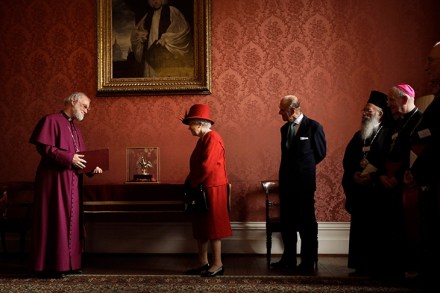
This week, the Church of England issued its document ‘Contested Heritage in Cathedrals and Churches’. It is guidance for what those locally running more than 12,000 churches should do about their monuments ‘to transform unjust structures of society, to challenge violence of every kind and pursue peace and reconciliation’ and address ‘the Church’s own complicity in structural sin’ and ‘oppression or marginalisation of people on the basis of their race, gender, religion or sexual orientation’. In church monuments, this usually boils down to whether the person commemorated had links with slavery. Seen from a parish level (where the poor churchwardens, such as my dear wife, will have to do the work), here are some preliminary questions.

‘Religious literacy’ rules risk gagging the press

From our UK edition

There should be more ‘religious literacy’. So says the All-Party Parliamentary Group on Religion in the Media, chaired by Yasmin Qureshi MP. Amen to that. Religious ignorance is now virtually universal, so errors appear in news stories every day. But the APPG report seems less concerned with facts, more with attitudes. It wants news to concentrate more on ‘lived experience’, less on doctrine and ritual; it asserts that ‘religious literacy also incorporates respect for religion and belief as a valid source of guidance and knowledge to the majority of the world’s inhabitants’.

Does it matter if Boris did say ‘let the bodies pile high’?

From our UK edition

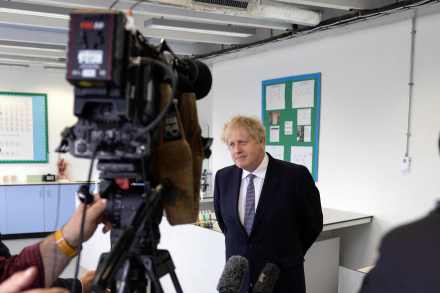
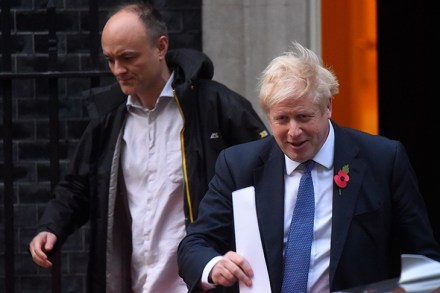
Like almost everyone else writing on the subject, I have no idea whether Boris Johnson told colleagues in October that he would rather ‘let the bodies pile high in their thousands’ than have another lockdown. When such words are reported, they are given to journalists ‘on lobby terms’ and are therefore unattributable. But surely the report should indicate from which point of view they come. In this case, the BBC cites ‘sources familiar with the conversation’, a phrase which gives it permission, it thinks, to run headlines like ‘Boris Johnson’s “bodies pile high” comments prompt criticism’, as if it knows that the Prime Minister definitely spoke those words.

The difference between private and public conversation

From our UK edition

Like almost everyone else writing on the subject, I have no idea whether Boris Johnson told colleagues in October that he would rather ‘let the bodies pile high in their thousands’ than have another lockdown. When such words are reported, they are given to journalists ‘on lobby terms’ and are therefore unattributable. But surely the report should indicate from which point of view they come. In this case, the BBC cites ‘sources familiar with the conversation’, a phrase which gives it permission, it thinks, to run headlines like ‘Boris Johnson’s “bodies pile high” comments prompt criticism’, as if it knows that the Prime Minister definitely spoke those words.

The strangeness of Britain’s BLM mania

From our UK edition

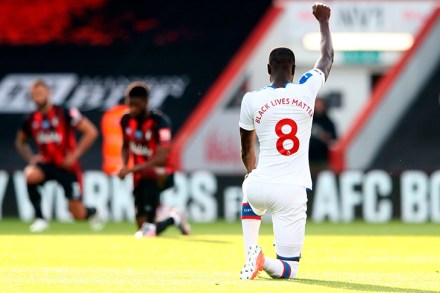
The conviction of Derek Chauvin for the murder of George Floyd makes last summer’s Black Lives Matter mania in British institutions look even stranger. The British Museum, Oxbridge colleges, Sir Keir Starmer, football teams, government departments, Kew Gardens, the National Trust and numerous corporations indulged in various forms of self-abasement. Some ‘took the knee’. At the Ministry of Defence, the permanent secretary, Sir Stephen Lovegrove, broke professional political impartiality by emailing his staff about the ‘deep roots’ of ‘systemic racial inequality’ in Britain, and signing off with a BLM hashtag. He was subsequently promoted to be the UK National Security Adviser.

A word about Prince Philip and religion

From our UK edition

The recent Sewell report on Race and Ethnic Disparities has been much abused and little read. It is full of interesting suggestions, however. One, emphasising the shared history of modern Britain, is to compile ‘a dictionary or lexicon of well-known British words which are Indian in origin’. Actually, such a work already exists. It is called Hobson-Jobson, ‘a glossary of colloquial Anglo-Indian words and phrases, and of kindred terms, etymological, historical, geographical and discursive’. Edited by Colonel Henry Yule, Royal Engineers, and Dr A.C. Burnell, of the Madras Civil Service, it was completed in 1886. It is a large, fascinating book, half an hour in whose company is never wasted.

Aintree is doing Rose Paterson proud

From our UK edition

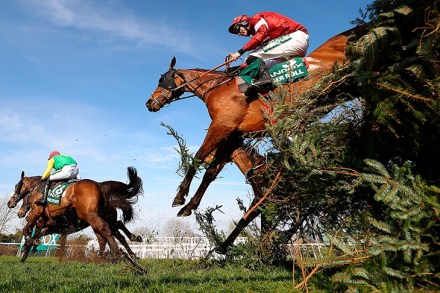
On Grand National Day at Aintree this Saturday, the Rose Paterson Trust will be launched. This time last year, Rose was the chairman of Aintree, and had to cancel the meeting because of Covid. In June, she took her own life. The purpose of the trust is to help prevent such events. Owen, her widower, is very frank. He believes that: ‘If Rose had been aware of the utter catastrophe she has wrought — the first victim being herself — she would not have done it.’ The worst is that it cannot be undone. It is a wound that time can do frighteningly little to heal. He says it is wrong to think of suicide only as something committed by obviously lonely and depressed people.

By banning what we dislike, we create a secular shariah

From our UK edition

‘Interior silence’ is not a phrase I associate with Sarah Sands, until recently the editor of the BBC Today programme and formerly my superb deputy at the Daily Telegraph. All her friends love her worldly, witty talk. Yet The Interior Silence is the name of her new book, whose subtitle is Ten Lessons in Monastic Life. Sarah knows that the contrast between author and subject is intrinsically funny, and laughs at herself — her struggle to fast in Assisi, parasites mercilessly biting her face while she sleeps in her Coptic desert cell. She is epigrammatic about monasticism: ‘Effortlessness is hard.’ But she is also appealingly sincere. She does want to understand it. She does long to turn off her mobile, though she rarely succeeds.

In defence of hereditary peers

From our UK edition

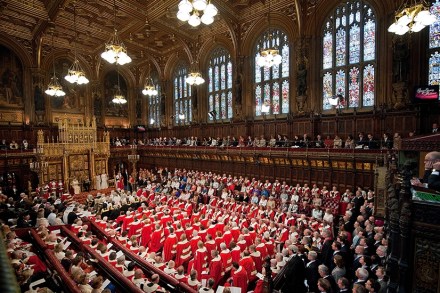
As the former editor of a Sunday newspaper, I know their front pages can be rather confected. There is sometimes a shortage of news at the weekend. But I was nevertheless stunned by the front-page splash of the latest Sunday Times. ‘Revealed’, it said in red letters, ‘The truth about the peers who are born to rule’. This ‘investigation’ showed there are currently 85 hereditary peers in the House of Lords, their average age is 71, 46 per cent of them went to Eton, none is a woman and they or their predecessors have claimed £47 million in ‘expenses’ (actually mainly allowances) ‘since 2001’. It was the ‘since 2001’ which rather gave the game away.

What happens when Facebook pays for news?

From our UK edition

The recently departed head of MI6, Sir Alex Younger, wants to balance China’s ideological antagonism to the West with the need for coexistence. Commenting on the government’s new ‘integrated review’, he says we must fight back with technological innovation and stronger alliances but avoid a second Cold War. He advocates ‘One Planet: Two Systems’ — a globalised echo of the Anglo-Chinese Hong Kong Agreement by which Hong Kong was handed back to China in 1997 under the principle of ‘One Country: Two Systems’. Sir Alex’s is an interesting analogy, but the important thing to note about ‘One Country: Two Systems’ is that China adhered to it only for 20 years and is now trashing it. Could the same problem take over the world?

Why I refused to be interviewed by Emily Maitlis

From our UK edition

On Tuesday, I was asked to appear on BBC Newsnight to talk about the Sussexes’ interview. When told it would be presented by Emily Maitlis, I declined, on the grounds that ever since her political speech against Dominic Cummings on the programme last year, I have had no confidence in her fairness. Sure enough, she spoke on the programme that night of ‘the sense of the attempted suicide’ of the Duchess of Sussex — though Meghan had mentioned only ‘suicidal thoughts’.

So did Harry and Meghan get married in their ‘backyard’?

From our UK edition

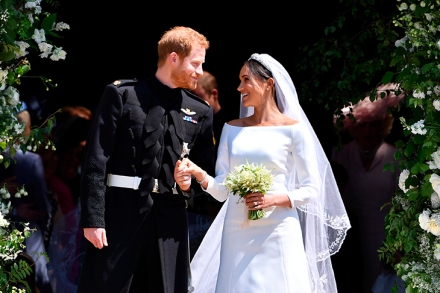
I have been slow in the uptake. When I saw the Duchess of Sussex complain in her interview clips about how her son had not been given a title and then move on to the alleged racism of an alleged speculation by an unnamed but probably royal person about the possible skin colour of the child she was expecting, I did not immediately see the connection. The full interview makes it clear. Meghan is saying that Archie was not allowed to be a prince because of his skin colour. Oprah: ‘Do you think it’s because of his race?

Emmanuel Macron’s vaccine muddle

From our UK edition

In 2000, this magazine dipped its toe in murky Irish water. Stephen Glover wrote three articles, one provocatively entitled ‘The Republican cell at the heart of the Guardian’. (For more detail, see Douglas Murray’s article.) One of the IRA supporters identified was Roy Greenslade, the paper’s media commentator. Alan Rusbridger, the Guardian’s editor, wrote angrily to the then editor, Boris Johnson, demanding an apology. Boris refused. Now Greenslade has emerged from that murky water, with an armalite in one dripping hand, and admitted he always secretly supported IRA violence and was close to IRA leaders. Where does his admitted ‘entryism’ leave the Guardian?

The curious case of Cornelia Connelly

From our UK edition

Visiting Jackson, Mississippi, in the 1980s, I found myself warmly welcomed (I cannot remember why) by a lively group of Catholic feminists. Their heroine was Mother Cornelia Connelly. I was embarrassed not to have heard of her since she did her greatest work near us in Sussex. Hers is quite a story.  In 1831, aged 22, she married Pierce Connelly, an Episcopalian minister, in her native Philadelphia. Both later converted to Catholicism. Pierce wanted to become a priest, which was difficult, what with a wife and five children. The couple eventually signed a perpetual deed of separation so he could be ordained. While still looking after her younger children, Cornelia became a nun. Coming to England, she established a teaching order, the Society of the Holy Child Jesus.

Will social kisses survive Covid?

From our UK edition

There is a ‘pervasive presence of Chinese military-linked conglomerates and universities in the sponsorship of high-technology research centres in many leading UK universities’. When the think tank Civitas recently revealed this, Cambridge University denounced the report as misinformation and pushed Civitas to qualify it. Thus, when Civitas had referred to Cambridge’s Memorandum of Understanding (MoU) with China’s National University of Defence Technology (NUDT), Cambridge wanted it added that the MoU had been ‘signed in the wake of the UK… government’s encouragement to create a “golden decade” for the UK-China relationship. That MoU produced no research, no collaborations, no funding and has been expired for three years’.

The unintended consequences of the Macpherson report

From our UK edition

Sir William Macpherson of Cluny has died. His obituaries praise him for his 1998 inquiry into the Stephen Lawrence case. His report did indeed shed light on the failure of the police to catch the young man’s killers. It has had, however, a profound and bad effect on our law. The report’s recommendations redefined a racist incident: ‘A racist incident is any incident which is perceived to be racist by the victim or any other person.’ This definition means that absolutely anything in the world could be a racist incident, because it relies wholly on what a complainant ‘perceives’. The definition’s use of the word ‘victim’ also implies acceptance that every person who claims to be a victim is one.

Britain’s universities are confounded by China

From our UK edition

'Tencent Wykeham’ has a ring to it. It captures how easily British universities can be bought. It is the new name for what was until now the Wykeham Professorship of Physics at New College, Oxford, now acquired by the huge Chinese techno-conglomerate Tencent for £700,000.  William of Wykeham founded New College and Winchester in the 14th century. ‘Tencent Winchester’ next? The problem, which Oxford seems to ignore, is that Tencent acts for the national security interests of the Chinese Communist party. It propagandises too: for Xi Jinping’s address to the 19th Party Congress in 2017, it brought out a mobile game called ‘Clap for Xi Jinping: An Awesome Speech’.

Where would politics be without fighting talk?

From our UK edition

‘Tencent Wykeham’ has a ring to it. It captures how easily British universities can be bought. It is the new name for what was until now the Wykeham Professorship of Physics at New College, Oxford, now acquired by the huge Chinese techno-conglomerate Tencent for £700,000. William of Wykeham founded New College and Winchester in the 14th century. ‘Tencent Winchester’ next? The problem, which Oxford seems to ignore, is that Tencent acts for the national security interests of the Chinese Communist party. It propagandises too: for Xi Jinping’s address to the 19th Party Congress in 2017, it brought out a mobile game called ‘Clap for Xi Jinping: An Awesome Speech’.

Lockdowns can destroy the lives they’re intended to protect

From our UK edition

Some Leavers are perturbed that Lord Frost was suddenly stood down as the next National Security Adviser. This anxiety may be misplaced. If he gets the necessary authority in No. 10, his new job of making our European policy fit with our entire foreign policy and making both serve a sovereign nation will be just what is needed. More discouraging, though, is his replacement choice at the NSC. Sir Stephen Lovegrove comes from the Ministry of Defence but is more renowned for tweeting the hashtag of Black Lives Matter and getting generals into rainbow lanyards than for helping the armed services adjust to war in the information age. His appointment is a victory for the Blob over Boris’s attempts at reform.