Charles Moore

Charles Moore

Charles Moore is The Spectator’s chairman.

He is a former editor of the magazine, as well as the Sunday Telegraph and the Daily Telegraph. He became a non-affiliated peer in July 2020.

The BBC exaggerates Britain’s importance in Afghanistan

From our UK edition

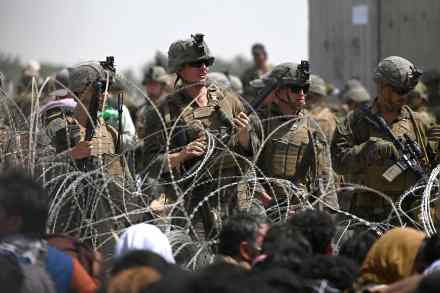
This week, the media pressure was on the British government to extend the deadline for the evacuations from Kabul airport. The government had no power to do this unilaterally: it duly asked the United States, and was duly turned down. The issue was almost beside the point. It is doubtful, given the burning desire of so many to leave the country, whether a few more days of rescue flights would have done much to shorten the suffering queue of hopefuls. Each day is dangerous, so more days are more dangerous. Preoccupation with extension deflected attention from the key point, which is that all evacuation planning assumed that Kabul and its airport would be controlled by the (now former) Afghan government, thereby ensuring an orderly exit.

The failed assumption of Biden’s withdrawal

From our UK edition

This week, the media pressure was on the British government to extend the deadline for the evacuations from Kabul airport. The government had no power to do this unilaterally: it duly asked the United States, and was duly turned down. The issue was almost beside the point. It is doubtful, given the burning desire of so many to leave the country, whether a few more days of rescue flights would have done much to shorten the suffering queue of hopefuls.  Each day is dangerous, so more days are more dangerous. Preoccupation with extension deflected attention from the key point, which is that all evacuation planning assumed that Kabul and its airport would be controlled by the (now former) Afghan government, thereby ensuring an orderly exit.

It is shabby of Biden to blame the Afghans

From our UK edition

Q. Is a Taliban takeover of Afghanistan now inevitable? The President: No, it is not. Q. Why? The President: Because you — the Afghan troops have 300,000 well-equipped — as well-equipped as any army in the world — and an air force against something like 75,000 Taliban. It is not inevitable… Q. Do you trust handing over the country to the Taliban? The President: No, I do not trust the Taliban. Q. So why are you handing the country over…? The President: It’s a — it’s a silly question. Do I trust the Taliban? No. But I trust the capacity of the Afghan military, who is better trained, better equipped, and more re — more competent in terms of conducting war.

Margaret Thatcher vs everyone else: the making of the 1985 Anglo-Irish Agreement

From our UK edition

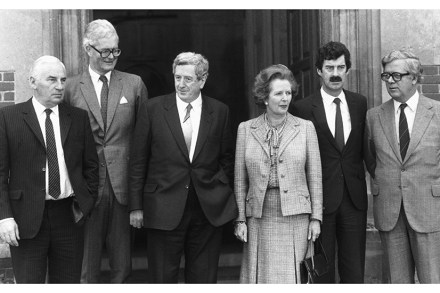
Diplomatic negotiations are rarely fully described by their participants in books, for two reasons. They are usually secret until much later, and their intricacies can be boring. Politicians often include brief accounts in their memoirs, but these seldom reveal much about the process as a whole because, as I discovered by interviewing scores of them for my biography of Margaret Thatcher, they cannot avoid focussing almost exclusivelyon what they did and said (or think they did and said). This book, however, overcomes the secrecy rule, because it is published nearly 40 years after the events described; and it overcomes the boredom problem because of the literary skill and intellectual grasp of its author. It is clear, precise, readable, sometimes drily funny.

Joe Biden’s shabby treatment of the Afghan army

From our UK edition

Is a Taliban takeover of Afghanistan now inevitable?The President: No, it is not. Q. Why? The President: Because you — the Afghan troops have 300,000 well-equipped — as well-equipped as any army in the world — and an air force against something like 75,000 Taliban. It is not inevitable… Q. Do you trust handing over the country to the Taliban? The President: No, I do not trust the Taliban. Q. So why are you handing the country over…? The President: It’s a — it’s a silly question. Do I trust the Taliban? No. But I trust the capacity of the Afghan military, who is better trained, better equipped, and more re- — more competent in terms of conducting war.

What ministers won’t admit about A-levels

From our UK edition

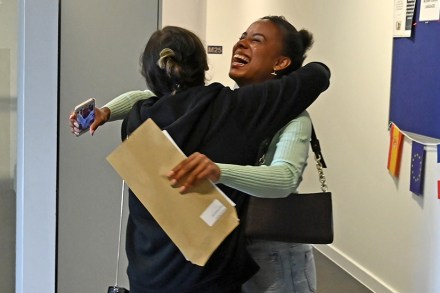
The tale of A-levels shows how ministers can sometimes find themselves in a position when it is simply too dangerous to admit something that is true. To the exterior eye, it is obvious that the temporary abolition of exams and its replacement by teacher assessment has produced grade inflation. This year’s A-level cohort has not suddenly got a third better than its pre-Covid equivalent. You or I can point that out, but if Gavin Williamson, the Education Secretary, says it, he thereby implies that he has presided over a change which devalues the exam, seriously weakening the basis of admissions to university. He will also be accused of disparaging pupils who, we all know, have had a very rough time.

Chris Packham’s suggestions to save the world

From our UK edition

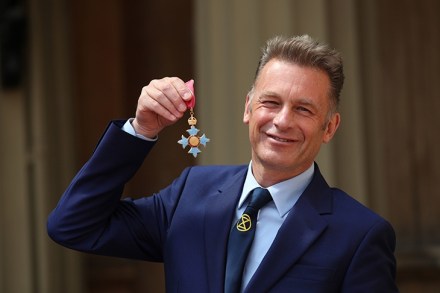
On Monday 2 August, the BBC Today programme offered its ‘Countdown to COP26’. For the rest of the month, Amol Rajan announced, Chris Packham would give us ‘a different suggestion’ about climate change EVERY DAY. I make that 26 Packham slots — Sunday being Today-free — on the main national news magazine programme. Chris’s Day One suggestion to address the ‘colossal, planet-threatening mess that we find ourselves in’ was that everyone should buy an alarm clock (second-hand if possible to save on emissions), set it to wake up 15 minutes earlier and devote that quarter of an hour to doing something helpful, rather as we did, he said, when we abolished slavery.

The West’s moralising over climate change will cost India

From our UK edition

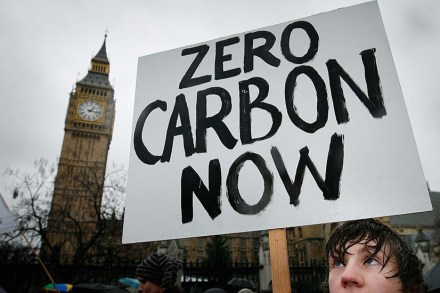
On Tuesday, I chaired a session at Policy Exchange addressed by Tony Abbott, the eloquent former prime minister of Australia, now an adviser to the British Board of Trade. Although he acknowledged severe recent difficulties, he declared himself optimistic that free-trading democracies, such as his country and ours, can combine to strengthen rules-based, transparent trade (i.e. the sort of trade China dislikes) across the world. I truly hope he is right. One problem, though, which we barely touched on, is climate change. In the West, this is considered the great global challenge of our time. In developing countries, however, it is often seen as the West’s way of denying them the advantages which made us rich.

Let’s hope the Third World prevails at COP26

From our UK edition

On Tuesday, I chaired a session at Policy Exchange addressed by Tony Abbott, the eloquent former prime minister of Australia, now an adviser to the British Board of Trade. Although he acknowledged severe recent difficulties, he declared himself optimistic that free-trading democracies, such as his country and ours, can combine to strengthen rules-based, transparent trade (i.e. the sort of trade China dislikes) across the world. I truly hope he is right.  One problem, though, which we barely touched on, is climate change. In the West, this is considered the great global challenge of our time. In developing countries, however, it is often seen as the West’s way of denying them the advantages which made us rich.

What Dominic Cummings gets wrong

From our UK edition

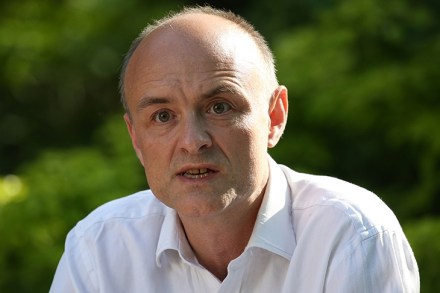
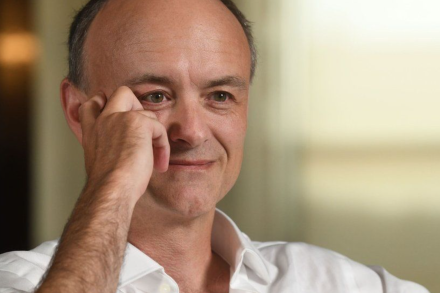
Anyone who thinks Boris Johnson lacks statecraft should pay attention to Dominic Cummings’s attacks on him. They often to seem to show the opposite of what Dom intends. Cummings now reveals that, in January 2020, he and his allies were saying: ‘By the summer, either we’ll all have gone from here or we’ll be in the process of trying to get rid of [Johnson] and get someone else in as prime minister.’ In fact, neither happened. By November, however, Cummings was (to use Mr Pooter’s joke) going; Boris stayed. The winner of the then still recent landslide election victory presumably discovered about his adviser’s seditious conversations and, reasonably, did not like them.

Why Dominic Cummings’s attacks on Boris Johnson backfire

From our UK edition

Anyone who thinks Boris Johnson lacks statecraft should pay attention to Dominic Cummings’s attacks on him. They often to seem to show the opposite of what Dom intends. Cummings now reveals that, in January 2020, he and his allies were saying: ‘By the summer, either we’ll all have gone from here or we’ll be in the process of trying to get rid of [Johnson] and get someone else in as prime minister.’ In fact, neither happened. By November, however, Cummings was (to use Mr Pooter’s joke) going; Boris stayed. The winner of the then still recent landslide election victory presumably discovered his adviser’s seditious conversations and, reasonably, did not like them.

The real reason Priti Patel is targeted

From our UK edition

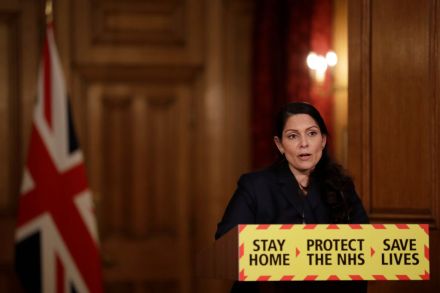
A special animus is aimed at Priti Patel, perhaps because the combination of being Indian, female and firmly Tory is unbearable to the left. The BBC’s Chris Mason, though paid to report, not pass judgment, speaks of the Home Secretary’s ‘at best equivocal stance’ about racist insults in football. The particular anger against her is that earlier on in the Euros, she described taking the knee as ‘gesture politics’, declining to condemn fans who booed it. Yet taking the knee is a gesture and is political. In its current form, taking the knee was invented by Black Lives Matter. Last summer, after the murder of George Floyd, there was a sort of ambush by BLM activists trying to force the West to kneel.

Should trains have mask and non-mask carriages?

From our UK edition

In deciding whether or not to wear a mask after 19 July, I am sure Boris Johnson is right that one must consider the feelings of others. But I notice this consideration is argued only one way: those not wearing masks are asked to consult the sensitivities of those wearing them. Should not people who insist on continuing to wear masks also be invited to reflect on whether their behaviour might upset the unmasked? After all, in a culture long committed to showing your face as a mark of trust, covering it is depressing and even intimidating for others. It makes people almost inaudible. Or perhaps the simpler answer on trains is to have mask and non-mask carriages, like the smoking and no-smoking ones of old.

‘Fear and bullying’ at the National Trust

From our UK edition

Is Winston Marshall — guitarist, banjo player, composer of Mumford & Sons, and father of the west London ‘Nu-Folk’ music that eventually conquered the world — a martyr to the Twitter mob? I find his story more interesting than that. He was trolled earlier this year for tweeting in favour of a book by Andy Ngo about the power of the far-left in the United States. (I haven’t read the book; I gather it is polemical, but in no way fascist.) Because of the difficulties this created for the band, he apologised, but later felt uneasy since he believed he had said nothing wrong. After consulting his fellow band members, he decided he wanted to be able to speak out.

winston marshall

Winston Marshall is more than a martyr

Is Winston Marshall — guitarist, banjo player, composer of Mumford & Sons, and father of the west London ‘Nu-Folk’ music that eventually conquered the world — a martyr to the Twitter mob? I find his story more interesting than that. He was trolled earlier this year for tweeting in favor of a book by Andy Ngo about the power of the far-left in the United States. (I haven’t read the book; I gather it is polemical, but in no way fascist.) Because of the difficulties this created for the band, he apologized, but later felt uneasy since he believed he had said nothing wrong. After consulting his fellow band members, he decided he wanted to be able to speak out. The best way to respect the mutual accountability by which they operate was to leave the band altogether.

Why the BBC believed Martin Bashir

From our UK edition

If it is true, as Lords Hall and Birt told a Commons committee this week, that Martin Bashir succeeded in duping all the five top BBC executives involved about the forged invoices by which he convinced Diana, Princess of Wales of the establishment’s conspiracy against her, then those executives must be very, very unworldly people. I am reluctant to believe that of them. There must be a different explanation, one with which, as an ex-editor, I have some sneaking sympathy. The interview got the BBC a wonderful story, so when trouble started shortly afterwards, that trouble had to be smoothed away. The problem was not only the BBC’s reputation, but also the careers of the five executives.

Would you pay £80 for a video from John Bercow?

From our UK edition

There is much to be said for meritocracy, and Adrian Wooldridge, in his new book, The Aristocracy of Talent, says it very well. He is right: a society organised on anti-meritocratic principles will decay, making life worse for all, not just for the naturally successful. And yet I feel that meritocracy is inadequate. Most of us, sensing our lack of merit, feel left out. It takes small account of things that matter in real life — love of family and friends, relationships across generations, enduring ill health and bereavement, beauty, landscapes, animals, flowers, kindness, joy, pleasing idleness, traditions, prayer, being silly, jokes, song, meals, bed. Meritocracy rightly seeks results. But life is better understood as a predicament, not a race.

Broken Trust: the crisis at the heart of the National Trust

From our UK edition

33 min listen

On this week’s podcast, we start with Charles Moore’s cover story on the failings of the National Trust. Why is the Trust getting involved in culture wars, and can it be fixed? Lara speaks to Charles, a Spectator columnist and former editor of the magazine, and Simon Jenkins, who was chair of the Trust between 2008 and 2014. Simon says that it’s ‘very odd’ for the organisation to become embroiled in controversy over Britain’s colonial past and contested history. ‘The National Trust’s relationship with the British Empire, let alone with slavery, is pretty tenuous. I don’t take this accusation against the Trust terribly seriously. This is just currently what I regard as a sort of cult’, he adds.

The crisis at the heart of the National Trust

From our UK edition

When Tim Parker announced his resignation as chairman of the National Trust last week, it was a first. Since it was founded in 1895, the Trust has endured many controversies, but until now the shared acceptance of its founding purposes has seen it through. The very first meeting proposed a body ‘for the holding of lands of natural beauty and sites and houses of historic interest to be preserved intact for the nation’s use and enjoyment’. The National Trust continued thus ever since, enforced by Acts of Parliament. This unity of purpose as a conservation organisation enabled it to become the owner of more than 600,000 acres of land and 200 historic houses, with nearly six million members — the greatest heritage organisation in the world.

The first step towards restoring the National Trust

From our UK edition

It is poetically fitting that the resignation of the chairman of the National Trust, Tim Parker, was announced on the first anniversary of the murder of George Floyd. The collective mistakes that have so damaged the Trust’s reputation were bound up in the rush of many institutions to ‘take the knee’, metaphorically and literally. Immensely delicate questions about how best to study the connections of Trust properties with slavery and (ill-chosen word) ‘colonialism’ were rushed and politicised. The view inevitably spread that the Trust now bears an animus towards the past whose glorious buildings and landscapes it is supposed to protect so that millions may enjoy them.