Charles Moore

Charles Moore

Charles Moore is The Spectator’s chairman.

He is a former editor of the magazine, as well as the Sunday Telegraph and the Daily Telegraph. He became a non-affiliated peer in July 2020.

Is Putin really losing?

From our UK edition

I remember my father telling me about Imre Nagy’s final broadcast before the Hungarian leader was taken by the Russians after they crushed his revolution in November 1956. He recalled listening as Nagy’s voice, often faint, came in and out of reception. He said: ‘This fight is the fight for freedom by the Hungarian people against the Russian intervention, and it is possible that I shall only be able to stay at my post for one or two hours. The whole world will see how the Russian armed forces, contrary to all treaties and conventions, are crushing the resistance of the Hungarian people.
Putin is bad, not mad

From our UK edition

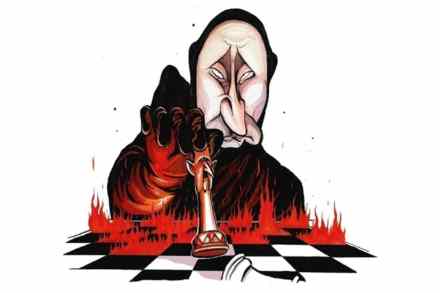
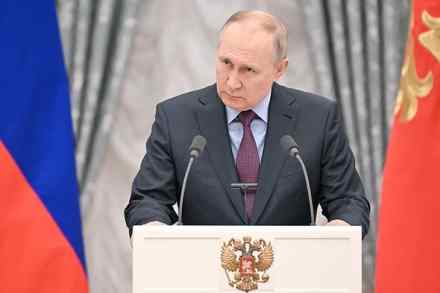
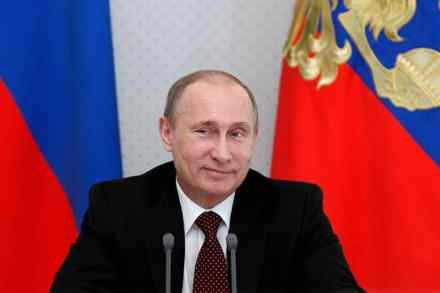
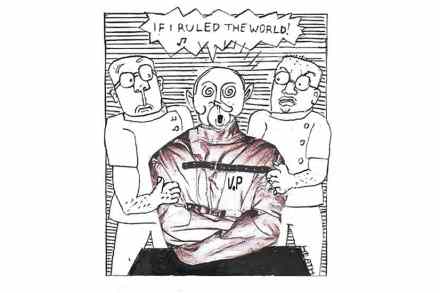
I wish people would not say Vladimir Putin is mad. One understands him much better if one says he is bad. In some ultimate sense, evil is a form of madness because it brings destruction to its perpetrators as well as its victims, but Putin is not mad in the ordinary sense of the word. He knows what he is doing. The value of saying something like ‘He would happily murder every single Ukrainian if it served his purpose’ is not to express one’s anger and disapproval (both of which should be obvious) but to shed light on his attitude of mind. Given that he is such a person and his purpose is the re-creation of the Russian empire, the western allies cloud their own minds by seeking a conventional diplomatic path.

The true meaning of ’emergency’

From our UK edition

Much attention has been paid to how Vladimir Putin has learnt from western weakness over his earlier invasions, including into parts of Ukraine; less to what he has learnt from Syria. He discovered that the West did not have the stomach for intervention there, and found that his own country did. He re-established Russian power in the region, including the power to influence both sides. He seems also to have learnt from his success in backing Assad that extreme brutality is effective. After much initial outrage, the West forgot about its indignation, handing victory to the Assad regime. Putin probably believes the same will happen over Ukraine. Although western anguish in this case surely runs deeper than it did over Syria, Putin might be right.

What Putin has in common with Hitler

From our UK edition

We are always cautioned against comparing a modern political event with those that led up to the second world war. One can see the risk of hyperbole and slander. But as Vladimir ‘Inky Poops’ Putin re-invades Ukraine, he will be making such comparisons himself. His long and bitter address on Monday showed his taste, common in tyrants, for historical disquisitions designed to turn grievance into aggression. He lambasted the foolishness of the Soviet leadership in the 1920s and 1930s which had laid ‘a mine to destroy state immunity to the disease of nationalism’.

What would Thatcher have made of Putin?

From our UK edition

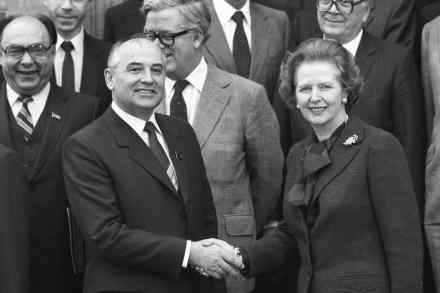
When Sir Tony Brenton writes a letter to the Times, as he frequently does, it always says at the bottom that he was British ambassador to Moscow. The uninformed reader could be forgiven for thinking the sub-editors have got it back to front and he was actually Russian ambassador to London. Sir Tony’s message in every letter is ‘It’s all Britain’s fault’. In his latest, his particular target was the Foreign Secretary, Liz Truss, after her visit to Moscow. He said she ‘might usefully recall Margaret Thatcher’s wise message to Mikhail Gorbachev sent in 1985 as perestroika began to take off: “We know that you have as much right to feel secure as we do”’. It is hard to think of a less apt comparison.

What would Thatcher have said about Putin?

From our UK edition

When Sir Tony Brenton writes a letter to the Times, as he frequently does, it always says at the bottom that he was British ambassador to Moscow. The uninformed reader could be forgiven for thinking the sub-editors have got it back to front and he was actually the Russian ambassador to London. Sir Tony’s message in every letter is ‘It’s all Britain’s fault’. In his latest, his particular target was the Foreign Secretary, Liz Truss, after her visit to Moscow. He said she ‘might usefully recall Margaret Thatcher’s wise message to Mikhail Gorbachev sent in 1985 as perestroika began to take off: “We know that you have as much right to feel secure as we do.

Why Falklanders should fear China

From our UK edition

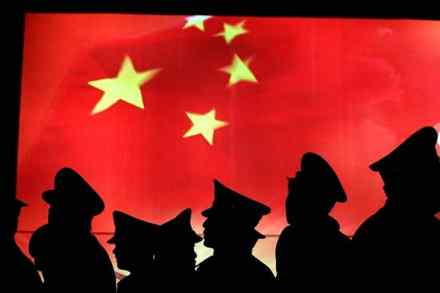
In a lecture I recently gave to mark the approaching 40th anniversary of the Falklands War, one of the questions I asked was whether Argentina would have another go. I concluded it would not, because the military protection of the islands, neglected in 1982, was now strong. In passing, though, I did note that China now has a close relationship with Argentina, over arms trading, the hog industry, soybeans, help with the pandemic etc. Argentina, I said, was now likelier to support China, not the West, in international forums. This week, Xi Jinping has declared his support for Argentina’s claim to ‘the full exercise of sovereignty’ over the islands. This may be mere game-playing, but our government should scent danger.

Downing Street’s growing problem

From our UK edition

In answers to questions following his statement in the Commons on Monday, Boris Johnson let drop an interesting statistic. He said that, ‘on busy days’, more than 400 officials work in 10 Downing Street. This figure explains a lot — why so many staff there got Covid, why, after long hours in overcrowded conditions, they might want to open bottles of wine, why factions struggle for mastery and leak against each other, and why the heart of government suffers from clogged arteries. With 400 rabbits in that warren, how can most of them know the Prime Minister personally, how can they feel much esprit de corps? The numbers are four times bigger than they were 30 years ago, to little visible benefit.

Is Putin the reason my house is so cold?

From our UK edition

Justin Webb is normally one of the least self-righteous BBC presenters, but he was out-Maitlising rivals on the Today programme on Tuesday. In that special, shocked tone broadcasters usually reserve for stories about racism or paedophilia, Webb contrasted ‘the final goodbyes not said’ by those who followed the rules with the Prime Minister’s birthday party/gathering in the Cabinet Room. He quoted Adam Wagner, ‘the human rights lawyer and Covid rules expert’, that it had been ‘obviously a birthday party’. It was ‘not denied’, Webb gravely intoned, ‘there was birthday cake’. How does he prevent himself bursting out laughing? The longer this story runs, now with added police, the more preposterous the solemnity becomes.

The curious case of Barry Gardiner

From our UK edition

In May 2020, in the wake of the Barnard Castle story, Emily Maitlis delivered her famous Newsnight address to the nation: ‘Dominic Cummings broke the rules. The country can see that, and it’s shocked the government cannot.’ The public felt ‘fury, contempt and anguish’ at what had happened. The Prime Minister was showing ‘blind loyalty’ to a colleague, etc. Now Mr Cummings is chief witness for the prosecution of Boris Johnson of which Ms Maitlis was an early forerunner. It is time for Emily to speak to us via Newsnight once more and, in the interests of the BBC’s Impartiality Action Plan, declare: ‘Dominic Cummings is a brave whistle-blower. Shocked that the Prime Minister has broken Covid rules, he has now spoken out’, etc.

My new nickname for Putin

From our UK edition

According to the new Chief of the Defence Staff, Admiral Sir Tony Radakin, the Russians wish to ‘put at risk and potentially exploit the world’s real information system, which is undersea cables that go all around the world’. Apparently, these carry 99 per cent of international communications. The cables which serve Britain are in the Atlantic, where Russian submarines are increasingly probing. This revelation resembles the plot of a book I loved as a child, The Pirates in the Deep Green Sea, by Eric Linklater, published in 1959. Timothy and Hew are two boys living, temporarily without their parents, on Popinsay, a Scottish island.

Why is Microsoft offended by ‘Mrs Thatcher’?

From our UK edition

The interregnum between incumbents is a well-known and often elongated process in the Church of England. I have recently witnessed this one because my wife is churchwarden of one of the three churches (we Catholics operate under a different system) in the benefice. Interregnums are arduous for all church volunteers and tend to erode parish life. It is remarkable how much there is for churchwardens to do. Dioceses tend to demand and obstruct rather than ease and encourage. Luckily, we are blessed with an excellent archdeacon who cherishes parish life and has declared there will be no more closures of churches in the district; but the bureaucratic flow of dos and don’ts (mainly don’ts) is considerable.

Lockdown has made poachers bolder – and more dangerous

From our UK edition

One midnight last month, Jon Wiltshire, who lives in a cottage just outside our Sussex village, was woken by a loud bang. Sleepily, he wondered if an intruder had slammed the farm gate shut. He peered out, could see and hear nothing, and so went back to bed. The next day, he had to go to London. When he returned, his wife Anja said: ‘Come and look at this.’ The whole of their sitting room was covered with a fine powder of glass and some bigger shards. Inspecting the double-glazed window, they found a 10mm hole in the outer glass and a much wider break in the inner one. Further searching, a couple of days later, uncovered a rifle round lying on the far side of the room. The house is in a dip below a quiet lane.

Who will be the Democrats’ Gorbachev?

From our UK edition

As this paper has argued since the time of the Tiananmen Square massacres, this country should offer Hong Kong people a way out via immigration. We made the 1984 Hong Kong agreement with China: we owe some protection to the victims when it goes wrong which, thanks to Xi Jinping, it has. He has torn up the famous ‘One Country: Two Systems’ rule upon which the agreement was founded. Our government has now commendably acted on this principle of protection, allowing holders of British National Overseas (BNO) passports a ‘pathway to citizenship’ via a visa scheme. The problem, however, is that the current proposals exclude a small but significant part of those affected. You have BNO status only if you were born by 1997, the year of the handover.

Why are editors sharing a platform with Miqdaad Versi?

From our UK edition

Next week, the Centre for Media Monitoring publishes its report on ‘British Media Coverage of Muslims and Islam 2018-2020’. Its launch webinar will be addressed by, among others, Mark Easton of the BBC, Alison Phillips, editor-in-chief of the Mirror, and Emma Tucker, editor of the Sunday Times. The CfMM, run by Miqdaad Versi, is a project of the Muslim Council of Britain (MCB) which, though arguing there is no one Islam, tries to insist that all media coverage of the subject must have its approval. Muslims, like all believers nowadays, often have just cause for complaint about secular ignorance of their religion, but Miqdaad’s CfMM is something else The MCB’s stance is much more Islamist (i.e.

Peppa Pig’s conservative values

From our UK edition

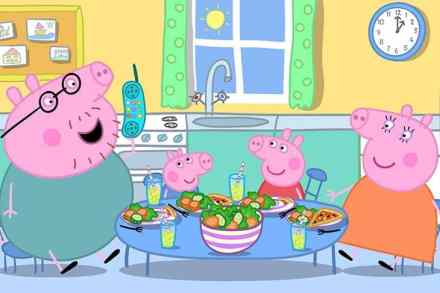
I like to think that Boris Johnson’s rambling performance at the CBI this week was a satire against the organisation which he (rightly) dislikes. But I may well be wrong: it is equally likely to have been a Johnsonian cock-up. Either way, he did well to get memorably on the right side of Peppa Pig, whom he turned into an emblem of unlikely British export success. Peppa and her family speak politely in the traditional English accent which foreigners much prefer to Estuary, and do amiable things like making Daddy Pig bicycle to work to avoid disturbing a spider’s web on his car. Peppa is particularly influential in our own household because she has a younger brother called George whom she forces to play along with her fantasies.

National Trust members fight back

From our UK edition

At the National Trust’s annual general meeting last week, the voting was much more unusual than the public will have learnt from media reports. In most resolutions, the numbers voting exceeded 100,000. In past years, the figures have been lower than 40,000. The reason for this high turnout was the controversies of the past 18 months. Motions about the erosion of curatorial expertise and the ill treatment of Trust volunteers would have won easily had not the chairman exercised the right to use the discretionary proxy votes which the Trust’s curious governance permits. Without these, the rebel resolutions would have been more than 15,000 votes ahead.

The cold hard truth about heat pumps

From our UK edition

When I went to Poland not long before Covid, I found a country more bitterly divided by a culture war even than we are. So I would not rule out EU leaders being right that the current government there has intruded on the independence of the judiciary for its own political ends. This is the background to recent Brussels fury that the Polish Constitutional Tribunal (supreme court) asserted the primacy of Polish law over that of the EU earlier this month. The problem never arises in the EU, of course, because there the European Court of Justice has never had an independent judiciary to be tampered with. It has aways been the purpose of the ECJ to make sure that its judges use European law to advance the European Union, which democracy tends not to. In that sense, all its judges are political.

Why the baby doomers are wrong

From our UK edition

Rarely does a piece of journalism bring a tear to my normally cynical eye, but I did find this happening when I read Tom Woodman’s piece (‘You must be kidding’) in last week’s edition. He and his wife would not have children, he wrote, because climate collapse means that ‘I can’t give them a future’. What made me weepy was his combination of obvious decency and utter mistakenness. How tragic that what he called ‘the facts and figures’ — in reality, contentious projections — have persuaded this couple that no little Woodman must come into the world. ‘Tree,’ I felt like shouting, in reversal of the Green order of priorities, ‘spare that Woodman!

In defence of Angela Rayner

From our UK edition

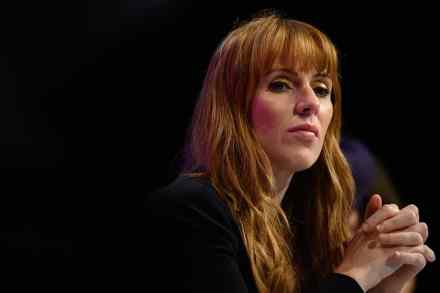
On the one occasion when I spent any time with Angela Rayner, she was funny, direct and friendly. We were both on the BBC’s Any Questions? in Alan Partridge territory and dined together beforehand with Sir Vince Cable. She got through a whole evening without identifying me, either privately or on air, as one of ‘a bunch of scum, homophobic, racist, misogynistic, absolute pile of banana republic, Etonian piece of scum’ (her chosen words at this week’s party conference fringe meeting). True, I am neither a government minister nor a Conservative (in the Lords I sit as ‘non-affiliated’), but she probably felt I was that sort of person. So, now I know how she sometimes talks, I feel grateful for her restraint.