Carl Heneghan and Tom Jefferson

Carl Heneghan is professor of evidence-based medicine at the University of Oxford. Dr Tom Jefferson is a Clinical epidemiologist
and Senior Associate Tutor at the University of Oxford.

Did Covid vaccines really save 12 million lives?

From our UK edition

The BBC reported that AstraZeneca and Pfizer are credited with together saving more than 12 million lives in the first year of Covid vaccination. To substantiate this claim, the BBC refers to Airfinity, a ‘disease forecasting company’. Models do not fit anywhere in the pathway for establishing effectiveness Airfinity used an Imperial College London study, which calculated that Covid vaccines saved 20 million lives between December 2020 and December 2021. Using a mathematical model, the Imperial team assumed that vaccination conferred protection against Covid infection (mRNA vaccines were estimated to have given 88 per cent protection against infection after the second dose) and the development of severe disease requiring hospital admission.
Do mask mandates work?

From our UK edition

This week there was an update to a Cochrane review, which studies the way physical interventions can interrupt or reduce the spread of respiratory viruses. The review, which Tom Jefferson is the lead author of, looks at evidence from 78 randomised trials with over 610,000 participants. In other words, this review is exactly the sort of higher-quality evidence you want when making healthcare decisions.   The review's fifth update looked at handwashing, antiseptic use, social distancing and barriers such as masks, gloves, gowns and visors. Given past controversies, it’s worth looking at what the review says about the effects medical or surgical masks have on the way respiratory diseases spread.

The UK isn’t learning the right lessons from lockdown

From our UK edition

This month, the UK’s Department of Health and Social Care published a Technical Report on the Covid-19 pandemic in the UK.  The report is a long 11-chapter document describing the UK’s response and pointing out suggestions for dealing with future pandemics.   The report is described as ‘independent’, but the authors are public health civil servants and a handful of academics. Given that the authors were instrumental to a greater and lesser degree in implementing the catastrophes of lockdowns, this report is as independent as President Xi marking his own homework in China.  It is hard to reconcile some of the report’s content with what we have written about in the past.

What Covid coverage gets wrong

From our UK edition

Throughout the Covid pandemic, the BBC’s coverage has strictly followed what is now known as ‘official science’ – with journalists not asking questions, but just reporting what they are told. This has especially been the case when it comes to ignorance of existing research on respiratory viruses. This week saw the BBC report on the latest fantastic revelation when it comes to Covid: that respiratory viruses, specifically SARS-CoV-2, ‘survive’ for days on certain types of surfaces and foodstuffs, from pastries to canned products. The news comes from a Food Standard Agency laboratory study carried out using credible methods: viral cultures.

Masks in schools: how convincing is the government’s evidence?

From our UK edition

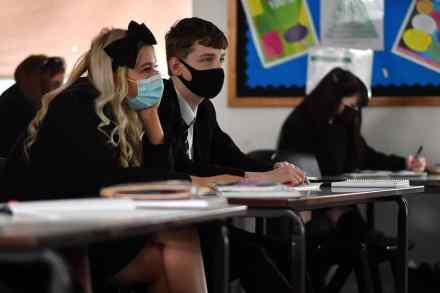
Why has the government changed its mind and asked children to wear masks in school? When Plan B was announced last month, there was no requirement. But that has changed. Nadhim Zahawi, the Education Secretary, was asked why on Monday. He replied that ‘we conducted a small observational study with 123 schools who had followed mask-wearing in classrooms before and saw that they made a difference'. He suggested it was quite a significant study. 'If you just think it through, with a respiratory disease that is aerosol-transmitted, if you are asymptomatic but wearing a mask, you're much, much less likely to infect other people.' The government has now published an ‘Evidence Summary' for the use of face coverings in education settings.

Landmark Danish study finds no significant effect for facemask wearers

From our UK edition

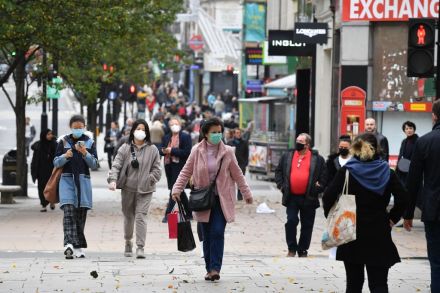
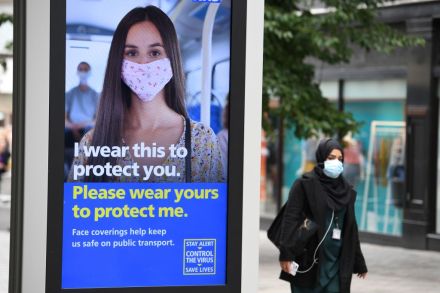
Do face masks work? Earlier this year, the UK government decided that masks could play a significant role in stopping Covid-19 and made masks mandatory in a number of public places. But are these policies backed by the scientific evidence? Yesterday marked the publication of a long-delayed trial in Denmark which hopes to answer that very question. The ‘Danmask-19 trial’ was conducted in the spring with over 6,000 participants, when the public were not being told to wear masks but other public health measures were in place. Unlike other studies looking at masks, the Danmask study was a randomised controlled trial – making it the highest quality scientific evidence.

How much do face masks actually help?

From our UK edition

The increasingly polarised and politicised views on whether to wear masks in public during the current Covid-19 crisis hides a bitter truth on the state of contemporary research and the value we pose on clinical evidence to guide our decisions. In 2010, at the end of the last influenza pandemic, there were six published randomised controlled trials with 4,147 participants focusing on the benefits of different types of masks. Two looked at healthcare workers and four at family or student clusters. The face mask trials for influenza-like illness (ILI) reported poor compliance, rarely reported harms and revealed the pressing need for future trials.

The dire effects of Italy’s coronavirus lockdown

From our UK edition

Locking down Britain sooner would have saved thousands of lives, according to Neil Ferguson. But while Ferguson’s claims have been rightly contested – and the merits of shutting down Britain, particularly in view of today’s woeful GDP figures – remain debatable, one thing is very clear: lockdown is having a dreadful effect on the lives of many. A survey from Italy, which went into lockdown a few weeks before Britain, shows why. 20,000 people were quizzed by researchers at the Mario Negri Institute in Milan on the psychological consequences of forcing people to quarantine themselves. And the findings – almost certainly replicable in Britain – make for grim reading.

Dying of neglect: the other Covid care home scandal

From our UK edition

Officially, more than 44,000 deaths in England and Wales have involved Covid-19. But how many have died as a direct result of the disease itself and how many are victims of the fear and neglect that it has engendered? It is remarkable how many deaths during this pandemic have occurred in care homes. According to the Office for National Statistics, nearly 50,000 care home deaths were registered in the 11 weeks up to 22 May in England and Wales — 25,000 more than you would expect at this time of the year. Two out of five care homes in England have had a coronavirus outbreak; in the north-east, it’s half. Not all these deaths, however, have been attributed to Covid-19.