Byron Rogers

When Mussolini came knocking on Hollywood’s door

From our UK edition

John Ford was the first of the five famous Hollywood film directors to go to war. He went expecting to get given a sword, which he could then brandish. After all, he knew about swords; they were things that came out of props baskets in his cavalry epics, but that was in films. Unfortunately in real life he found he had an arthritic thumb, which meant that having once drawn one he needed help to put the sword back in its scabbard. It had not been like that in his films, where he had only to say the word for anything to happen. There he could put a coal mine on top of a mountain in How Green Was My Valley, and farm the desert in his Westerns. But the first film he made in the navy was real life with a vengeance.

The man who shared a bed with D.H. Lawrence and Dylan Thomas (though not together)

From our UK edition

Rhys Davies was a Welsh writer in English who lived most of his life in London, that Tir na nÓg in the east, the place of eternal youth and beauty to which in the mid-20th century many Welsh writers in English, adulterers and homosexuals ran. There were few chapels in London, but many bedsits. Also publishers. And guardsmen. Here Davies followed a career unique by Welsh standards, for he did not sell milk or teach. For 50 years he just wrote.

What happens when journalists take sides

From our UK edition

This is a curious book. Its title and the name of its publisher suggest that it is going to be an indictment by two journalists of their old profession. These two are now safe and snug in higher education: Stewart Purvis, a former chief executive of ITN, became Professor of Television Journalism at City University in London, where Jeff Hulbert is an honorary research fellow. For here the roll-call begins: up first is W.N. Ewer, who between the wars wrote for the Daily Herald and is mysteriously thought to have been responsible for the lines ‘How odd/ Of God/To choose/The Jews’, though Purvis and Hulbert do not mention this.

Boliver, by Marie Arana – review

From our UK edition

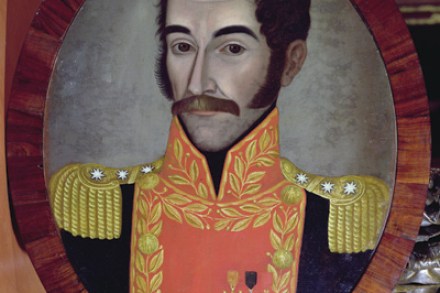
So here we go again into a heart of darkness:  the humbug and horror which is the history of Spanish South America ever since Columbus landed on the island of Hispaniola. Now modern Haiti and the Dominican Republic, the island’s population had within a few decades of Columbus’ arrival, through genocide and disease, been reduced to barely 200. And that was just the beginning. No Christian nation has ever trailed such a shameful colonial past, which is why the colonists must feel the need to assemble what they see as its glories. This, the 2,684th book about Simon Bolívar, is subtitled ‘The Epic Life of the Man Who Liberated South America’. But liberated it for whom?

Michael Wharton: A Peter Simple life

From our UK edition

He was fascinated by the Welsh, whom he listed, along with walking and gardening, as one of his three recreations in Who’s Who, something that alarmed those few Welshmen he actually met. One of them, the political columnist Alan Watkins, who had been sturdily on the run from his race for most of his working life, said of him, ‘He’s mad, the man’s quite mad.’ The journalist Peter Simple, who wrote a column for almost 50 years in the Daily Telegraph and the centenary of whose birth is on 19 April, was almost as fascinated by the Tibetans, a people, he told me, who had forever solved the problems of political philosophy by reducing the subject to two propositions, ‘It is the custom’ or ‘It is not the custom’.

Part of the pantheon

From our UK edition

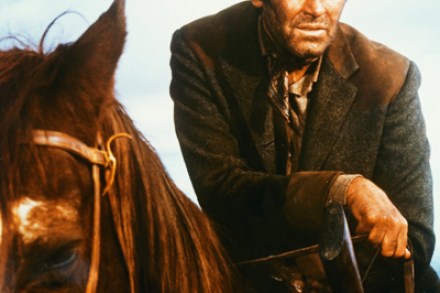
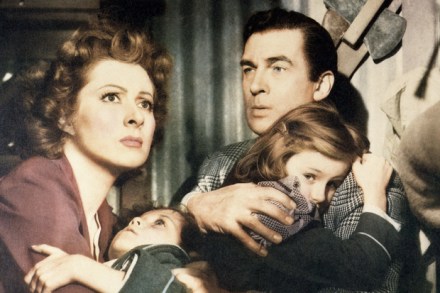
Henry Fonda once said that he had never had any ambition to be a film star. But then how could a man want to become someone who came out of nowhere, had no past, so that even the names we know them by were mostly not ones bestowed on them by their parents and the registrar? An old college football star (John Wayne), a virtual tramp who had served time on a chain gang (Robert Mitchum), circus acrobats (Cary Grant and Burt Lancaster)— each had served no professional apprenticeship, but had become more famous than men had ever been, their subsequent careers a source of wonder not just to the world but to themselves. They were the Hollywood film stars of the mid- 20th century, not actors — actors will come again — but stars. These men never will.

Now we know what happened

From our UK edition

First there was Sir Walter Raleigh, who after ‘getting one of the Mayds of Honour up against a tree in a Wood’ went on to write The Historie of the World. Then there was H.G.Wells, who cut a swathe through the high-minded girl intellectuals of the early 20th century, a new species, before writing The Outline of History. World history and women may sound an odd pairing, but they seem to go together. For now there is Andrew Marr, who, after apologising in the papers for his misdemeanours, has written A History of the World. And when you have stopped sniggering consider this: it is a wonderful book.

More vindictive than merry

From our UK edition

At first I thought this was going to be a terrible book. It starts like a Hollywood B-movie Western on which Ingmar Bergman has done a quick rewrite. This, for example, is how the authors convey the simple fact that Oliver Cromwell died on 3 September 1658: ‘Death finally caught up with Oliver Cromwell on a muggy summer afternoon in 1658.’ All it needs is the dusty main street of the frontier town with two men, one all in black, facing each other against the sky, with one of Dmitri Tiomkin’s lush orchestral soundtracks gulping away in the background. Another death — that of Charles I by execution on 29 January 1649 in Whitehall: carpenters are putting the finishing touches to his scaffold and, according to the authors, the sound awakens the King. Fair enough.

Out of sight, out of mind

From our UK edition

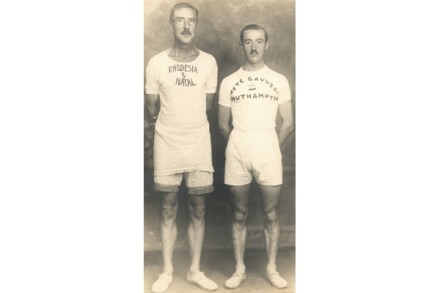
Arthur Newton and Peter Gavuzzi, long-distance interwar runners, are two of the most extraordinary British athletes. They are also the most forgotten. This is because the distances they favoured were too long to be accommodated by any athletics event: to them a marathon would have been a mere warm-up jog, their distances were 100 miles, and, in one case, a run across the whole of the United States, when they completed 40 miles a day for 80 consecutive days. Mark Whitaker has thus set out to write a poignant account of unrecognised achievement. The only thing is, in the process he has written the most bizarre and bleakly humorous book there will probably ever appear on athletics.

More sinned against than sinning

From our UK edition

When I saw the title of this book, then read that it only covered the period 1600-1800 I hoped this would be a riot of comedy, something along the lines of the most wonderful sentence in the English language. This is in Havelock Ellis’s Psychology of Sex and concerns a discovery made by the doctor Realdus Columbus: in 1593, a century after his namesake discovered the New World, this great man claimed to have discovered the clitoris.   But no, there is no comedy, apart from the doings of one Frances, Lady Purbeck, who in 1635, with the son of the Earl of Suffolk, lived happily and ‘adulterously’ in what the author calls ‘the depths of Shropshire’.

Nobody turns up

From our UK edition

This is not a book likely to figure in the lists of the reading circles of Home Counties England. There is for a start the little problem of a title, which on the spine is How to Disappear but then itself does, for the centre of its frontispiece is A Memoir for Misfits. A dedication follows, ‘To my old friend Pedro Friedeberg whom I’ve never met’. Just three pages in, and every fuse in the brains of the respectable matrons who meet to talk about books will have blown over the Bristol Cream. And that is before they have even started reading. What about?

Scenes from the Mad Hatter’s tea party

From our UK edition

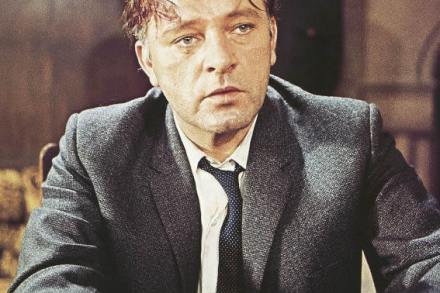
I only ever heard my mother admit twice to fancying other men. One, remarkably, was Saddam Hussein, the other was Richard Burton, and of each she said, ‘He’s a good-looking old man.’ She said this the way only a Welsh Baptist matron could: grimly, and because she was secure in the knowledge that she was not likely to meet either in chapel or on the streets of Carmarthen. Richard Burton, once of Port Talbot, later of the Dorchester Hotel, was cat-nip to women. He had a face ravaged by acne and his feet smelt, but he managed to sleep with the most beautiful leading ladies of his time, something his latest biographer quotes Stanley Baker, his fellow thespian and Welshman, as saying was ‘absolutely essential’ for an actor. Sadly, Baker did not say this.

A world of her own

From our UK edition

This book, written by someone whose husband was for three years prime minister of Britain, is impossible to review. Yes, it is dull, but it is so triumphantly, so ineffably, dull it enters a breezy little monochrome world of its own. There is no characterisation, for no value judgments are passed, except those on Mrs Brown’s husband, who is portrayed as such a force for good he is virtually an extra-terrestrial being intervening in the affairs of men. As for the rest they are ‘charming’ or ‘lovely’. This is Mrs Brown showing HRH Prince Andrew, as she calls him, round Chequers: Without thinking, I open the drawer that holds the wax death mask of Oliver Cromwell.

Nowhere becomes somewhere

From our UK edition

There have been quite a few anthologies of British eccentricity. Usually they are roll-calls of the lunatic: a sought-after heiress so snobbish she finally gave her hand in marriage to a man who had managed to convince her he was the Emperor of China; a miser so mean he would sit on fish until he considered them cooked; a man so addicted to cobnuts he would, after any long coach journey, be up to his knees in their shells. Men who refused to get into a bath, others who refused to get out of one, or were so quarrelsome they could spot an insult at 100 yards, others who so loved animals they would bath owls (which died), or founded their own religions so they could copulate with the faithful on the high altar (though I gather this was an ambition of the novelist Graham Greene).

Laughter from the Gallery

From our UK edition

This is an amiable book. The parliamentary sketchwriter Simon Hoggart, also the wine correspondent of this magazine, for which he drinks as selflessly as Zorba the Greek, has set out to record anecdotes that have amused and appalled him in the course of his long professional life. He also throws in some, mainly Jewish, jokes whenever the mood takes him, so at times this reads like one of those gag books that professional comedians lose, then loudly appeal in the press for the return of, but it is none the worse for that. This is a book you are meant to read, put down, read, and put down. It is very readable. But one thing it isn’t is an autobiography.

Mountain sheep aren’t sweeter

From our UK edition

Anyone who can speak Welsh is going to get a lot of fun from this book. Antony Woodward buys a six-acre smallholding 1200 feet up a mountain near Crickhowell in Wales where he sets about trying to fulfill his dream of creating what may be the highest garden in Britain. The smallholding is called Tair Ffynnon, which, he informs his readers, means Four Wells. Ooops. For this is where the Welsh will start to snigger. Part of his mad project on the mountain is the creation of a pond, which involves diverting water from his four wells into this. Only he has, of course, first to locate them, which proves difficult. Very difficult. And even now an increasingly frantic Woodward may be up there in the clouds trying to locate his lost fourth well. For Tair Ffynnon does not mean Four Wells.

Holy smoke | 22 May 2010

From our UK edition

I have seen the last of the things that are gone, brooded the poet Padraic Colum. But then so have we all. We have seen them clustered outside the plate-glass doors of offices or under the flapping canvas awnings ouside pubs, these last irreconcilables inhaling in the wind and rain. And the crazy thing is that they are acquiring a tattered dignity, which presumably was the last thing the authorities and the doctors thought would result when they got their ban on smoking in enclosed public spaces. But what happens when their ranks thin, when eventually just one is left, as the last old Jacobite was left in some Paris café?

The stuff of legend

From our UK edition

This book could have been a classic. It starts as an account of the author’s family, no better, no worse than many such; but then, amongst the grandparents and the uncles, one figure starts to shoulder his way through the rout of characters, slowly at first, but then, perhaps two thirds of the way through, you realise he is dominating everything. Macdonald Hastings, the author’s father, is one of the great comic, and tragic, figures of our time. Without him, the book would have been Henry IV, Parts I and II without Falstaff, a chronicle of events and people doing extraordinary things. With him, the writing quickens, the perception deepens, and you really begin to care about this fascinating, formidable, totally absurd man.

Method in his madness

From our UK edition

The car manufacturer Henry Ford dominates this remarkable book, managing, like Falstaff, to be its tragic hero, villain, and comic relief all at the same time. A gaunt, pacing figure, he conducted interviews while standing, believed in the values of small Main Street America (though his methods of industrial mass production destroyed these), and in pacifism, fitting out a ship to sail to Europe in an attempt to stop the Great War (though later he made billions out of armaments, and had machine-guns mounted on his factories while his paid thugs shot down hunger-marchers).

Racists, pigs and hysterics

From our UK edition

I cannot remember getting so much pleasure from a book. It is not just its beauty, the handmade paper, the quarter leather, the engraving of the Rhaeadr Falls cut in purple into the cover cloth of something the size of an atlas. These are accidental details (as, I note bemusedly, is the fact that it costs £300 more than the current value of my car). For this, quite simply, is the funniest book I have read in years. Its godfather seems to have been Napoleon, whose wars sealed Europe off to the Romantics. In other words, he deprived them of their fixes of the Sublime, the Picturesque, the Prospects of Infinity; the Emperor deprived them of mountains. So where were they to go?