Bruce Anderson

Bruce Anderson is The Spectator's drink critic, and was the magazine's political editor

French fancies

From our UK edition

‘That sweet enemy, France.’ It takes a poet to summarise centuries of military and diplomatic history. On a prosaic level, if we consider Anglo-French relations over many centuries, all the evidence vindicates Sidney’s judgment. Although there is much that each nation admires and respects in the other, we have never been natural allies. For hundreds of years, we fought each other, which never prevented Britain from thriving and prospering. Then we started going to war together. Crimea: a pointless venture. The two world wars: there was probably no alternative to shoring up French weakness in order to resist German domination. But it cost us blood, treasure, an Empire, and it meant lasting genetic impoverishment.


A very British bildung

From our UK edition

Over the long weekend I read a couple of bildungs-romans; one a revisit after many years, the other a recent work. In Hemingway’s words, A Moveable Feast was about living in Paris ‘when we were very poor and very happy’. The poverty was relative. Hemingway did occasionally have to skip lunch, but there was always enough to drink, even if some of it, from Corsica or Cahors — rough in those days — was better mixed with water. Fishermen still plied the banks of the Seine. Simple restaurants sold the catch, delicious with Muscadet, and our author does not mention ill effects. Nor does he inflict any on his readers. Yet there is an obvious question. How good a writer was Hemingway?

A glimmer of hope

From our UK edition

I argued that it was unnecessary to have made sacrifices during Lent in order to celebrate its conclusion. It is the thought that counts. Others were less sure, though none of them exhibited the stigmata of austerity. Anyway, we ate some magnificent Pascal pig, plus a delicious lamb which would have been scampering around a neighbouring field during last year’s Lent. The one which we were feasting on and its cohorts have been replaced by some sweet little spring lambs, now playing regardless of their doom. They have all been earmarked for the next phase of their education: in local deep freezes. I pointed out that there was no reason for sentimentality. Left to nature, a lamb would decline into sheephood. Sunday lunch for an appreciative table is a much more dignified fate.

A toast to unsung heroes

From our UK edition

We were talking about war, the desert and God. In the early Seventies, one of our number, Christopher James, had been involved in serious fighting in the struggles to stop Yemeni-backed communist insurgents from destabilising Oman. Christopher was happy to pay tribute to everyone else, but evasive about his own service in the SAS. That savage little war of peace witnessed much unsung gallantry, not least by one of the most under-decorated soldiers in military history: Sgt Talaiasi Labalaba, also SAS. In 1972, he won a battle by firing a 25 pounder as if it had been a rifle (it normally needs a crew of three or four). Hit repeatedly, he persevered as if he had struck a deal with the god of battles: do not take me until the day is won. It was a clear VC.

The fall of Paris

From our UK edition

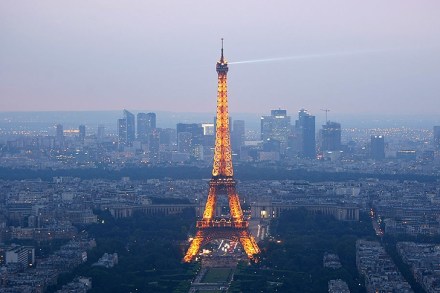
Paris used to be the most self-confident city in the world. Brash, assertive, boastful: Manhattan claimed to be the best. Cool, elegant, sophisticated, supercilious: Paris knew that it was the best. This is no longer true. Paris has lost its élan, and that has created a love-hate relationship with the UK. Everyone seems to know someone who is working in London. The ones left in Paris cannot decide whether to punish us or join us: to hope that Brexit fails — or to fear that Brexit might fail, and keep able young Frenchmen from job opportunities in London. Flics everywhere, tattiness, tension: one is reluctant to acknowledge the successes of evil, but terrorism is at the core of Paris’s problems.

A vintage that tastes of Old Possum

From our UK edition

Eliot. After 50 years trying to make sense of his verse, and at the risk of admitting to rampant philistinism, I propose three conclusions. At his best, he is one of the finest poets in the language. Partly because he is straining language and thought to the uttermost — an analogy with the final Beethoven piano sonatas — he is sometimes incomprehensible: sometimes, indeed, falls into arrant pseudery. Finally, his anti--Semitism before the war, his rejection of Animal Farm after it: this great man and devout Christian was not exempt from original sin. Gerontion. ‘The Jew squats on the window sill, spawned in some estaminet of Antwerp.’ We turn our eye from the page in revulsion and pity.

Cats and clarets

From our UK edition

Call me a sentimental old whatever, but watching a four-year old hearing The Tale of Samuel Whiskers for the first time, read by someone who could do the police in different voices, took one as far from the Waste Land as is possible. It also made me think about moggies, which brought back memories of a trip to Kabul. Outside the Portakabin where we were billeted, there was a notice: ‘Please do not bring cats into the living quarters.’ No one puts up an instruction like that without the expectation that it will be disobeyed. One can imagine why, and how very British. It is to the credit of the brutal and licentious, living in cramped conditions, exposed to constant danger, that they had sentimentality left for local felines.

Bloody Marys and glorious Jean

From our UK edition

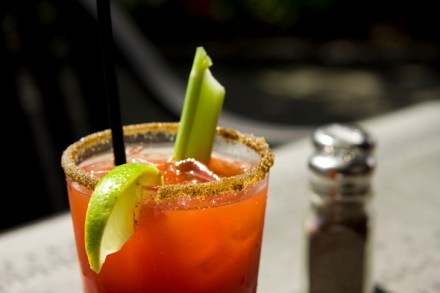
To the Western Isles, or at least to its embassy in Belgravia. Boisdale restaurant always claims to be extra-territorial. There was an awards ceremony, and the principal recipient was a remarkable old girl. Ninety-four years into an extraordinarily diverse life, Jean Trumpington is one of the funniest people I have ever met. She is also one of the bravest. She was born in easy circumstances, a child of the affluent upper middle classes, and the first disruption occurred when her mother lost a lot of money in the Great Crash. Her family did not exactly become poor, but she had her first lesson in adversity, and on the unwisdom of taking anything for granted. At the beginning of the war, she set off to be a land-girl on David Lloyd George’s farm.

Cold War collation

From our UK edition

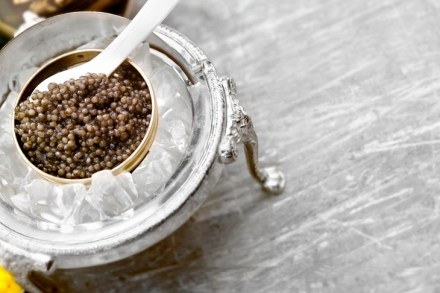
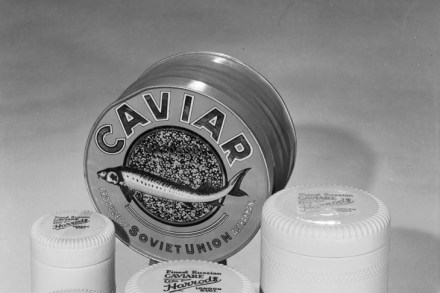
I know an immensely grand aristocratic lady, impeccably mannered, with a regal grace and presence, who cannot be trusted near a tin of caviar. Apart from scoffing far more than her share, she will eventually make off with the tin itself, to lick it clean. Those of us from lesser social milieux should not only treat this as a lesson in etiquette. There are sound environmental arguments for her behaviour. Caviar is so precious, so rare, that it is an ecological crime to waste a single egg. When her ladyship is on the prowl, there is no danger of that. Such thoughts came to me over the weekend, while musing on large themes over a small tin. It brought back memories and also made one think about the unforeseen consequences of political change.

Sherry to start

From our UK edition

Someone came up with a century-old quotation plangent with irony and sadness: ‘The year 1916 was cursed: 1917 will surely be better.’ That was Tsar Nicholas II. Poor fellow: tragedy for him and his family, tragedy down the decades for tens of millions of his subjects. Its spectre is still haunting Russia. Although we raised a toast to the tsar’s memory, tragedy was far from our minds as we welcomed the latest New Year in a mood best described as eupeptic pessimism. Not hard to do: Dorset is one of the least dyspeptic places on earth. My friends who live there sometimes try to discourage me from praising their sweet especial rural scene.

Harry, Jeffrey and Benoit

From our UK edition

I first ate at the London version of Harry’s Bar in the early 1990s. Back then, Jeffrey Archer and I would give each other dinner about three times a year. It was my turn and he suggested Harry’s, where he was a member but I could pay (on expenses, needless to say). I remember the meal vividly because it was awful. Choosing the same dishes, we started with a risotto, which was just rice plus ingredients. Then there was a leg of lamb for two, grossly over-salted. Had I been the nominal host as well as the real one, it would have gone back to the kitchen with a flea in its ear. Two glasses of competent champagne were followed by a nothing-special Chianti: bill, £208 — to repeat, at early 1990s prices.

Wines of the times

From our UK edition

The other day, I had lunch with the grandest person I know. Forget 1066: Adrian Ziani de Ferranti can trace his Venetian ancestors to the time when St Theodore was the city’s patron saint and St Mark’s corpse still reposed in Alexandria. Ziani Doges were buried under the crypt of San Zaccaria centuries before Bellini painted that church’s sublime altarpiece. John Julius Norwich believes that it is the finest painting in Venice. Were I entitled to an opinion, it might go in favour of the Titian Assumption in the Frari, but we are talking about works which transcend mere admiration: works of mastery, glory and joy. Anyway, the Zianis were part of the fabric of la Serenissima.

Bottle shots

From our UK edition

This is something to be said for starting to celebrate Christmas before the end of the grouse season. It provides a good excuse for opening the odd bottle. Apropos bottles, the club of that name has not featured on this page for some time. That is not because of idleness. One Bottle is single-handedly defending the criminal justice system. Others are editing and writing for Reaction, an online journal which, though not (quite) as right-wing as it sounds, is waging the culture wars. There may be further members, but if so, they were elected late in the evening, and no one can remember who they were. But it is pleasing to report that the two junior Bottles are in fine form. Even if they are still too young for full participation, Charlie and Florrie are Bottledom’s military wing.

Autumn riches

From our UK edition

A few days ago, on the Dorset/Somerset marches, autumn was still in orderly retreat. Although a pear tree’s leaves had turned sere and yellow, the last fruit was still peeping through. Across the lawn, a horse chestnut was undressing, festooning the lawn with bronze. Out of a cloudless sky, a mild seasonal sun blessed the scene with a gentle glow, as if it were pouring Sauternes. Along the Ladies’ Walk, the yellows and greens were reinforced by bushes in russet mantles and by the triumphant redness of acers and liquidambar. We could have almost been in the New England fall, at least for a few yards. Autumn, fall: the two have profound resonances from different histories. As one might expect from its French name, autumn is full of good eating.

From Bordeaux to Nato

From our UK edition

An aeon ago, when I was first invited to the odd City lunch, there was a standard formula: G&T, white, red, port, brandy, cigars, with stumps drawn at around a Test match tea interval. But there was a problem. By 8 a.m. local time, when Manhattan was champing at the telephone, London would be at lunch. By the time the call was returned, it would be apparent that lunching had taken place. ‘My Dear Cyrus, how nice to hear your voice. Are you planning to cross the big pond? If so, we’ll have a jolly good lunch.’ Cyrus thought to himself: ‘Is that all those Limeys ever do: have lunch?’ Within a few years, post-Big Bang, the Cyruses did cross the big pond, but not to enjoy lunch.

Whisky galore | 20 October 2016

From our UK edition

A long-standing friend of mine is a lucky fellow. He has spent his career doing exactly what he was born to do: befriending the human race. An inspired philanthropist, he has done more to help mankind than most aid agencies and NGOs put together. His name is Andrew Smith and he has devoted his career to selling whisky. Whisky and freedom gang the gither: whisky and all good things go together. Andrew spent many years working for Brown-Forman, an admirably well-run American family company. Family members who wish to join the firm have to possess two degrees and to have proved themselves working for another outfit. Brown-Forman is probably best known for Jack Daniel’s, a Tennessee whisky which sells very well, all across the world. That is helpful.

Eat, drink and be worried

From our UK edition

We were surpassing Sydney Smith. His idea of heaven was pâté de foie gras to the sound of trumpets. Our version was an un pâtéd foie: even more delicious. Though no one had laid on Jeremiah Clarke, there was music: a bottle of Doisy Daëne ’75. In most of the Bordeaux area, 1975 was an austere year, and the fear was that the wines would live and die as sleeping beauties. Well, the Dozy Dean had awakened, to a harmony of structure and sweetness. There seems only one sensible response to such pleasures: ‘God’s in his heaven and all’s right with the world.’ Instead, however, the conversation took a melancholy tone. We started with that unendingly paradoxical figure, W.B. Yeats.

Winemaking with convictions

From our UK edition

Any Australian who admits to not having convict ancestors loses caste. When granted a coat of arms, the smart ones always include fetters. It is the Oz equivalent of claiming that your ancestors came over with William the Conqueror. But it was not always thus. In the Adelaide of the 1890s, there was a family called Strangways Wigley, who had paid for their tickets and never stopped swanking about it. But they had a blot on the escutcheon in the form of young Robert. He was determined to rectify the lack of criminal blood. In those days, a pieman — as opposed to a swagman — used to sell his wares in the town centre. He was especially popular towards the end of the evening, when the ockers needed ballast to soak up the grog.

Grouse rules

From our UK edition

The autumn bank holiday is like the five-minute bell at the opera. The shades of the prison house loom. All over the country, kids are looking for missing kit while mothers are trying to remember where they put the Cash’s name tapes — after they have made sure that the grindstone is in working order. Interrogation is certain to reveal holiday tasks incomplete: holiday reading well short of the final page. But there are compensations. The last chores of summer can be palliated by the first fruits of autumn. On Holland Park Avenue — I suppose you could call it South-West Notting Hill — there is a delightful enclave with a bookshop, a boozer and a butcher. The bookshop is Daunt’s, scene of many a book-launch party.

A toast to Provence

From our UK edition

Friends have a house in Provence, near the foot of Mont Ventoux. Even in a region so full of charm and grace, it is an exceptional spot. Although nothing visible dates from earlier than the 18th century, the house is in the midst of olive groves and there has been a farm dwelling for centuries. I suspect that one would find medieval masonry in the foundations. Beginning life as a simple farmhouse, it has been bashed about, added to and poshed up. On the western side, the exterior has pretensions to grandeur. The other elevation is more feminine; you expect to find Fragonard painting a girl on a swing. At this season, the parasols act as the drawing room. There is a pool, and there were expeditions to Nîmes, Orange and Avignon.