Brian Cullen

Cabinet support?

From our UK edition

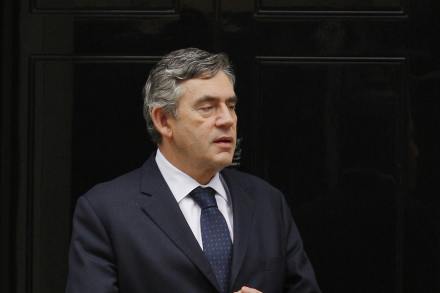
The one thing – apparently - saving Brown’s skin since the start of the “rebellion” last Friday is the fact that he has the backing of the entire Cabinet. But how far have they really backed him? Here’s a list of comments (or – tellingly in some cases – lack thereof) made by all Cabinet members since this all started. I’ll let CoffeeHousers decide how many of them are ringing endorsements of the PM… Unequivocal support: Ed Balls: "Everyone in the Labour Party knows that if you don't stick together and you're not unified, then you can't succeed. I don't think there's anyone in Cabinet who disagrees with that…No one on the doorstep is arguing for a change of leader.

Downing Street desperate to look tough  

From our UK edition

Two bits of news have emerged this afternoon that indicate Number 10 really wants to strike a strong pose on the Labour 'rebellion’ – but appears to be making a ham of it. 1) Firing someone who’s already quit. News emerged this morning that Brown had 'fired' forestry envoy Barry Gardiner MP for adding his voice to the rebels. Unfortunately for the PM, Guido has now broken the news that Gardiner had in fact resigned a couple days before Brown removed him. 2) Getting support – from the wrong people.  Margaret Beckett has told potential rebel MPs to fall in line or the electorate would not forgive Labour. Unfortunately some of Brown’s cabinet (which, of course, Beckett isn’t a part of) isn’t quite so forceful.

Labour’s confused agenda

From our UK edition

It seems today’s Guardian bears the fruit of the Labour briefing paper they obtained earlier in the week on how best to attack the Tories.  Stephen Byers’s op-ed toes the ‘same old Tories’ line to a tee, focusing –above all – on the Conservative belief in small government: “Cameron is an old-style Conservative who is deeply uncomfortable with the state playing any role in our lives…I believe that now is the right time for a debate about the size and role of government: in particular, the need to establish a new relationship between citizens and the state. This is something that Cameron is trying to avoid. His is a dogmatic opposition to an active and enabling government.

China’s changing – quietly

From our UK edition

I was in Beijing last weekend and, having heard about the “Great Firewall of China”, I typed ‘Tiananmen Square’ into Google. I was surprised to find the Wikipedia page describing the 1989 massacre – complete with image of the iconic ‘Tank Man’. Just six months ago, this page was unavailable. The Chinese government isn’t making a song and dance about this.  Combine this with the fact that more and more Chinese children are now learning English and an ever increasing number of young Chinese adults are coming to study in the west and you can see that glasnost is taking place even if it hasn’t been announced to the world.

A class act?

From our UK edition

Polly Toynbee’s piece in the Guardian this morning is what one might expect – telling us class is not dead in Britain and inequality is more of an issue than ever. Maybe so, but she still waxes lyrical about phenomena she doesn’t seem to understand. She writes: “there was nothing cool about Sunday's picture of Prince Harry's girlfriend Chelsy holding a "chav" fancy dress party, where royal hangers-on dressed in (very expensive) shell suits, hoop earrings and gold necklaces. What's hip about hoorays mocking their idea of the working class? The new classlessness is just the yob rich shedding all class embarrassment.

Russia’s aggression shows weakness as much as strength

From our UK edition

Some of the responses to Russia’s actions in the past two weeks have been slightly panicked, and focused strictly on geo-politics.  But the key to the situation is Russia’s economic position - not any ambitions to kick off a new cold (or hot) war.  We shouldn’t be surprised that supposedly resurgent Russian ‘imperialism’ has dealt its first blow in energy-rich central Asia.  Russia’s actions are a result of its needs as a petro-economy.  Its economic weaknesses led to this attack – not a desire to take over the world.

Brown’s not the only one

From our UK edition

There’s an article in the latest New Republic which (perhaps unintentionally) highlights a key similarity between George Bush’s and Gordon Brown’s difficulties.  Jonathon Chait points out that Republican claims that America underwent an economic ‘boom’ under Bush are totally hollow.  He writes: “The whole trick here was to start at the bottom point of the economic cycle and assume that any subsequent improvement was the result of his policies. Of course, this is a ludicrously forgiving measure. Over time, the economy tends to grow, and it also goes through cycles. To point out that we're better off at the peak of a cycle than at the trough is something that could be said of any economic cycle.

The deceit of protectionism

From our UK edition

Jagdish Bhagwati has an excellent piece in the FT today.  He argues that America needs a new deal for trade which supports a globalised market without resorting to protectionism.  He argues  that the Democrats, the worst offenders, and Republicans need to face up to reality and offer plans for restructuring America’s work force (including realigning the education system) rather than just resorting to populist rhetoric.

Cameron’s right there’s a drink problem – but good luck fixing it

From our UK edition

In the new Cameron book put together by GQ’s Dylan Jones the Tory leader has directly addressed the – apparently particularly British – problem of binge drinking.  Cameron explains that: "The police can shut down shops that sell alcohol to young people…we need the police to get in there and sort things out, and arrest people selling drink to people under the legal limit” But Britain’s binge drinking problems aren’t mainly because people are drinking under age but because those legally allowed to drink are drinking too much.  Any visitor to a British town can see hordes of drunken people – almost all of whom are over 18 – engaging in binge drinking.

Our low expectations

From our UK edition

Today’s Times tells the heart-warming story of Alex Griffiths who was kidnapped as an infant and has now achieved an A and two Bs at A-level to win her place at university.  The story certainly has the feel-good factor, but one part struck me as depressing: "Her mother, Dawn Griffiths, a nanny from Middlesbrough, was paid £110,000 for the story, but rather than spend it, she put all the money into a fund to give her daughter the education that she never had. The sacrifice - which allowed Alex to attend a private boarding school with fees of more than £6,000 a term - paid off." Sacrifice? Alex’s mother’s decision to spend the money on education was certainly laudable.

A grade A problem

From our UK edition

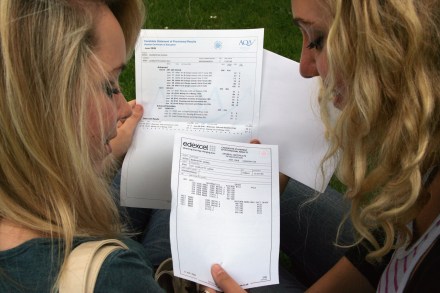
The debate sparked by today’s A-level results was predictable - the Tories are saying they’re getting easier and the government is saying everyone is simply getting smarter – but it’s also academic. It doesn’t matter why the number of students getting As is higher than ever – the fact itself is a problem. The purpose of grading is to distinguish between different strata of performance. Of course it’s possible that students are smarter than ever.  But if that’s the case then the bar must be raised again – and again - and again until only a small percentage achieve the top grade; the message that A grades are meant to send to employers and universities is lost when one in four pupils are getting them.

A Golden achievement

From our UK edition

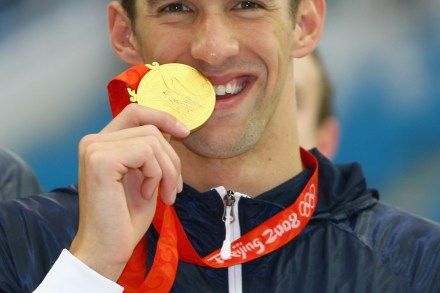
Whether you’re a fan of the Olympics or not it’s hard to deny the magnitude of American swimmer Michael Phelps’s achievement – winning a record 11 gold medals during his career (and still going for three more at the current games).  To put that in perspective, there are 163 countries which, individually, have won fewer golds over the modern Olympics’ entire 110 year history. There are some surprisingly big names on this list. None of India, Ireland, Jamaica or Mexico has managed to accumulate as many golds over the years as Phelps has in Athens and Beijing. If Phelps was a country, he’d be fifth in the Beijing medal table having won five golds — comfortably ahead of Team GB which has only won two so far.

The tough Tories

From our UK edition

The shadow justice secretary, Nick Herbert, said today that the Conservatives believe much stricter bail laws are required – one year on from the death of Garry Newlove (who was killed by a gang whose ringleader had been bailed the same day).  The ideas (clearly set out on ConservativeHome here) seem like common sense to me.  However, they did stir my memory back to Guido’s observation last week that it has been a long time since we’ve heard the Tories talk about ‘freedom’ (barring David Davis).  Do the Conservatives take it as a given that they’re the most libertarian major party and therefore want to show they still believe the state should play a vital role in some areas?

Boom then bust leaves Labour no leg to stand on

From our UK edition

There’s something funny in Gordon Brown’s (and the Labour Party’s generally) political response to the economic crisis – which Larry Elliott picks up on in today’s Guardian.  Elliott points out  – rightly – that the “bust” we’re currently experiencing, accompanied by reckless behaviour in the City, should be prime political real estate for Brown et al.:  “this is a time made for a party of the left prepared to intervene to tame the wild excesses of deregulated financial markets and to use the full armoury of the state to help all its citizens through troubled times.

Brown’s PR people should rein him in

From our UK edition

Gordon Brown has written in the literary anthology Wow 366 that he had a boyhood fascination with Antarctic explorers such as Captain Scott.  It surely won’t be long before the cogs start whirring for commentators (in fact it’s already started) on the similarities between Brown’s premiership and Scott’s Antarctic expedition, which ended in his – and his whole party’s – deaths. Brown really doesn’t do himself many favours by proudly telling us his fascination with doomed figures – or how he most identifies with the (questionable) character of Heathcliff from Wuthering Heights.  Like it or not we live in an age of spin.  It must be hard to spin this PM when he so unthinkingly sets himself up as a subject for satire.

Maybe not so courageous

From our UK edition

There is an irony about the arrest of Tibetan freedom protesters in Beijing yesterday. The mother of Lucy Fairbrother – one of those detained – was quoted as saying:  "If my daughter’s going to be put in prison for anything I’m glad it’s for a human rights protest." Except, of course, that she wasn't put in prison.  In addition to attracting great attention, the timing of the protest also means that those arrested (two Brits and two Americans) have already been deported and arrived home safely.    Whatever the rights or wrongs of the protest – I’ll leave those to CoffeeHousers to decide – we should consider for a moment how differently they would have been treated were they Chinese nationals.

Is French reconciliation with Rwanda possible?

From our UK edition

Yesterday Iain Dale wrote that the only French response to a new report on the Rwandan genocide – which implicates former president Francois Mitterand and ex-prime minister Dominique de Villepin – would be for Nicolas Sarkozy to fly to Kigali to apologise. He shouldn’t hold his breath.  Ever since the event, France has been wholly reluctant to acknowledge any role in the tragedy – or make any sort of apology.  This has been true regardless of the administration in power, and there’s no reason to think Sarkozy would behave much differently.  The 1994 genocide shames all the western nations who could have wielded influence to end it - regardless of the more direct involvement France may have had.

Who is Solzhenitsyn’s dissident heir?

From our UK edition

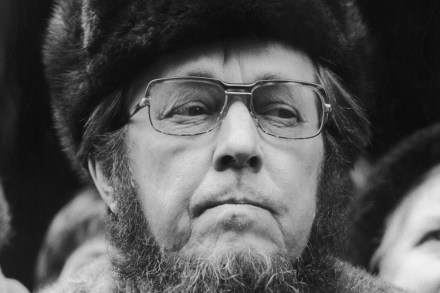
Alexander Solzhenitsyn, the great Russian dissident, has died at the age of 89.  Solzhenitsyn gave a face – and a powerful voice – to the victims of Soviet authoritarianism, through books such as A Day in the Life of Ivan Denisovich and The Gulag Archipelago.  His efforts earned him the Nobel Prize for literature in 1970. Solzhenitsyn revealed just how terrible the regime was that the West faced in the Cold War.  But who – if anyone – is highlighting the evils of the 21st Century world with such clarity and force?  Any ideas, CoffeeHousers?