Ben Kew

Nicaragua’s campaign of persecution against the Catholic Church

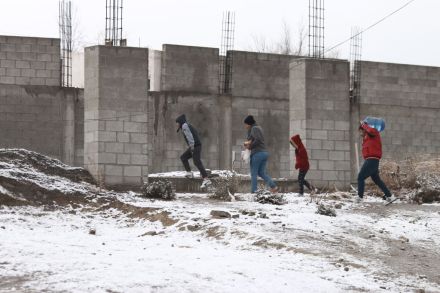
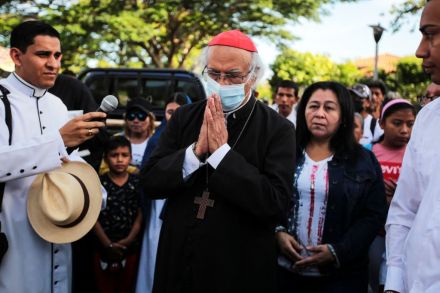
From Stalin’s Russia to Castro’s Cuba, socialism and religious persecution have nearly always gone hand in hand. Nicaragua’s Daniel Ortega, a seventy-seven-year-old former Sandinista terrorist turned twenty-first-century dictator, is no exception to that rule.  The Havana Times reported last week that at least twenty Nicaraguans were kidnapped by Ortega’s dictatorship during the first ten days of April, most during Holy Week, a period in which the regime prohibited processions and religious celebrations in the streets. “In 2023, the policy of terror imposed by the Ortega government has mostly focused on the Catholic Church, and proof of this is that most of those imprisoned have some relation with the religious institution,” the report notes.
The growing bipartisan backlash against ‘Latinx’

Since its emergence, the term “Latinx” has been unpopular with Hispanics. Yet despite this opposition, progressive activists and organizations continue to use it as a means of identifying people of Latin American heritage in a supposedly more sensitive way. The term's origins remain a subject of debate, although its users argue that the word "Latino" reinforces the patriarchy while the "x" recognizes nonbinary people. According to the Wall Street Journal, it made its debut in academic literature a decade ago in Puerto Rican psychology periodicals as part of an effort to "escape the gender binaries encoded in the Spanish language." Since then it has been adopted by many progressives as part of their ever-expanding twenty-first-century lexicon.

latinx

Why Louis C.K. has a point on immigration

During a recent appearance on The Joe Rogan Experience, comedian Louis C.K. stated a position that many on the left believe but are unwilling to admit: America should open its borders to the world. “My feeling is they should open the border,” he explained. “Just let everybody pour in… Then there will be all these problems, well, there should be. It shouldn’t be so great here. It is a weird thing to sequester a certain group of people and keep upping their lifespan and their lifestyle.” As someone who's spent most of his journalistic career railing against mass immigration, my initial reaction was one of scorn.

The Pink Tide returns to Latin America

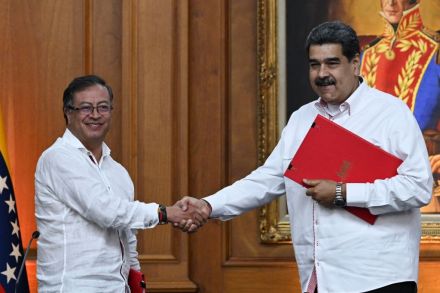
As the dust settled on Jair Bolsonaro’s seismic victory in Brazil back in 2018, one might have spared a thought for those dedicated to the cause of international socialism. Having bathed in the glory of the so-called "Pink Tide" and the commodities boom of the early 2000s that allowed socialist governments such as Hugo Chávez's Venezuela to seemingly prosper, any hopes that Latin America would forever unify in the cause of left-wing anti-imperialism seemed well and truly dashed. In many of the continent’s wealthiest countries, right-of-center politicians had swept to power with a view to restoring their nation’s former glory. These included Bolsonaro in Brazil, Sebastian Piñera in Chile, Ivan Duque in Colombia, and Mauricio Macri in Argentina, among others.

The rage of the Bolsonaro voter

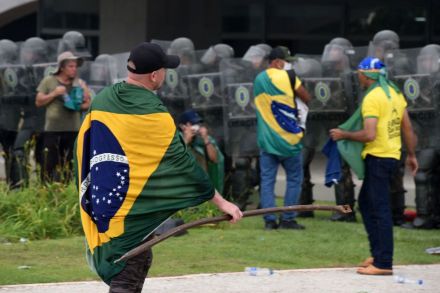
Despite being the world’s fourth largest democracy, Brazil was barely on the radar for most Americans until the meteoric rise of Jair Bolsonaro in 2018. Bolsonaro’s presidential campaign caught attention because of the perceived similarities between him and Donald Trump. Many observers, including the Brazilian-American journalist Glenn Greenwald, argued this comparison was overstated. Yet while Trump and Bolsonaro may be quite different, the recent trajectory of Brazilian politics has been strikingly similar to that of its North American ally.

Kari Lake isn’t about to go away

Typically, when media outlets project election winners, the loser comes out soon afterward to officially concede the race. Yet when decision desks announced that Arizona’s secretary of state Katie Hobbs had defeated conservative firebrand Kari Lake in the state’s hotly contested gubernatorial election, no such concession came. One week later, Lake's position remains unchanged. Even though the election was called last Monday evening, Lake’s first definitive statement didn't come until four days later. In an interview with Mail Online on Friday, she blasted the election system in Arizona's Maricopa County as “worse than in banana republics.

Pro-lifers were the midterms’ biggest losers

When the Supreme Court of the United States ruled in Dobbs v. Jackson Women's Health Organization in favor of the overturning of Roe v. Wade back in June, thus ending a woman's federal right to an abortion, the pro-life movement was jubilant. The decision was the culmination of decades of campaigning by conservative and anti-abortion activists to send the issue back to the states. Republican-controlled legislatures across the country moved immediately to place restrictions on abortion, and for the first time in decades, the pro-life movement finally felt like it had the upper hand. Fast-forward five months to the morning after the midterm elections and much of that optimism must have dissipated.

abortion

Bolsonaro falls as South America tilts toward socialism

After a bruising campaign, the leftist former president of Brazil Lula Ignacio Da Silva appears to have won back control of the Palácio da Alvorada, the Brazilian presidential residence. Lula defeated conservative incumbent Jair Bolsonaro by the narrowest of margins and is now poised to bring back socialist leadership to the world’s fourth-largest democracy. However, the result was by no means a blowout for Lula and his Workers' Party, which polls had suggested could win a landslide victory. In reality, Bolsonaro outperformed expectations just by taking the vote to a second round, while his Social Liberal Party maintained control of Brazil's congress. Nevertheless, the outcome marks an incredible comeback story for the 77-year-old Lula.

Is TRUTH Social doomed to fail?

Following his suspension from Twitter in the wake of January 6, the question of where Donald Trump would take his tweets was a matter of much public debate. At the time, his options were limited. The obvious choice was Parler, which had experienced rapid growth in response to Twitter’s censorship. Yet after Amazon pulled its web hosting services over concerns about “hate speech,” the company fast imploded. The only other possibility was Gab, though its reputation as a cesspool of racist bile meant it likely would have been a PR disaster that even Trump would have struggled to weather. Seemingly out of ideas, Trump started an online blog, although that project was short-lived. His only other prospect was to launch a new platform at which he would be the star attraction.

Can Venezuela’s exodus become America’s gain?

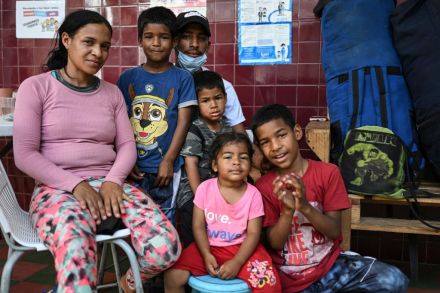
Since the onset of Venezuela’s economic and humanitarian crisis back in 2015, around 6.8 million people have fled the country in search of refuge. The most popular destinations include neighboring countries Colombia and Brazil, as well as a host of other Latin American countries. Many who can afford it have also found safe passage to Europe. Yet many of Venezuela’s poorest and most disaffected are setting their sights on another destination entirely: the United States. At the height of the country’s troubles between 2015 and 2018, the number of Venezuelans apprehended by US officials never exceeded 100 people a year. Fast forward to 2022, and more than 150,000 Venezuelans have arrived this year already.

The Spectator’s Guide to EU Referendum day (and night)

From our UK edition

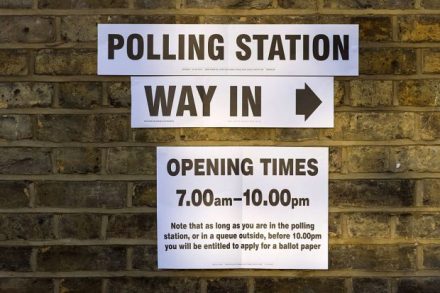
Britain goes to the polls tomorrow for the most important vote in a generation, as the country decides whether it would like to remain part of the European Union, or leave. But what will happen on the day itself? And where are the key areas to watch out for overnight? Here, The Spectator has put together a run-through of what to look out for and when we can expect to find out the results: Thursday 23rd June 7.00am Polling stations open across the UK. Voters will be asked the question: Should Britain remain a member of the European Union, or Leave the European Union? 10.00pm Polling stations close and the counts begin. Unlike a general election, no exit poll will be taken because of the potential margin of error.

Chesterfield FC have given Ched Evans the rehabilitation he deserves

From our UK edition

My sole experience with Chesterfield FC was overseeing their relegation on the computer game Football Manager before I got the sack. But this week they have impressed me more than I could ever impress my virtual squad. They are the first club to sign former Sheffield United striker Ched Evans since he was released from prison in 2014, after serving two and a half years for raping an intoxicated 19-year-old woman. Evans has always denied the charges, and in April, he had his conviction quashed by the Court of Appeal. He now faces a retrial in October. Against this backdrop, Chesterfield have given Evans the chance to ply his trade as a footballer again.