Austen Saunders

Discovering poetry: Lord Byron’s myth-making through verse

From our UK edition

‘So, we’ll go no more a roving’ So, we’ll go no more a roving So late into the night, Though the heart be still as loving, And the moon be still as bright. For the sword outwears its sheath, And the soul wears out the breast, And the heart must pause to breathe, And love itself have rest. Though the night was made for loving, And the day returns too soon, Yet we’ll go no more a roving By the light of the moon. Let’s start at the beginning. The beginning of each line, that is. If you ignore the rest for now, this is what you’re left with: So... So... Though... And... For... And... And... And... Though... And... Yet... By... It’s a pretty restless sequence, especially the sequence of ‘and...and...
Discovering Poetry: Thomas Traherne’s life lessons

From our UK edition

From ‘Wonder’, by Thomas Traherne How like an angel came I down! How bright are all things here! When first among his works I did appear O how their glory me did crown? The world resembled his eternity In which my soul did walk; And every thing that I did see Did with me talk. The skies in their magnificence The lively, lovely air; Oh how divine, how soft, how sweet, how fair! The stars did entertain my sense And all the works of GOD so bright and pure, So rich and great did seem, As if they ever must endure In my esteem. A native health and innocence Within my bones did grow, And while my God did all his glories show, I felt a vigour in my sense That was all SPIRIT. I within did flow With seas of life, like wine; I nothing in the world did know, But ‘twas divine.

Which Ulysses is the most heroic?

From our UK edition

From ‘Ulysses’ by Alfred, Lord Tennyson                                     Come, my friends, ‘Tis not too late to seek a newer world. Push off, and sitting well in order smite The sounding furrows; for my purpose holds To sail beyond the sunset, and the baths Of all the western stars, until I die. It may be that the gulfs will wash us down: It may be we shall touch the Happy Isles, And see the great Achilles, whom we knew.

Alexander Pope, mock-epic, modernity and misogyny

From our UK edition

from The Rape of the Lock And now, unveiled, the toilet stands displayed, Each silver vase in mystic order laid. First, robed in white, the nymph intent adores With head uncovered, the cosmetic powers. A heavenly image in the glass appears, To that she bends, to that her eyes she rears; The inferior priestess, at her altar's side, Trembling, begins the sacred rites of pride. Unnumbered treasures ope at once, and here The various offerings of the world appear; From each she nicely culls with curious toil, And decks the goddess with the glittering spoil. This casket India's glowing gems unlocks, And all Arabia breathes from yonder box. The tortoise here and elephant unite, Transformed to combs, the speckled, and the white.

Laughing at sin

From our UK edition

Francis Quarles, An emblem on books 'The world’s a book, writ by the eternal art Of the great Maker, printed in man’s heart; ‘Tis falsely printed, though divinely penned, And all the erratas will appear at the end.' I like this witty little poem. The idea is simple – just as books have their printing errors listed on the last page, we’ll have all our sins listed to us at the Last Judgement. As a joke, it says a lot about the way seventeenth-century people thought about human nature. Today, I think, the whole Last Judgement thing is a bit off-putting to most people. No-one likes to be told they’re sinful. Except that four hundred year ago it seems they did. Couldn’t get enough of it, in fact.

To their coy mistresses: two poems about the arts of seduction

From our UK edition

Andrew Marvell, from ‘To His Coy Mistress’ But at my back I always hear Times winged chariot hurrying near: And yonder all before us lie Deserts of vast eternity. Thy beauty shall no more be found: Nor, in thy marble vault, shall sound My echoing song. Then worms shall try That long preserved virginity, And your quaint honour turn to dust, And into ashes all my lust. The grave's a fine and private place, But none I think do there embrace. This is the middle stanza of Marvell’s poem ‘To His Coy Mistress’, which I imagine many will know well. The first stanza begins ‘Had we but world enough and time...’ and the third is a plea to ‘tear our pleasures with rough strife, / Through the iron gates of life’.

Discovering poetry: John Donne, from deviant to Dean of St. Paul’s

From our UK edition

Holy Sonnet 7, John Donne At the round earth’s imagined corners, blow Your trumpets, angels, and arise, arise From death, you numberless infinities Of souls, and to your scattered bodies go – All whom the flood did, and fire shall, overthrow, All whom war, dearth, age, agues, tyrannies, Despair, law, chance, hath slain, and you whose eyes Shall behold God, and never taste death’s woe.     But let them sleep, Lord, and me mourn a space For, if above all these my sins abound, ‘Tis late to ask abundance of thy grace When we are there. Here, on this lowly ground, Teach me how to repent; for that’s as good As if thou hadst sealed my pardon with thy blood.

The Glorious Revolution and small ‘c’ conservatism

From our UK edition

From a dialogue  between a non-juring clergyman and his wife by Edward 'Ned' Ward Wife: Why will you prove so obstinate, my dear, And rather choose to starve, than yield to swear? Why give up all the comforts of your life, Expose to want your children and your wife; Hug your own ruin through a holy pride, Which interest calls you now to lay aside; And common safety, that prevailing plea, Justifies those who wisely do agree? Consider, therefore, and in time comply, You may, perhaps, on some mistakes rely; And then, how fatal 'twould hereafter be, That error should beget our misery?

In defence of William Shakespeare’s nonsense

From our UK edition

‘It was a lover and his lass’ from As You Like It It was a lover and his lass With a hey and a ho and a hey nonino, That o’er the green cornfield did pass In springtime, the only pretty ring-time, When birds do sing, hey ding a ding, ding Sweet lovers love the spring. Between the acres of the rye, With a hey and a ho and a hey nonino, These pretty country folks would lie In springtime...etc. This carol they began that hour With a hey and a ho and a hey nonino, How that life was but a flower In springtime...etc. And therefore take the present time With a hey and a ho and a hey nonino, For love is crowned with the prime In springtime...etc. If you’re reading this on a sunny morning, open the window and listen to the birds singing.

Falling out of love, William Shakespeare’s Sonnet 97 – discovering poetry

From our UK edition

How like a winter hath my absence been From thee, the pleasure of the fleeting year! What freezings have I felt, what dark days seen, What old December’s bareness everywhere! And yet this time removed was summer’s time, The teeming autumn big with rich increase Bearing the wanton burden of the prime, Like widowed wombs after their lord’s decease. Yet this abundant issue seemed to me But hope of orphans and unfathered fruit, For summer and his pleasures wait on thee And thou away, the very birds are mute: Or if they sing, ‘tis with so dull a cheer That leaves look pale, dreading the winter’s near. Spring is a strange time for a break-up. ‘Rejoice!’ says the earth, ‘the world is full of hope!’.

John Milton’s ambiguous love for Oliver Cromwell – Discovering poetry

From our UK edition

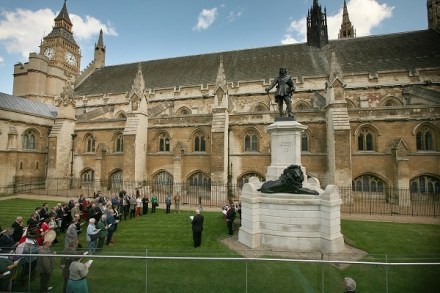
‘To Oliver Cromwell’ Cromwell, our chief of men, who through a cloud Not of war only, but detractions rude, Guided by faith and matchless fortitude To peace and truth thy glorious way hast ploughed, And on the neck of crowned fortune proud Hast reared God's trophies and his work pursued While Darwen streams with blood of Scots imbrued, And Dunbar field resounds thy praises loud, And Worcester's laureate wreath; yet much remains To conquer still; peace hath her victories No less than those of war; new foes arise Threatening to bind our souls in secular chains: Help us to save free conscience from the paw Of hireling wolves whose gospel is their maw. This sonnet was written in 1652 when Milton was part of Oliver Cromwell’s civil service.

Was Katherine Philips a lesbian love poet?

From our UK edition

To my Excellent Lucasia , on our Friendship. I did not live until this time Crowned my felicity - When I could say without a crime I am not thine, but thee. This carcass breathed, and walked, and slept, So that the world believed There was a soul the motions kept; But they were all deceived. For as a watch by art is wound To motion, such was mine: But never had Orinda found A soul till she found thine Which now inspires, cures and supplies, And guides my darkened breast: For thou art all that I can prize, My joy, my life, my rest. No bridegroom’s nor crown-conqueror’s mirth To mine compared can be: They have but pieces of this earth, I've all the world in thee.

Discovering poetry: Samuel Daniel and the art of outliving death

From our UK edition

from Delia When winter snows upon thy golden hairs, And frost of age hath nipped thy flowers near; When dark shall seem thy day that never clears, And all lies withered that was held so dear;    Then take this picture which I here present thee, Limned with a pencil not all unworthy; Here see the gifts that God and Nature lent thee; Here read thyself, and what I suffered for thee.    This may remain thy lasting monument, Which happily posterity may cherish; These colours with thy fading are not spent; These may remain, when thou and I shall perish.    If they remain, then thou shalt live thereby;    They will remain, and so thou canst not die. Nicholas Hilliard’s miniature portraits are bewitchingly beautiful.

Discovering poetry: how the Psalms made the English

From our UK edition

Psalm 42, verses 1-8 Philip Sidney                                         Miles Coverdale Miles Coverdale’s translation of the psalms was among the first fruit of Henry VIII’s ambivalent reformation. The religion of Henry’s England was essentially Catholicism without the Pope; but he did permit the translation of scripture into English, and in 1535 Coverdale printed the first full English bible. His Psalms were later included in the Book of Common Prayer and are still used in Anglican services today.

Discovering poetry: John Dryden, Jacobite superstar

From our UK edition

From Dryden’s translation of Virgil’s Aeneid Arms and the man I sing who forced by fate And haughty Juno's unrelenting hate Expelled and exiled left the Trojan shore. Long labours both by sea and land he bore And in the doubtful war; before he won The Latian realm and built the destined town, His banished Gods restored to rites divine, And settled sure succession in his line: From whence the race of Alban Fathers come, And the long glories of majestic Rome.     O Muse! the causes and the crimes relate, What goddess was provoked, and whence her hate, For what offence the Queen of Heaven began To persecute so brave, so just a man! Involved his anxious life in endless cares, Exposed to wants, and hurried into wars!

Discovering poetry: Henry VIII’s Camelot

From our UK edition

‘Pastime with good company’, attributed to Henry VIII Pastime with good company I love and shall until I die. Grudge who list, but none deny, So God be pleased, thus live will I. For my pastance, Hunt, sing and dance, My heart is set. All goodly sport For my comfort Who shall me let? Youth must have some dalliance, Of good or ill some pastance. Company me thinks the best All thoughts and fancies to digest. For idleness Is chief mistress Of vices all. Then who can say But mirth and play Is best of all? Company with honesty Is virtue, vices to flee; Company is good and ill, But everyman has his free will. The best ensue, The worst eschew! My mind shall be Virtue to use, Vice to refuse; Thus shall I use me.

Discovering poetry: George Herbert’s ‘Prayer’ and the beauty of holiness

From our UK edition

‘Prayer’ Prayer the Church’s banquet, angels’ age, God’s breath in man returning to his birth, The soul in paraphrase, heart in pilgrimage, The Christian plummet sounding heaven and earth; Engine against the Almighty, sinner’s tower, Reversed thunder, Christ-side-piercing spear, The six-days-world-transposing in an hour, A kind of tune, which all things hear and fear; Softness, and peace, and joy, and love, and bliss, Exalted manna, gladness of the best, Heaven in ordinary, man well dressed, The milky way, the bird of paradise, Church-bells beyond the stars heard, the soul’s blood, The land of spices; something understood. St Augustine argued that Christians pray for themselves, not for God.

Why Dr Faustus’ dark obsessions still resonate

From our UK edition

Faustus to Helen of Troy from Doctor Faustus, by Christopher Marlowe Was this the face that launched a thousand ships? And burnt the topless towers of Ilium? Sweet Helen, make me immortal with a kiss. Her lips suck forth my soul, see where it flies: Come Helen, come give me my soul again. Here will I dwell, for heaven be in these lips, And all is dross that is not Helena. I will be Paris, and for love of thee, Instead of Troy shall Wittenberg be sacked, And I will combat with weak Menelaus, And wear thy colours on my plumed crest. Yea I will wound Achilles in the heel, And then return to Helen for a kiss. O thou art fairer than the evening air, Clad in the beauty of a thousand stars.

300 years of hating party politics

From our UK edition

‘Whig and Tory Scratch and Bite’, by Aaron Hill Whig and Tory scratch and bite, Just as hungry dogs we see: Toss a bone 'twixt two, they fight, Throw a couple, they agree. Tribal party politics are three-hundred years old in Britain. So is the fashion for satire which aspires to rise above it all. The British people have been dealing with political parties since the 1670s. It was then that a faction led by the Earl of Shaftesbury tried to have Parliament pass a law to prevent Charles II’s brother James from succeeding to the throne. Charles had no legitimate children so James was next in line.