Ariane Bankes

The Lisson show is so hermetic, sometimes we flounder for meaning

From our UK edition

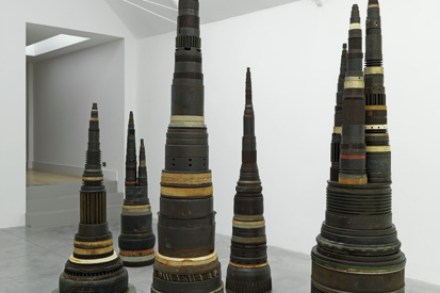
The title of the Lisson Gallery’s new show, Nostalgic for the Future, could sum up the gallery’s whole raison d’être. From its inception in 1967, the Lisson has championed the cutting edge, providing a British and European platform for the major conceptual and minimal artists from the States — Sol LeWitt, Carl Andre and Dan Flavin among them — and following that in the 1980s with its promotion of New British Sculptors such as Anish Kapoor and Tony Cragg. While this generation wittily subverted the material world to question our position within it, their heirs in turn seem more interested in querying the position of art in the world — still subversive, but more hermetically so.
The big tease

From our UK edition

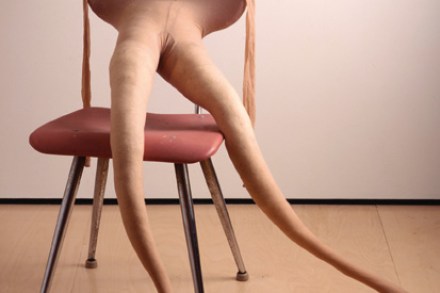
Perhaps the greatest irony of many in this first solo London show of Sarah Lucas is that it is sponsored by Louis Vuitton. ‘Symbolising French elegance and joie de vivre, the Maison LV has always collaborated with the best engineers, decorators and artists,’ it claims. Well, welcome to a new world. Soiled mattresses provocatively pierced by fruit’n’veg, two dessicated hams shoved into a pair of knickers, a mechanical ‘wanking’ machine, a primeval soup of penises — you get the drift. It is of course vintage Lucas, a retrospective of work drawn from two decades of artistic confrontation, and the site she has chosen for this engagement is the human body. And how cleverly she articulates it.

Exhibition review: The charm and dexterity of Sir Hugh Casson

From our UK edition

It is nothing short of a miracle that this aptly titled exhibition could be shoehorned into just two rooms at the Royal Academy, such was the range of the irrepressible Hugh Casson’s work and influence during his lifetime. Architect, artist, designer and writer, he was a fireball of energy and a fount of ideas. He was described by one friend as ‘the golfball on an IBM typewriter’. Not the least of his multifarious talents was, indeed, making friends with anyone, from the casual visitor queuing for the RA’s latest exhibition to the Queen and Duke of Edinburgh, for whom he worked discreetly but tirelessly for many decades on a series of royal apartments, unaltered to this day.

Sculptural conundrums

From our UK edition

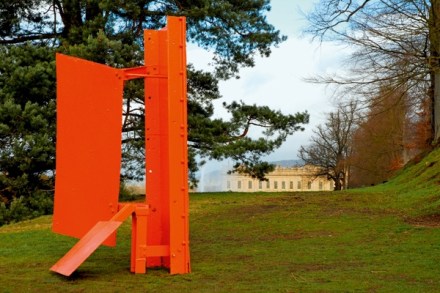
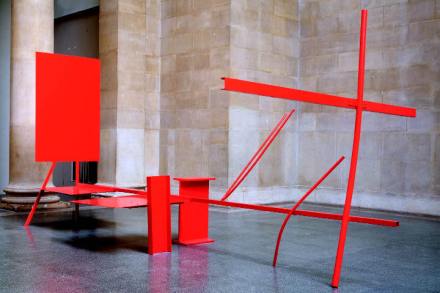
2012 is proving something of an annus mirabilis for Anthony Caro OM CBE RA, now 88, with no fewer than three exhibitions of his work on view around the country.  And he continues to beaver away daily in his studio in Camden Town, London, with the strength of a man much younger than himself, one who has been manhandling heavy, often intractable materials throughout the course of his creative life.

Where dreams take shape

From our UK edition

The question of what artists actually get up to in their studios has always intrigued the rest of us — that mysterious alchemical process of transforming base materials into gold, or at least into something marketable in the present volatile art world. Today’s studio might as likely be a laptop as laboratory, factory, hangar or garden shed, but is nevertheless an apt prism through which to explore the notion of creativity, and this boldly ambitious volume does just that, interviewing 120 British artists in a freewheeling way about their practice and process, inspiration and ideas.

Best in show | 15 January 2011

From our UK edition

Penelope Curtis, director of Tate Britain, talks to Ariane Bankes about the planned revamp of the museum and 100 different ways of showing sculpture The evening after first meeting Penelope Curtis, director of Tate Britain, I bumped into a mutual friend who told me, only half-joking, that she could be frightening. Fair enough, I thought: to become the first woman director of one of Britain’s pre-eminent public galleries you have to frighten a few people along the way. As it happened, I hadn’t found her alarming at all at the press briefing that morning: direct, brisk, purposeful — she was, after all, embarking on a wholesale top-to-toe redesign and rehang of the gallery — but approachable.

Friends reunited

From our UK edition

Zanzotti’s in Soho: redolent of surreptitious lunches fondly remembered, with its red gingham cloths and crusted tricolore paintwork, its ‘chianti-in-a-basket./ Breadsticks you snap/ with a sneeze of dust...And Massimo himself/ touring the tables / with his fake bonhomie.’ An old haunt, and the setting, in Christopher Reid’s poem ‘The Song of Lunch’, for a reunion between former lovers, ten years on — or could it be 15? Zanzotti’s in Soho: redolent of surreptitious lunches fondly remembered, with its red gingham cloths and crusted tricolore paintwork, its ‘chianti-in-a-basket./ Breadsticks you snap/ with a sneeze of dust...And Massimo himself/ touring the tables / with his fake bonhomie.

‘If he couldn’t paint, he couldn’t live’

From our UK edition

Ariane Bankes talks to the widow of Arshile Gorky, whose retrospective is about to open at Tate Mougouch Fielding opens the door to me looking a little gaunt but as beautiful as ever, though I have not seen her for a couple of years. She is in her late eighties, but no less stylish now than when we knew her as children; we were mesmerised by her chic, her gravelly voice with its hint of an American accent, her sense of fun and the faint whiff of excitement that enveloped her. When she was about 17, my father, then working in China, helped her ashore from a capsized sailing dinghy and fell in love with her on the spot. She was then Agnes Magruder, daughter of a captain in the American Navy stationed off Shanghai, and her youthful romance with my father evolved into a lifelong friendship.

On the move

From our UK edition

Last weekend, as part of Open House London, the Government Art Collection flung open its doors to allcomers, probably some Spectator readers among them. Its energetic acquisitions and commissioning policy over past decades has made it one of our country’s most valuable cultural resources — yet those of us who don’t stalk the corridors of power may still be only vaguely aware of its existence, let alone the astonishing breadth of its collections. These span four centuries and now contain around 13,500 works of art in almost every medium you can think of.

We will remember

From our UK edition

Art and Memory: New perspectives on memorial art West Dean, Nr Chichester, until 1 November There are those who haunt ancient churchyards in search of elegant epigraphs or curious carvings on lichened gravestones, but many focus only on what makes a good memorial when forced to do so by bereavement, and the desire to commemorate justly someone we loved. A few years ago we might have been forgiven for thinking that the fine art of letter-cutting was moribund, polished off by the dead hand of Church officialdom with its rules and regulations and its mania for neat, ‘easy to maintain’ burial plots, devoid of all interest and idiosyncracy.

Virtual trip to the opera

From our UK edition

‘Having every best seat in the house’ is how some describe seeing opera live on screen, and recently we’ve had the opportunity of seeing the nuts and bolts backstage, too. It was a bold initiative of English National Opera and Sky Arts to take the cameras behind the scenes on the first night of Jonathan Miller’s new production of La bohème for Sky Arts 1, while simultaneously broadcasting the opera itself live on Sky Arts 2, and it was quite a challenge for the backstage crew: how do you keep your audience gripped for two and a half hours when all the real action is happening the other side of the set?

Caught napping

From our UK edition

Sleeping & Dreaming Wellcome Collection, 183 Euston Road, London NW1, until 9 March 2008 ‘To sleep, perchance to dream...’. If only. We are supposed to spend one third of our lives asleep, but many find getting their regulation quota a losing battle, and others don’t even want to. Sleep is beleaguered in our busy world, fighting a slow battle of attrition against the massed pressures of modern life. And why do we sleep, and dream? It is still a mystery, although the scientific community is awash with different theories. For those of us who toss and turn nightly, armed with a fistful of heavily rationed sleeping pills (or a slug of Night Nurse, if desperate), that elusive and desirable realm enlivened with often baffling imagery takes on added fascination.

All points East

From our UK edition

Serendipity is the best aspect of travel — the chance encounter, the unexpected discovery — and a journey overland to China by rail can throw up all sorts of surprises. In Moscow we bumped into the countertenor Michael Chance, who was there for the first of a series of recitals with the Soloists of Catherine the Great, and who whisked us off to their rehearsal in the city’s Catholic cathedral. This celebrated ensemble was founded in 2001 by Andrey Reshetin, a former violinist in a radical, agitprop Russian rock band, but classically trained and now dedicated to the authentic performance of baroque music.

The ‘transvestite potter from Essex’

From our UK edition

I was intrigued to meet Grayson Perry — who wouldn’t be? I hadn’t known his work before he hit the national headlines in 2003 as one of the artists shortlisted for the Turner Prize, which he subsequently carried off in triumph as his alter ego ‘Claire’, dressed to kill in mauve satin frock with ankle socks and red patent-leather Mary-Jane shoes. Since then, everything I’ve seen or heard indicates a truly original talent, an integrity matched with iconoclastic wit.

The witching hour

From our UK edition

Twilight, the witching hour — that tantalising moment on the cusp of day and night when everything seems strange, poignant and full of possibilities. It is a gift to the photographer, whose raw material is light: its shifting subtleties, its evanescence, its poetic potential. The V&A has collected in this exhibition the work of eight contemporary photographers from around the world who have made twilight their subject. Like all the best ideas it seems strikingly obvious, yet it has apparently not been done before. Just off the bustle of the V&A’s entrance foyer, the exhibition offers a twilight zone, an area of stillness suffused with dim blue light.

Utter madness or good fortune

From our UK edition

I work at the V&A and walk every day through galleries packed with marvellous things, but the other day I was stopped in my tracks by something unique: eight contemporary illuminated manuscript pages, flecked with gold and shimmering with light and colour in their display cases. They are, I discovered, from the Saint John’s Bible, a project of visionary scope and ambition described by the manuscript expert Christopher de Hamel as ‘either utter madness or magnificent good fortune’: a handwritten and illuminated Bible for the 21st century, the first to be made since the invention of printing more than five centuries ago.