Angus Colwell

Angus Colwell

Angus Colwell is The Spectator’s daily newsletters editor, and lead author of Morning Press. Sign up here.

San Sebastian is a culinary miracle

From our UK edition

Across the border from San Sebastian, just down the beach, is France. I never got over that. San Sebastian is so effervescent, so tropical, so fast, that its proximity to the surlier Gauls seems strange. French cooking is the best in the world and there is no point arguing. But somehow it’s been eclipsed by its neighbour on the Basque coast. Biarritz and Bayonne have nothing on this Spanish city that’s pretty much universally called the ‘culinary capital of the world’. Of course, it isn’t quite: that’s still Paris or maybe Tokyo. But San Sebastian might be the best place in the world to eat. There’s a difference. You can’t go to Paris just to eat: even by day two, un autre confit duck leg begins to make you feel sick.


Does British politics have a problem with the ‘omnicause’?

From our UK edition

51 min listen

It is undoubtable that – under the leadership of Zack Polanski – the Green Party have soared to new heights. Having won their first parliamentary by-election in February, polls consistently show them as a force to be reckoned with on the left of British politics. Much of their success has come at the detriment of Labour, with disgruntled further-left progressive voices opting to vote Green. This, though, is a brand of eco-populism that comes at the expense of the Green Party's roots, or so argues Angus Colwell in the Spectator's cover article this week. Have the Greens ceded the issue of the environment?

Does British politics have a problem with the 'omnicause'?

How the Green party abandoned its environmental roots

In the summer of 1972, Lesley Whittaker walked into a pub in rural Warwickshire. She had something for her husband Tony. It was a copy of Playboy magazine. In that issue, there was an interview with the biologist Paul R. Ehrlich, who died this month aged 93. In it, he repeated the thesis of his 1968 book The Population Bomb, where he wrote that ‘in the 1970s hundreds of millions of people will starve to death’. There were simply too many of us. Worldwide famine was imminent. Lesley and Tony were terrified. Along with a local businessman, Michael Benfield, and his future wife, Freda Sanders, they talked about it over pints at the Bridge Inn, becoming known as a ‘Gang of Four’. Over several months, they roped in 39 others, and set up the People party in 1973.

Ruaridh Nicoll, Angus Colwell, Mary Wakefield, Philip Hensher & Nicholas Farrell

From our UK edition

34 min listen

On this week’s Spectator Out Loud: Ruaridh Nicoll reads his letter from Havana; Angus Colwell takes us through an A-Z of London horrors; Mary Wakefield points out the glaring flaw in Keir Starmer’s 'cohesion plan; Philip Hensher reviews an increasingly reflective Alan Bennett; and finally, Nicholas Farrell reflects on Jeffrey Epstein, Silvio Berlusconi – and nudists in Italy. Produced and presented by Patrick Gibbons.

The perils of London: a beginner’s guide

From our UK edition

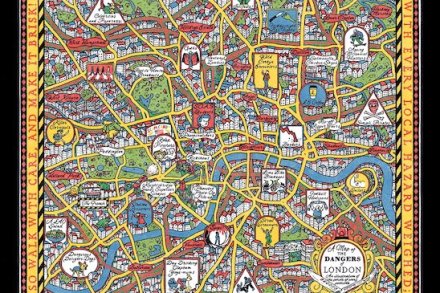
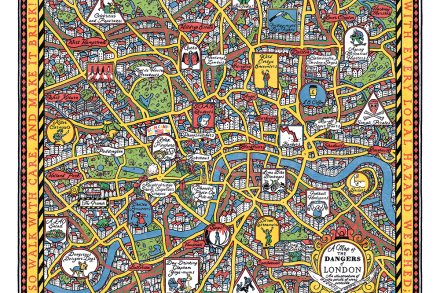
An interesting new perspective on London is doing the rounds. Our capital city is being advertised as a paradise. London, it seems, is suddenly a place where every building is a Wren, where every sunset is a Turner, where every neighbourhood is Notting Hill. The sentiment has even got a name – ‘Londonmaxxing’. It’s been invented by tech accounts on X who got excited by the long queues at AI events run by Vercel earlier this month. There has also been speculation that a disgruntled-with-Trump Anthropic could move to London. As much as I love London, like any true sceptical Londoner, I suspect bollocks. Look at the map by our resident artist J.G. Fox. Anyone considering the move should in fact be sniffer dog-aware of a multiplicity of perils.

Angus Colwell, Paul Wood, Andrew Rule & Jonathan Meades

From our UK edition

26 min listen

On this week’s Spectator Out Loud: Angus Colwell ponders why young Brits seem to aspire to be more Australian; Paul Wood analyses the daring plan to reclaim the Chagos islands; Andrew Rule explains why to read is to love; and finally, Jonathan Meades declares that John Vanbrugh defies taxonomy as events kick off to mark the 300th anniversary of his death. Produced and presented by Patrick Gibbons.

Strewth! Australian culture is taking over Britain

From our UK edition

Catherine and Heathcliff. These are surely roles that every attractive British actor should aspire to. Why mope between auditions for years if you don’t think it could be your windswept hair decorating bus posters one day? So the British director Emerald Fennell’s casting of two Australians – Jacob Elordi and Margot Robbie – to play these parts in ‘Wuthering Heights’ feels unfair. But her decision is canny. Elordi and Robbie are both gorgeous, of course, but they also come bearing a new type of cultural clout. Their perfect hair and facial symmetry are nothing compared with the quirkiness of their being Australian, the aesthetic that’s seducing young Brits most of all. The first clue was about five years ago, when many British men started looking ridiculous.

Our verdict on the new In Our Time presenter

From our UK edition

Melvyn Bragg’s first ever intro to In Our Time in 1998 clocked in at 21 seconds. Misha Glenny, meanwhile, took one minute and four seconds to get through his. The initial public reaction to Glenny taking over from Bragg was positive. The prevailing sentiment was ‘thank Christ it isn’t Stephen Fry’. But now you felt as though you could hear two million people shouting ‘Get on with it!!’ at the radio as he stressed and elongated virtually every syllable. John Stuart Mill and his wife had been labouring over ‘On Liberty together for soooome yeeaarrss’. Then we were away. And he’s all right, thank God. With In Our Time, there is no upper bound on how haughty and arrogant a presenter should be I emphasise ‘all right’, though, because there were definitely problems.

The rise and fall of the football presenter

From our UK edition

What does it mean to be a ‘good’ sports presenter? Really, it should mean nothing. They aren’t important. They should have a sense of perspective, a sense of remembering that they are peripheral to the most popular consumer product and human activity that we have come up with. Of course, it doesn’t work like that. Look at Gary Lineker. The BBC paid him £1.3 million to ask Danny Murphy things like ‘Bournemouth look to have run out of steam a little bit?’ for 75 minutes a week. Such is our infatuation with sport that we end up really caring about who asks this kind of question. That person gets to be the highest-paid broadcaster in the country.

From The Queen to Bonnie Blue: The Spectator’s Christmas Edition 2025 

From our UK edition

40 min listen

The Spectator’s bumper Christmas issue is a feast for all, with offerings from Nigel Farage, Matthew McConaughey and Andrew Strauss to Dominic Sandbrook, David Deutsch and Bonnie Blue – and even from Her Majesty The Queen. To take us through the Christmas Edition, host Lara Prendergast is joined by deputy political editor James Heale, associate editor Damian Thompson and writer of the Spectator’s new morning newsletter, Morning Press, Angus Colwell.

David Deutsch: The Enlightenment, ‘irrational memes’ and how Wikipedia turned woke

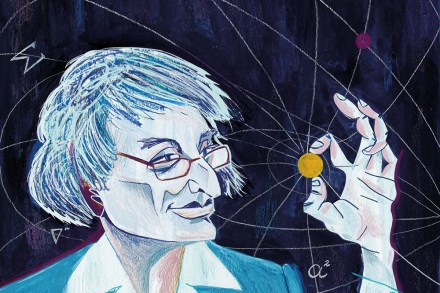
The Amazon reviews for David Deutsch’s The Beginning of Infinity don’t alert you to the fact that this is a book on theoretical physics. They sound more like a weepy divorcé’s YouTube comments below a Mark Knopfler guitar solo. ‘I didn’t so much read it,’ says one. ‘It read me.’ ‘I was honestly sad when it was over,’ writes another. ‘This book changed my way of seeing the world, politics, science and, most importantly, of seeing what I will understand as containing some truth.’ When I talk to Deutsch – one of the most sensationally interesting theoretical physicists of our age – on Zoom, I see two beady eyes peering at me over some non-spectacular spectacles under a mess of thin white hair, borne by a thin white man in a thin white shirt.

Domino’s has fallen

From our UK edition

There are few culinary experiences like the first bite of a Domino’s pizza. The finest N25 caviar or a perfectly seared lobe of foie gras surely can’t compare to the ecstasy that comes from that mouth-cutting cornmeal that they sprinkle all over the base, or that sweet, cloying ‘cheese’, or those tart, dancing cups of pepperoni. In these moments, resistance is futile. It’s not a question of whether this is the best takeaway pizza there is, or even the best food there is. It’s a question of whether this is the best thing there is. Of course, we know how it ends. Fifteen minutes later, caked in sweat, parched, filling yourself up like a swimming pool. And then, if you’re unlucky, an awakening in the middle of the night. You wheeze against the table.

Unesco are idiots

From our UK edition

Of all the moronic decisions made by cultural organisations over the past 50 years, probably the most insulting and retrograde is the decision, in 2021, by Unesco to strip Liverpool of its world heritage status. Unesco said the development of the docks amounted to an ‘irreversible loss’. The regeneration of the waterfront, including the building of Everton’s new £500 million stadium, was blamed for destroying Liverpool’s ‘outstanding universal value’.  I walked up Liverpool’s Regent Road for half an hour to see for myself. Doing so took me through one of the most derelict wards in the country, the old docklands. I didn’t pass another human being for a good 20 minutes, only cars screaming. There was some majesty in the buildings. The Tobacco Warehouse is beautiful.

The fantasy of fantasy football

From our UK edition

Football has a problem: there isn’t enough football. The world’s most popular thing is too popular. Fans seem to find it ludicrous that our entertainment is constrained by flesh and blood, that we can’t – like with everything else – just watch live football when we feel like it. It started to get like this when Sky bought the Premier League rights and set up the Sky Sports channels. They had realised people really like this stuff. People like it enough for you to air football content endlessly. Throughout the 2000s came Premier League Years, where people could watch football that happened ten years ago.

Left-wing Ultras, Reform intellectuals & capitalist sex robots

From our UK edition

38 min listen

‘The Ultras’ are the subject of The Spectator’s cover story this week – this is the new Islamo-socialist alliance that has appeared on the left of British politics. Several independent MPs, elected amidst outrage over the war in Gaza, have gone on to back the new party created by former Labour MPs Jeremy Corbyn and Zarah Sultana. The grouping has got off to a rocky start but – as Angus Colwell and Max Jeffery write – there are expectations that they could pick up dozens of seats across the country. Can the hard-left coalition hold? Host Lara Prendergast is joined by the Spectator’s deputy political editor James Heale, commissioning editor Lara Brown and Angus Colwell – who also writes the Spectator’s new morning newsletter Spectator Daily.

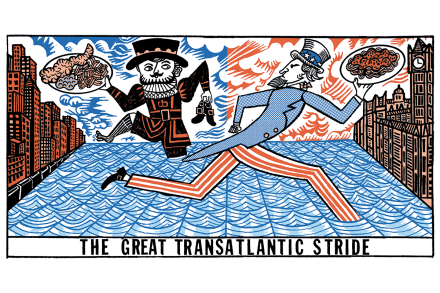
Can American restaurants thrive in Britain?

To mark the arrival of Carbone in London and the imminent opening of Straker’s in New York, The Spectator’s Angus Colwell spoke with writer Gage Klipper about the differences between British and American restaurants, whether bad-boy chefs are back in – and which eateries couldn’t exist anywhere else. ANGUS COLWELL: Shall we talk about Carbone, which has just arrived in London? GAGE KLIPPER: For sure. I’m a certified Carbone hater: New Yorker, born and raised, but for me, Carbone just never really fit the New York vibe. It’s the Instagram person’s idea of what New York fine dining should be. Of course, they cater to this old-school, showy New York sensibility, but it’s not really New York in any real sense.

restaurants

James Heale, William Atkinson, David Shipley, Angus Colwell and Aidan Hartley

From our UK edition

25 min listen

On this week’s Spectator Out Loud: James Heale says that, for Labour, party conference was a ‘holiday from reality’; William Atkinson argues that the ‘cult of Thatcher’ needs to die; David Shipley examines the luxury of French prisons; Angus Colwell provides his notes on swan eating; and, Aidan Hartley takes listeners on a paleoanthropological tour from the Cradle of Mankind.  Produced and presented by Patrick Gibbons.

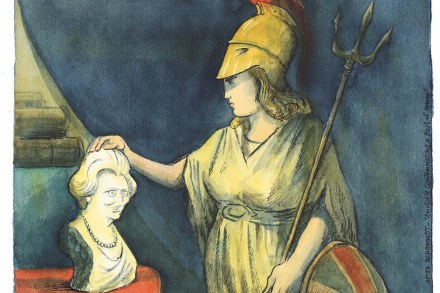
Let them eat swan

From our UK edition

How to react to Nigel Farage’s suggestion that immigrants are killing and eating swans? You can react like LBC’s Iain Dale, who said that ‘Reform UK might have peaked in the polls’. You can react like Times Radio’s Adam Boulton, who said that Farage was ‘in danger’ of repelling voters by ‘copying memes’ from Donald Trump. You can react like Reform’s Andrea Jenkyns, who said that swan eating was a ‘serious issue’. Or you can think, as I did: ‘Mmm, I wonder what swan tastes like.’ ‘Quite fishy’ is the surprising answer. I don’t know that from experience, but because of Americans, who can eat swan but choose not to.

Matthew Parris, Stephen J. Shaw, Henry Jeffreys, Tessa Dunlop and Angus Colwell

From our UK edition

31 min listen

On this week’s Spectator Out Loud: Matthew Parris reflects on the gay rights movement in the UK; faced with Britain’s demographic declines, Stephen J. Shaw argues that Britain needs to recover a sense of ‘futurehood’; Henry Jeffreys makes the case for disposing of wine lists; Tessa Dunlop reviews Valentine Low’s Power and the Palace: The Inside Story of the Monarchy and 10 Downing Street; and, Angus Colwell reviews a new podcast on David Bowie from BBC Sounds.  Produced and presented by Patrick Gibbons.

Labour’s Terminator, Silicon Valley’s ‘Antichrist’ obsession & can charity shops survive?

From our UK edition

37 min listen

First: who has the Home Secretary got in her sights? Political editor Tim Shipman profiles Shabana Mahmood in the Spectator’s cover article this week. Given Keir Starmer’s dismal approval ratings, politicos are consumed by gossip about who could be his heir-apparent – even more so, following Angela Rayner’s defenestration a few weeks ago. Mahmood may not be the most high-profile of the Starmer movement, but she is now talked about alongside Wes Streeting and Andy Burnham as a potential successor to Starmer. But – it all depends on what she can achieve at the Home Office. So, who does she have in her sights?