Andrew Tettenborn

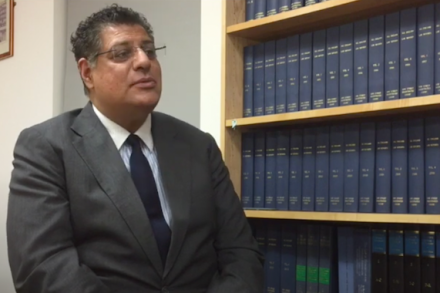
Andrew Tettenborn is a professor of law at Swansea Law School

UNRWA hasn’t earned our trust in Gaza

From our UK edition

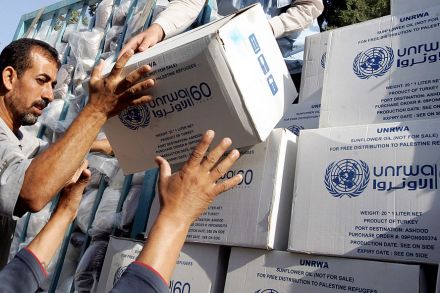
Before 7 October last year, observers had long suspected an uncomfortable symbiosis between UNRWA, the UN organisation tasked with organising aid to the unfortunate Palestinians of the Gaza Strip, and the autocratic Hamas government in control in Gaza city. The attack on Israel on that day certainly didn’t dispel these suspicions, and in January this year Israel alleged that a number of UNRWA staff had been implicated. Seventeen countries paused funding for UNRWA, including the US, Australia, Canada, Japan, the EU and several individual European states. So did the UK, which last year had provided about £35 million. The UK, which had said it would await the Colonna report before making a decision, will now face immense pressure to resume payments Will this funding come back?

The National Portrait Gallery’s bizarre obsession with slavery

From our UK edition

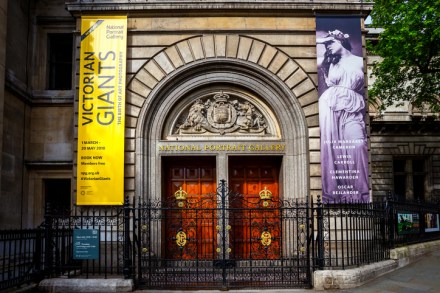
The movement to radicalise the art and museum world was always going to come back and bite its own children. It has happened more quickly than we thought, as demonstrated by the seriously red faces at the National Portrait Gallery (NPG) last week. Among the paintings on display at the NPG was one by French society artist James Tissot of Edward Fox-White, a well-known British 19th century art dealer who opened his first gallery in Glasgow in 1854. Last year, Donald Gajadhar, a descendant of Fox-White’s and manager of the art appraisal business founded by him, noticed a statement in the gallery’s notes next to the picture of his great-great-grandfather.

The courts can’t solve climate change

From our UK edition

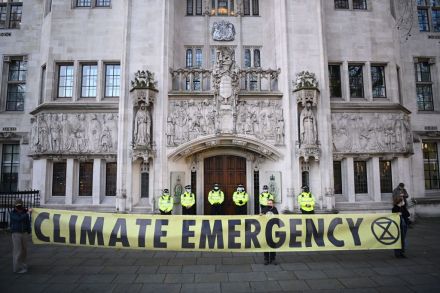
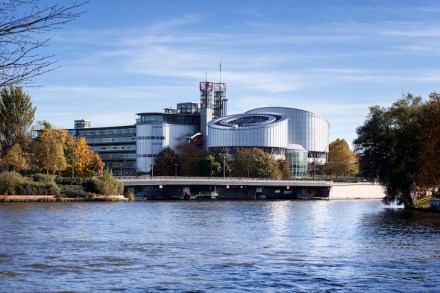
It was always a racing certainty that this week’s ‘Swiss grannies’ climate change judgment in Strasbourg would spawn a new wave of environmental lawfare and give new life to that already in progress. A taste of the brave new future duly came from the High Court in London yesterday. Section 58 of the Climate Change Act requires the government periodically to lay before parliament its objectives to deal with climate change. The government has duly produced a so-called ‘National Adaptation Programme 3’, but some people say it is not good enough.

Is climate change really a human rights matter?

From our UK edition

The media and the middle class may love net zero. Unfortunately, it is increasingly clear that voters are less keen. Predictably then, activists have been trying to take as much power as possible away from elected representatives, transferring it instead to international courts and judges. This morning, this programme of lawfare scored a major success in the European Court of Human Rights. Every yard gained by a well-meaning extension of the ECHR is a yard lost to the democratic process Some months ago, three high-profile cases reached the Court where the claimants suggested that climate change was a European human rights matter.

Civil servants can’t down tools if they don’t like Israel

From our UK edition

Britain in the nineteenth century pioneered the idea of the professional, impartial civil service independent of politics. In the twenty-first, that same civil service is unfortunately pioneering the notion of a body increasingly independent of the state that employs it, and apt at times to follow its own remarkably political agenda without much control from anyone. Following your conscience is a good deal less impressive when you are doing it on someone else’s dime British companies export a good deal of military equipment to Israel. To do so, they require export licences from the Department for Business and Trade (DBT).

Barristers should be allowed to join the Garrick

From our UK edition

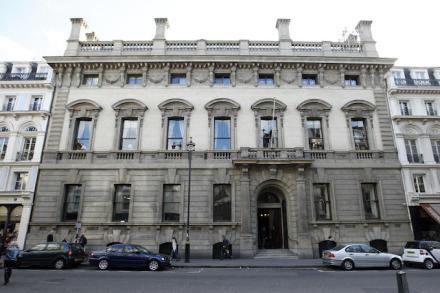
The Garrick Club affair has taken a new and slightly worrying twist, this time courtesy of – of all bodies – the Bar Council. Hot on the heels of calls for judges to resign en masse from the club because it remains single-sex, the Council now apparently wants to go even further. It is hinting that it may forbid any member of the Bar from being a member. Its menacing words bear quoting in full:  For now, it is a matter for individuals to determine whether or not membership of an institution, such as the Garrick Club, is compatible with the views they espouse in their professional lives, but this may change. As a profession it is vitally important that we retain the trust and confidence of the public.

Why the WHO’s pandemic planning poses a threat to Britain

From our UK edition

The fall-out from Covid continues. Its latest manifestations on the international stage are a draft pandemic preparedness treaty, soon to be formally published and opened for signature by the WHO, and an upcoming vote on proposals to amend the organisation's International Health Regulations 2005 (IHR). The latter is a set of internationally binding rules for dealing with, among other things, pandemics. Neither text makes for gripping reading; both might look innocuous and almost uncontroversial. In fact, however, as a group of Tory MPs and peers from the all-party parliamentary group on pandemic response and recovery pointed out this week, they could carry considerable dangers for Britain's sovereignty, freedom and democracy.

Why can’t Ukraine trademark the phrase: ‘Russian warship, go f**k yourself’?

From our UK edition

Ukraine's bravery and daring in the face of Russian aggression marks a stark contrast with European – or at least EU – lethargy and disinclination to take sides. A recent spat over, of all things, European trade mark law is a case in point. In early 2022, a soldier on the desolate Snake Island in the Black Sea famously added to Ukrainian folklore by greeting the Russian cruiser Moskva, which had come to take over the island, with the words 'Russian warship, go f**k yourself'. This slogan quickly became hot merchandising property. Kyiv understandably decided to put to work to aid the war effort: it applied to register the phrase as a European trade mark, on the basis that if anyone should be allowed to profit from its use, it should. But their pleas fell on deaf ears.

UCL is harming itself by pandering to China

From our UK edition

We have suspected for some time that UK universities were supping with the devil when they relied on legions of foreign, especially Chinese, students to balance the books. Last week the mask slipped spectacularly at University College London.  Some months ago a Chinese student complained of ‘horrible provocation’ when Michelle Shipworth, an associate professor dealing with human behaviours, asked a seminar class of whom about a quarter were Chinese, to criticise statistics suggesting that China had one of the world’s biggest modern slavery problems. The case escalated. She was leant on to lay off China in favour of, say, India so that Chinese students would not feel ‘singled out’. She refused, citing academic freedom. The result was all too predictable.

In defence of Judge Tan Ikram

From our UK edition

Judge Tanweer Ikram is not your usual judge. Ikram, who has a CBE to his name for services to diversity, has tirelessly insisted that minorities need to see people looking like them in senior positions (he has Pakistani Muslim heritage). Whether you see him as an innovative radical or a dreary progressive, Ikram is now mired in less savoury controversy. Last month, he notoriously gave a 12-month conditional discharge to three women guilty of publicly displaying paraglider images supporting Hamas, a banned terrorist group. It was quickly pointed out afterwards that he had previously 'liked' a post on LinkedIn accusing Israel of terrorism in Gaza (something he says he did mistakenly).

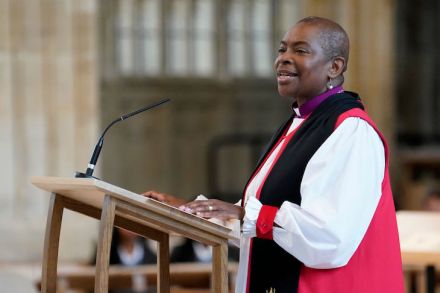
The Church of England should stop distracting itself with ‘racial justice’

From our UK edition

Churches are emptier than ever since Covid. Fewer clergy have more and more parishes to look after; the buildings themselves are falling down, with little money available to repair them. In the face of these existential problems, what high-profile subject was discussed over the weekend by the General Synod of the Church of England? Encouraging more worshippers, perhaps, or possibly improving finances? Not quite. You’ve probably guessed the answer: racial justice.  The Synod ran what can best be described as a consciousness-raising session to cheer on the work of the Archbishops’ racial justice commission. It's aim, it seems, is to push race towards the top of the ecclesiastical agenda.

Dartmoor’s mass trespass isn’t what it seems

From our UK edition

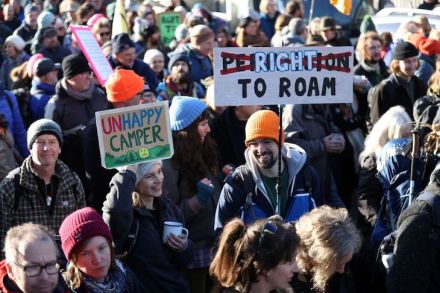
The largest mass trespass in a generation will take place in Devon today. Hundreds of protesters belonging to the pressure-group Right to Roam will descend on Vixen Tor, a slightly sinister-looking granite outcrop on Dartmoor a few miles from Tavistock. Since 2003, access has been banned. But given that much of Dartmoor is already open to the public, why the stress on this fairly small part, which is not? Those marching on Vixen Tor say the reason is simple: a small part of the high moor where hikers have the right to walk at will is inaccessible because it can only be reached across the Tor, which is privately owned and lacks any public rights of way across it.

Rishi Sunak should ignore this biased Rwanda Bill report

From our UK edition

‘UK’s Rwanda Bill incompatible with human rights obligations… damning report by MPs warns.’ So ran the headline yesterday morning, referring to the report released by the joint human rights select committee on the Safety of Rwanda Bill. As often happens, however, immediate appearances can deceive. Constitutionally, the UK is administered by a ministry with the confidence of the House of Commons, not by committees captured by the progressive establishment The striking feature of this report is that, even though it came from a select committee, it could have been penned by Amnesty International or another similar radical human rights pressure group. The ECHR and other human rights treaties, it insists, must be followed at all costs and to the letter.

Why the EU detests Hungary

From our UK edition

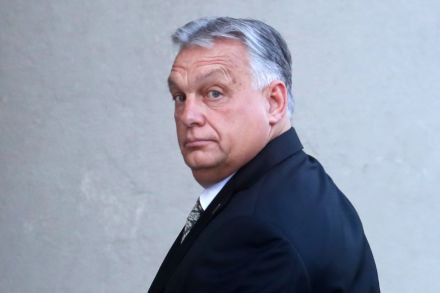
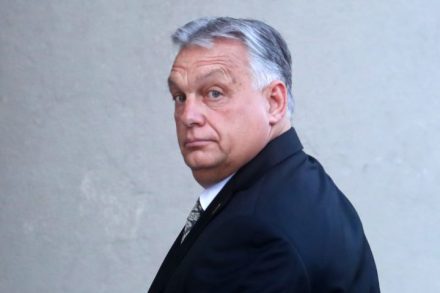
To misquote von Clausewitz, the European Union sees lawfare as the continuation of politics by other means. Brussels’s latest sally against the government of Viktor Orbán in Hungary, which it viscerally detests (and which seriously rattled Eurocrats last week with its calculated brinkmanship over the Ukrainian aid programme) is a nice example. The new casus belli is a piece of domestic Hungarian legislation from last year, the Act on the Defence of National Sovereignty. (For a fairly rough English translation of the law, see here.

Viktor Orban has proved he’s a shrewd negotiator

From our UK edition

All eyes were on Hungary’s Viktor Orbán at yesterday’s EU summit in Brussels. The issue at stake was simple but vital. The EU wanted to provide €50 billion (£43 billion) in aid to Ukraine over four years, but this use of the bloc's funds required unanimity from all member states. Orbán remained unconvinced. But would he continue unmovable, or would he budge? And if so what price would he demand? Hungary has always been concerned to keep as judiciously uncommitted as possible in the Russia – Ukraine conflict. Orban was instinctively unhappy about supporting the EU's stance that was, whatever its virtues, highly partisan.

Estate agents shouldn’t need A-Levels to sell houses

From our UK edition

Last week the shadow housing minister Matthew Pennycook tabled an opportunistic amendment to the government’s Leasehold and Freehold Reform Bill. This would require the government to closely regulate all estate agents selling leasehold properties or properties carrying management or service charges (in essence flats, or houses on managed estates).  There is a lot that is wrong with this idea. It derives from a 2019 report by a committee chaired by the crossbench peer and social housing campaigner Lord Richard Best. Featuring among its demands were a proposed licensing regime of enormous complexity more appropriate to lawyers or doctors and a dedicated governmental regulator.

Why is the UN sticking up for Just Stop Oil protestors?

From our UK edition

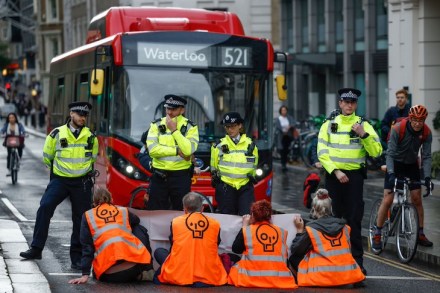
Do you remember when you couldn’t get your child to school on time because of a Just Stop Oil slow march? Or when you got gridlocked on the M25 because someone had draped themselves over one of the gantries? There’s a man from the United Nations who, it seems, rather likes the idea of us going back to those times. Michel Forst, a French UN functionary with the grand title of 'special rapporteur on environmental defenders (Aarhus convention)', published a two-page report this week following a brief visit to London. In it, he referred to 'extremely worrying information' about Britain’s 'increasingly severe crackdowns on environmental defenders', by which he meant Just Stop Oil and those like them.

In defence of Katharine Birbalsingh’s prayer ban

From our UK edition

We won’t know for some time what the outcome of the claim that a London school has broken the law by refusing to allow ritual prayer on its premises will be. But whatever the result, the case neatly exposes the problems of the rights culture we now live in. The school is Katharine Birbalsingh’s Michaela School in Brent, an non-religious establishment where roughly half the intake is Muslim. Until recently Muslim pupils engaged in a daily prayer ritual. But after this created disorder, unpleasantness and some intimidation of teachers, the governors introduced a blanket ban on all ritual prayer, apparently with the result that calm and order were quickly restored.

Joining Reform may be a smart move for Lee Anderson

From our UK edition

Richard Tice of Reform may not be the most charismatic party leader, but he has impeccable timing. The ink was hardly dry on Lee Anderson and Brendan Clarke-Smith's joint resignation letter following their support for Robert Jenrick's amendments to the Rwanda Bill, before he openly propositioned them to defect. Predictably Anderson told Christopher Hope straight away on GB News that he was not for turning. But things can change fast in politics. The idea that at least some of the New Conservatives should jump ship actually makes more sense than you might think, whether you look at things from the point of view of the people concerned, the Tory party or the country as a whole.

The European Court has become positively immoral

From our UK edition

Another new year, and on the very first day we hear of two cases where human rights law has made a laughing stock of our immigration system.  Gjelosh Kolicaj, an Albanian migrant given dual British citizenship after marrying a British woman (whom he later divorced), turned out to be a senior crime boss. After he got six years for money laundering, the Home Office said he should be stripped of his citizenship and deported. Immigration judges quashed the order: insufficient consideration had been given to his right to family life under article eight of the European Convention on Human Rights (from two children born here to a later wife) and a probation report suggesting a low (but not non-existent) risk of reoffending.