Andrew Tettenborn

Andrew Tettenborn is a professor of law at Swansea Law School

24-hour courts are risky, but right

From our UK edition

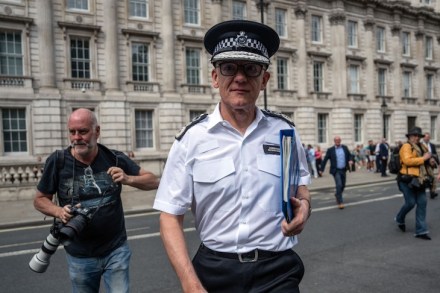
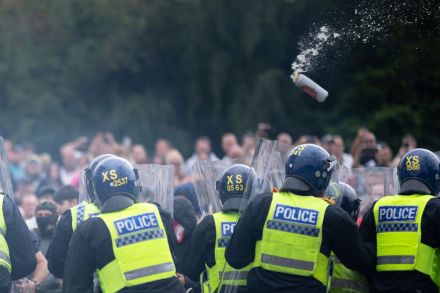
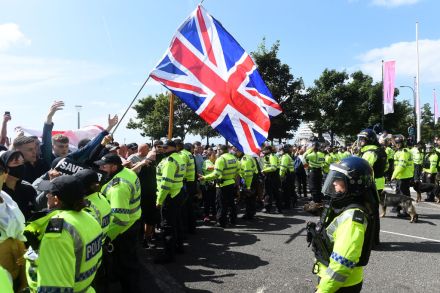
Yesterday evening, the government instituted a little-known procedure called the Additional Courts Protocol. Set up following the 2011 London riots, this involves emergency ad hoc magistrates’ courts sitting 24 hours a day to deal swiftly with the troublemakers.  This was the right decision. But it still may come back to bite the people who made it. It’s not difficult to see the advantages. Quick justice, bypassing the usual bureaucracy and reducing the scope for suggestions that witnesses’ memory may have faded, may well give offenders a salutary shock: the prospect of it can concentrate minds in future.

Does Labour care about free speech on campus?

From our UK edition

Universities fought tooth and nail against plans to impose fines if they failed to uphold freedom of speech. That proposal – contained in last year’s Higher Education (Freedom of Speech) Act – was one of the few things the Tory government could point to as a success. But under Labour the plan has been shelved. It's a good day for universities; a bad day for anyone who cares about free speech on campus. This bleak episode neatly sums up Labour’s attitude to higher education Education Secretary Bridget Phillipson said that the ministerial order, which was required to bring into force the relevant parts of the new law, would be delayed. She told the Commons, with obvious pleasure, she was ready to 'consider options, including repeal.' In short, the Act is dead.

Letting the worst universities collapse would be an act of kindness

From our UK edition

Nobody said much about it before the election, but the new government inherits a ghastly financial problem with the higher education system. Rising costs, stagnant tuition fees, and a big drop in foreign student enrolments have left several universities tottering like ivory Jenga towers. We probably have too many universities This week we got an inkling of what education secretary Bridget Phillipson and higher education minister Jacqui Smith are thinking of doing about this mess. Not surprisingly, big money bail-outs are out (chancellor Rachel Reeves won’t allow them), as are increases in student fees (which backbenchers wouldn’t stand for). Instead, apart from telling the institutions in trouble to tighten their belts, the government seems rather short on solutions.

Just Stop Oil fanatics deserve their lengthy jail terms

From our UK edition

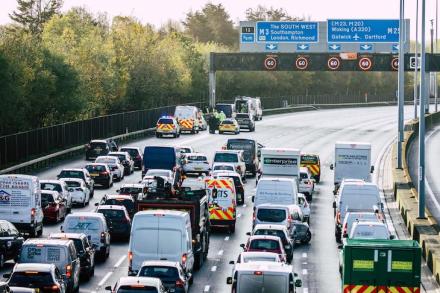
The prison sentences passed on the Just Stop Oil protesters who immobilised the M25 – five years for Roger Hallam and four for the others – were certainly stiff. With prisons overflowing and some violent offenders receiving less harsh sentences, a small reduction in the jail terms might have been justified. But despite the backlash from environmentalists, justice has been served. Those who say that the protesters are merely conscientious practitioners of civil disobedience – and that the punishments imposed amount to a stamping on the right of peaceful protest – are wrong.  Roger Hallam’s casting of himself in the role of a civil disobedience advocate is both disingenuous and incorrect.

Have the Republicans resolved their abortion dilemma?

From our UK edition

The botched assassination attempt on Donald Trump could well generate a wave of sympathy that helps waft him into the White House in November. Another indirect result of those same events may contribute further to this effect. Until the Republican National Convention opened in Milwaukee this week, the GOP had a potentially awkward problem over its stance on abortion rights. Following the attempt on Trump’s life, this has now disappeared.

How Hungary’s presidency could shake up the EU

From our UK edition

Life in the Berlaymont building, the Brussels headquarters of the European Union, just got a bit more surreal. A striking feature of the EU is its rotating presidency, under which the 27 member states take it in turns to do a six-month stint running its technically supreme political body, the European Council. This week, Hungary, the bad boy of Europe, took over the hot seat. It keeps it until the end of this year. The difficulty is that the government of Viktor Orbán in Budapest, albeit still popular at home, is at loggerheads with the EU. Politically, its scepticism over Ukraine’s war effort and its open dislike for liberal social policies exasperate Brussels; legally, it is under attack over the so-called rule of law, LGBT rights and its intransigence on immigration and asylum.

Unesco’s Stonehenge threat isn’t worth taking seriously

From our UK edition

If you gaze south from the sarsens of Stonehenge, your view at present is of a constant crocodile of cars and caravans grinding along the nearby A303 en route to the West Country. Unfortunately the government’s plans to improve matters by burying the road in a neat two-mile tunnel, already badly delayed by activist lawfare, now face another obstacle. The problem is that Stonehenge is a Unesco world heritage site – and the UN functionaries that run Unesco do not approve. Indeed they disapprove so much that the Unesco World Heritage Committee last week recommended that unless it was stopped, Stonehenge should be added to its official list of heritage in danger. For a principled government, there is only one answer to this impertinence.

Assange is released – but there is still a danger to press freedom 

From our UK edition

James Cleverly may now be a care-and-maintenance Home Secretary, but even so he will be heaving a sigh of relief as he finally tapes up the file on Julian Assange. The Australian journalist and WikiLeaks founder was on the point of being extradited to the US for revealing state secrets obtained from agents in that country. Last night we heard that Assange’s lawyers had closed a deal with American prosecutors. The arrangement is this. Assange voluntarily surrenders to US officials in the Marianas Islands; he pleads guilty to one offence of revealing US classified information, and gets five years. The court then providentially notices that he has already spent more than that in HMP Belmarsh, gives him credit for it, and releases him to fly to his native Australia.

The Supreme Court has put the future of fossil fuel projects in jeopardy

From our UK edition

'Britain is evolving from a democracy towards a kritarchy – the rule of lawyers,' wrote Ross Clark in today’s Spectator magazine. His gloomy prediction has been proved correct almost immediately. A 3-2 majority in the Supreme Court today put the emergency brakes on long-standing plans to extract oil at Horse Hill in Surrey when it struck down the council’s necessary grant of planning permission. As with most legal decisions, the reasoning was convoluted. But in essence it was this: the court ruled that the environmental impact of emissions from burning fossil fuels must be considered in planning applications for new extraction projects, not just the impacts of the emissions produced in extracting them.

Reform’s radical manifesto would do wonders for democracy

From our UK edition

In this election, neither Labour nor the Tories are particularly interested in serious constitutional reform. By contrast, there’s one smaller opposition party that makes it quite clear in its manifesto that it does believe in serious democratic change to make government radically responsive to what voters want. That party is Reform. True, there’s a lot in its manifesto, launched today, to make you cautious: its elements of rehashed free-market Thatcherism, for instance, not to mention its fairly sketchy funding projections. But a number of its constitutional proposals make for interesting reading.

Cosying up to the EU would do Britain more harm than good

From our UK edition

If anyone thought our relations with the EU since the Brexit referendum would be a respectful dialogue of equals, they were quickly disabused. Relations remain, to use an understatement, strained. Three national opposition parties have all chosen to weaponise this unpleasantness, and call for re-engagement with at least some EU institutions. Before you follow them and cast an anti-Sunak vote two weeks on Thursday, you could do worse than read their manifestos. If you like the look of the Greens’ 'real hope, real change' motto, do note that they openly want the UK back in the EU as soon as possible. Meanwhile they would sign up immediately again to the customs union and to free movement of people.

Why the EU is cracking down on Hungary’s migrant policy

From our UK edition

We are set for another high-profile tussle between Budapest and Brussels. Yesterday the EU Court of Justice chose to impose a whopping €200 million fine on the Hungarian government for failing to apply EU asylum laws, a fine that increases by €1 million for every day the infringement continues.   Politics is never very far from the surface with the EU court The legalities as ever were murky, but essentially Brussels’s complaint was this. EU law requires that asylum seekers be allowed into a member state to seek protection and to stay there until their claim is handled. Originally Hungary had prevented this by corralling applicants in border reception centres, until the Court decided in 2020 that this was not good enough.

Sunak’s crime crackdown won’t pay off for the Tories

From our UK edition

The Tories are pledging to reshape our homicide laws if they win re-election. There could, as in many US states, be first-degree murder for intentional killing, second-degree murder for manslaughter because of diminished responsibility or death arising from a deliberate wrong. Rishi Sunak is also promising to get tough on domestic abuse, with a minimum tariff for murder in the home. The crackdown will form a key part of the Conservative manifesto. The plan is far from foolproof You can understand Sunak’s thinking. The hospital order imposed on Nottingham triple killer Valdo Colocane earlier this year after he admitted manslaughter owing to diminished responsibility raised eyebrows among those who looked to the Tories as defenders of law and order.

Cracking down on the ECHR won’t save Sunak

From our UK edition

Rishi Sunak’s unequivocal statement this week about sex and the Equality Act was a clever piece of electioneering. Subsequent reports suggesting that the Tories planned to harden their stance on the European Convention on Human Rights (ECHR), by contrast, had the air of a measure taken in sheer panic. Regrettably, this will be obvious to many potential voters already mulling the idea of quietly jumping ship to Reform UK. The Prime Minister has failed badly in the presentation stakes. This matters. One of the chief attractions of Reform is that, for all their faults, they have never made any bones about their commitment to give notice to exit the ECHR and to give top priority to the connected topic of suppressing irregular migration.

The Northern Irish law posing a threat to free speech in Britain

From our UK edition

On Friday, the High Court in Northern Ireland deflected a serious threat to the right to free speech, not only in the province but also in the country as a whole. It was, however, a very close-run thing, and the affair is still highly worrying. A Northern Ireland Assembly law that came into effect last year, the Justice (Sexual Offences and Trafficking Victims) Act (Northern Ireland) 2022, made it an imprisonable crime to publish the fact that someone had come under police investigation for a sexual offence unless and until they were charged. If they were never charged the matter had to be hushed up until 25 years after their death (or even longer, if a court agreed to their relatives’ request). As I pointed out at the end of last year, this law was incredibly wide-ranging.

Fewer kids should go to university

From our UK edition

Rishi Sunak said on Tuesday what many of us have quietly suspected for some time. As a nation, we have too few apprentices and too many university students. Why not, he said, look hard at the higher education courses we provide at public expense, and where we see high drop-out rates, or poor employment and earnings prospects, be prepared to axe them and use the money to support apprenticeships? Predictably, the call for a cut in the number of university students has led to yelps of dissent, both from Labour with an election to win, and also from the higher education establishment with sales to safeguard. For all that, however, Rishi has made a good point, although his suggested remedy may need alteration. What about a bit of old-fashioned academic elitism?

Is the West being hypocritical about Georgia’s foreign agents law?

From our UK edition

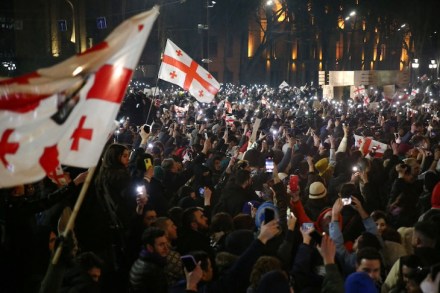
The Georgian parliament has rammed through its new foreign agents law amid massive protests, overriding the veto of pro-western and pro-EU president Salome Zourabichvili. The new law essentially will require all non-commercial organisations operating in Georgia to register as foreign agents and publicise themselves as such if they receive over 20 per cent of their funding from abroad. Its aim is to counter the influence of pro-western NGOs in the country. The Georgian government has a point when it defends the requirement of registration as a transparency measure The proposal has already caused serious unrest, and this will undoubtedly now balloon. You can see why. The government led by ruling party Georgian Dream is not a pleasant grouping.

Judges are empowering Just Stop Oil

From our UK edition

It has been argued that the preparedness of the courts to declare governmental action unlawful is vital to the rule of law. Well, up to a point, Lord Copper. Yesterday’s High Court decision which annulled new police powers to control protests shows that there might be two sides to this, especially when you find yourself on the school run behind a deliberately dawdling crocodile of JSO protesters or in front of a a bunch of XR zealots lying in the road. The rule of law is all very well, but progressives cannot be allowed to have it all their own way The background to the episode is boringly legalistic. (Please accept apologies in advance.

Press freedom means protecting Julian Assange

From our UK edition

James Cleverly won’t be able to move the Julian Assange file out of his inbox quite yet after all. The High Court has allowed Assange to appeal once more against extradition to the US on the basis that no sufficient assurances have been received over his ability to rely on the First Amendment if tried there. We don’t know what the result will be (today’s hearing merely gave permission to appeal, with no guarantee as to its outcome). Nevertheless, we should still think twice before we hope that the appeal will ultimately be dismissed, thus allowing the final removal of someone who has been a thorn in the UK authorities’ side for nearly 15 years. This is Assange’s second brush with extradition law.

Stay-at-home parents don’t need free nursery places

From our UK edition

Except for households blessed with rather generous incomes, most mothers these days have to work to keep a family decently fed and housed. Some kind of subsidised childcare is therefore an unfortunate necessity. The government recognises this, and has just introduced a new scheme. When fully up and running, it will give parents working full-time who earn less than £100,000 a free 570 hours a year of child-minding or early education for each child between nine months and four years. Plus it will (in effect) also hand them a basic rate tax deduction if they want to spend a further £10,000 per year on it. This will be over and above a free 570 hours available to any parent of any child aged three or four. Generous?