Andrew Lilico

In defence of Liz Truss’s ‘fairytale economics’

From our UK edition

One of the key dividing lines of the current Tory leadership contest concerns economic policy. The gap between the candidates is not actually very large, but of course political arguments often magnify small differences. And in this case there quite an important philosophical difference that could have significant consequences over the longer-term. Broadly speaking, Rishi Sunak is the candidate of economic continuity – how could he be otherwise, given that until a couple of weeks ago he was in charge of economic policy as Chancellor of the Exchequer. His plans involve large tax rises. Even before inflation raced ahead of expectations his plans scheduled the total tax rate rising to its highest level since 1948.
The case for Liz Truss

From our UK edition

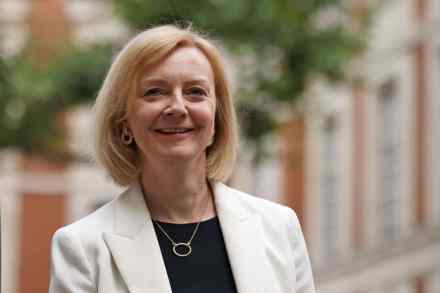
The past six years have been a turbulent and controversial time in British politics. Through them all, one person consistently delivered progress, not deflected by the chaos around her. As others made headlines, Liz Truss made deals. Having been environment secretary under David Cameron, Truss was justice secretary and lord chancellor then chief secretary to the Treasury under Theresa May, before moving on to become trade secretary, minister for women and foreign secretary under Boris Johnson. Experience at Environment, Justice, the Treasury, Trade, Women and Foreign Affairs provide the perfect background of experience – a suite and breadth that no other candidate in the race comes even close to matching. A Truss administration will be a conservative administration.

What the Tories should look for in their next leader

From our UK edition

The Conservatives are selecting a new leader, who will become Prime Minister. What sort of a person should that be? It needs to be someone with the spark or edge of a leader, able to carry others with them – not just a clubbable ‘Yes Man’ type. It needs to be someone able to press a vision and policy agenda across a range of issues, not just something narrow like finance, defence, international relations or legal issues. It needs to be someone able to convey an optimistic message, but have a serious mode that can be turned on when necessary. Someone who is willing to be unpopular, taking tough decisions when necessary with the confidence that vindication will come later, who trusts that the truth is the Conservative’s greatest political friend.

How Boris Johnson squandered his premiership

From our UK edition

Boris Johnson has been given so many second chances. He hasn’t taken any of them. Let’s start with his voting for Theresa May’s terrible Brexit deal. Despite this, when Theresa May resigned he was backed by Leavers and became PM. Having become PM he didn’t, as he should have done, back a no deal, and instead negotiated a revised version of May’s deal. Though a huge improvement on her version, it was far from perfect. Leavers backed him nonetheless and he won a large majority in the general election. And for having defeated Corbyn and achieved Brexit he will be remembered as a hero by many Conservatives. Barely a couple of months after the general election, Covid arrived.

Boris will keep losing until he tackles inflation

From our UK edition

The Tories took a serious beating in Thursday’s by-elections. Whilst Boris Johnson and his government refuse to take responsibility for the big issue of the day – inflation – and fail to convey any meaningful central purpose to their government (‘levelling up’ being clearly nothing more than an empty soundbite) they will continue to face huge electoral defeats. It really is as simple as that. When I say the government needs to take responsibility for inflation the immediate question is: ‘So how would you get it down?’ But that is the wrong place to begin. The first thing the government needs to do is to take political and policy responsibility for inflation.

What Boris needs to do to survive

From our UK edition

Most people date the beginning of Boris Johnson’s current woes to the start of the partygate scandal, and especially to the revelations from 10 January 2022 onwards about the ‘bring your own booze’ event that Johnson himself had attended. But Johnson’s problems can also be seen as having started at an earlier date and from a different source. In mid-December Lord Frost resigned from Johnson’s Cabinet, rejecting the additional restrictions proposed in response to Omicron, a few days after Steve Baker and the Covid Recovery Group had led about 100 backbenchers in a revolt against new measures. This meant Boris felt he had to take proposals for a Christmas 2021 lockdown to Cabinet, where it was rejected.

Sunak, not Bailey, is to blame for inflation

From our UK edition

Inflation has hit a 40-year high. The cost of household utilities rose by an average of £700 last month. We are now facing inflation of 9 per cent and the figure is still careering upwards. In response, politicians and ministers have attacked the Bank of England. Some commentators have even started to call for Governor Andrew Bailey to resign. The Governor himself and Chancellor Rishi Sunak say there is nothing that can be done about prices rising. They’re both wrong. First, let’s understand why it is unfair to attack the Bank of England. Under our system, the Bank is not independent, as some like to claim. Rather, it has what is called ‘operational independence’.

Has Boris really lied yet about partygate?

From our UK edition

Labour MPs and parts of the media are currently exploring, as part of the partygate scandal, whether if you repeat often enough that someone has lied, you can make that an accepted fact, even if you do not have a shred of evidence or reason to believe it. The latest example came in the Commons this week when MPs referred Boris Johnson to the privileges committee for potentially misleading parliament. The problem is that Boris Johnson did not lie about having received birthday greetings from work colleagues between work meetings. His team literally briefed the event to the press on the day it occurred. In June 2020, during the height of lockdown, the Times reported that Boris Johnson had received a cake for his birthday. No one noticed.

In defence of Boris: would his replacement be any better?

From our UK edition

Keir Starmer, aided and abetted by Boris Johnson’s many internal enemies within the Conservative party, has managed to get into the public consciousness the idea that if Boris Johnson attended a ‘party’ during lockdown, he should resign. There are a number of good reasons that the Tory party might feel it was time for a new leader, but the notion that attending an at-best semi-licit drinks event in one’s own back garden counts as a grounds to remove a prime minister seems to me to be wildly disproportionate. People say: ‘Those that make laws should not break them.’ And, of course, that it correct. But it doesn’t follow that any PM that broke a law ought to resign because of it.

The problems with Boris Johnson’s mask mandate

From our UK edition

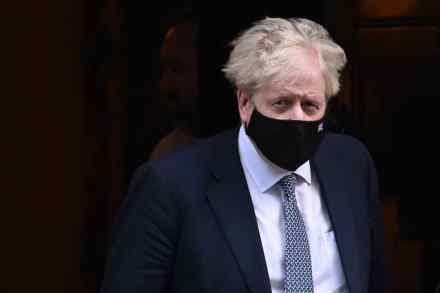
Today the government has said that for the next three weeks it will be mandatory to wear masks in shops and on public transport, pending a review. It was already mandatory to wear a mask on the tube, as a condition of travel. So to avoid mixing up ideas, let’s focus on the new mandate from the government: that people will have to wear masks in shops. Imposing a requirement that anyone entering a shop must wear a mask, whether the shop wants to accept them or not, is a straightforward imposition on human liberty. We have accepted huge infringements upon our liberties over the past 21 months.

The Treasury’s Brexit short-term impacts analysis: A bit high, a lot political

From our UK edition

The Treasury's analysis of the short-term impact of Brexit offers us two scenarios for the two years following the referendum: a base ‘shock’ and a ‘severe shock’ scenario. The base case means 3.6pc less economic growth in the two years following Brexit, with inflation up 2.3 percentage points and house prices down 10pc. A first thing to grasp is the connection between the scenarios in this report and those in the previous Treasury report on the longer-term impact of Brexit.

Jobs miracle or low-pay disaster? Andrew Lilico and David Blanchflower debate

From our UK edition

Dear David, From Q2 1979 to Q1 1981, quarterly real GDP fell in the UK by 5.5%. Unemployment rose rapidly, from 1.4m in Q2 1979 to 2.4m by the end of the recession, then continued rising through to its peak of 3.3m in 1984 – 12% of the workforce. Unemployment stayed above 3m for 51 straight months. This is the pattern economists expect in a serious recession. Unemployment rises, then stays persistently high, falling back only well into the recovery. It has also been the experience of much of the developed world since the Great Recession of 2008/09. So, for example, whereas US unemployment was below 5% in 2007, it rose to about 10% in 2010, falling back only gradually over several years thereafter. Similarly, in Spain unemployment rose from 8.4% in 2007 to 27% in 2013.

We don’t want equal oppression for all, so stop attacking M&S

From our UK edition

Lots of brouhaha the past few days about the apparent M&S policy (later back-tracked upon) of allowing Muslim staff not to serve pork or alcohol.  Why, though?  M&S presumably has orthodox Jewish staff whom it does not insist must work on Saturdays?  Why would we be any more outraged if it let some staff not serve booze? Obviously such an accommodation could be done poorly.  If there’s one thing certain to rile a Briton it’s a violation of queuing etiquette, and making someone stand in a queue only to discover at the end that you’d have to queue again at another counter just because the person at the desk didn’t want to touch your goods would be quite out of order.

The day of reckoning draws near

From our UK edition

Tomorrow we finally move from generalities to specifics.  No need to argue any more about whether the losers will be up in arms or will it all be a damp squib.  Tomorrow we get the gory detail. At the time of the Emergency Budget we were told to expect cuts in non-ring-fenced departments of 25 percent.  Then we heard that departments had been asked to provide scenarios for 25 percent and 40 percent cuts.  That was always going to be necessary because Defence and Education (the two largest departments apart from the ring-fenced Health) weren’t ever going to be cut by that much.

Nearing the precipice?

From our UK edition

Recent events in the Eurozone have led a number of commentators to suggest that we are nearing some repeat of the financial crisis that followed the nationalisation of Fannie Mae and Freddie Mac in August 2008 and the subsequent (and consequent) bankruptcy of Lehman's. In my view, the current situation is rather different from that in 2008, but matters could turn out much worse.

Undoing the spending of the last government

From our UK edition

In the table below, we consider how the budgets of various departments grew over the last Labour government. It spells out the very large rises in Health and Education (together, the rises in these two departments accounted for 61 percent of the total rise in departmental expenditure over the period). And we can see that other departments, such the Foreign Office, experienced cuts. Then, in the later columns, we consider what percentage falls today’s cuts represent and what proportion of the total rises since 2004/5 they undo.  We see that the largest cuts fall on CLG communities, down by 7.3 percent, reversing 74 percent of the rises over the last Parliament.

Here’s how you raise £100bn through tax hikes

From our UK edition

Policy Exchange has repeatedly urged that the country’s fiscal problems should be addressed principally by spending cuts, combined with some tax rises.  We have recommended a ratio of 80 percent spending cuts to 20 percent tax rises. The “structural” deficit in the UK (i.e. the bit of the total deficit that will still be there once the economy has recovered) is estimated by the Treasury at 9 percent of GDP, or about £125 billion.  Not all of that needs to be eliminated quickly, but the vast majority of it does, say £100 billion.  So on a ratio of 80:20 our position equates to £80 billion in cuts in underlying spending (spending that isn’t the direct result of the recession) and about £20 billion in tax rises.

Ongoing deflation

From our UK edition

This morning the inflation figures were released for September.  They show that the economy is in ongoing deflation, as it has been since March 2009, with the annual change in the Retail Prices Index (RPI) standing at -1.4 percent.  At the same time, the policy index used by the Bank of England to determine its interest rate and quantitative easing policies – the Consumer Prices Index (CPI) – saw its annual rate of inflation fall to 1.1 percent from 1.6 percent. Some press commentary suggests that the fall in CPI inflation to 1.1 percent suggests there is now a threat of outright deflation next year.  This is wrong.  The country is already in deflation.  The CPI is not a measure of the cost of living in the UK.

Brown’s second spending spree

From our UK edition

Public spending is currently accelerating at an unprecedented pace — more swiftly, even, that during the total loss of control during the 1970s.  Spending is due to rise £120bn, 20%, in just three years from 2007/8 to 2010/11, taking it from 41% of GDP to above 50% — a much more rapid rise than in other parts of the world, lifting us from well below the EU average to well above.   The considerable majority of this rise is not the automatic result of the recession (extra unemployment benefits, etc.) – only 38% takes this form.  Neither is it any kind of “public works” programme – only 6% is extra capital spending.  Instead, the vast majority is extra consumption spending.