Andrew Downie

Andrew Downie is a Scots-born correspondent who has spent nearly 30 years in Latin America, much of them in Brazil. He currently divides his time between São Paulo and Madrid

Can Lula use the pro-Bolsonaro riots to unite Brazil?

From our UK edition

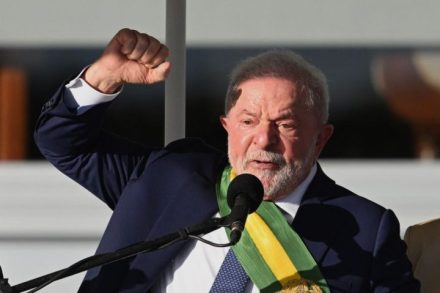
A week is a long time in politics. Just ask Brazilian president Luiz Inácio Lula da Silva.  On 1 January this year he was greeted by adoring crowds at Brasilia’s presidential palace after being sworn in for a four-year term. Seven days later that same building had been overrun by far-right insurrectionists intent on overthrowing him. The incredible scenes in Brasilia were almost a carbon copy of the Trump insurrection of 6 January 2021, bar a few key details.  First, the North America mob wanted to prevent Joe Biden taking power. In Brazil, Lula was already in office, having replaced Jair Bolsonaro after winning a narrow election victory in October. Second, hundreds of those who marched on the Brazilian capital were arrested.
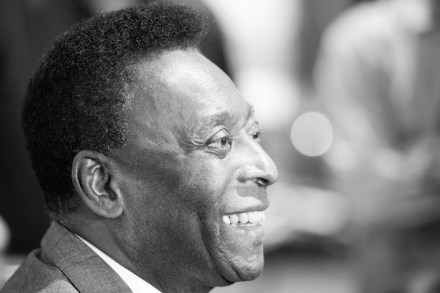
Rest in peace, Pelé, the undisputed King of football

From our UK edition

When Lionel Messi won the World Cup for Argentina earlier this month, it not only filled the last hole in his trophy cabinet, it also seemed to end the debate over who was the greatest footballer of all time. Football fans have debated for years about whether Messi was equal to Pelé and Diego Maradona, the two long-standing candidates for one of sport’s most futile and yet most sought-after titles. By finally winning the World Cup, fans and pundits the world over ruled en masse; Messi was now the greatest. Pelé’s death on Thursday will reopen that debate and hopefully give pause to those who have sided with the Argentine magician.

Lula faces an uphill battle in Brazil

From our UK edition

The Brazilian presidential election yesterday was billed as one of the most consequential in decades – not just for the country but for the future of the planet. Anyone paying attention to either the climate crisis or the Amazon, the world’s largest rainforest, could hardly quibble with that description. The good news is that the Amazon can expect a breather. After four years of Jair Bolsonaro’s often destructive policies, the right-wing incumbent is being replaced. His leftist challenger Luiz Inácio Lula da Silva squeaked home with 50.9 per cent of the vote in a bitter contest that ended with the smallest winning margin since the end of the military dictatorship in the 1980s.

Why do Brazilian footballers like Bolsonaro?

From our UK edition

There are weeks when Jair Bolsonaro dominates the headlines in Brazil and there are weeks when that honour goes to Neymar. Both men have been in the news this week, which is understandable given the run-off election for president is on 30 October, and the World Cup kicks off in less than a month. One plays to the far-right galleries, spends a lot of his time on social media, and is frequently defending himself against accusations of corruption. The other is the president. Most outside of Brazil, though, would find it odd that the news cycle in the last few days has been about the two of them together. Neymar is in the news not just for his starring performances with Paris Saint Germain.

Bolsonaro isn’t finished yet

From our UK edition

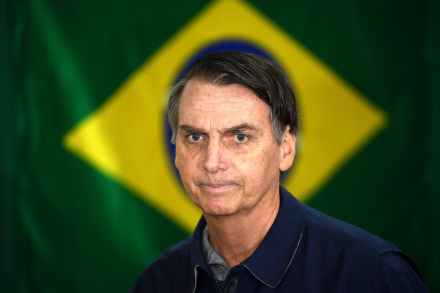
São Paulo The polls got it wrong again. In the first round of Brazil’s presidential election on Sunday, challenger Luiz Inácio Lula da Silva (Lula) got 48.4 per cent of the vote, 5.2 points ahead of the incumbent Jair Bolsonaro. Polls had predicted a possible first-round win for the insurgent. But – with neither candidate gaining a majority – they will now face a run-off election on 30 October. Bolsonaro hasn't just flirted with the idea of a coup, he's wined and dined it Lula has the lead and remains sanguine about victory. But the momentum is with Bolsonaro, the populist former army captain whose chaotic administration has polarised Brazil.

Jair Bolsonaro and Brazil’s football fight

From our UK edition

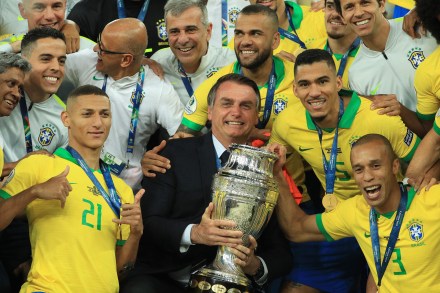
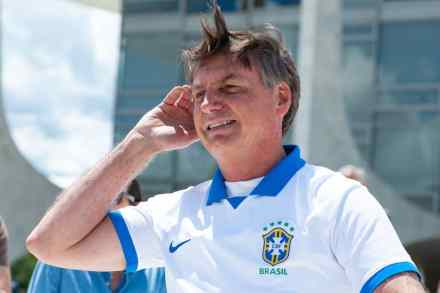
Brazil's football strip is one of the most recognisable garments in sport, perhaps the most potent symbol of Brazil’s sizeable soft power. People who can’t name the country's capital or president are familiar with the players who made the yellow jersey famous. Names such as Pelé, Sócrates, Ronaldo and Marta are known and loved the world over. In Brazil, however, the iconic shirt is at the centre of a political tug-of-war. With barely a month until the presidential election, and two months until the World Cup, the fight over who 'owns' the jersey, a symbol appropriated in recent years by supporters of Brazil's president Jair Bolsonaro, is one of the more colourful political dramas currently playing out in the South American nation.

Latin America in crisis again

From our UK edition

It wasn’t so long ago that British readers, on hearing about the incompetence and corruption of Latin America’s political leaders, could gasp, despair or smirk, depending on their own political leanings and the leaders in question, and rest assured that, for all the United Kingdom’s problems, they were immune to such folly. Institutions were stable, the rule of law was unshakeable, the economy was reliably solid and, besides, the good old Brits, born with an innate common sense that was the envy of the rest of the world, would never fall for such blatant chicanery. Those days are no more. In Latin America, however, charlatans have long been part of the political landscape.