Ameer Kotecha

Ameer Kotecha is CEO of the Centre for Government Reform. He was formerly a senior diplomat, serving as the head of the British consulate in Russia 2023-25. He is the author of Queen Elizabeth II’s official Platinum Jubilee Cookbook (Bloomsbury).

How to celebrate the coronation weekend

From our UK edition

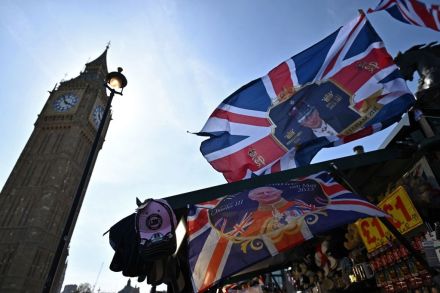
Lots of things seem to get described as ‘once in a lifetime’ experiences nowadays, but for many of us the coronation really will be just that. So, how to make the most of the historic long weekend? Clock off from work at a reasonable time on Friday and while getting dressed into your glad rags pour yourself a glass of English sparkling wine. Nyetimber and Hattingley Valley both have appealing coronation edition cuvées. Have some friends over – as with Christmas or new year, I think the tantalising eve of the big day is always the most fun time for a party. Serve some nibbles, such as Tyrrells's coronation chicken crisps, and a Jack Russell cake from the Waitrose coronation collection (at £24.99 their Leckford Estate Brut is also worth getting as a good-value English sparkling).

The timeless rules of youth

From our UK edition

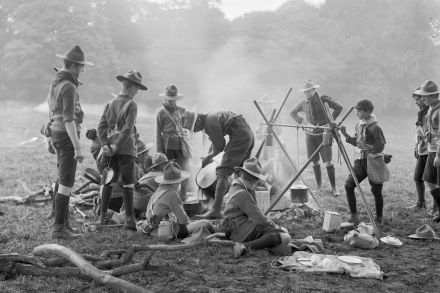
Every so often, one stumbles across some long-forgotten text that could have been written yesterday. It’s a reminder that often the answers to today’s problems lie in the past. I had one of those moments when I read Lord Baden-Powell’s Rovering to Success. Recently I had another such moment reading about Kurt Hahn’s Six Declines of Modern Youth. He wrote of a widespread decline of self-discipline, a dislocation from the world and a weakened tradition of craftsmanship. All this, and more, rings true. And, God knows, we need to find solutions. Kurt Hahn is not exactly unknown: the German-born educator who later settled in Scotland was the late Duke of Edinburgh’s headmaster at Gordonstoun which Hahn founded together with Lawrence Holt.

Why bother cooking?

From our UK edition

In a world of ultra-convenience, I think making the argument for home cooking is important. Because a lifestyle of takeaway delivery apps, ready meals or eating out every day is not a recipe for health and happiness, no matter how easy the modern world makes it.   One of the downsides of the cult of the ‘foodie’ is that it can make food and cooking more intimidating than they need to be. If you’re a Londoner, invite friends over for a dinner of lasagne and garlic bread and you’ll have one guest asking if the pasta is fresh or dried and the other telling you to try roasting the garlic for 24 hours in a low oven next time to unleash its inner umami. It’s enough to put anyone off.

Save our sweet shops

From our UK edition

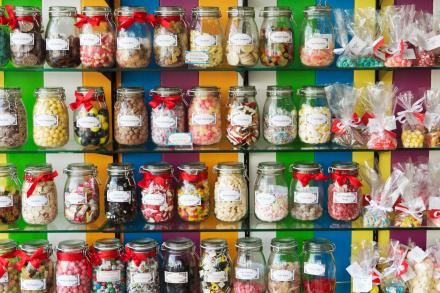
There are only so many times I can watch Lord Sugar swivelling in his chair and reusing put-downs from three seasons ago before enough’s enough, so I’ve dropped in and out of the latest series of The Apprentice. But one contestant that has caught my eye is Victoria Goulbourne, the flight attendant turned online sweet shop owner (note: not sweat shop, despite what one unfortunate online review might say) from Merseyside. And while I pass no judgment on her business acumen, it did get me thinking: what a miserable thing an online sweet shop must be. Victoria’s company markets itself as the ‘UK’s most Instagrammable pick ’n’ mix'. Quite apart from why sweets that belong in your gob needs to be camera-friendly, it was the selection that left me wondering.

Why you should write poetry

From our UK edition

In a recent Low Life column, Jeremy Clarke referred to Edward Thomas and his writing of 16 poems in just 20 days. Similarly, practically all of the poems that made Wilfred Owen famous were composed in a few months (and when he was still in his twenties). It has been the same for many of our greatest poets. This prompts a few reactions: one is undoubtedly a sense of inferiority. But another is the thrill of possibility. It doesn’t matter if you’ve produced nothing of any literary merit in your life to date: a sudden burst of inspiration over a few weeks could be all you need. This is something almost unique to creative pursuits – you won’t be making any breakthroughs in nuclear fission outside of your nine to five – and it is particularly true of poetry.

The charm of crumpets

From our UK edition

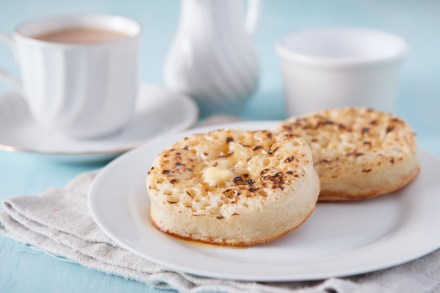
At this time of year, it is pancakes and hot cross buns that are meant to enjoy a moment in the spotlight. I shall not begrudge them that. But my heart really belongs to the crumpet. They are the epitome of the simple pleasure, and an economical choice in a cost-of-living crisis. There may have been much alarm about reports at the weekend that prices have more than doubled in the past year – but a six-pack of crumpets (sourdough no less) can still be had for 39p at Lidl or 42p at Aldi. It’s 90p if you want to go luxe with Warburtons. Never was so much breakfast cheer available to so many for so little. And it seems I'm not alone in feeling this way – sales of crumpets in the UK are up 10 per cent in the past 12 months.

In defence of February

From our UK edition

Everyone has their own most loved and hated months. While for Chaucer, Browning and others April was a time of joyful rebirth, it was of course for Eliot ‘the cruellest month’. Still, February tends to get a bad rap from everybody. It manages to be both the shortest and longest month of the year. In theory the days are getting longer, and yet the darkness of the previous night and the next morning blur, making for a grim nocturnal existence. It doesn’t matter if you’re a night owl or a morning lark, in February you’re commuting from work in the dark. Still, better than midwinter isn’t it? Hardly. The glamorous, festive part of the season is a mulled wine-blurred distant memory.

10 Scotch whiskies to try on Burns Night

From our UK edition

Burns Night always feels like a particularly well-timed celebration. Hot on the heels of ‘Blue Monday’ – supposedly the most miserable day of the year – it’s certainly nice to have a reason to get merry. It also happens to be the perfect refutation to those killjoys determined to make Dry January the new Lent.  ‘O thou, my muse! guid auld Scotch drink!’ So wrote Robert Burns in the winter of 1785 in his ode 'Scotch Drink'. The Scottish bard’s love of the stuff is no surprise and no Burns Night celebration is complete without a few drams.

The power of the royal Christmas message

From our UK edition

Today, shortly before 3 p.m., there will be a collective heave as backsides – weighed down from turkey and roast potatoes – are prised from dining chairs and plonked on to sofas to tune into the King’s speech. So I very much hope. For the royal Christmas broadcast is important, and this year’s of course marks a new era. This afternoon our televisions will bring us not only the first Christmas message from the new King, but indeed the first from any King. For while the tradition of the Christmas message began in 1932 under King George V, the first Christmas broadcast to be televised was not until 1957, and that of course was by Queen Elizabeth II.

The King’s speech

Christmas dinner is the meal we love to hate

From our UK edition

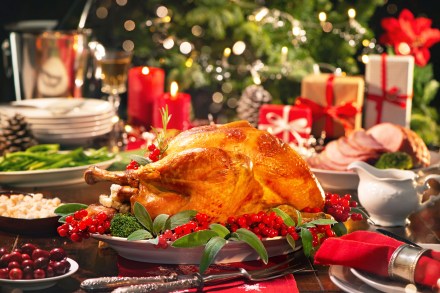
Many of the elements of the Christmas spread have more detractors than admirers. Turkey can seem an undistinguished bird thrust into an undeserved limelight: bland and unwieldy, it’s a far cry from a rich goose or even a regular, moist chicken. Carrots and parsnips – uninspiring. Bread sauce resembles the gruel ladled out to Oliver Twist. Christmas pudding – dense and gluey. And Brussels sprouts, well, enough said. Every year, Christmas dinner-haters crawl out of the woodwork to air their disgust at the traditional meal and find themselves given a surprisingly sympathetic hearing. A 2020 YouGov poll indicated that only around half of us, for example, consider turkey part of our ideal Christmas dinner (it hardly needs saying that for Gen Z the figure is even lower).

What should be on your Christmas cheeseboard?

From our UK edition

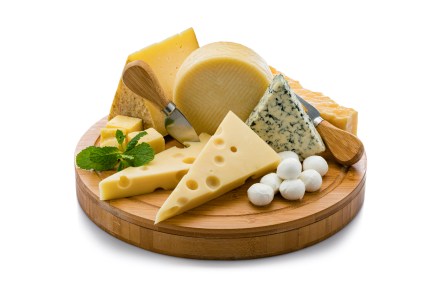
No overindulgent gourmand worth his salt fails to own a stilton scoop. Mine has a bone handle and Mappin & Webb silver plate. It has an ingenious contraption to release the cylindrical pellet of cheese: a bit like those retro ice cream scoops that, with a little squeeze, crack like a whip, the metal slicing under ice as vicious as a mousetrap. My stilton scoop is gentler. One releases the mouldy blue at one’s own pace, until it falls sensuously on to the plate. It is used just once a year, at Christmas, like the cookie-cutter and the nut-cracker. Why this extended detour about a kitchen utensil? Because one cannot talk about cheese at Christmas without talking of stilton.

What makes the perfect pub?

From our UK edition

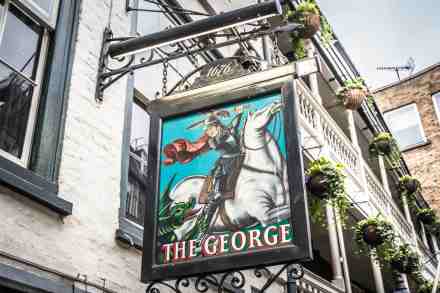
From Geoffrey Chaucer’s Tabard and Martin Amis’s Black Cross to Thomas Hardy’s Buck's Head Inn, literature is as replete with pubs as are villages and high streets up and down the land. It is no surprise. They are atmospheric settings for a plot, and places of inspiration and contemplation besides; many authors have written their novels while sitting within them. Above all, they are one of the essential stitches in the fabric of British life. In the words of Hilaire Belloc: ‘But when you have lost your inns, drown your empty selves – for you will have lost the last of England.’ Before my father came to this country in 1971 from East Africa, he read that the British socialised in pubs.

Best of British: Christmas gifts for under £20

From our UK edition

Christmas shopping has its challenges at the best of times. Oxford Street crowds and high street tat; Black Friday generating more excitement than a White Christmas. And this year will, for many, be more challenging than ever. Who needs the Grinch when the cost-of-living monster threatens to steal Christmas? When looking to keep down the cost of presents, gravitating towards well-known British heritage brands might seem counterintuitive. The ‘big box’ instinct sometimes kicks in: the bigger the package the more expensive it’ll look under the tree, we reason. And many of us are guilty of buying presents that are more gimmicky and flashy than genuinely likely to get good use.

The full English is a breakfast to be proud of

From our UK edition

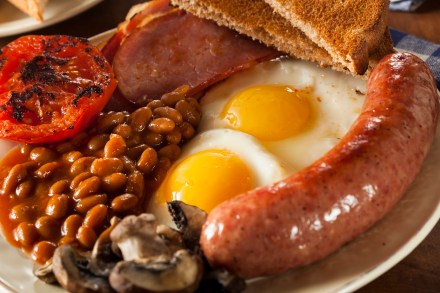
The British playwright Somerset Maugham once said that ‘to eat well in England you should eat breakfast three times a day’. I think he meant it as a jibe, but we should take it as a compliment. Our breakfast is as powerfully evocative of England as any part of our cultural heritage. In The Lion and the Unicorn, stirred to patriotism amid the country’s daily bombardment in the Blitz, George Orwell opined that English civilisation was ‘somehow bound up with solid breakfasts and gloomy Sundays, smoky towns and winding roads, green fields and red pillar-boxes. It has a flavour of its own’. That flavour is of sizzling bacon, straight from the pan. Rare is the Englishman who doesn’t have strong views on how they like it: toasted bread or fried? Mushrooms or tomatoes?

Three cheers for Branston Pickle

From our UK edition

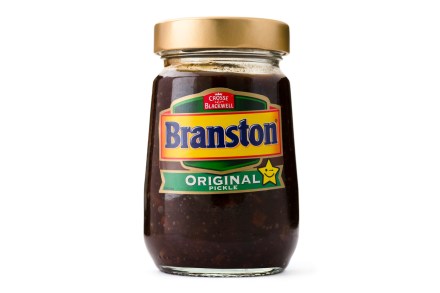
There is no shortage of foodstuffs (or people) jostling for admission into the hallowed hall of ‘national treasures’. Perhaps the best litmus test for right of entry is time-proven popularity, and appeal across class and generational divides. No mere passing flavour of the month or millennial indulgence. Something that unites us all in affection. Branston Pickle ticks the boxes. Branston and cheddar cheese were made for each other. Like jam and clotted cream, or rhubarb and custard; brought together they become more than the sum of their parts. One brings fruity tartness in perfect juxtaposition to the other’s creamy richness. Many a grand dinner party features an elaborate cheeseboard accompanied by membrillo and pickled figs.

The pomp and pageantry of the Lord Mayor’s Show

From our UK edition

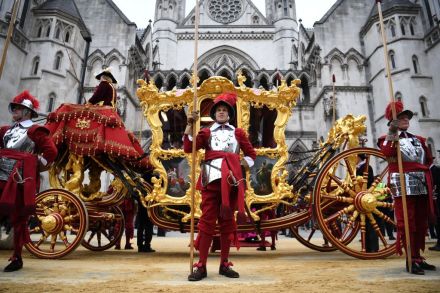
The Lord Mayor’s Show is a mix of traditional buttoned-up pageantry and let-your-hair-down carnival. A bit like the state opening of parliament without all the MPs, and Notting Hill without the jerk chicken. I am a Freeman of The Worshipful Company of Merchant Taylors, one of the ‘Great 12’ livery companies of the City of London. The Lord Mayor’s Show is an occasion in which the City’s livery companies – there are some 110 in all – have prominent place. What’s more, the incoming Lord Mayor has a special link to the Merchant Taylors as a member of the Company’s Court. Which is all a roundabout way of saying: I have been roped into today's show to ride atop a camel.

In defence of instant coffee

From our UK edition

The past is a foreign country; they do things differently there. Ten or 20 years ago no one would have thought twice about enjoying Nescafé or its equivalent. There is soothing ritual in spooning, pouring, stirring and sipping the mud-brown concoction in a mug. But nowadays, for a generation nourished on slow-roasted Colombian cashew-milk cortados, instant coffee seems as primitive as campfire cookery. I recently stayed at Brownsover Hall, a grand Gothic mansion house near Rugby: a place where you can sit for a whole weekend in a Georgian wingback chair, gazing out at Warwickshire. In a wood-panelled bedroom, with ceilings loftier than millennial expectations, by the mini kettle and the branded writing paper, was the familiar tray of Nescafé sachets, PG Tips and milk thimbles.

The remarkable success of the East African Asians

From our UK edition

When Idi Amin’s voice crackled through the radio on 4 August 1972 with his fateful ultimatum, my family paid little notice, save for wondering briefly why a government announcement had interrupted the blaring Bollywood tunes. My father’s two sisters were getting married the next day (both tying the knot at the same time meant half the wedding cost) and preparations were in full flow. In any case my family – like many of Uganda’s 76,000-odd Asians who were subject to Amin’s expulsion, giving them 90 days to leave the country – thought the President could hardly be serious. Despite being a small minority of the country’s population, the Asians were responsible for 90 per cent of Uganda’s tax revenues. To expel them would be madness. But madness came easily to Amin.

Inside the recharged Battersea Power Station

From our UK edition

At its peak, Battersea Power Station supplied a fifth of London’s electricity, including to Buckingham Palace and parliament. Today, the most electric thing about it is the virtual reality gaming venue on site. Times have changed – but the reopening of the power station allows us to rediscover one of our finest pieces of industrial heritage and to take stock of the neighbourhood's £9 billion makeover. The iconic Grade II*-listed building was decommissioned and shut down in 1983. Over the past ten years, in Europe's largest urban regeneration project, it has been restored and repurposed. The project reaches its climax today when the power station reopens as a residential, retail and hospitality development.

What to eat in game season

From our UK edition

Game is a perfect refutation to the sort of militant vegan campaigners who go around placing floral tributes on packaged meat. So long as shoots are responsibly conducted, game is as environmentally sustainable and ethical as meat-eating gets. But this year looks set to be a tough one for parts of the industry. Chiefly because of a severe outbreak of avian flu in France, gamekeepers in the UK have struggled to source enough birds to rear (90 per cent of partridge eggs and 40 per cent of pheasant eggs are imported from or through France). By some estimates up to 70 per cent of partridge shoots and nearly a third of planned pheasant shoots may be cancelled this year.