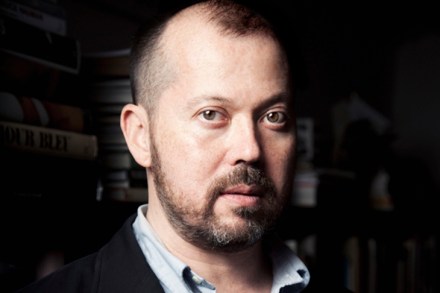
Alex Preston

A bleak vision of adolescence: The Shards, by Bret Easton Ellis, reviewed

From our UK edition

Bret Easton Ellis’s novels were my literary gateway drug when I was young, the stylised bleakness of his debut Less Than Zero a model for my own writerly aspirations. He was a wunderkind. The fact that he’d written his first novel while still a teenager seemed incredible to me as I read and re-read it: a book with little plot but with so much life. The Shards can be usefully thought of as both a prequel to Less Than Zero and a presentation of the atmosphere and circumstances that brought that novel into being. Ellis has spent much of his career exploring the territory between fiction and autobiography. Lunar Park (2005) was a kind of faux autobiography, while Imperial Bedrooms (2010) followed the semi-autobiographical protagonist from Less Than Zero into middle age.

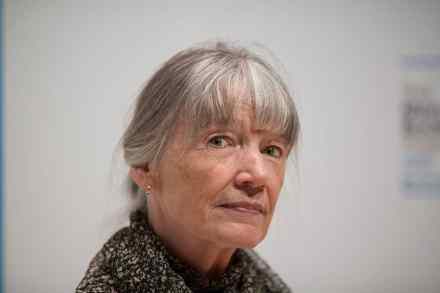
Knotty problems: French Braid, by Anne Tyler, reviewed

From our UK edition

Anne Tyler’s 24th novel French Braid opens in 2010 in Philadelphia train station. We find the teenage Serena, who has the ‘usual Garrett-family blue’ eyes, with her boyfriend James, waiting for a train back to Baltimore, where they’re at university together. Serena runs into her cousin Nicholas – although she’s not certain it’s him – and doesn’t seem especially keen to speak to him. There’s an awkward meeting; then Serena and James go to catch their train. A sense of unease hangs over the whole encounter. James speaks for the reader when he says: ‘Maybe there’s some deep dark secret in your family’s past.’ Uncovering this secret is at the heart of the novel.

Sowing seeds of comfort

From our UK edition

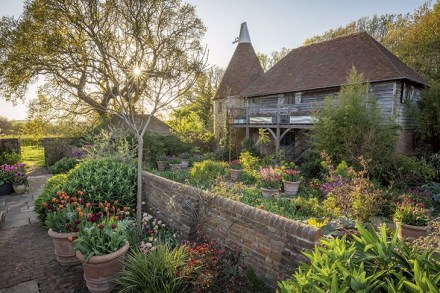
If you had asked me a year ago how a pandemic-panicked world of stockpiles, curfews and social isolation would influence my life in the garden, I might have drawn you a picture of myself as a kind of prepper homesteader, proudly feeding my family from the veg beds, trading spuds for loo rolls in the lanes around my house. As it was, last year was all about flowers for me, and while the lettuces and tomatoes were indeed bountiful and welcome, it was the glory of the sweet peas — the first thing I smelt on recovering from Covid — and the roses and dahlias that meant most. When all the news was ghastly and life felt scarily provisional, the nurturing of seeds into beautiful life took on an almost religious symbolism. And the high priestess of that religion is Sarah Raven.

Bright and beautiful: Double Blind, by Edward St Aubyn, reviewed

From our UK edition

Edward St Aubyn’s ‘Patrick Melrose’ novels were loosely autobiographical renderings of the author’s harrowing, rarefied, drug-sozzled existence. Despite their subject matter, they managed to be uplifting through the beauty in which they expressed their melancholy sentiments. After At Last, the final novel of the pentalogy, St Aubyn published Lost for Words, a prickly satire on the literary prize culture that seemed narrowly parochial for such a classy novelist. Now we have Double Blind, his tenth novel, which has what is typically referred to as a rich cast of characters. We open with Francis, a kind of St Aubyn avatar, working at Howarth, a rewilded Sussex estate clearly based on Isabella Tree’s project at Knepp.

Modern English

A decade ago — eheu fugaces labuntur anni — Stuart Evers’s debut story collection, Ten Stories About Smoking, was one of the first books I ever reviewed, and I’ve kept tabs on his career ever since, in that spirit of comradely competitiveness one feels for a writer of a similar age launching at the same time. I spoke warmly of his first novel If This Is Home and enjoyed his second collection, Your Father Sends His Love, when it appeared in 2015. But there was nothing in those earlier works to prepare me for the scale and ambition of The Blind Light. This extraordinary novel about Britain and Britishness spans six decades and uses the stories of two men and their families to delve revealingly into complex questions of class, fate and history.

stuart evers

Pithy and profound

From our UK edition

It’s not surprising, perhaps, that Emil Cioran isn’t much read in England. Born in Romania, but winning a scholarship to the University of Berlin in 1933, Cioran was an avid supporter of both the Nazis and the Romanian far right group, the Iron Guard. His writing is bleakly nihilistic, his titles a hint to what lies within: On the Summits of Despair, A Short History of Decay, The Trouble With Being Born. Cioran was perhaps the greatest 20th-century practitioner of the aphorism, that ancient, fusty, patrician form associated with Hippocrates, Erasmus, de la Rochefoucauld and Pascal. Viewed in a certain light, though, a kind of mordant humour begins to emerge from Cioran’s writing.

A panoramic novel of modern Britain: The Blind Light, by Stuart Evers, reviewed

From our UK edition

A decade ago — eheu fugaces labuntur anni — Stuart Evers’s debut story collection, Ten Stories About Smoking, was one of the first books I ever reviewed, and I’ve kept tabs on his career ever since, in that spirit of comradely competitiveness one feels for a writer of a similar age launching at the same time. I spoke warmly of his first novel If This Is Home and enjoyed his second collection, Your Father Sends His Love, when it appeared in 2015. But there was nothing in those earlier works to prepare me for the scale and ambition of The Blind Light. This extraordinary novel about Britain and Britishness spans six decades and uses the stories of two men and their families to delve revealingly into complex questions of class, fate and history.

If you haven’t read Louise Erdrich, now’s the time to start: The Night Watchman reviewed

From our UK edition

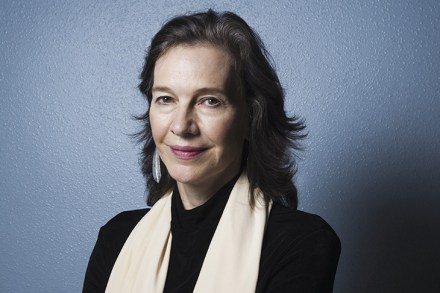
Louise Erdrich’s grandfather, Patrick Gourneau, was tribal chairman of the Turtle Mountain Band of Chippewa when the US Congress imposed House Concurrent Resolution 108 in 1953. This revoked the federally recognised status of many Native American tribes and withdrew legal protection of their territory, culture and religion. Gourneau was also a night watchman. While Erdrich’s latest book is fiction, it clearly draws deeply on what she describes in a prefatory note as ‘my grandfather’s extraordinary life’. Thomas Wazhashk — the surname means muskrat in Chippewa — is the night watchman at the Turtle Mountain Jewel Bearing Plant, a place where the women of the tribe ‘spent their days leaning into the hard light of their task lamps’.

Finding his voice

From our UK edition

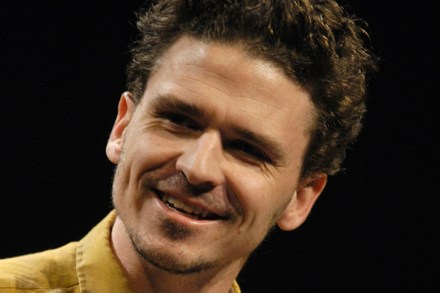
The Parade, Dave Eggers’s eighth novel, is a slim, strange book, another unpredictable chapter in the career of this hard-to-pin-down author. Like his friend and sometime collaborator Jonathan Safran Foer, there’s the sense with Eggers that, after launching himself so spectacularly onto the literary scene with his debut, A Heartbreaking Work of Staggering Genius, this is an author who hasn’t quite worked out what sort of grown-up writer he wants to be.

The dawn of Romanticism

From our UK edition

Several years ago, I was interviewing the garden writer and designer Sarah Raven at her home in Sussex when a tall, tanned figure bounded up from the woods towards us. It was Adam Nicolson, her husband, and he carried an axe over his shoulder. A few months later, an email arrived from Nicolson, inviting me to come with him and a gang of his friends on a ‘moon walk’ in the Quantocks. I couldn’t make it, but realise now that the night walk was part of the research for his extraordinary and engrossing record of the time William and Dorothy Wordsworth spent in Somerset with Samuel Taylor Coleridge. This ‘year of marvels’ (from June 1797 to September 1798) would end with the publication of the first great work of Romanticism, the Lyrical Ballads.

Echoes of The Tempest…

From our UK edition

‘I should not have gone back to the island but I did it all the same.’ So begins the Swedish author Steve Sem-Sandberg’s brief, dark and wonderfully atmospheric 12th novel, The Tempest. Islands play a special role in our literary imagination. They are crucibles, havens, prisons and escapes, places of magic and mysterious transformation, worlds that can be shaped and owned. There is a rich history of island-writing, from D.H. Lawrence to J.M. Barrie, Compton Mackenzie to Aldous Huxley, William Golding to John Fowles. Behind them all sits Shakespeare’s late, troublesome, self-reflexive play of creativity and destruction, forgiveness and retribution. Sem-Sandberg’s island is one of a small archipelago sitting in a fjord on the Norwegian coast.

You couldn’t make it up

From our UK edition

Orhan Pamuk, writing about Vladimir Nabokov’s masterful memoir Speak, Memory, noted that there was a particular ‘thrill’ for the writer who calls ‘something wholly autobiographical fiction, something wholly fictional autobiography’. When Nabokov did this, Pamuk said, it changed ‘the secret centre of the story’. The fertile interplay of fact and fiction animates a pair of books by the Korean American author Alexander Chee: one a collection of essays, the other Chee’s debut novel, published in the US in 2001 but appearing in Britain for the first time. There’s something strangely nostalgic about reading Edinburgh (it’s set in Maine; the title is a reference to a book that features in the novel).

Pay back time

From our UK edition

‘We lived in a country that rewarded its worst people. We lived in a society where the villains were favoured to win.’ So says Seema, the 29-year-old wife of hedge-fund manager Barry Cohen in Gary Shteyngart’s fourth novel, Lake Success. The relationship between fiction and the world of high finance has a complicated history. Having largely ignored Wall Street — Tom Wolfe, Bret Easton Ellis and F. Scott Fitzgerald aside — novelists found in the crash of 2008 a galvanic moment. Suddenly bankers were everywhere, from Sebastian Faulks to John Lanchester to Anne Enright, while younger writers such as Adam Haslett and Zia Haider Rahman wrote memorable novels that made (flawed) heroes of the money-men.