Alex Massie

Alex Massie

Is a summer without cricket truly summer at all?

From our UK edition

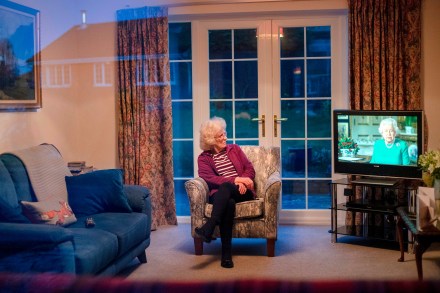
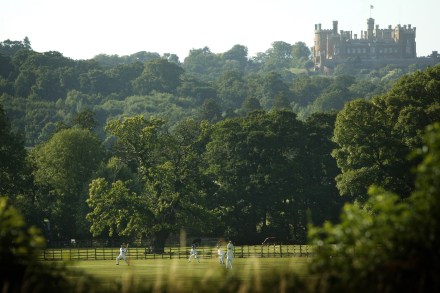
I suppose most of us have a hole or two in our lives right now. This is a time of absence; a hollow period in which time seems congealed. Every so often we receive a fresh reminder of all that’s missing. One such came to me this week as Cricket Scotland confirmed there will be no league cricket played here this summer. Perhaps some local mini-leagues or knock-out cups will be organised in late summer and perhaps it will be different, and happier, elsewhere in the cricketing realm but, as matters stand, right now and right here, this feels like a strange kind of bereavement. Speaking for myself, I had been looking forward to playing in Perthshire and Derbyshire and the County Kildare and many points in between.
Boris and Cummings’ words are coming back to bite

From our UK edition

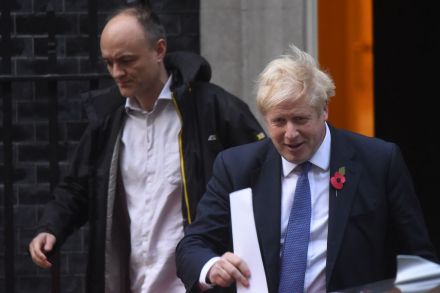
Unlike many of his critics, I do not particularly think of Dominic Cummings as a Keyser Soze figure, a devilish master of the black arts whose influence has assumed mythical dimensions. Nor do I even consider him a Rasputin-type advisor, corrupting the government and leading it astray for reasons, well, for reasons that are never quite or fully explained. So I am not vexed, far less appalled, that the prime minister’s chief advisor sometimes sits in on the meetings of advisory committees. Indeed, it might be just as surprising – and just as surely fodder for his critics – if he, or one of his colleagues, did not attend some of these discussions. But then I think Cummings an interesting man with some interesting things to say.

The SNP is using Covid to bury bad news

From our UK edition

This, everyone agrees, is no time for politics as normal. We are – all of us – engaged in a great national struggle. Partisanship is for yesterday and tomorrow; these are different times and the ordinary rules of politics have been suspended. Even so, the occasional green shoot of normality can still be seen and for some of us this is a joyous thing indeed. So yesterday I was delighted to see the Scottish government announce that an inconvenient and controversial review of Scottish education, due to be led by officials from the OECD, will not report its findings until June 2021 at the earliest.

There is nothing to lose from a Brexit extension

From our UK edition

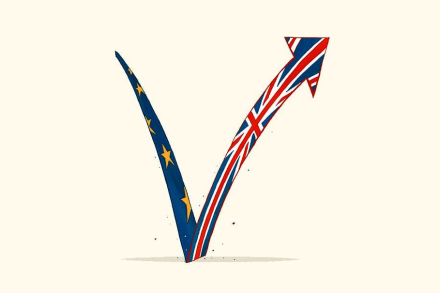
You might think that the biggest public health and economic crisis since the second world war ought to be a moment at which government should concentrate on the here and now, forsaking grand projects the better to focus all its attention on dealing with both the coronavirus itself and its wider, monumental, impact on almost every aspect of British life. But, no. Other matters continue, even if preposterously so. According to the government, not even this calamity can be allowed to interrupt the hitherto smooth and straightforward passage of Brexit. The ongoing negotiations over the UK’s final withdrawal from the European Union cannot be delayed by anything so trivial as Covid-19. Here, though nowhere else, it is business as usual.

A note to fellow lockdown lethargics

From our UK edition

Strange times, these. Dull and unsettling in equal measure. Much of life feels as though it is stuck in some interminable holding pattern, waiting for permission to land and move on. The days drag, even for those of us accustomed to working from home. But the city is a dreary place, for now, stripped of most of its conveniences and opportunities.  Worse still, there are professional problems. This is a game in which you’re always supposed to have a view and the hotter it is the better. Incentives favour certainty; if in doubt double down on your lack of doubt. Bets should not be hedged; everything is a triumph or a disaster and we ricochet from one to the other unencumbered by a moment’s self-reflection. At least, sometimes that seems to be the way the game is played.

Our politicians are only trying to do their best

From our UK edition

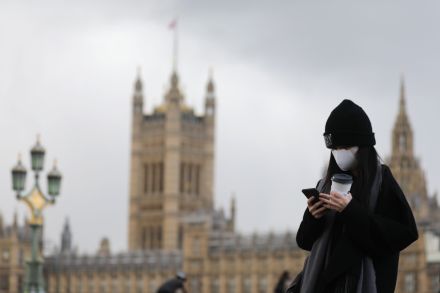
This is a time for generosity and kindness; a moment for the cutting of slack and the making of allowances. These are, as most people now accept, unprecedented times. A great disruption to ordinary life that eclipses the two other great shocks to the system experienced this century. 9/11 and the great crash of 2008 were, in their different ways, man-made calamities. This is a beast of a different order altogether. And that, I think, should prompt a reappraisal of our political leaders. To say they are making it up as they go is not a criticism but, rather, obvious reality. What else can be expected in these circumstances?

The row over Suzanne Moore is a test for the Guardian’s liberal credentials

From our UK edition

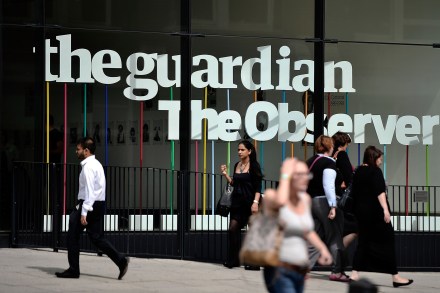
The Guardian is a great newspaper and it remains so even if, puzzlingly, more than a fifth of its workforce - both editorial and commercial - appear to think there is something appalling about working for a newspaper. That is the first and most glaring conclusion to be drawn from the extraordinary letter signed by 338 Guardian and Observer employees lamenting the paper’s willingness to run a column written by the great Suzanne Moore earlier this week, in which Moore argued that “we have gone through the looking-glass and are being told that sex is a construct” and that “you either protect women’s rights as sex-based or you don’t protect them at all”.

The government’s political capital is waning

From our UK edition

Upon how many fronts can a government fight at any one time? Political capital has a short-enough half-life as it is without the risk of it being diluted through simultaneous multiple battles. Concentration of political firepower matters. At a rough count, Boris Johnson’s ministry is currently fighting the civil service, the media, the European Union and now, of course, a looming public health emergency from a likely coronavirus epidemic. There is also the small matter of a budget and the government’s actual – or, if you prefer, notional – plans for ‘levelling-up’ the United Kingdom. Some of these are more significant problems than others, and some of them required no super-forecasting skills to foresee.

Priti Patel’s immigration crackdown is a sham

From our UK edition

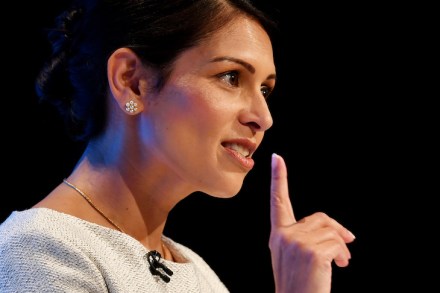
Once you accept that Brexit is happening - because, like it or not, the British people demanded it - it is not so very hard to accept that Brexit must come with consequences. In the absence of free movement from the European Union to the United Kingdom, new immigration arrangements must be put in place. As a political matter - which should not be confused with the policy design or practical application of new immigration controls - these must be seen to be tougher than the regime which preceded it. That is the meaning of 'Take Back Control'. So it is no great surprise that the measures announced today represent, on the surface, a toughening of immigration rules. A low moment, you may feel, and I am inclined to agree.

Sinn Fein’s surge in the Irish election was a cry of frustration

From our UK edition

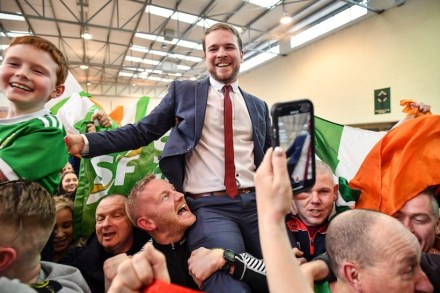
The people have spoken. Now, what do they mean? That is the first question to be asked in the wake of this Irish election and, as is so often the case, not all the answers to it are elementary and some of them are contradictory. This was both a startling election result and an unsurprising one. Few people, least of all Sinn Fein themselves, thought Mary Lou McDonald’s party would top the poll but some aspects of the result are less surprising. Overall, however, this was both an earthquake election and an inconclusive one. So much so, in fact, that the 33rd Dail may prove a short one. Until the weekend, Fine Gael had been in power for nine years, the party’s longest run in government since it was founded in 1933.

Boris is failing a crucial One Nation test in Scotland

From our UK edition

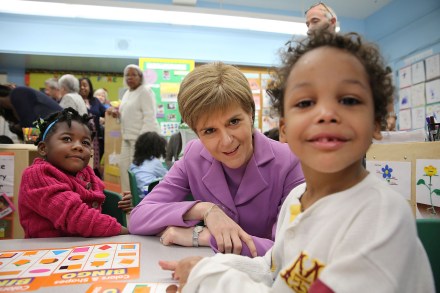
Yesterday, Nicola Sturgeon unveiled a proposal to devolve certain aspects of our post-Brexit immigration policy to Scotland. Well, you might say, she would say that, wouldn’t she? But Sturgeon’s argument has some merit, for Scotland has a demographic problem that is not shared by the rest of the United Kingdom. A few thousand Scotland-only visas issued each year has the potential, assuming they proved sufficiently attractive, to address that. This is not just an SNP ploy, either. There is a widespread acceptance in Scotland that the country needs to be able to do more to attract more immigrants. On current trends, immigration is likely to be essential for the population growth Scotland is likely to need.

Why there won’t be a Scottish independence poll this year

From our UK edition

There will be no second referendum on Scottish independence this year. This is certain. And it is not because Boris Johnson has today told Nicola Sturgeon that, as expected, he is not minded to pass control of the UK constitution from Westminster to Holyrood – but because the people of Scotland are not yet demanding a referendum within Sturgeon’s preferred timetable. Indeed, they are not demanding a referendum at all.  Absent evidence of an overwhelming enthusiasm for reopening the national question – evidence not yet furnished by any respectable opinion poll – the UK government’s position will hold. For the time being, it is a position supported by the majority – a narrow majority, but a majority nonetheless – of Scottish voters.

Hong Kong faces a growing crisis in 2020

From our UK edition

Last week Carrie Lam, the embattled chief executive of Hong Kong’s increasingly beleaguered and unpopular government, deplored the latest round of protests against her administration. “Selfish” protestors, she declared, had “ruined” Christmas for millions of ordinary Hongkongers. Doubtless some of the territory’s citizens agreed with her but, having just returned from spending Christmas in Hong Kong there was little obvious sign that her appraisal of the latest round of demonstrations was either correct or the view of the majority of Hongkongers, silent or not. Riot police were much in evidence but then they always are in Hong Kong these days. Tomorrow may prove a different matter.

Boris’s big strength could soon become a Tory weakness

From our UK edition

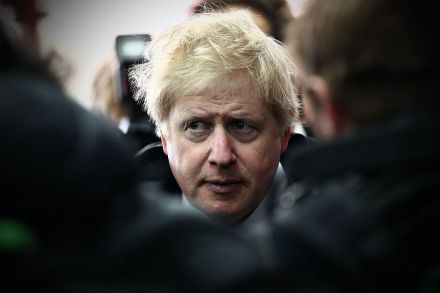
First, a clarification. I may previously have suggested that Boris Johnson is an unprincipled egomaniac wholly lacking in both moral character and political judgement. I may have intimated that he does not possess the empathy or imagination a prime minister requires and that he would neither lead his party to a crushing election victory nor deserve to. I now acknowledge that he is, in fact, one of the great political leaders of our lifetime, an English Charles de Gaulle arriving in the nick of time to rescue his country from its own folly. If that means rewriting the rules then let them be rewritten for we shall all be the better for it. In years to come we shall speak of him as a twenty-first century Benjamin Disraeli.

Why I’m voting for None Of The Above

From our UK edition

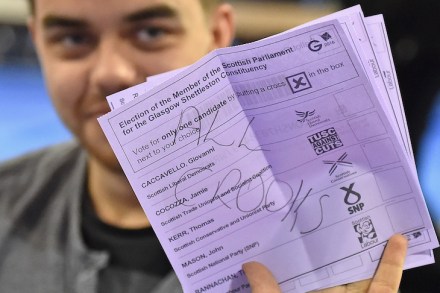
To choose is to endorse. But this is an election in which, for myriad reasons, all the options are deplorable. To choose one of them, even on a least-bad basis, feels like a kind of capitulation. So I will vote tomorrow but I shall, for the first time, spoil my ballot. None of the Above has my vote. I want no part of this election and desire no share, however tiny, of the responsibility that comes with endorsing any of the candidates representing the major parties. To choose is to sanction and, in this election, that’s intolerable and impossible. So last night’s YouGov MRP number-crunching was oddly cheering. For it raised the possibility, still faint perhaps but alive nonetheless, that this really could be an election without winners.

Bob Willis’s contribution to English cricket will never be forgotten

From our UK edition

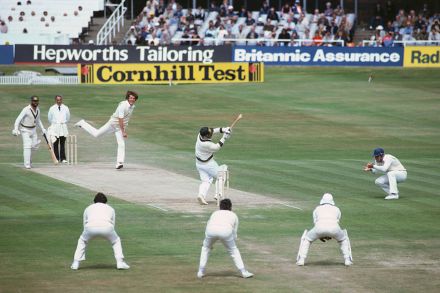
Certain days in the long and sometimes glorious history of English cricket are so brightly coloured they can never fade. Two such are the 20th and 21st of July, 1981. Age and the passing of time cannot weary them. The old tape has been played and replayed so often, it becomes all but impossible to discern between the facts of the Headingley test that summer and the legend it has become. Sometimes the facts are legendary enough.  That was Botham’s match, of course, but also Bob Willis’s finest hour. Without Willis and his eight wickets for 43, Botham’s heroics, his 149 not out that gave England a sniff of victory they had no right to contemplate, would have been little more than a gallant act of defiance in a long-doomed cause.

Nicola Sturgeon’s ‘two referendums’ ploy is nonsense

From our UK edition

Nicola Sturgeon has not hitherto often been considered a humorist but she is busy revealing a new side to her character in this general election. This is pleasing for many reasons but not least because this election already needs some levity.  Consider the article written by – or, rather, for – Sturgeon and published at the weekend in the pro-independence rag The National. In it, the first minister does her best to extricate herself from a predicament entirely of her own making. The SNP, you see, are running an election campaign predicated on the suggestion there should be two new referendums next year.

Jacob Rees-Mogg cannot escape his own carefully crafted persona

From our UK edition

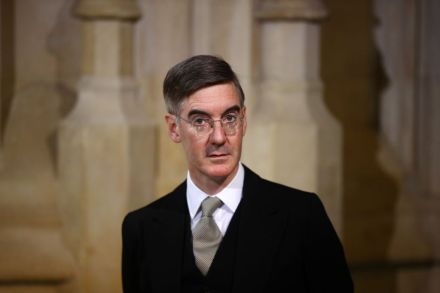
Common sense is a slippier concept than you might think. Common sense, after all, might suggest you don’t put Jacob Rees-Mogg in the Cabinet. But if you have put Rees-Mogg in the Cabinet, common sense might then dictate you do not compound this avoidable error by sending him onto the radio to defend or advance government policy. Radio, much more than television, is a place pock-marked with traps for unwary politicians. And Mr Rees-Mogg is an unwary creature indeed.  A persona must be maintained, after all, even if doing so leads a politician into trouble. This is the problem with politicians whose appeal – to the extent it exists at all – is not much more than a kind of branding exercise.

In Corbyn’s fight for power, Scottish Labour is disposable

From our UK edition

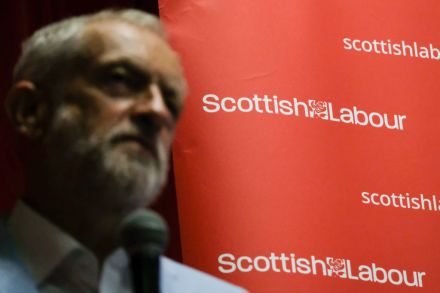
Once upon a time, the Labour party believed the road to Downing Street ran through Scotland. This was, it is true, a long, long, time ago. By which I mean it was what the Labour party’s leadership believed in the summer of 2017. A different time; a simpler time.  Then Labour people were fond of claiming that 18 of Labour’s top sixty or so target seats were north of the border. Win them and Labour would be back in business and back in office. You don’t hear very much of that sort of thing anymore.  And with good reason for the Labour party in Scotland is a husk of what it used to be. It lost its empire years ago and has still not found a role.

Boris and Corbyn don’t deserve an election win

From our UK edition

The first thing to be said about a general election in December is that it is necessary. This is the case regardless of your particular Brexit preference (though should that preference be a wish for it all to go away, I am afraid not even an election can offer you any relief). The government lacks a majority and no other government can be formed in this House of Commons. So an election is required. This is not Belgium and, indeed, the United Kingdom is not capable of being Belgium. The second thing to be said about a general election in December is that there are vanishingly few good outcomes available. This is not a Conservative party that inspires any great confidence. But nor, in spades, does the Labour party.