Alex Massie

Alex Massie

No, the Tory Detoxification Project is Not Complete.

From our UK edition

There are times, I confess, when I wonder about politicians. They are a rum breed and it still seems possible to rise to quite elevated heights without possessing very much of an idea about anything. Consider the cabinet minister quoted in this Telegraph article: Mr Cameron won the leadership promising to modernise the party, but one Cabinet minister said it should now “move on” to more “traditional” Conservative issues such as welfare reform and immigration control. “The 'toxic’ issue has been neutralised,” the minister said. “Now we can move on to the red meat Conservative issues.
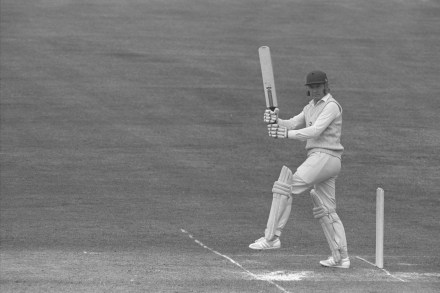
Mike Denness and an All-Time Scottish Cricket XI

From our UK edition

Mike Denness, who died yesterday, could credibly claim to be the finest Scots-reared cricketer of the past 50 years. That is not, at least not quite, as small a claim as you may think. Cricket in Scotland is a game of perseverance played on the edge of possibility. Even the most devoted flanneled-fool sometimes wonders if all the shivering and frustration is really worth it. In a nation scarcely over-freighted with sunshine of either the figurative or literal variety, cricketers cannot avoid being optimists. The climate and, it must be said, the culture is against them. Few things vex the Scottish cricketer more than the accusation that there is something suspicious about being a cricketer in Scotland.

The Myths of Margaret Thatcher, Sermon on the Mound Edition

From our UK edition

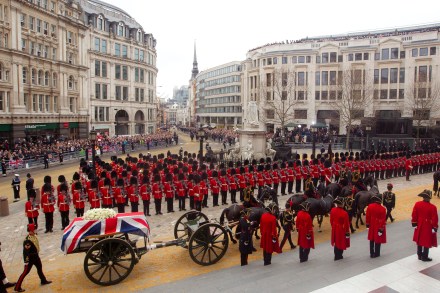
Like Iain Martin, I was not sure a full ceremonial funeral was quite appropriate for Margaret Thatcher. That is not to dismiss her achievements or her significance, merely to wonder if such pomp was wholly suitable for a figure who has proved as divisive in death as she was in life. And yet, the majesty of the service at St Paul's worked its magic. Combining grandeur with simplicity it said simply this: Margaret Hilda Thatcher mattered.  It is hard to think of other non-Royal Britons who will be afforded, far less merit, this kind of send-off. I thought the Bishop of London's address splendid. It deftly punctured some of the myths that surround the Thatcher legacy. She was, in truth, always more complicated than either her admirers or her enemies admitted.

Wisden, 150 Not Out

From our UK edition

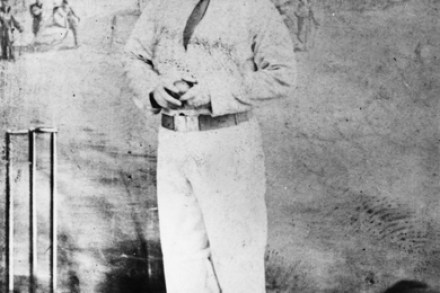
Summer, or rather the hint or promise of it, only arrives with the publication of Wisden. The cricketers' almanack - the venerable almanack - celebrates its 150th anniversary this season. It has been quite an innings. John Wisden (pictured above) created an institution that, happily, shows no sign of flagging. This year's almanack clocks in at a chunky 1584 pages and is a fine edition that pays proper tribute to the Yellow Brick's past. This second edition stewarded by Lawrence Booth confirms the impression fostered last season that his editorship is a considerable upgrade upon his predecessor's. His prejudices are sound. Quite correctly, Booth is a conservative but not a reactionary.

Margaret Thatcher: An Accidental Libertarian Heroine

From our UK edition

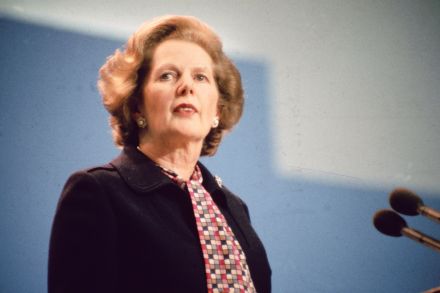
It is 34 years since Margaret Thatcher became Prime Minister. Coincidentally, she entered Downing Street 34 years after Clement Attlee won the 1945 general election.  The whole history of post-war Britain is cleaved, neatly, in two. If the first half of that story was dominated by a left-led consensus, the second has been a triumph for liberalism. We have lived in an era of liberal emancipation and are much the better for it. Mrs Thatcher, of course, was a great economic liberal. Her approach to economics, guided by Smith, Hayek and Friedman, stressed the importance of individual endeavour. Remove the dead hand of state control and Britain could flourish again. The many individual invisible hands of the market would improve our collective lot. Decline was not inevitable.

Maggie Won’t Jump

From our UK edition

  A remarkable clip from an interview with Swedish television. No-one asks Margaret Thatcher to "jump" and gets away with it. One does rather think that some of her successors would have been happy to make fools of themselves in this fashion.

Margaret Thatcher and Scotland: A Story of Mutual Incomprehension

From our UK edition

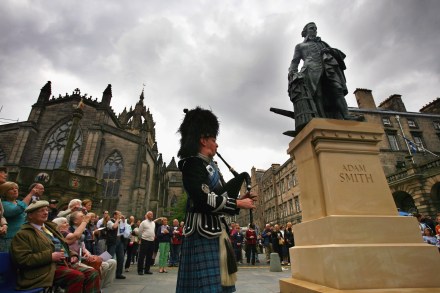
There is a poignant passage in Margaret Thatcher's memoirs during which she contemplates her failure in Scotland. She seemed puzzled by this, noting that, in her view, many of her ideas and principles had at least some Caledonian ancestry. And yet, despite her admiration for David Hume and, especially, Adam Smith, there was no Tartan Thatcherite revolution. Sure, there were some true believers - Teddy Taylor, Michael Forsyth - but Scotland never warmed to the Iron Lady. And she never quite knew or understood why. Two issues, above all, led to her downfall. Europe and the Poll Tax. The former was a Westminster affair and a matter of internal internecine conflict within the cabinet; the latter lost her the country. It was a policy conceived in Scotland.

The Philpott case is horrific; so is the attempt to hijack it for any political purpose

From our UK edition

The sorry truth of the Philpott case is that almost nothing can be learnt from it. Everything would be so much simpler if there were clear public policy conclusions that could be drawn from the horrors of this case. But there are not. How could there be if we're expected to mine a case like this for meaning? It is almost always a mistake to draw firm conclusions from extreme examples of any given phenomenon. The perils of the small sample size should be well enough understood by now to make this clear. It is even dafter to presume too much on the back of a monstrous case such as this. A recap: Mick Philpott had spawned no fewer than 17 children by at least five different women. He did not work. Instead his family relied upon the safety net.

David Cameron’s Legacy? Preserving the Union or presiding over the Break-Up of Britain

From our UK edition

Politics is at least partially a matter of perspective. The same object can look very different depending upon the angle from which it is viewed. Which brings me to Brother Forsyth's latest column. I bow to no-one in my admiration for James's reporting and astute analysis. Nor do I dispute much of what he says in his analysis of David Cameron's legacy. No, what's interesting is what isn't there. The Union. I know. Scots go on and on and on about this stuff. It is true that the Caledonian gene is strong on self-absorption.

Welfare Reform is this government’s most difficult but most popular policy.

From our UK edition

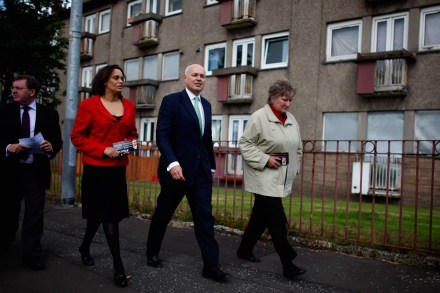
I always enjoy Peter Oborne's columns not least because his opinions are as entertaining, predictably unpredictable, quixotic and changeable as his cricket captaincy. This is not a bad thing. This week he's back in full-on Cameron as Disraeli mode, arguing that the coalition's reforms of education (in England, though sadly the Peter and the Telegraph refer to "Britain's schools") and welfare (across the UK) are so important that success here dwarfs any failure anywhere else. I think he may be right. Coincidentally, I've an article in today's Scotsman that, though chiefly concerned with Iain Duncan Smith and welfare reform, makes passing reference to Gove too.

Independent Scotland: neoliberal nirvana or Scandinavian paradise?

From our UK edition

So, an independent Scotland. Neoliberal nirvana or Scandinavian paradise? True, these are not the only choices available but as a useful shorthand for the size of the state and its optimal take of national revenues it will do for the time being. That is, should taxes rise, fall or remain much as they are at present? What external pressures will hamper Edinburgh's ability to set its own course, free as the wind? And, for that matter, whose dreams are most likely to be confounded and whose worst fears most liable to be misplaced? That was the subject of an article I wrote for the Scotsman at the weekend. The gist of it: The battle for independence has entered a new phase.

Happy Easter | 29 March 2013

From our UK edition

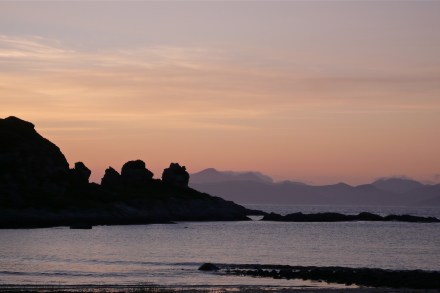
I'm away to Jura* for the Easter weekend, so it's improbable there will be much posting happening around here. I hope you all have a splendid weekend, especially those of you for whom this is a properly significant time of year. See you next week, so to speak. *That's a view towards Mull, taken from Glengarrisdale Bay on Jura's uninhabited west coast.

Scotland’s War on Clothes: Be Careful What You Wear

From our UK edition

Welcome to Scotland, a land where freedoms of expression and other liberties are treated so seriously that the police and prosecuting authorities would never dream of monitoring and judging the clothes you wear. If that sounds like fantasy it's because, alas, it is. Yes, this is now a country in which wearing the "wrong" kind of t-shirt will land you in court and, as likely as not, result in you being convicted of a breach of the peace. For real. I draw your attention toa recent case at the High Court of Justiciary and the opinion delivered by Lord Carloway (a man who, it might be noted in passing, thinks the need for corroboration is a quaint and medieval relic that has no place in a modern justice system). Last August Kevin Maguire was convicted of a breach of the peace. His crime?

The Scottish Tories Cross Their Rubicon

From our UK edition

Alea iacta est. And not before time. More than a year ago and at the outbreak of this independence referendum virus I wrote an article for this magazine arguing that, crikey, there was just a hint that the Conservative and Unionist party might become relevant in Scotland again. Or, at any rate, there was an opportunity for them to do so. You see, the referendum offered Tories a chance to press the case for something they should have embraced long ago: proper fiscal autonomy within the Union. This might satisfy Scots' evident thirst for real Home Rule without needing to go to all the trouble of winding up the Union after 300 years. And - let joy be allowed to gambol briefly in the winter sunshine - Ruth Davidson today has moved towards embracing this logic.

Referendum Spin: Beware the Tory Bogeymen!

From our UK edition

So we have our date with destiny. Scotland will march to the polls nine days after the 501st anniversary of the Battle of Flodden. September, 18th 2014. There are fewer than 600 days to go. And already the spin is starting. Stephen Noon, that smart nationalist strategist, is first out the blocks with a post asking who would stand to benefit from a No vote? His answer should not surprise you. Noon thinks David Cameron's own re-election campaign will be boosted if Scotland says no to independence: Labour and Tories may share a platform and campaign together before the vote, but as soon as the votes are counted there would be only one person in the No victory spotlight. Peer into that future and what do you see? It's David Cameron, UK PM, alone on the winner’s podium.

The Boys of the Green Brigade

From our UK edition

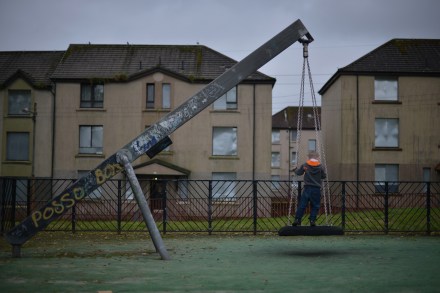
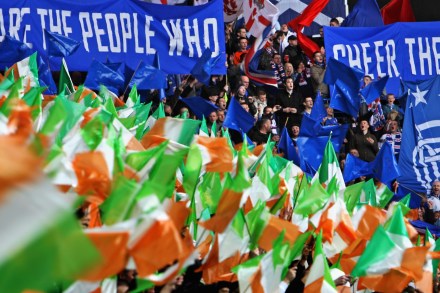
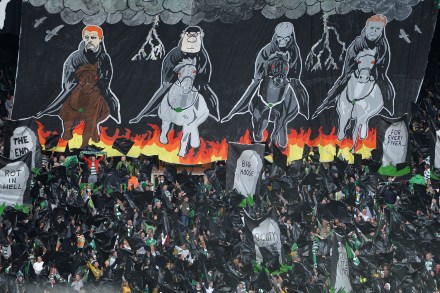
Och, now's the hour and now's the day for the Historic Announcement of the Historic Date for Scotland's Historic Referendum on Independence. It's only taken the SNP the best part of two years to get to this point and, of course, there's only another 18 months or so to wait for the Historic Day itself. So today's parliamentary announcement is hardly the stuff legends are built from. Never mind. But this being a banner day for the SNP and all that, let us pause to recall one of the party's most dismal - yet telling - failures. I refer, of course, to the Offensive Behaviour at Football and Threatening Communciations Act. This preposterous, cock-eyed, bill has proved just as illiberal and capricious as its critics predicted.

A Budget That Could Have Been Delivered By Alistair Darling

From our UK edition

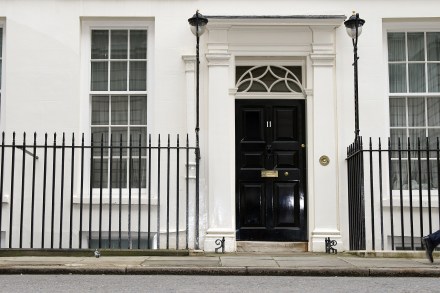
Let us begin with a statement upon which everyone can agree: Aspiration Nation is a rubbish phrase that should be abandoned forthwith. Robert Colvile is correct about this. Secondly, the budget is a response to, but hardly a cure for, the worst recovery in recorded, memorised, history. Thirdly, the soft bigotry of low budget expectations is such that I agree with Sam Bowman and think this may - at first glance - be George Osborne's best budget yet. That scarcely means it was a triumph. How could it be when the forecast for growth this year has been halved to a wholly inadequate 0.6%? This was a budget sired by Labour, out of failure. More selling plate at Pontefract than the Derby at Epsom.

An Antediluvian Tory Press Causes Problems for David Cameron

From our UK edition

Today's papers make dreadful reading for anyone with an interest in modern, reformed conservatism. They are a reminder - if it were needed - that the Tory press is estranged from the Prime Minister. Mr Cameron has played his part in the breakdown of relations (his behaviour over press-regulation has hardly helped) but he is hardly the only guilty party. Today is one of those days you look at the headlines and just wonder what decade it is. An Insult To Stay At Home Mothers screams the Mail. The Telegraph is only modestly more restrained: PM's 'slur' on stay-at-home mothers. Good lord, you may think and wonder, what on earth Mr Cameron has done now? Perhaps he has branded stay-at-home mothers a collection of selfish, workshy misfits?

After Leveson and McCluskey, does Alex Salmond believe in the freedom of the press?

From our UK edition

So, it seems some kind of torturous "deal" has been reached in London on how best to regulate the press in the future. If David Cameron's proposals for a Royal Charter are less reprehensible than the plans favoured by Labour and Liberal Democrats that is not, in the end saying very much. But I suppose even midget mercies are worth welcoming. This is not quite the end of the matter, however. It remains to be seen what impact this deal has on the other jurisdiction in these islands. That press regulation is a devolved matter is, I think, pretty much an accident (it was left off the list of explicitly reserved powers) but devolved it is. Alex Salmond convened an "expert panel" headed by the former Solicitor-General Lord McCluskey to consider how to build upon Lord Leveson's proposals.

Nemo me impune lacessit: defending an independent Scotland

From our UK edition

Sometimes I wish Conservative cabinet ministers would couch their arguments in favour of the Union in terms of principle, not process or drab accountancy. Philip Hammond, the unimpressive Secretary of State for Defence, is the latest minister to warn that some of the perfectly solvable problems that are an inescapable feature of unwinding the United Kingdom are in fact so intractable that it's a fool's mission to even think about resolving them. Mr Hammond's interview with the Daily Telegraph today is but the latest example of this question-begging. He appears to believe that Scottish independence is an idea so obviously ridiculous that it effectively refutes itself without the need for proper argument. This is not actually the case.