Alex Massie

Alex Massie

The Daily Mail is disreputable, twisted, tendentious and malignant. Thank heavens for that

From our UK edition

For the want of a question mark, the empire was defeated. Something like that anyway. Changing The Man Who Hated Britain to A Man Who Hated Britain? would have saved the Daily Mail an awful lot of bother. Too late for that now. And, of course, there are many people savouring the Mail's distress. Many more, too, who appreciate the irony of the Mail being the object of this week's Two Minute Hate. What goes around comes around. Sauce for geese and ganders and all that. I thought the problem with the Mail's hatchet job on Ralph Miliband was that it used a very small, rather blunt hatchet. A couple of diary entries, a few quotations from his books and, er, that was it. Surely there should have been more material than this? Disappointing.
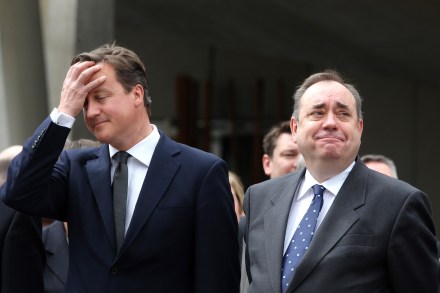
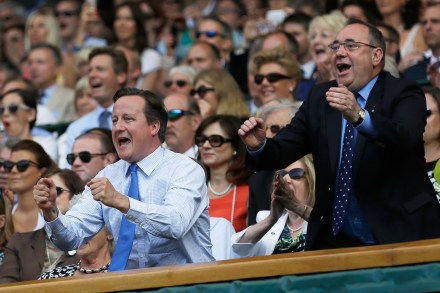
David Cameron ducks a debate with Alex Salmond. This makes sense but is still depressing.

From our UK edition

A novice poker player quickly learns - or had better quickly learn - that strength often connotes weakness and weakness is a reliable indicator of strength. But as the stakes increase and the level of play becomes more sophisticated such elementary tells can be misleading. They are false friends in the land of the double and triple bluff. So a novice poker player might conclude that David Cameron's refusal to debate against Alex Salmond is a sign of weakness. A slightly more experienced player would think this weakness too obvious to be true and conclude that Cameron is holding better cards than he is indicating. And it is true: with the polls indicating a No vote Cameron has little need to risk a debate the outcome of which must be uncertain.

Being a ‘National Treasure’ appears to be a license to talk rot

From our UK edition

Take, for instance, the curious case of Sir David Attenborough. The poor booby is another neo-Malthusian. Which is another reminder that expertise in one area is no guarantee of good sense in another. As I wrote in The Scotsman this week: Attenborough is a supporter of Population Matters, a creepy outfit who have previously suggested Britain’s optimum population lies around the 20 million mark. Let’s rewind the clock to 1850 then. Like other Malthusians, Population Matters is coy about how it proposes to reduce Britain’s population to this “sustainable” level. Emulating China’s one-child policy may be tempting, but will not reverse the terrifying tide of prosperity and population growth now threatening our planet.

Ed Miliband: You Are The Quiet Bat People And I Am On Your Side

From our UK edition

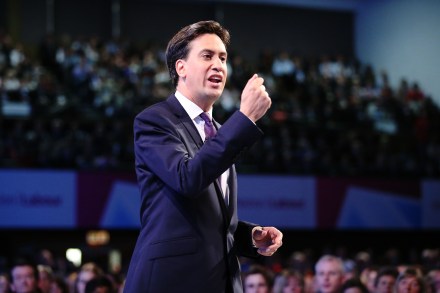
Ronald Reagan once quipped that  "The nine most terrifying words in the English language are, ‘I’m from the government and I’m here to help." As was so often the case the Great Communicator was only half-joking. He knew government had important jobs to do, jobs only government could do. What was needed was a rebalancing. Government had become too invasive. It needed pruning. (Never mind that not much pruning took place; the rhetoric and the positioning was what mattered.) I didn't watch Ed Miliband's speech to the Labour party conference this afternoon but no-one, I think, would say he possesses a Reaganesque delivery.

The heroism of Pussy Riot and life inside the modern Russian gulag

From our UK edition

Nadezhda Tolokonnikova's decision to begin a hunger strike in protest against the conditions she and her fellow prisoners endure inside Russia's modern gulag will, doubtless, be met with a measure of scorn or lack of sympathy by some. After all, there were plenty of people who thought Pussy Riot - the Russian band of which Tolokonnivoka is the most high-profile member - got what they deserved last year. Not all of these hanging judges live in Russia either. To recap: three of Pussy Riot's members were imprisoned last year having been convicted of, essentially, embarrassing the Orthodox Church and Vladimir Putin. The band's methods may not be to everyone's tastes but some causes merit support even if they are also supported by Madonna and Sir Paul McCartney.

Thank Heavens for Godfrey Bloom

From our UK edition

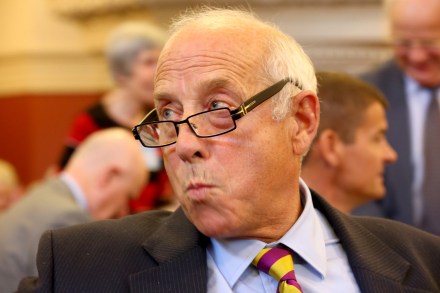
I was at a funeral on Friday and so late catching-up with the latest entertainment provided by UKIP. But, gosh, thank heavens for Godfrey Bloom. Not just because he and his ilk have injected some welcome craziness into British politics - the circus always needs new clowns - but because by doing so they have reminded us of the stakes involved. Bloom - last heard decrying aid squandered on feckless Bongo Bongo Land - one-upped himself with his talk of sluts who fail to clean their kitchens properly. Sure, there was something refreshing about hearing Nigel Farage admit all this amounted to a disaster for UKIP but the bigger point is that it should concentrate Tory minds. Far too many Tories seem to think UKIP might be rascals but rascals-with-their-heart-in-the-right-place.

World Without Borders: Lebensraum for German Pensioners

From our UK edition

Borders matter less than they used to. That's not always apparent in this country protected as it is by the sea but on the continent frontiers are, once again, increasingly arbitrary and meaningless lines on a map. Modern Europe, in this respect, is beginning to look like an older Europe. Consider the new German invasion of the east. Invasion is, of course, too hysterical a term. Nevertheless, according to this fascinating Bloomberg report, (hat-tip: Tyler Cowen) increasing numbers of German pensioners are moving to Poland and elsewhere in search of more affordable care to ease them through their final years. Not quite lebensraum then but you get the idea.

A Cheap Parcel of Rogues

From our UK edition

What price a Scotsman's vote? About £500 apparently. Beneath a headline claiming 'New poll gives Yes campaign hope' The Scotsman reports that support for independence, as measured by ICM, rises to the giddy heights of 47 per cent if voters are told that they will be £500 a year better off in an independent Scotland. If this seems a disappointingly mercenary reason for voting Yes the same poll finds that many supporters of independence have their price. Only 18 per cent favour independence if, hypothetically, it were to leave you £500 a year worse off. The Incorruptible 18 per cent! Almost everyone else, it seems, has a price. Upon such things does the fate of nations hang.

Yes, Royal Mail should be privatised.

From our UK edition

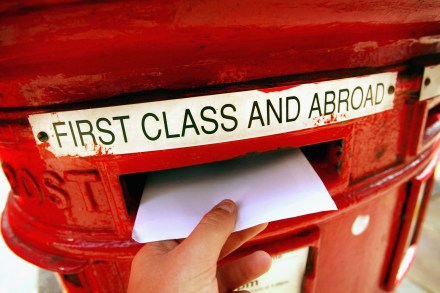
In this morning's post: enticing offers from McDonald's, Domino's pizza, Sainsbury's a local clothes shop and a children's charity. Arriving later today: a couriered parcel from Amazon.  That's often the reality of the modern British postal service. The Royal Mail delivers things you don't want; private companies deliver the things you do. Which is one reason why all the arguments citing the fact that Margaret Thatcher - sorry, even Margaret Thatcher - thought privatising the Royal Mail a step too far are cute but utterly irrelevant. It's a different world now. One in which if things are to stay the same they must change. And so, on balance, the partial privatisation of Royal Mail is a better idea than not partially privatising it.

The lobbying bill is a pernicious attack on freedom. All good men (and women) should oppose it.

From our UK edition

Sometimes, you know, I come close to despair. These are the times when you think the Reverend I.M Jolly was right. About everything. I mean, you could read Benedict Brogan's column in today's Telegraph and think that with friends like these the free press - to say nothing of the freedoms of the ordinary citizen - have no need for enemies. To begin with, the headline is not encouraging. Shining a light on the shadowy figures who shape our politics. It's just a little too close to the sort of thing you might find in a BNP newsletter. But perhaps, you may think, as is so often the case the headline is a misleading teaser. If only that were the case.

Ed Miliband vs the Trade Unions (and why Tories should hope the Unions win)

From our UK edition

There is something distasteful about the latest Tory assault on the Trade Union movement. I hold neither candle nor torch for Len McCluskey and am, generally speaking, opposed to the kinds of policies much-favoured by Union bosses (sorry "Barons"). But the Tory attack on organised labour still jars. It may well be that the unions do a poor job of representing the interests of their members. It may also be that they have an outsized influence on the Labour party. These seem matters for union members and the Labour party to decide for themselves. It's not really anyone else's business. And, to be frank, the distinction between attacking Union bosses (sorry "Barons") without simultaneously seeming to attack union members (sorry, "hardworking, ordinary Britons") is a tricky one to make.

In London, John Kerry Promotes World’s Smallest Syrian Whirlwind

From our UK edition

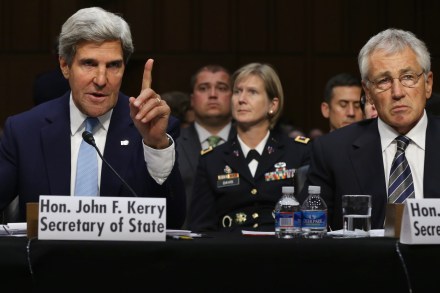
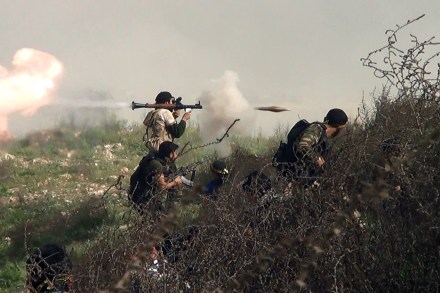
There's little need for people opposed to launching any kind of attack on Syria to expend much energy doing so when those tasked with making the case for reminding Bashar al-Assad that using chemical weapons is not something the international community can or will ignore are making such a bloody hash of the job. Here, for instance, is John Kerry, the US Secretary of State, reminding us all that the Americans really don't want to be taking action at all. They've been pushed into doing so, the result of both the Syrian regime's use of chemical weapons (why assume Assad's people are clever enough not to use them?) and by President Barack Obama's rhetoric about red lines and so on. But this is not where this American president would really like to be.

Flodden 500 Years On: The Flower of Scotland, Lying Cold in the Clay

From our UK edition

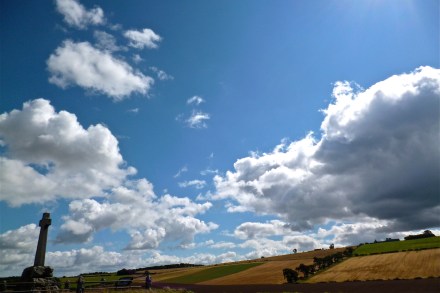
As best I can tell it is not permissable to talk or write about the battle of Flodden without first asking why it is not talked about more frequently? But of course there are good reasons why this calamity (a matter of perspective, I grant you) as slipped from mind. In the first place, contemporary Scotland feels less need to remember disaster. Or even, cynics might suggest, history. Secondly, for the English it was just another occasion on which they hammered the Scots. And they did it with their reserves, so to speak, commanded by the Earl of Surrey while Henry VIII was away battling the French. Nevertheless, Flodden was a catastrophe for Scotland, the single greatest military defeat in the country's history.

A Game of Numbers: Pollsters Go To War in Scotland

From our UK edition

On Sunday an opinion poll was just a poll. Nothing to be too excited by. Unreliable too. The real poll - the one that counts - is still a year away. So put not your faith in numbers. Disappointment that way lies. On Monday the mood in the Scottish nationalist camp changed. Opinion polls now offered a persuasive and necessary reminder that Scotland's on the march. A march that ends in freedom and liberty and whisky next September as an ancient country reasserts her prerogatives  and takes here rightful place in the family of nations once again. Polls are pure dead brilliant, don't you know? From which you will gather that two opinion polls have been released in Scotland these past few days and they cannot both be accurate.

On Syria, parliament has voted to have no policy at all.

From our UK edition

A muddle and a cock-up. For all the talk of parliament reasserting itself, last night's vote on Syria showed a parliament that voted, twice, to oppose actions it actually supports. David Cameron has been humiliated but this was hardly a banner day for Ed Miliband either. The House of Commons has, for now, cut off its nose to spite its face. Perhaps surgery can repair the damage. Perhaps it can't. Because the longer and more deeply one contemplates yesterday's events the more evident it seems that there were no winners. The government motion was defeated. So was Labour's amendment. Since these motions were, in essence and in most practical respects, identical one wonders what on earth has happened.

Why must we worry about London’s success?

From our UK edition

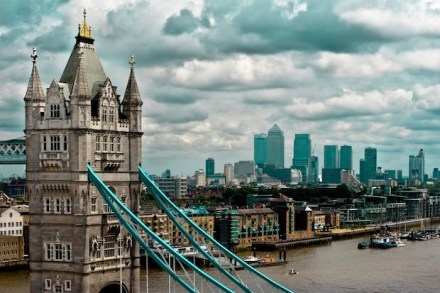
For a long time my view of the Imperial Capital — as, like other Scots, I am still prone to considering London — was borrowed from Joseph Conrad’s description of its riverside: ‘It is a thing grown up, not made. It recalls a jungle by the confused, varied and impenetrable aspect of the buildings that line the shore, not according to a planned purpose, but as if sprung up by accident from scattered seeds. Like the matted growth of bushes and creepers veiling the silent depths of an unexplored wilderness, they hide the depths of London’s infinitely varied, vigorous, seething life.’ London was mysterious, huge and confusing. I disliked it intensely. Times change. London seems a place transformed these days. It fizzes.

The Closing of the Nationalist Mind

From our UK edition

A paper with the title Scottish Independence: Issues and Questions; Regulation, Supervision, Lender of Last Resort and Crisis Management is not one liable to set pulses racing on the streets of Auchtermuchty. Or anywhere else, for that matter. Nevertheless it is a matter of some importance. The paper, published by the David Hume Institute, was written by Professor Brian Quinn and reported upon by Bill Jamieson in today's Scotsman. According to Quinn, who is an expert of some standing in these matters, a currency union between Scotland and the remainder of the United Kingdom would - or at least has the potential to be - sub-optimal.

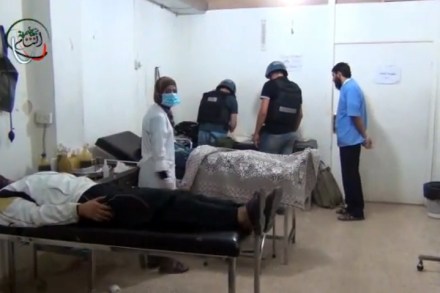
Syria is not Iraq (but at least the Iraq War had a clear objective)

From our UK edition

A decade ago, I was sure that going to war in Iraq was the right thing to do. I persisted in that belief for a long time too, well beyond the point at which most supporters of the decision to remove Saddam Hussein from power had recanted their past enthusiasm. The link between 9/11 and Iraq was quite apparent. Not because (despite what some mistaken people insisted) Saddam had any involvement in the atrocity but because removing tyrants and dictators seemed the best way of spreading the pacifying forces of commerce and democracy that might, in time, render Islamist extremism and terrorism obsolete. Why Iraq? Because it was there and because it could be done. Besides, there was unfinished business. Not just from 1991 but from 1998 and Operation Desert Fox as well.

George Orwell’s lesson for Jamie Oliver

From our UK edition

Jamie Oliver, eh, what a card? Why can't Britain's revolting poor eat better food? If they can afford televisions they can afford mussels and rocket too, don't ya know? Something like that anyway. But instead they loaf in front of the goggle-box stuffing their fat faces with lardy ready-meals and fast food. What is to be done with them? And why can't they be more like the Spanish or the Italians? Never mind that Italian children are more likely to be obese than British children. Never mind, too, that kids in impoverished southern Italy are more likely to be overweight than children in the wealthier north. Instead just fantasise about a future in which poor British families will dine on fresh vegetables and the finest seafood.

Ashes to Ashes, Dust to Dust, if Pietersen don’t get ya, the ICC must.

From our UK edition

It was pretty dark. Darker, in fact, than it had been when the players were hauled off for bad light earlier in the test. Darker, too, than it had been in Manchester when Michael Clarke objected to the umpire's decision to halt play on account of the light. But so what? Was there any evidence that continuing to play would constitute an "obvious and foreseeable risk to the safety of any player or umpire, so that it would be unreasonable or dangerous for play to take place"? That is what the laws demand; it remains a mystery why this is not the standard umpires actually use. The England batsmen did not think conditions dangerous. We have all seen test cricket played in murkier conditions than those pertaining in south London last night.