Alex Massie

Alex Massie

What is Nicola Sturgeon hiding?

From our UK edition

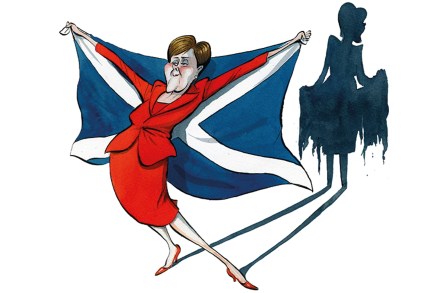
For as long as it has been rumoured, and even more so since it was confirmed, Nicola Sturgeon’s appearance on Wednesday before the Holyrood committee investigating her government’s unlawful handling of complaints made against Alex Salmond promised to be a challenging, perhaps even chastening, moment for the First Minister. Twin revelations tonight appear to reinforce that supposition. In spades. If Sturgeon’s administration was not facing crisis before, it undoubtedly is now. At the outset of this process — which followed Salmond’s acquittal on all charges made against him in the criminal trial — Sturgeon promised that she and her government would co-operate fully with the inquiry. Such words are cheap, of course, and require the backing of actions.
A beginner’s guide to the Salmond inquiry

From our UK edition

For some months now it has been apparent that the greatest threat to Nicola Sturgeon’s position as the uncontested queen of Scottish politics lay within her own movement. Opposition parties could — and did — criticise the Scottish government’s record in government but their efforts were as useful as attempting to sack Edinburgh Castle armed with nothing more threatening than a pea-shooter. Meanwhile, in London, Boris Johnson and his ministers appeared determined to do all they could to inadvertently bolster Sturgeon’s position. As Douglas Ross, the leader of the Scottish Conservative and Unionist party complained, 'the case for separation is now being made more effectively in London than it ever could be in Edinburgh'.

The break-up: Is Boris about to lose Scotland?

From our UK edition

40 min listen

Could No. 10 infighting lose the Union? (00:40) When should the government tell us how to behave? (13:20) Can a relationship work without hugging for a year? (31:30) With The Spectator’s deputy political editor Katy Balls; The Spectator’s Scotland editor Alex Massie; vice chair of Ogilvy and Spectator columnist Rory Sutherland; Deirdre McCloskey, Professor of Economics, History, English and Communications at University of Illinois at Chicago; writer Rob Palk; and journalist Emily Hill.  Presented by Lara Prendergast. Produced by Max Jeffery and Charlie Price.

It’s a pity that both Alex Salmond and Nicola Sturgeon can’t lose

From our UK edition

Henry Kissinger’s sardonic appraisal of the Iran-Iraq War is increasingly applicable to the war between Alex Salmond and Nicola Sturgeon: it is a shame they can’t both lose. Disinterested observers, however, are under no obligation to pick a team. It is wholly possible neither protagonist has offered a convincing version of events. Treating Salmond’s claims sceptically imposes no requirement to swallow Sturgeon’s and, indeed, vice versa. Salmond’s allegations are so extraordinary they risk seeming incredible. It is one thing to allege that senior officials within the SNP – including but not limited to Peter Murrell, the party’s chief executive and Nicola Sturgeon’s husband – wished to destroy Salmond’s reputation.

The Salmond case has left the House of Sturgeon teetering

From our UK edition

From a distance, Nicola Sturgeon seems unbeatable. Polls show her party with just over 50 per cent of the vote, quite a feat in a five-party parliament. But this week, she has found herself fighting for her political future. Alex Salmond’s sensational claim to be the victim of a conspiracy designed to destroy him — even ‘imprison’ him — has the potential to bring down the House of Sturgeon. Salmond alleges that his successor has misled the Scottish parliament on multiple occasions about her knowledge of (and involvement in) her government’s investigation into complaints of sexual misconduct made against him.

There is something rotten in Scottish politics

From our UK edition

It is now two years since Nicola Sturgeon accepted the need for a parliamentary inquiry into how, and why, her government’s investigation into Alex Salmond was so thoroughly tainted by apparent bias it was unlawful.   Ever since then, she has repeatedly promised that both she and her government will fully co-operate with the Holyrood committee — set up to investigate the Scottish government’s response to claims of sexual misconduct against her predecessor. Many hollow promises have been made in the still-short history of the Scottish parliament but few have been emptier than this.   It is necessary to insist upon what the committee is not investigating: it takes no view on the complaints made against Alex Salmond.

‘The greatest 11-6 battering any of us can recall’: On England v Scotland

From our UK edition

In retrospect, the 1980s were a thoroughly misleading period in which to grow up as a supporter of Scotland’s rugby team. Those of us who did so enjoyed a gilded childhood without even knowing it. By the age of 16 those of us born in 1974 had seen Scotland win two Grand Slams (in 1984 and 1990) as well as claiming a share of the five nations championship in 1986 (a year that really ought to have brought a further clean sweep). We had no inkling of our good fortune and international rugby seemed improbably well-arranged.  Most of the years since have been lean and hard, an over-correction that seems excessive. If the 1980s were unusually fat, the 21st century has been a largely miserable experience.

Boris Johnson’s Scotland trip is a gift to the SNP

From our UK edition

Boris Johnson is in Scotland today and once again this counts as news. This is intolerable to everyone. Intolerable to Unionists because a prime ministerial appearance in Scotland should be as routine as a prime ministerial appearance in the Cotswolds. It should not count as a newsworthy moment. And it is intolerable to Scottish nationalists because, well, because everything is intolerable to Scottish nationalists. The Prime Minister’s visit can hardly be deemed 'essential travel' in the current circumstances even if it is also essential that Scotland never becomes a no-go area for Johnson or, indeed, other cabinet ministers. Making it seem such, chipping away at Johnson’s legitimacy, is one small front on the SNP’s long, attritional, struggle against the British state.

A race against time: can the vaccine outpace the virus?

From our UK edition

34 min listen

Coronavirus vaccines are now being distributed across the world, but what are the challenges posed by its delivery? (01:30) Is Boris Johnson the SNP's greatest weapon? (13:55) And is Prince Harry becoming more and more like his mother? (23:35)With financial columnist Matthew Lynn; former director at the McKinsey Global Institute Richard Dobbs; the UK's former director of immunisation David Salisbury; The Spectator's deputy political editor Katy Balls; The Spectator's Scotland editor Alex Massie; journalist Melanie McDonagh; and royal biographer Angela Levin.Presented by Lara Prendergast.Produced by Max Jeffery, Alexa Rendell, Sam Russell and Matt Taylor.

After Trump’s carnage, Joe Biden is the president America needs

From our UK edition

A day of infamy but also a clarifying one. The scenes at the US capitol building yesterday were both a wholly predictable and a predicted finale to Donald Trump’s wretched presidency. Predictable because it was obvious four years ago – at least it was obvious to those who cared to open their eyes – that Trump was a festering threat to America’s great democratic experiment. And predicted because everything Trump has said and done since losing the presidential election in November led inexorably to this final, shabby, shameful coda to his presidency.

Most-read 2020: Boris Johnson isn’t fit to lead

From our UK edition

We're closing 2020 by republishing our ten most-read articles of the year. Here's No. 1: Alex Massie's article from May, in which he makes the case against Boris. Danny Kruger, formerly Johnson’s political secretary and now the MP for Devizes, has – perhaps inadvertently – done the country some small service. In a note sent to newly-elected Tory MPs, Mr Kruger has reportedly advised his colleagues that ‘calling for Dominic Cummings to go is basically declaring no confidence in [the] prime minister.’ Well, yes, indeed. That is the point. Because, in the end, this is not a story about Dominic Cummings but, rather, one about the Prime Minister.

Most-read 2020: Why Dominic Cummings had to go

From our UK edition

We're closing 2020 by republishing our ten most-read articles of the year. Here's No. 3: Alex Massie's article from May on the Cummings' imbroglio Most aspects of this present emergency are complex and resist easy solutions. Only a handful are elementary but one of these, and quite obviously so, is the Dominic Cummings affair. He must go and he must go now. There is no alternative, no other way out, no means by which this ship can be saved. The only question is the number of casualties Cummings will take with him. Judged by the cabinet’s performance on social media this weekend, the answer to that question is also simple: all of them. It cannot be stressed too often that the government’s authority during this crisis is moral much more than it is legal.

Spectator Out Loud: Alex Massie, Paul Wood and Melissa Kite

From our UK edition

26 min listen

On this week's episode, the Spectator's Scotland editor Alex Massie asks why Nicola Sturgeon's popularity keeps growing, despite her government's underperformance. (00:55) Next, Paul Wood argues that the next six weeks are crucial for the future of the Middle East. (12:00) Finally, Melissa Kite wonders what the new Covid rules mean.

The Sturgeon paradox: how is she so popular?

From our UK edition

37 min listen

Despite her government’s underperformance on education, health and Covid-19, Nicola Sturgeon’s popularity continues to climb – why? (01:10) Does spending more on overseas aid mean we care more? (14:05) And finally, are we all followers of the cult of casualness? (26:25)With The Spectator’s Scotland editor Alex Massie, former SNP finance spokesperson Andrew Wilson, development adviser Gilbert Greenall, former international development secretary Andrew Mitchell, journalist Melanie McDonagh and editor of The Oldie, Harry Mount. Presented by Lara Prendergast.Produced by Max Jeffery, Cindy Yu and Matt Taylor.

The Sturgeon paradox: the worse she does, the more popular she becomes

From our UK edition

Before Covid-19, if you can remember such a time, this was supposed to be a difficult year for Nicola Sturgeon. Her party had been in power in Edinburgh since 2007 and, like all ministries of such antiquity, was beginning to look jaded. There was never any doubt that she would remain First Minister following next year’s Holyrood elections, but the prospect of her winning a majority seemed to be receding. Opposition parties believed that a relentless focus on the SNP’s record in office would be enough to clip Sturgeon’s wings. After 13 years, it was hard to point to many stunning successes: on the contrary, failures and scandals were accumulating. Time ruins all governments and hers did not seem to be an exception.

Nicola Sturgeon’s vainglorious conference speech

From our UK edition

In March this year, as the country went into Covid-prompted lockdown, the SNP and the Scottish government put their campaigns for independence on hold. 2020 has been a year of few consolations and it is typical that even its better things must come to an end. Then again, there was no need for the SNP to put their demands for independence into cold storage, for a temporary cessation of outrage requires nobody to forget the party’s sole reason for existence.

Blundering Boris will regret insulting Scotland

From our UK edition

Every so often I make the mistake of thinking Boris Johnson must have exhausted his capacity for indolent carelessness and each time I do he pops up to remind me not to count him out. There are always fresh depths to which he may sink. For he is a Prime Minister who knows little and cares less that he knows so little. In happy times of placid prosperity this might be inconvenient but tolerable; these are not such times. Speaking to his northern English MPs last night, Johnson declared that devolution has been 'a disaster north of the border' and was the biggest mistake Tony Blair ever made. The implication, quite obviously, is that in a better ordered world the Scottish parliament should be abolished.

Suzanne Moore’s departure is a sad day for the Guardian

From our UK edition

Who runs a newspaper – and especially a great liberal newspaper – in a digital age when liberalism often seems to be in retreat, menaced by its enemies internal and external? In the not-too-recent past, the question would be easily answered: the editor, supported by his (for in the past it was usually ‘his’) senior journalists ran the paper. Things are more complicated now. At least they appear more complicated at the Guardian and at the New York Times. At both papers, each the proud inheritors of certain liberal traditions, one may no longer say with confidence that editorial control of the paper resides with the editorial staff. This evening, the columnist Suzanne Moore announced she is leaving the Guardian.

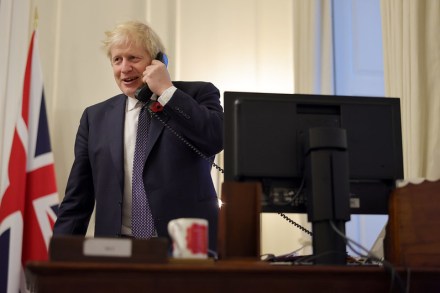
The ghastly race to phone the American president

From our UK edition

Boris Johnson spoke to Joe Biden yesterday! Did you feel the thrill of it all? These Romans may be uncouth but they still know their Greeks. Or were you, instead, secretly annoyed that the new American president did not make good on all those breathless intimations that, summoning the ghosts of ancient persecutions and more recent insults, he would ‘snub’ the Prime Minister? Much of the Westminster village appears consumed by this absurdity on a quadrennial basis. Hence the manner in which the presence – or absence – of a bust of Winston Churchill in the Oval Office is deemed a reflection of the specialness of the special relationship. If Winston is there, all is fine; if he is not, irrelevance awaits.

Macron isn’t Islamophobic

From our UK edition

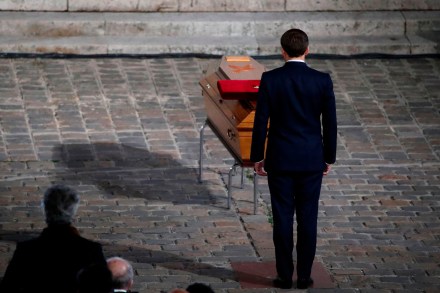
Sometimes a story does not receive the attention you think it should. Sometimes the news is too familiar or too far away to warrant a real response. There is, in any case, so much else going on and the bandwidth of our attention is limited. And so the decapitation of the teacher Samuel Paty in a small town to the north of Paris has not commanded quite the attention in this country that you might have expected. Paty, you will recall, was targeted by a Chechen-born terrorist who had developed a murderous obsession with the teacher. His 'crime' had been to show his pupils a depiction of the prophet Mohammed during a lesson exploring the concepts of liberty and freedom of expression.