Alex Massie

Alex Massie

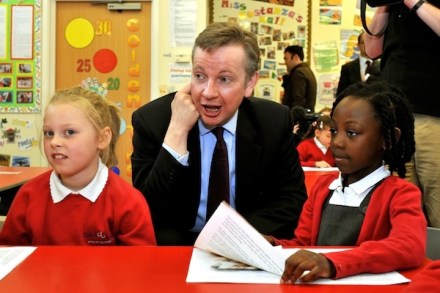
Education reform works. Who knew?

From our UK edition

Education reform that actually works is one of the noblest, but most thankless, tasks in politics. Noble because it's necessary, thankless because it doesn't earn much in the way of an electoral dividend. Polling consistently suggests fewer than 15% of people consider education a top priority. This is understandable. If you do not have children you are, often, less interested in education than if you do. If your children attend a good school (or, at least, if you are satisfied with the school they attend) you may not care too much about the schools other kids have to attend.
What is David Cameron for?

From our UK edition

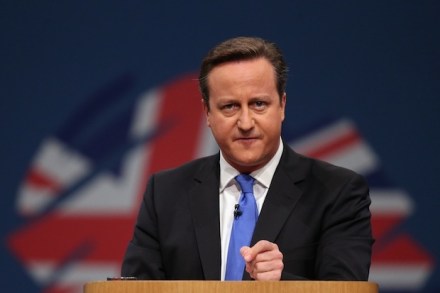
A mischievous question, I know, but one prompted by Janan Ganesh's latest Financial Times column. It is eight years since David Cameron became leader of the Conservative party and three and a half since he became Prime Minister. He may only have 18 months left in either post. We know - or think we know - a lot about Cameron. He is what he seems to be. Decent fellow, capable in a crisis, unruffled. A better-than-average product of his class and background. Thought he should be Prime Minister because he reckoned he'd "be good at it". And yet the thought nags: what is he for? What is Cameron's ministry about? As Ganesh says, the Prime Minister lacks a project. The economy is George Osborne's infant, education belongs to Michael Gove.

A time for despair but not for panic

From our UK edition

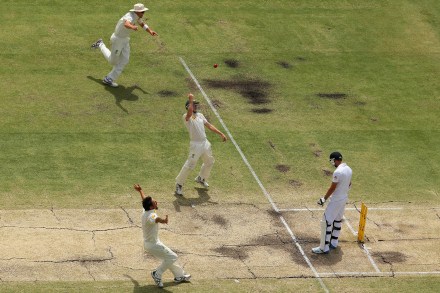
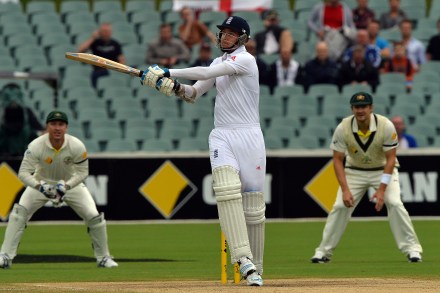
All winning cricket teams are alike; each losing cricket team loses in its own way. It doesn't matter, right now, that Shane Watson and Michael Clarke will never be chums just as it did not matter very much, back in the day, that Shane Warne and Adam Gilchrist couldn't stand one another. Victory spawns solidarity. Happiness too. We are wired to over-react to defeat and under-react to victory. England have been trounced in Australia. Battered in Brisbane, assaulted in Adelaide and pummelled in Perth. The tour has become a travelling horror show and, god help us, there are still two tests left. A 5-0 whitewash is a distinct possibility. Don't believe anyone who suggests the Aussies might ease up now the little urn is back in their possession.

No, the Irish are not afraid of Scottish independence

From our UK edition

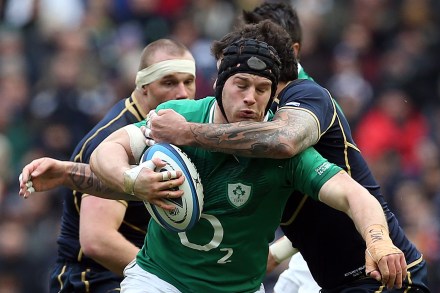
If I were to say that I admire Charles Moore tremendously you would know there must be a 'but' looming towards the end of the paragraph. Nevertheless I do admire Charles Moore an awful lot. His column is a weekly treat much enjoyed by all sensible folk. If you don't do so already you should subscribe to ensure you never miss his weekly epistles from High Toryville. But... I am not persuaded by his suggestion that people in the Republic of Ireland are worried by the prospect of Scotland voting to become an independent state. He says "most people" do not want Scotland to vote for independence. I daresay this is the case, at least amongst those folk favoured with Charles's company but it still strikes me as an odd conclusion.

The Dumbest Dog in the World

From our UK edition

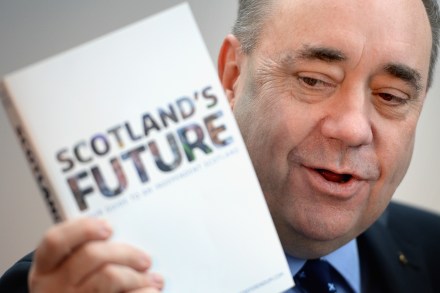
That's Duggy Dug, the latest champion of the campaign for Scottish independence. For some reason Brian Cox - the actor, not the physics professor - has decided to put his voice to this cringetastic calamity. Duggy Dug (even the name is grim) is not, mercifully, part of the official Yes campaign which, given his plainly limited mental capacity, is probably just as well. His argument is so stupid - and misleading - that one wonders if Duggy Dug is actually a Unionist fifth columnist. Then again, he's not much more embarrassing than some of the members of the Scottish parliament whose grasp of elementary concepts would be considered astonishingly weak if such disappointments still had the power to disappoint or astonish.

Scottish Nationalism’s Dangerous Cult of Victimhood

From our UK edition

Danny Finkelstein's column in the Times today is characteristically elegant and incisive. In politics as in life he writes, "whatever apparent power and temptation lies with the adoption of the identity of victimhood it is ultimately destructive". Since Finkelstein is pondering lessons that may be drawn from the life of Nelson Mandela it may not be immediately obvious that the conclusion he reaches has some relevance to the campaign for Scottish independence. I better elaborate, then. Much has been said about how and why Unionists need a better "narrative" when making the case for Scotland as part of the United Kingdom. This is true. There is a need for a positive, optimistic, case for the Union. This is also true.

A crucifixion in the City of Churches

From our UK edition

Here we go again. Time for another round of that perennial game so wearily familiar to England cricket supporters: Hunt the Positives. It is a mean game because, most of the time, there aren't any. Certainly not today. England were abject in Adelaide. Scarcely any better than they had been in Brisbane. If, borrowing from Evelyn Waugh, we classify sides as Leading team, First-Rate team, Good Team and Team we must acknowledge that England, at present, rank as Team. And as Mr Waugh would have put it, Frankly, Team is pretty bad. Less a team, in fact, and more a rabble. With the exception of Joe Root's second-innings knock England can take nothing but misery with them as they cross the Nullarbor Plain to Perth.

Nelson Mandela gave us the greatest gift of all: Hope

From our UK edition

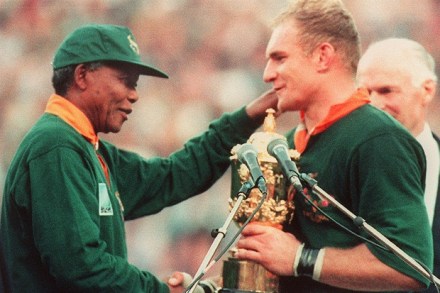
Sometimes when a significant public figure dies, even, perhaps especially, when that death comes as no surprise and may, indeed, be considered some form of release there is a natural tendency to wonder if the blanket media coverage that invariably follows is altogether appropriate or even seemly. Is it not all too much? A man is merely a man; a woman merely a woman. Sometimes too, it is natural to react to the endless parade of tributes and wonder how genuine they really are. Is there not something vainglorious about them? Is there not something a little ridiculous about all these attempts to cling to the coat-tails of greatness? Perhaps sometimes there is. But not tonight. For more than two hours now I have been watching the coverage of the news of Nelson Mandela's death.

Gerry Adams: still a revolting man and still trying to steal Irish history.

From our UK edition

I know this is not exactly breaking news but Gerry Adams is a vile man. Since no-one devotes much attention to Northern Ireland these days it is easy to forget this. Easy to file Adams and his Sinn Fein comrades into a musty drawer marked Ancient History. But the past is not another country. In Dublin this week the Smithwick Tribunal's report into alleged Garda collusion with the IRA in the murders of RUC officers Harry Breen and Robert Buchanan in 1989 was finally published. The report confirmed long-held suspicions that the IRA had a mole or, less dramatically, a simple informant inside the Garda station in Dundalk, County Louth.

A choice for Tories: Goldman Sachs or UKIP?

From our UK edition

Hats-off to James Kirkup for noticing that Goldman Sachs have suggested they would "drastically" cut their UK workforce (and operations) should Britain decide to leave the European Union. That is the view of Michael Sherwood, the fellow responsible for running Goldman's european operations. I am sure eurosceptics will dismiss this as the usual scaremongering just as Scottish nationalists dismiss warnings that some businesses (RBS?) might shift their operations south in the event Scotland votes for independence next year. This is but one of the many ways in which the european and Scottish questions overlap or dovetail with one another. Perhaps it is only scaremongering! But what if it isn't?

London is different: the government will spend money there

From our UK edition

The chart at the top of this post comes from the government's National (sic) Infrastructure Plan 2013. (Sic because it is largely a plan for England.) You can find it on page 30. You may notice that one rather large part of England is not listed on this chart: London. Perhaps that is because the value of infrastructure spending in London comes in at a nifty £36 billion. Or, to put it another way, spending on infrastructure in London is equivalent to the total amount of infrastructure spending in every other part of England save the south-west. And the south-west's figure is chiefly so high because of a single project: the new nuclear power station at Hinckley Point.

Tory attacks on Alistair Darling show that WMD Unionism is MAD

From our UK edition

I don't really understand why politicians spend so much time talking to journalists. Most of the time little good can come from doing so. Of course, from a personal or professional perspective, this is fine and adds greatly to the gaiety of trade and nation. Nevertheless... Take, for instance, the reports in today's Financial Times and Daily Mail in which "senior" government sources stick their shivs into Alistair Darling. The leader of the Unionist campaign fighting next year's referendum on Scottish independence is, we are informed, "comatose most of the time". A different (I think) Downing Street figure complains that Darling is a "dreary figurehead". Meanwhile in the Mail, Gerri Peev finds another "senior parliamentary figure" who complains that Darling is "useless".

When oh when will we ever be able to talk about immigration (sensibly)?

From our UK edition

I do wish we were never allowed to speak about immigration. That seems the only way to prevent folk from spouting - and writing - rubbish on the subject. But of course there is no conspiracy intent on stifling discussion on immigration. Not even a liberal, metropolitan or elitist conspiracy. Sorry. You can say all the things you think you can't say. And we know this because many, even most, of them are said all the time. So often, in fact, that they lack novelty. And we also know that no-one really wants to have a conversation about immigration. Conversation would require some back and forth. It might even allow the possibility someone might change their mind. Just imagine that.

Scotland and the EU: Mariano Rajoy should just jog on.

From our UK edition

It's bad enough being lectured by politicians from Edinburgh or even London. That, I suppose, is to be expected however. Irritating but normal. It's rather different when foreigners - real foreigners - decide to interfere in our own constitutional rammy. It smacks of impertinence. When that intervention comes from the leader - to put it in Sun-speak - of a nation of donkey-slaying, rock-coveting bankrupts it's even less respectable. So the suggestion made yesterday by Mariano Rajoy, Prime Minister of what we still call Spain, that an independent Scotland would, by creating a new country, need to reapply for EU membership is hackle-raising stuff. You're tempted to reply jog on, pal. Of course Rajoy's remarks are not about Scotland at all. They are about Catalonia.

Scottish independence is a little more likely today than it was yesterday

From our UK edition

The argument about Scottish independence which, it should be said, is not a new one is best understood in terms of the Overton Window. James Overton, an American political scientist, suggested that the general public is only prepared to contemplate a relatively narrow range of political opinions and policies. Those that fall outwith this window of plausibility are discounted; the task for politicians and other advocates is to shift the window so that ideas once considered heretical now appear orthodox common-sense. Overton suggested there were six phases to this process. A idea would move from being unthinkable to radical to acceptable to sensible to popular before, finally, becoming policy. Scottish independence is currently somewhere between acceptable and sensible.

Is Boris Johnson the Man to Save the Union?

From our UK edition

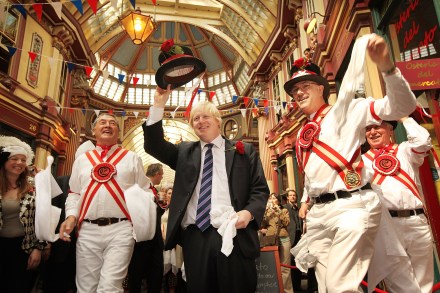
This is not as obviously a Question to Which the Answer is No as it may initially seem. The Mayor of London is, in fact, well-placed to play a significant part in the campaign to persuade Scots their interests still lie within the United Kingdom. In the first place, as the titular leader of europe's greatest city he has no obvious or immediate dog in the fight. Neither Boris's reputation nor his future will be dented by a Scottish vote for independence. His Prime Ministerial plans - for we all still assume he has such plans - will not suffer if Alex Salmond wins next year's referendum. They might even benefit from such a result, not least because David Cameron's reputation - and legacy - will be crippled by a Yes vote.

Massacre at the Gabbatoir

From our UK edition

Don't say you weren't warned. You were. "Australia will win at least one test this winter...England will have a bad test or Australia an extremely good one...This is an Australian side learning who it is. There are signs of improvement, signs that on their day they could be formidable. (The question being, as before, how many of those days there will be). Meanwhile, England are solid but not perhaps quite as good as they think they are. Brilliant individual performances saved the English collective in this series. They are not a team in transition but nor are they quite a team going anywhere." That was this blog's verdict on the last Ashes series. England's 3-0 victory was both clear-cut and less than it seemed.

The Conservative Case for Gay Marriage

From our UK edition

Perhaps there is something mildly tawdry about discussing an issue such as gay marriage in terms of its impact on perceptions of the Tory party or the extent to which it helps the Tory evolutionary project. It is, after all, a rather larger, better issue than that. A Conservative who only supported equal marriage for these tactical reasons would be a poor and shilpit thing indeed. Yesterday the Scottish parliament, catching up with Westminster, debated gay marriage. The best speech was that given by Ruth Davidson, leader of the Scottish Tories. It shows her - and her party - at their best and is well worth six minutes of your time.

Nick Boles is right: the Tory party must change.

From our UK edition

Another outbreak of the Tory Modernising Wars! What larks! Nick Boles's speech to Bright Blue, a newish think tank for metropolitan swells folk who think the Tory message needs rethinking, has, as it was designed to, caused a minor rumpus. Rod Liddle thinks Boles is off his head. Iain Martin is kinder but concludes the Cameroons are still obsessed with fighting the wrong battles. Other commentators are gentler still, conceding that Boles is asking the right question but that he's searching for answers in the wrong places. Nick Denys and, to some extent, Paul Goodman fall into this camp. On the other hand, Ian Birrell and Matt d'Ancona essentially agree with Boles while James Kirkup concludes that Boles has inadvertently conceded the failure of the Cameroon modernisation project.

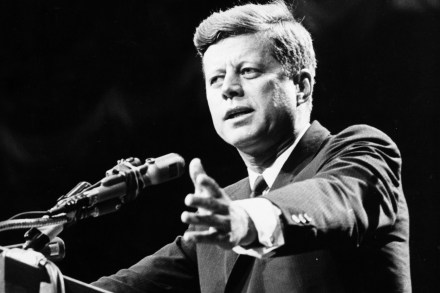
John F Kennedy was one of the nastiest presidents in American history

From our UK edition

The fiftieth anniversary of John F Kennedy's assassination is, of course, an occasion for a fresh outbreak of the virulent hagiography that has corrupted the memory of his actual record. The New York Times, a paper that should know better by now, published an article this week that repeated the old lie that somehow right-wing hysterics in Texas were the people really responsible for Kennedy's murder. A theory inconvenienced only by the fact Lee Harvey Oswald was a pro-Castro leftist. But never mind that. Better to reframe the assassination as a part of America's culture wars. And we know who the guilty men are in those, don't we? American history is a quilt of many myths but few are so exasperating, perhaps even so pernicious, as the myth of Camelot.