Alex Massie

Alex Massie

The right-wing case for Scottish independence

From our UK edition

Chuckle not, it exists. Wealthy Nation, a new grouplet formed by the eminent historian Michael Fry, is making the case that Scotland can be an admirably prosperous little country after independence provided, that is, she casts off the soft-left Caledonian consensus that remains wearily orthodox thinking north of the Tweed and Solway. Fry, whose new history of Scotland from Waterloo to Mons I commend to you without reservation, set out his case in The Scotsman earlier this month. If Scotland is to be free, she must be rich and she will not be rich unless her politics moves to the right.
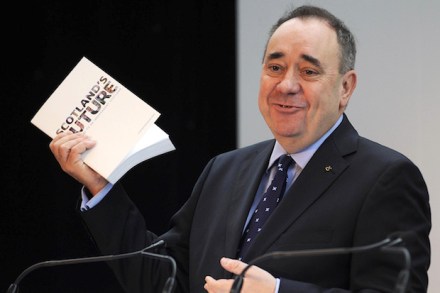
Alex Salmond writes a cheque – in pounds sterling – he cannot honour

From our UK edition

As I type this, Alex Salmond and Mark Carney are chowing over porridge at Bute House, the First Minister's official residence in Edinburgh. There is always the risk of exaggerating the importance of these things but this morning's meeting with the Governor of the Bank of England may be the most important encounter Alex Salmond has this year. The question is simple: will an independent Scotland be able to forge a currency union with the rump United Kingdom? The answers, for all the First Minister's bland assurances that such a union is in everyone's interests, are not so simple. Like poker players, politicians often have a "tell". When Salmond offers a kind of breezy emollience he's often holding weaker cards than he wants you to think.

To fix the north-south divide, revive the Council of the North!

From our UK edition

These, ranked from first to tenth, are the urban areas in Britain with the highest average weekly earnings in 2012: London, Reading, Crawley, Aldershot, Edinburgh, Cambridge, Milton Keynes, Aberdeen, Southend, Brighton. That's from the latest, fascinating, report (pdf here) published by the Centre for Cities. It can be summarised easily: if you want to make it, head to London or the south-east of England. Or to Scotland. London, as Jeremy Warner observed this morning, is still driving the British economy. Financial services remain vital both to economic recovery and the country's long-term future. Strengthening other sectors remains important; so does the City. But strengthening Britain's other cities is - or should - also be at the top of the agenda.

India holds the cricket world to ransom; England and Australia agree to pay

From our UK edition

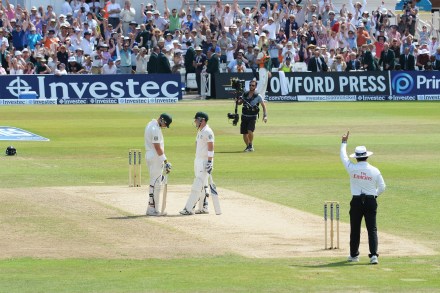
Almost no idea is rotten enough that it can't or won't be defended by some scoundrel somewhere. Even so, the equanimity with which some folk have greeted the proposed ICC coup is startling. Sure, the likes of Andy Bull, Mike Selvey and Simon Wilde each note that the ECB-CA-BCCI takeover is seriously flawed but, gosh, something needs to be done about the International Cricket Council and, by jove, this is at least something. Besides, Giles Clarke and his two pals say they wish to protect test cricket so we should take that assurance at face value and all will be well. Or something. I must say that seems an oddly credulous approach but there you go.

Labour and the Conservatives are both wrong about income tax

From our UK edition

Never interrupt your opponent when he is making a mistake. On the other hand, when your opponent has made a mistake try not to match him by making an equal blunder of your own. That's not how Westminster politics works, of course. For reasons that presumably make sense to the respective parties, Labour and the Conservatives have each managed to cock-up their tax policies. Specifically, they are both wrong on the politics of the 50% rate of income tax. That is, the Tories should never have cut the rate of tax paid by those few Britons earning over £150,000 and Labour should not be promising to restore the 50% rate. This is not an argument about finances but about signalling.

What is Europe good for? Rather a lot, actually…

From our UK edition

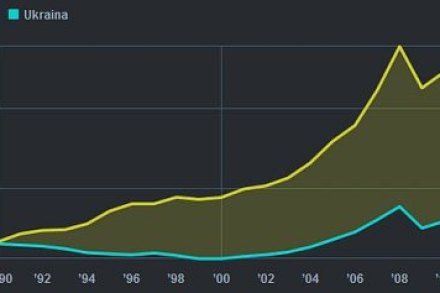
Europe, eh? Good for nothing, innit? That's the prevailing narrative you hear these days. But, as so often, this is a matter of perspective. The chart above, plundered courtesy of Anne Applebaum's twitter feed, shows the respective growths of GDP per capita in Poland and the Ukraine since the fall of the Iron Curtain and the disintegration of the Warsaw Pact. One of these countries, as you can see, has done rather better than the other. It's the country that has made a better fist of democracy. And it's the country that is a member of the European Union. Which is one reason why Britain should still be in favour of expanding EU membership.

The SNP’s blinkered, ideologically-driven, approach to the NHS is typically dismal.

From our UK edition

Anyone who questions any aspect of the way the NHS performs - whether in Scotland or England and Wales - soon becomes accustomed to being accused of harbouring some kind of ideological resentment towards the dear old thing. Ideological, of course, is a Bad Thing. It is supposed to indicate a preference for an evidence-free approach that places means above ends. This works both ways, however. If (some of) the NHS's critics are motivated by ideology many of its keenest defenders are no less moved by an ideological commitment to the service. Their ideological commitment, of course, is a Good Thing and not to be confused with the other kind of ideological commitment.

A Carve-Up That’s Just Not Cricket

From our UK edition

By god, you know matters have come to a wretched pass when you feel inclined to defend and protect the International Cricket Council. And yet, remarkably, such a moment is upon us. Like the old Roman republic, the ICC is threatened by a triumvirate. In this instance, Crassus is represented three times as India, England and Australia bid to carve up cricket's empire between themselves. Few people doubt change is needed. The ICC has been broken for ages. It is easy to conclude that it has outlived its usefulness. Nevertheless, that does not mean any proposed alternative is going to produce better outcomes for cricket. The proposals for reforming cricket's governance and, more pressingly, its finances are mooted in a 21 page paper that, usefully, has been leaked. You can read it here.

The Emotional Case for the Union

From our UK edition

For a long time now, the case for the United Kingdom has been made in a tiresomely negative sense. That is, Unionists have spent more time pointing out the practical and procedural difficulties that are an unavoidable consequence of Scottish independence. This is fine as far as it goes. The problem is that, however justified these concerns may be, it does not go very far. After all, practical difficulties are the things politicians are elected to solve. Or at least ameliorate. The case for the Union needs to be about something bigger and better than that. Unionists don't simply need a plan, they need a story. So it was braw to read Chris Deerin making what he termed the moral case for the Union in the pages of the Scottish Daily Mail last week.

The Winter Olympics should never have been awarded to Vladimir Putin’s Russia

From our UK edition

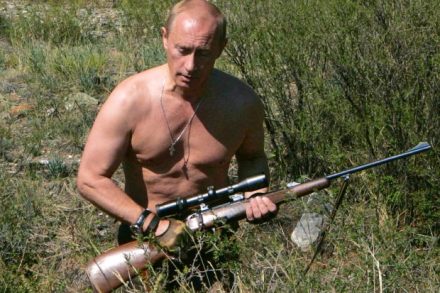
Last month's terrorist attacks in Volgograd were doubtless an attempt to warn foreigners off the Winter Olympics in Sochi next month. An attempt, too, to remind Vladimir Putin that his problems in the Caucasus - many of them at least partially made in Moscow - haven't gone away. For understandable reasons the bombs have caused plenty of folk to wonder about the security of athletes and visitors in Sochi. Those concerns are, plainly, real even if we may also, I think, expect the Russian state to erect several rings of steel around the Black Sea resort. The real concern, frankly, is that Russia was awarded the games in the first place. As I've written in today's Scotsman: The games should never have been sent to Russia in the first place.

The Quiet and Sorry Death of Liberalism, Part CCXXXIV

From our UK edition

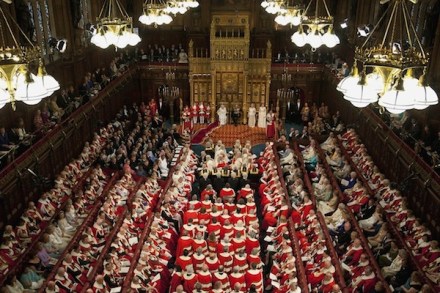
The whole point of the House of Lords is that it lacks democratic legitimacy. This, as they say, is a feature not a bug. A damn good feature too. It is - or can or should be - a valuable cooling saucer into which ploys devised by the lower, popular, house are poured until such time as they congeal to be revealed in all their unappetising horror. From time to time the will [sic] of the people, as expressed by Her Majesty's Government, jolly well should be frustrated or otherwise suppressed. Take this headline, for instance: Peers block law on being annoying in public.  That's from the BBC not The Daily Mash though I'd forgive you for assuming otherwise. You click on it because you think, hang on, even Westminster wouldn't try and pass such an obviously daft notion.

Rumours of Chris Christie’s political death are exaggerated.

From our UK edition

January 2014, two years before the Iowa caucuses and already Chris Christie, the pugnacious governor of New Jersey, has been handed the Black Spot. His chances of securing the Republican party's presidential nomination are already ruined. Or so the likes of Jonathan Chait would have us believe. Why? Because, well because Chris Christie is a New Jersey kind of politician. With all that entails. And because he's a punk and a bully. Christie is guilty on each of these charges. Let's rewind. Last September Christie, running for re-election, was keen to harvest endorsements from Democratic figures in the Garden State. This would make him seem a presidential kinda guy. The sort of man who can win - and win, er, large - in Democratic states.

The SNP school Labour in politics. Again.

From our UK edition

Alex Salmond might not wish to be compared to Gordon Brown but there is one sense in which the two dominant Scottish political personalities of the age are more alike than either would care to acknowledge: they each love a good dividing line. In Edinburgh yesterday Salmond announced that all pupils in their first three years of primary school would henceforth be entitled to a free school lunch. This, he claimed, would save parents £330 a year per child. A useful benefit for those parents whose offspring do not currently qualify for free meals; a means of ending, the First Minister suggested, the stigma presently endured by those children who do rely on free meals. Labour voted against the proposal. Cue much celebration in Natland. Another dividing line has been established.

Storm in the Sound of Jura; Mainland Cut Off

From our UK edition

Digital Detox is grand even when, as this New Year, it's partly unplanned. Back today from an extended break on the Isle of Jura which, like much of Britain, has been lashed by gales. Unlike most of Britain, however, this has meant a) no ferries running and b) not much in the way of internet access (thanks to said storms). There are worse places to be marooned even if, like George Orwell, we ran dangerously low on tobacco... Still, good to be back and all that. I trust you all had a splendid Christmas and an even finer New Year. Normal posting to resume forthwith. Meanwhile here, somewhat belatedly are the answers to this year's Christmas Quiz. I hope you had some fun with it. I know some people (or teams of people) got all the answers correct. 1.

High tea in Sri Lanka’s Hill Country

From our UK edition

In the bar of the Hotel Suisse, perched above the lake in Kandy (pictured), high up in Sri Lanka’s Hill Country, a driver touting for business smiles to reassure me that the British ‘left us many good things’. Trains, roads, the English language. And cricket, I remind him, ‘Oh yes, sir, cricket.’ I wonder what he says to French or Australian tourists. The Hotel Suisse was used as Louis Mountbatten’s South-East Asia Command headquarters in the second world war; these days it has something of the feel of an old-fashioned and slightly eccentric English prep school. If the Hill Country is not quite the last redoubt of Sri Lanka’s British past, it remains the district in which it is most palpable.

Christmas Quiz 2013

From our UK edition

That time of year again, I guess. Here is this blog's fifth annual Christmas Quiz. I hope it has not been compiled in quite as absent-minded a fashion as last year's effort and thus contains fewer errors that might both make it harder and more nonsensical than needs be the case. Anyway, as always, it's just for fun and there are no prizes. Google might help you but only at the cost of your self-esteem. Answers will be published some time next week though you can ask for hints on Twitter where, highland internet access and time permitting, I'll do my best to help. 1. How are hostages plus steps the answer to everything? 2. Where were a new Prince, the chief author of a good book's vulgar version and a Munster hell-raiser accompanied by an American sour cherry? 3.

Chris Grayling plays Scrooge

From our UK edition

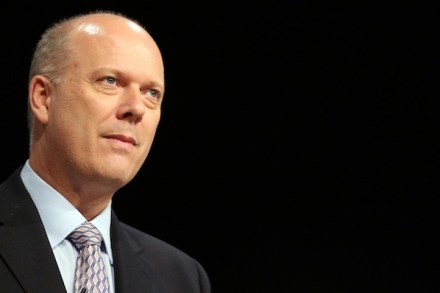
Chris Grayling is a nasty piece of work, isn't he? To wit: [N]ew rules, which forbid prisoners from receiving any items in the post unless there are exceptional circumstances, were introduced in November as part of the government’s changes to the Incentives and Earned Privileges (IEP) scheme. Under the rules, families are prevented from sending in basic items of stationery such as cards, paper or pens to help people in prison keep in touch with their friends and families and wish them a happy Christmas. They are also prevented from sending books and magazines or additional warm clothes and underwear to the prison.

David Cameron talks nonsense about vetoing future EU enlargement

From our UK edition

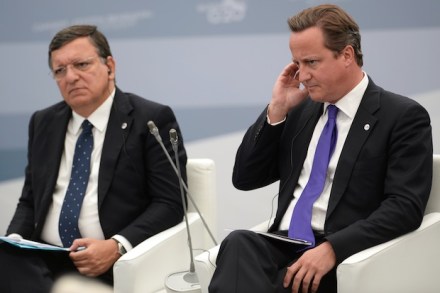
Fair's fair. Ed Miliband might be a fish-faced ninny but that doesn't let David Cameron off the hook. And not just because he's trailing a fish-faced ninny in the polls. No, the Prime Minister can be a terrible poltroon himself. Witness his witless suggestion today that the United Kingdom might veto future EU enlargement unless something is done to  thwart "vast migrations" of people. It is a silly thing to say for a number of reasons and the first of those is that Cameron is in no position to make any such suggestion. He cannot bind future British governments and since there is no immediate prospect of any country being accepted into the EU club it's not likely to be a decision he will ever have to make anyway.

The so-called “crack cocaine of gambling” is a myth. Trust Ed Miliband to believe in it.

From our UK edition

The puritan, as devotees of Baltimore's finest know, is greatly exercised by the fear that someone, somewhere, might be enjoying themselves. Ed Miliband is a puritan. And a hopeless, nagging, fish-faced puritan at that. A ninny, in other words. The Labour leader has a rare gift. He knows, you see, how you should spend your money. What's more, if you fail to spend your cash in the proper Miliband-approved manner he thinks he should be - nay is! - entitled to coerce you into changing your miserable behaviour. Of course he is not alone in that. Many politicians are far too free and easy in these matters. But there is a special teeth-grinding awfulness to the way in which Miliband seeks to coerce this fine country's citizens that never fails to annoy me.

In praise of Eric Joyce

From our UK edition

Yes, Eric Joyce, the MP for Falkirk until the next election, has issues. Yes, his copy book is well blotted. He has a conviction for assault which scarcely reflects splendidly upon him (even if many members of the public themselves wouldn't mind sticking-the-heid on any number of MPs) and in his dozen or so years in Westminster he has made energetic use of his parliamentary allowances. Yes, yes, yes. But I have some time for almost anyone declared "unfit to stand for the Labour party". It's a kind of character reference. Moreover and despite his troubles, Joyce possesses many of the qualities we should desire in our parliamentary representatives. Chief of these, intelligence and an independent spirit. He may be mistaken on many issues but that's not the point.