Alex Massie

Alex Massie

The argument about Britain in Europe is just the same as the argument about Scotland in Britain

From our UK edition

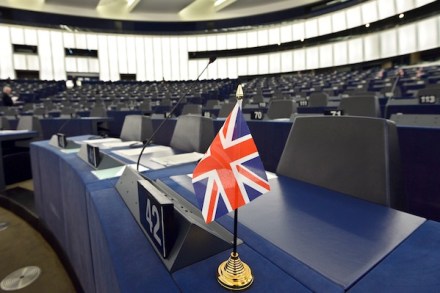
I know some readers have tired of Scotland's independence debate. That is understandable, even forgivable. It has, after all, been rumbling along for 40 years. There may only be six weeks of campaigning left but these arguments won't go away. You'll be hearing them again and again for the next few years at least. This is true even if Scotland does vote Yes next month. Because the argument about Scotland's place within the Union is really not very different from the argument about Britain's place within the European Union. Of course the similarities are not absolute but they are significant enough to be striking.
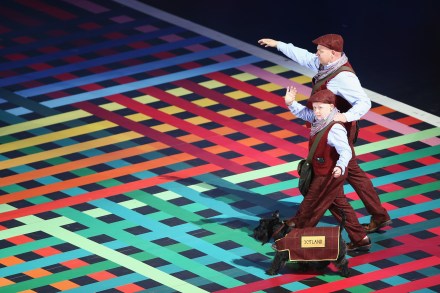
Two Sober Men Fight Over A Thistle

From our UK edition

Never before have so many waited so keenly to hear Alistair Darling speak. Tonight's the night, however, and the fate of a nation hangs upon his words. Or so some folk would have us believe. Anyway: two hours of Alistair Darling, live on prime time television. We chosen people, we. In truth, Darling is still the Other Guy in tonight's debate with Alex Salmond just as the Better Together campaign has been the Other Lot for most of the independence referendum campaign. What he says and what they do matter; just not nearly as much as what Alex Salmond says and what the Yes campaign does. They are the fellows making the running; they are the crew with the point to prove and the people to convince.

Tunes of Numpties: Scottish novelists on independence

From our UK edition

There are many ways to commission fat-headed political analysis but, in my experience, by far the easiest is to ask a novelist his (or her) opinion on the great issues of the day. Better still, ask several. That way you can be sure you'll get something even the student version of the Socialist Worker might think twice before publishing. There are, of course, exceptions. Some of them quite close to home, in my view. Nevertheless (as Miss Spark so often said) the general rule applies: asking writers for their views on politics is no more useful or sensible than asking gravediggers or sheep shearers their opinion. It may be interesting; it is not likely to be valuable. Or, to put it more kindly, expertise in writing fiction does not necessarily translate into expertise in analysing politics.

Who cares whether English commentators like or respect Scotland?

From our UK edition

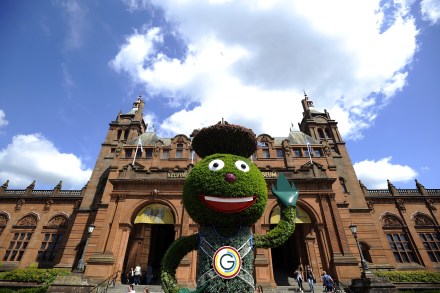
Because the Commonwealth Games are a thing and because newspapers need to fill their pages every day it is natural, even unavoidable, that they have in recent days been stuffed with pundits pontificating on the political significance of the games. Being a mere and humble freelance hack I wrote one such piece for the Daily Mail earlier this week even though I also stand by my suspicion that the political implications of these games are much too easily and keenly exaggerated. But that does not mean all such commentary is worthless or lacking interest. Here, for instance, is Lesley Riddoch writing in today's edition of the Scotsman: [A] subtle and powerful political point has been made with every waking moment of these Games.

The political implications of the Commonwealth Games in Glasgow

From our UK edition

Several people have asked me to write something about the politics and potential implications of the Commonwealth Games which open tonight in Glasgow. As is sometimes the case, I am happy to oblige. There aren't any. To think otherwise is to insult the great Scottish public. I am often prepared to do this, not least because it often needs to be done but in this instance, and not for the first time, the people are liable to be more sensible than the pundits. Back in the day, it was sometimes claimed that the campaign for (modest) home rule in 1979 was scuppered by Scotland's woeful (yet epic!) misadventure in the 1978 World Cup. I've always thought that theory insulted the electorate.

A game of loyalties: the Scottish independence debate is about belonging, not policy

From our UK edition

It's less than two months until the referendum on Scottish independence. Two months to decide the future of two (or, if you prefer, four) countries. No pressure and it's not a small thing at all. Sensible Unionists (the qualification is, alas, eternally required) can, indeed do, acknowledge that something was lost in 1707 and that this something mattered. They might also agree that independence in 2014 would bring some benefits. Something real would be recaptured, if you like. In any case, the sky would not fall; some things would probably improve. We should expect them to. Only a dolt assumes everything must be worse after independence. (There are some dolts out there.

Britain has very little to fear from the ECHR. So why are so many Tories so afraid of it?

From our UK edition

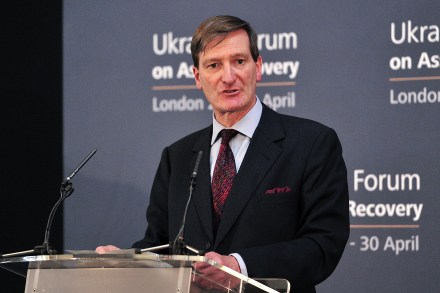
On matters domestic (England and Wales division) I was sad to see Dominic Grieve turfed-out of the cabinet in last week's reshuffle. Today he pops up in the Times to remind us (well, me) why his departure has lowered the average level of decency in the cabinet. According to the former Attorney-General, the Prime Minister's plans to rework Britain's relationship with the European Court of Human Rights are the kind of cockamamie scheme that would, quite correctly, be considered laughable if it were copied by, say, Vladimir Putin.

Hopeless in Gaza; Israel’s tragically futile war

From our UK edition

Travelling back from holiday yesterday we had Jeremy Vine's show on the car radio and the Radio 2 man was talking about the fighting in Gaza and as is often the case with such matters how the subject is framed is at least as interesting as anything that is subsequently said during the discussion. In this instance, the debate was pitched on the premise that there was something unfair about the fighting. Even something grotesque. Israel, after all, is so very strong and Gaza's Palestinians so terribly weak. What's more even if you accept - and not everyone does! - that Israel has been sorely provoked there's still the question of the proportionality of its response. I mean, aren't they just flying off the handle just a teensy wee bit?

Farewell Ken Clarke, last of the Tory Big Beasts

From our UK edition

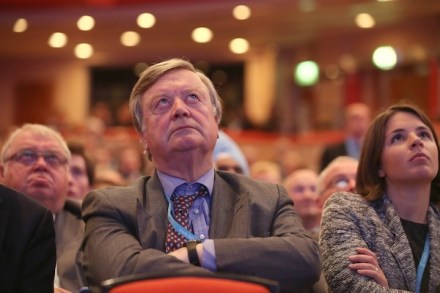
But for Europe, eh? It is a mark of how thoroughly the European issue has poisoned Tory waters that many party activists - and MPs - will be celebrating the end of Ken Clarke's ministerial career tonight. Not before time, many of them will doubtless froth. Well, maybe. But it bears remembering that the Tories who hated Clarke the most tend, more often than not, to be the Tories the public hates most. The kind of Conservatives good at losing elections and rather less good at winning them. That does not mean Clarke was always right or that his judgement was necessarily routinely sound. Nevertheless it is something to be kept in mind. Would the Conservatives have been better or worse off these past 20 years with more or with fewer politicians like Ken Clarke?

The problem with the NHS? The soft bigotry of low expectations.

From our UK edition

In many ways I've endured enjoyed a very fortunate life. Not least because, perhaps unusually, I've had almost no dealings with the National Health Service. I mean, apart from a couple of vaccinations before trips to heathen foreign parts I've hardly seen a doctor since I left school. This surprises me as much as it may surprise you. So I'm never quite sure what passes for 'good' service on the NHS. What is normal in an organisation of its size, diversity and complexity? And how, in any case, do we measure 'success'? I have a sneaking suspicion that we often do so by rebadging failure as normal. As I type this, you see, my mother is confined to her bed, unable to walk on account of, quite literally, crippling pain in her back and leg.

Labour’s true believers ask Ed Miliband to repeat past Tory mistakes.

From our UK edition

The first, and perhaps most important, thing to say about the 2015 general election is that it is Labour's to lose. The second thing to say is that Ed Miliband might be just the man to do it. Nevertheless and despite Miliband's awkwardness Tory optimists should ask themselves a very simple question: Which seats will we win in 2015 that we failed to win in 2010? Perhaps a handful will be taken from the Lib Dems and perhaps another handful can be snatched elsewhere but, overall, the battlefield picture is pretty damn bleak. But perhaps Labour will help. Miliband's problem is that his position is not secure to hunker down, do bugger all, and just wait for victory. He must move.

Proof that the Liberal Democrats are a party of ninnies

From our UK edition

I know that it is unfashionable to feel sorry for Liberal Democrat MPs. Nevertheless there are times when, contemplating their unhappy lot,  it seems appropriate to feel the odd pang of pity. The latest polling from Lord Ashcroft furnishes one of these rare moments. He asked punters who they would like to see form the next government. As you would expect 77 percent of Tory supporters want a Conservative government while 14 percent actually rather like being in coalition with the Lib Dems and would be quite happy to see that arrangement continue. The picture is much the same amongst Labour voters. 80 percent say they want Labour to govern alone and 12 percent think a Labour-Lib Dem alliance would be better for Britain. But what of the remaining Lib Dem voters?

Yes, of course the BBC is biased against Scottish Nationalists

From our UK edition

There are many reasons for this but let's begin with the first and simplest: it is the British Broadcasting Corporation. Who could have imagined that an organisation that, rightly or not, sees itself as both creator and guardian of much of modern Britain's identity and culture might think itself threatened by a movement hell-bent on destroying, or at least significantly changing, that identity and culture? I know, me neither. Now of course the BBC is not consciously or deliberately biased against the SNP and against Scottish independence. It is scrupulous about ensuring 'No' voices are balanced by 'Yes' voices just as, in other areas and debates it does its best to be seen as an impartial, disinterested, referee.

Confronting the Tories’ original sin: they are still seen as the party of the rich.

From our UK edition

Dominic Cummings is at it again. Michael Gove's former advisor has become a reliably entertaining guide to the Whitehall labyrinth. It is plain, too, that Cummings likes to think of himself as a Teller Of Hard Truths Many Of Which Our Masters Prefer Not To Contemplate Too Deeply If At All. This is fun. His latest post purports to be about swing voters, immigration and the EU but it is really about the biggest problem afflicting the Conservative party: who is it for? And who is it seen to be for? As Cummings puts it: The fundamental problem the Conservative Party has had since 1997 at least is that it is seen as ‘the party of the rich, they don’t care about public services’. This is supported by all serious market research.

The War on Rupert Murdoch is the Real Story of the Hacking Saga.

From our UK edition

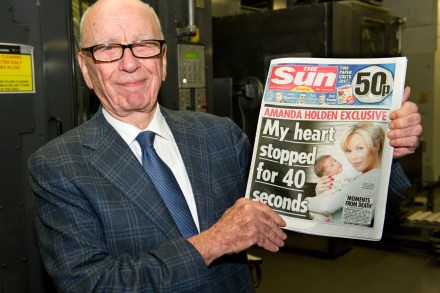
The hacking scandal was about many things but the way in which it has played-out and, crucially, been reported reminds us that it has chiefly been about power. Not just the power of the press when weighed against the power of parliament but the relative positions of power and authority within the press. In that respect it has been a confusing, complex kind of conflict. You might view the newspapers as over-mighty magnates whose powers should have been curbed long ago. In this picture, the press barons have been so revolting - in every sense - that their activities began to threaten the security - and decency - of the state itself. But there has been another war too. A media civil war within the larger parallel conflicts between press, parliament and public.

Scaremongering and smearing: just another day in the Scottish referendum campaign.

From our UK edition

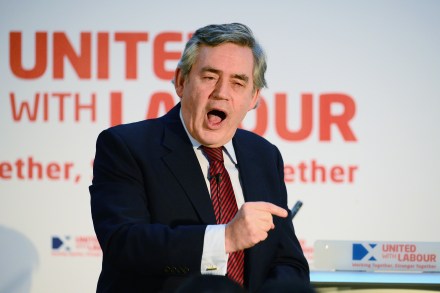
I was surprised to discover this morning that Gordon Brown last night suggested the Scottish education system should be abolished and replaced by a new pan-UK curriculum and examination system. This would indeed be a bold thing to recommend three months before the independence referendum. A surprise too and the sort of thing you'd expect to be all over the news today if it weren't, of course, the case that the press is irrevocably biased against the nationalists and determined to bury anything that might embarrass Unionists. Still, Gordon said it. He must have. Otherwise why would Kenny Gibson MSP say Gordon Brown "has endorsed the idea of a UK-wide education system - which could only mean taking powers away from Scotland and giving them back to Westminster"?

David Cameron is a Tory, not a radical. Which is both a strength and a problem.

From our UK edition

There is much to enjoy in Dominic Cummings' glorious attack on the ghastliness of Britain's political system. It is a cri-de-coeur from a man who, whatever else may be said of him (and his enemies have plenty to say), has given the matter some thought. Westminster will swoon at the criticisms of Cameron ('a sphinx without a riddle'), Ed Llewellyn ('a classic third-rate suck-up-kick-down sycophant presiding over a shambolic court') and Craig Oliver ('just clueless')  but that's just the gags, really. The substance is elsewhere. As in: “MPs have no real knowledge of how to function other than via gimmick and briefings. That’s also how No 10 works. It’s how all of them are incentivised to operate.

The shocking, secret truth about Scotland’s independence debate: it is civilised.

From our UK edition

BREAKING: The night is dark and full of nutters. Perhaps it's because I've been writing on the internet for nearly a decade now that this neither astonishes nor appals me. After enough time has passed you begin to appreciate that it doesn't matter. Not really. You learn to ignore the howling. Sure, it makes for good copy and there's hardly a hack or a blogger who hasn't peered beneath the line and despaired of humanity. It's a swamp, right enough. Sometimes, too, you wonder where all these bampots and zoomers live. Nowhere near you, you hope. But the chances are that some of them do. It sometimes takes an effort to remember that the fury chimps represent nothing more than their own tiny selves. You comfort yourself with the thought that though they may be like us they are not us.

Who will fill a coward’s grave? 100 Days to decide Scotland’s future

From our UK edition

In the new Scotland people may be able to count. Until then we will endure nonsense like yesterday's hoopla claiming there were 100 days until the referendum when there were, in fact, 101. Peevishness aside, the campaign now enters its final stages. Not before time, you may think. You would not be alone in reckoning so. For every person energised by the campaign (and many folk have been) there's at least one thirsting for it to end. Not that it will, of course. If the Yes side wins more than 40 per cent of the vote (and especially it it takes more than 45 per cent) this thing will rumble on and on. Until, as one nationalist put it to me recently, "we win". As matters stand - which is to say, if the referendum were held tomorrow - Scotland would vote No.