Alec Marsh

Alec Marsh’s latest novel, Cut and Run, is published by Sharpe Books.

The joy of Suffex: England’s county that never was

From our UK edition

There is a point on the dreaded A12 – a road so soulless it makes the M4 looks like Shangri La – when you reach the end of Essex. If you’re driving from London it takes you a surprisingly long time; there’s a lot of noisy beige concrete to go over – about 60 miles’ worth – with roadside highlights including a large, sad-looking ‘adult shop’ that was clearly a Happy Eater or Little Chef in more innocent times, and dejected-looking service stations with alarming short slip-roads. Then of course there are lorries galore thundering along, laden with shipping containers bound for Felixstowe, Britain’s happiest sounding port. Heading east you’ll pass signs for places like Basildon, Billericay, Brentwood, Chelmsford, Clacton and Southend-on-Sea.

Glastonbury has become the new Last Night of the Proms

From our UK edition

Time was when the pinnacle of the summer’s musical experiences – certainly from a UK television perspective – was the Last Night of the Proms. Preceded by weeks of more staid performances of classical music which most people did not tune in to, the conclusion of the Proms season, which dates back to 1895, was a collective cultural experience. Watched by those at home, as well as the audience of the Royal Albert Hall, it was and remains an effervescent outpouring of costume, flag-waving and patriotic singing – more an example of massed karaoke than a traditional virtuoso performance, particularly during the annual rendition of Sir Henry Wood’s Fantasia of British Sea Songs.

The forgotten genius of Alfred Munnings

From our UK edition

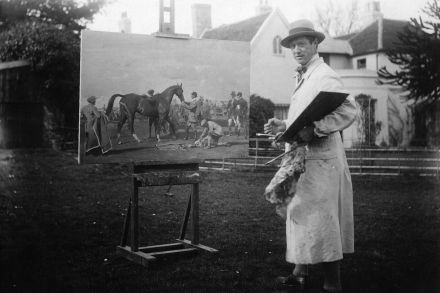
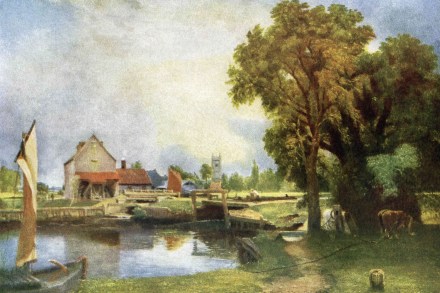
At first glance, the substantial yellow house on the turn of the country road could be a Trollopean rectory, one long sold off to a lawyer or boardroom executive. This is Castle House in north Essex – set in the flat, luscious landscape made famous by John Constable – which was for 40 years the home of the artist Sir Alfred Munnings. Since his death in 1959, it has been a museum dedicated to his life and work. There is an overwhelming sense of tranquillity, a peculiar bucolic permanence, like the memory of a hot sunny day from childhood Munnings, you may recall, painted horses – that’s what the Oxford Dictionary of Art and Artists will tell you, at least – but he did so much more than this, as the contents of this magnificent house reveal.

Is it time for the £100 note?

From our UK edition

Thanks to the recent spike in inflation, never have indisputable luxuries such as Sharwood’s mango chutney or Anchor butter quite so tested the domestic purse strings. The sad truth is, however, that it’s much worse than you think. Because unlike the watched kettle, the frog of devaluation hasn’t just arrived at a nice simmer, it’s begun to boil over. And mango chutney at £4.10 a jar is but the tip of the iceberg. For the long view consider the BBC’s new drama, Ten Pound Poms, about Brits who emigrated to Australia in the 1950s for the princely sum of a £10 processing fee. These days the closest you’ll get to Australia for a tenner is a four-pack of Castlemaine XXXX – and there probably won’t be much change from that either.

It’s time to ban young children from restaurants

From our UK edition

When you have small children just getting them out of the door can be traumatic. Finding and applying each shoe can be enough to provoke a tantrum – and not just in the parent. And no, they can’t bring their Power Rangers swords, because we are going out to lunch and everyone knows that plastic swords and restaurants don’t mix.  Eventually you will arrive at the restaurant, although it will 20 minutes later than the booking. As you push the buggy inside, the establishment falls quiet like the Slaughtered Lamb in An American Werewolf in London. There’s a scrape of chairs – a pause – then the chatter resumes. But in that moment everyone is thinking the same thing: please don’t sit next to us.

Why speeding is good for us

From our UK edition

What’s your go-to speed on the motorway? Do you snuffle along at 70, slowing down the lorries in your Rover 75? More likely you cruise the middle lane on the cusp of 80 – just on the wrong side of the law, plus 10 per cent and then some. That’s what I like to do, along with nine out of ten of the other drivers I observe. Perhaps you’re one of the speed merchants in a grot-covered Beamer, or a fly-drenched Audi who insists on making the M4 a little autobahn when no speed cameras are watching?  That’s the joy of Britain’s motorways, there’s something for everyone. Aside from pensioners who accidentally stray onto the motorway on their mobility scooter in search of an Asda, no one voluntarily drives under 70.

Gentlemen’s clubs for all!

From our UK edition

Is it a stage of life thing? Recently I’ve got a hankering to join a gentlemen’s club. It might be the creeping realisation that having put it off for so long – drifting in and out of London’s clubs over the years as a guest thinking ‘This is rather nice…’ – as I near 50, it’s a case of now or never. So here’s a question – have you been to a club recently? Have you settled into the tightly stuffed, wing-backed armchair at the Athenaeum, White’s, Buck’s, Boodle’s or the Carlton? Have you dined at the Garrick surrounded by the some of the finest things to drip off the paintbrushes of Zoffany, Millais, Hogarth and numerous others?

The purgatory of soft play

From our UK edition

Are you familiar with the child-focused phenomenon generally known as soft play? Often located in the windowless recesses of garden centres with an innocent-sounding name like ‘Snakes and Ladders’, these are compounds dedicated to the frenetic, ergonomic joy of children – assault courses for mites, with slides, chutes, ball baths and various dangling hazards all swathed in gaudy soft foam-wrapped plastic. On paper, soft play sounds like fun: what could be more enjoyable than watching your tiny ones zipping gleefully down slides in an ultra-safe environment, one where there’s even compulsory armbands for accompanying adults and locked doors to keep out perverts?

Stop demonising cyclists

From our UK edition

If you were to ask me how many bicycles I’ve had in my life, my response would be about as precise as Boris Johnson’s to the question of how many children he’s fathered. In my case, so many bikes have been stolen over the years – including one attached to a signpost (which vanished along with the bike) and another that I left unlocked for 45 seconds outside Nicolas on Holland Park Avenue. That turned out to be the most expensive bottle of wine I’ve ever taken to a dinner party. (In fact, that was the same bike that had previously been harvested of 90 per cent of its components after being tied up in the street one night, leaving only the bare frame.) So many bikes, but I persist.

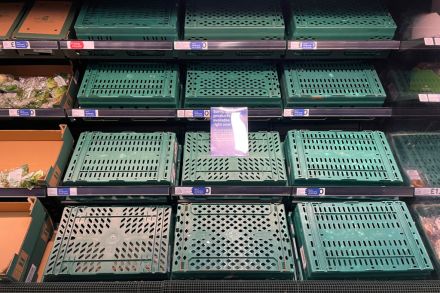
Why do we expect to buy tomatoes and cucumbers all year round?

From our UK edition

When did it become an inalienable human right for 65 million Britons to have a cucumber in March? When did we suddenly regard the possession, weekly, of a half kilo or so of vine-ripened tomatoes as fundamental to our very being, when our corner of the northern hemisphere is still essentially frozen and has been for months? If we were in southern Italy or if London were transposed with Madrid – so 800 miles closer to the equator – then one might begin to think that a leafy salad or a few tomatoes could or should be a daily staple, even in these darker days. But up here, at 52 degrees north, in an archipelago off the last landmass before you have the void of the swirling Atlantic?

Why Greggs is the modern-day Lyons Corner House

From our UK edition

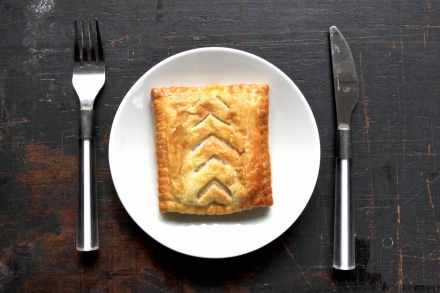
My family has a dirty secret. I'm ashamed of admitting it in writing because I feel I may be permanently marking my card in life. And not just my card. There will now be an upper ceiling against which the heads of my children will bump. The secret is this: we go to Greggs. I know, I know; there is a time and place for such a visit – you’re catching a train and starving, for instance, and nothing but a sausage roll will do. Those are the occasions when a grown man or woman might reasonably enter such a premises and stalk away, head bowed, clutching a steak bake so hot it could strip the boron off a boron rod from the core of a nuclear reactor. But, generally speaking, Greggs is not a place for a family dining experience. Well, it is for us.

Bring back the railway restaurant car

From our UK edition

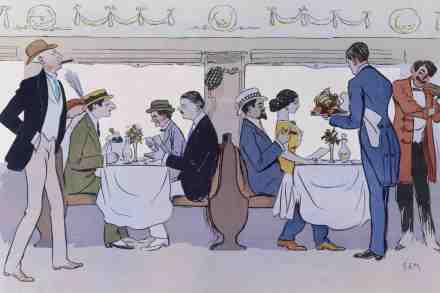
It’s six o'clock and you’ve fought your way on to a train at a major London terminus. The carriage is rammed – heavily pregnant women, the stricken and the young stand in the corridors like it’s A&E – and everywhere people are diving into takeaways. The pungent egg and cress sandwich from Pret is bursting at the seams next to you; on the other side of the table there’s a lout blasting music from his phone speaker and eating the smelliest katsu curry money can buy.

The remaking of Gainsborough’s House

From our UK edition

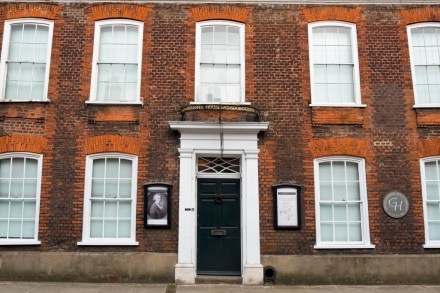
From the road Gainsborough’s House looks like it could be a thoroughly plausible restaurant in a town like Godalming or Chertsey, the sort of place where a prawn cocktail costs £15 and comes with most of a lemon in a white gauze satchel on a separate plate. The stout two-storey structure is Georgian, red brick and has a front door flanked by a pair of handsome Regency windows. Glance up the neighbouring side street, however, and you immediately see that something extraordinary has happened: there’s an enormous, ultra-modern, industrial-looking extension to the rear in brick and flint. Is it a carbuncle? I’ll leave you to decide, but yes, I’m confident it’s the sort of thing that would make King Charles choke on his fountain pen.

The art of shooting (and cooking) game

From our UK edition

I love game, me. Not the great game, of course, which is football. But game, real game, the sort that was running about in hedgerows and copses, and in fields of spent brassicas and wintry stubbles, until you shot it. At this time of year there's nothing better, to my mind, than a day out in the country with a gun and a dog, shooting a few brace of pheasant or duck, and then taking them home for a bit of butchery. People talk about from farm to fork. Good for them. I think from trigger to tongue is even better. I know that butchery sounds grisly and may be shocking to the sanitised ears of Tesco man or Waitrose woman. But the fact is eating meat or fish is a grisly business. Regardless of the posh packaging, there’s been blood spilled along the way.

Why it’s time to go back to church

From our UK edition

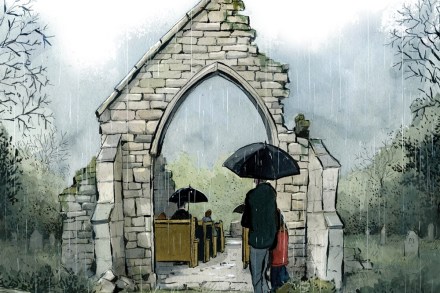
Somewhere in the midst of the hurly-burly antics and preoccupations of life, I think maybe, I’m probably a Christian. Not the type who sings in church with his eyes shut, but an extremely moderate, unthinking Anglican for whom the prospect of the existence of nothing is too painful for words. That makes me the sort of Anglican who starts to pray once the 747 has been in freefall for six seconds or more over the Atlantic, or the type that looks heavenward when Harry Kane is about to take the most important penalty in the recent history of English football. As a result, the Great Being plays precious little part in my day-to-day life; I fear I’m essentially Godless.

Why a nightcap is a dream Christmas present

From our UK edition

Have you finished your Christmas shopping yet? I ask because there is a must-have item for 2022 that may have so far escaped your attention. And that’s a small irony because at some point in the weeks ahead it will almost certainly be staring you in the face. Whether you’re reading A Christmas Carol and enjoying John Leech’s illustrations, or relishing in the monochrome horror of Alastair Sim in Brian Desmond Hurst’s gothic version of 1951, or enjoying once again Michael Caine’s peerless performance in the Muppets’ musical adaption, you will notice that one of Ebenezer Scrooge’s nocturnal accessories is never missing: the nightcap. You don’t have to be a miser to see the benefit of this piece of forgotten headgear.

A daily shower is money down the drain

From our UK edition

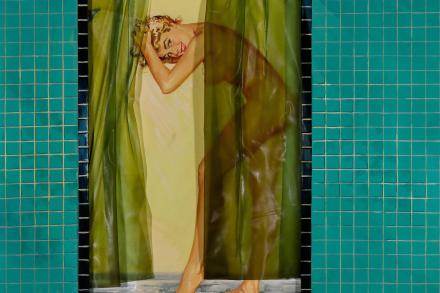
When did it become an inalienable human right to have a shower every day? I ask the question because pretty clearly it wasn’t always so. Yes, the Romans had showers – of course they did (they probably had the internet, too, but archaeologists can’t see it). A potter about online will tell you that we got the first mechanical shower here (hand pumped) thanks to the ingenuity of a plumber from Ludgate Hill named William Feetham. That was in 1767, which means that by the time Jane Austen was getting ink on her fingers a shower was an option for some. So the answer to my question is somewhere between 1767, when I expect a monthly bath was de rigueur for most of us, and around 1990, by which point it become common for Britons to take a daily shower and regard it as essential.

The lost art of the bow tie

From our UK edition

Whatever you think about Deputy Prime Minister Dominic Raab – whether you think he’s bully or a tomato-thrower, and whether you couldn’t care less if he is or isn’t – there is something you ought to know about him. Apparently, he can’t do up a bow tie. That’s according to the Financial Times journalist Sebastian Payne and his forthcoming book about the last days of Boris Johnson’s government. He tells the story of Raab arriving to counsel the Prime Minister during his last hours in Downing Street, dressed in white tie. ‘Raab awkwardly told Number 10 staffers he had to attend a white-tie dinner at the Mansion House in the City of London that evening, but required assistance with the outfit. An attendant was found with the skills to fix his bow tie.

The power of the dog

From our UK edition

We live in a dog-crazy land. You know it’s true. There are 12.5 million pet dogs in Britain, and no fewer than one in three households have one. Which is, by any measure, a lot of dogs, especially when we’re confronting a cost-of-living crisis. Most people, of course, will already know why we have quite so many of them: they’re cute when they’re young and beautiful or handsome when fully grown; they provide companionship, yet they don’t do passive aggression or sarcasm. Most of us already have siblings, parents or a spouse for that.

In defence of booze

From our UK edition

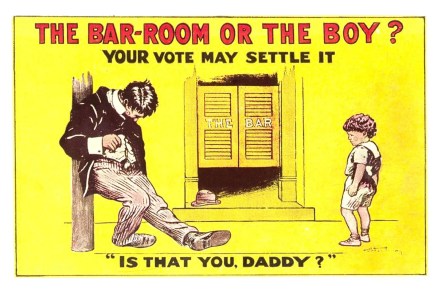
Once upon a time, well within living memory, a free-born Britisher could drink as much as he or she liked and smoke with a carefree abandon – all within working hours, and even without leaving their desk. You may remember elevenses – immortalised in those moments when M briefs Bond in the 007 films and the decanter comes out. That’s how people did a business meeting once, before Starbucks and 15 types of coffee. And then there was lunch. This could begin with a pint of beer or a steep gin and tonic, before some wine, and then perhaps a glass of port or brandy. Water? Kah! That’s for rinsing the glasses, not going in them. Nowadays, if you suggest having a glass of wine at a work lunch people will look at you like you’ve just offered their toddler a line of cocaine.