Alec Marsh

Alec Marsh’s latest novel, Cut and Run, is published by Sharpe Books.

My shopping list for the apocalypse

From our UK edition

So far this summer we’ve had the blackouts in Portugal and Spain, that rather astonishing Heathrow fire, yet more sabre-rattling between Russia and America and the former head of the Army warning that Britain must be ready for the ‘realistic possibility’ of war within five years. Then there was an old general on the radio telling civilians to prepare themselves for the struggle both mentally and practically – by stocking up on foodstuffs, loo roll, an FM radio and cash. Normally I don’t do what the radio tells me, but he got me thinking. And it turned out my wife – who is an actuary and is to risk what the Wicked Witch of the West is to tap water – had been pondering something similar. So we’ve begun ‘prepping’.

The Daughter of Time was worth the wait

From our UK edition

That it has taken its sweet time getting here cannot be denied, but, at last, it has happened. More than 70 years after the novel by Josephine Tey became an overnight sensation in 1951, a stage adaptation of The Daughter of Time has arrived in the West End. Voted the greatest crime novel of all time by the Crime Writers’ Association back in 1990, The Daughter of Time is Tey’s most unusual but brilliant detective story. It’s her most unusual because its sees her Inspector Alan Grant – the central character in five of her detective stories – solving a crime from his hospital bed while recovering from a broken leg.

Forget Oasis – we should celebrate Pulp’s legacy

From our UK edition

It begins with an electric swish sound that makes you feel like you are falling backwards, followed by an arresting synthesiser da-da-dum drumbeat. Then we get the voice, in double-time: ‘She came from Greece, she had a thirst for knowledge. She studied sculpture at St Martin’s College…’ With those words, singer Jarvis Cocker and his fellow members of Pulp caught the attention of a nation. And chances are, three decades on from the release of ‘Common People’, this musical intro will still send a tingle down your spine, particularly if you’re aged anywhere between 40 and 70.

Let’s slash the school summer holiday

From our UK edition

There are three little words that strike horror into the heart of every parent of school-age children. They are the words that cause you to break out in a cold sweat or let out a moan in your sleep in the dead of night – even in the middle of winter. They are ‘school summer holidays’. Hear those three words and you may very well envisage jubilant children spewing from the school gates and then remember the dim, distant sun-kissed summers of your own youth. But mention them within earshot of a parent of appropriately aged offspring and you’ll see the light go out in their eyes. Oh yes, the kids are happy – just like the waving teachers who weep with joy to see their charges depart. But now it’s time for the parents to weep.

The brilliant, brave sister I never knew I had

From our UK edition

My own episode of Long Lost Family doesn’t involve a hug from Davina McCall or a visit from Nicky Campbell, armed with a box of tissues and the kind of tight smile that tells you that you’re about to cry your eyes out. It begins with an unexpected call from my brother who lives in the United States. Had I got a minute? Perhaps I should sit down… We have a sister living in Matlock in Derbyshire, he said. She was born in August 1976 – making her a year and half my junior – and had come to light through the wonders of a genetic match on the family history website Ancestry.com, which my brother had put his DNA on. Was I surprised? Not massively.

Is it time to put Margaret Thatcher on our banknotes?

From our UK edition

The Bank of England wants to rethink banknotes and has announced a public consultation in order to generate suggestions about what to put on them. ‘Banknotes are more than just an important means of payment,’ declares Victoria Cleland, the Bank’s chief cashier, whose signature is on notes. ‘They serve as a symbolic representation of our collective national identity and an opportunity to celebrate the UK.’ The ‘Maggie’ would become the go-to note. How better to celebrate a free-marketeer and our first woman prime minister? So, who should we put on our next banknotes? My vote, 35 years after she left office, would be to put Margaret Thatcher on the ten pound note. The ‘Maggie’ would become the go-to note.

The blossoming career of Cedric Morris

From our UK edition

In the winner-takes-all world of modern art, there’s every chance you might not have heard of Cedric Morris. Why should you? No matter how much you sweeten the tea, the Welshman, born in 1889, was no Pablo Picasso, Mark Rothko or Salvador Dali. Nor from our 21st-century outlook can it be said that the name itself inspires much confidence: ‘Cedric’ sounds about as on-trend as a character from a short story by Saki, and when paired with Morris, the combination offers up all the avant-garde promise of a baked camembert starter at an Aberdeen Angus steakhouse.

Are you tough enough for the school run?

From our UK edition

Nothing in life prepares you for the school run. In theory, on paper, it ought to be idyllic. What could be better than feeding a nutritious breakfast to your nine- and five-year-old, before scrubbing their cherubic upturned faces and combing down their buoyant hair, and then helping them get dressed and out to the car for the short drive to school, whereupon they can skip through the gates happily to education-land? Instead, it’s a Thursday morning – by which point the week has taken its toll – and you find yourself shouting ‘GET YOUR SHOES ON’ for the 30th time at the sort of level that would be a serious breach of health and safety regulations were the noise emanating from a hairdryer or lawnmower.  But your children aren’t wearing ear protection.

The overlooked brilliance of BBC’s The Hour

From our UK edition

With reluctance – but enticed by its surprisingly starry cast and the fact that it had landed, ironically enough, on Netflix – I recently tuned in to The Hour, the BBC’s 2011 political drama series. It's about a BBC TV news programme being launched in 1956, against the backdrop of the Suez Crisis. And, goodness me, isn’t it good? Better than good, in fact – it’s a high-carat television diamond, and not some lab-grown job either, but the real, romantic, sparkling deal hewn out of the earth and hawked via Antwerp before ending up in the Imperial State Crown.

The sorry state of our public conveniences

From our UK edition

Britain’s public loos are a national embarrassment. If you are in any doubt, head to Liverpool Street Station and spend a penny. It’s unquestionably the most odious and unpleasant public lavatory anywhere in the supposedly civilised world. It has to be experienced to be believed, but suffice it to say that the level of cleanliness on display would make a Medicine Sans Frontier doctor fresh from West Africa recoil in fear and reach for their PPE. The floor is usually awash in various places with unknown fluids. The long shared trough installed for handwashing is so disgusting that you wouldn’t clean your dog in it. The supposedly automatic taps barely dispense water. The soap dispensers are equally hit and miss.

Save the Red Arrows!

From our UK edition

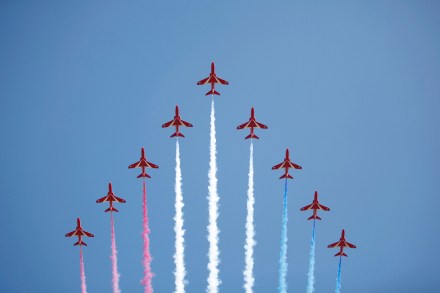
You will be aware that we face a national emergency. I’m not referring to the fact that our closest ally has seemingly taken leave of its senses or the astonishing news that apparently one in four Britons is now disabled – nor that more than nine million of us of working age are economically inactive. I’m not even talking about the parlous state of the NHS. The national emergency I’m referring to is one that trumps even Trump, so brace yourselves. Soon we are going to run out of Red Arrows. The jolly red-painted planes they fly – the Hawk T1s made by BAE Systems – are now so old, they’re even older than Putin’s fighters.

It’s time to buy a British jumper

From our UK edition

When did you last bump into the words ‘Made in Britain’ on a jumper, shirt or pair of trousers? There’s a chance, if you’re under 40, that you’ve never actually seen those words printed in an item of clothing – ever. And that’s quite a problem, particularly when you consider that we find ourselves in an era when the Prime Minister’s favourite two words are ‘national resilience’. The simple fact is that when it comes to clothes we aren’t resilient. In fact quite the reverse: in the past year Britain imported something like £15 billion-worth of textiles and clothing (compared with clothing exports of around £3 billion).

John Hemingway and the lost world of Angels One Five

From our UK edition

You will doubtless have read the news and possibly even an obituary of Group Captain John ‘Paddy’ Hemingway, the last of ‘the Few’, who died this week at the great age of 105. That he lived beyond the age of 21 is little short of miraculous, of course – given that he was shot down no fewer than four times in just a fortnight during the Battle of Britain, which claimed the lives of 544 pilots out of nearly 3,000 who fought for Fighter Command. Without the victory their service and sacrifice brought, it’s highly likely that the outcome of the second world war would have been reversed.

We need a modern Wogan

From our UK edition

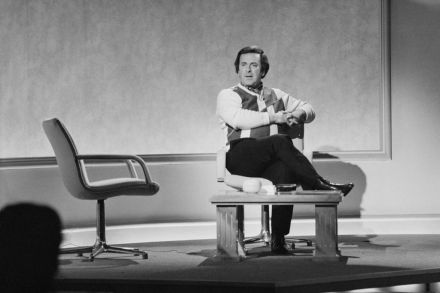
Nowadays whenever an elderly celebrity dies – consider the death last month of Gene Hackman as a case in point – one of the first things that happens is that a chunky clip of them appearing on a talk show such as Wogan or Parkinson gets shared on social media. Before you know it, you’ve spent three or four minutes listening to them regale television-watchers of the 1970s, 1980s or 1990s with a reflective anecdote or a personal story that reveals something important or even profound about their lives and animating passions or influences.

Are schools taking in too many international pupils?

From our UK edition

Browse the website of the Independent Schools Council (ISC), which represents some 1,400 schools teaching around 500,000 children, and it will tell you there are 26,195 overseas pupils at its UK member schools. They make up 4.7 per cent of the total student population. The cosy percentages belie the truth. For rather like the growing importance of foreign students in keeping our universities financially afloat, so there are swathes of overseas pupils enrolled at public schools providing a similar financial cushion. And that was true even before the Labour government slapped 20 per cent VAT on the entire sector.

How ‘toxic’ poisoned our national conversation

From our UK edition

There was a time when the word ‘toxic’ was applied in only a handful of circumstances. There was the stuff that occasionally oozed out of a power station into the North Sea and made the fish go funny. Or there was the substance that Christopher Lloyd would stick in the gull-wing doored DeLorean to make it go back to 1955. More prosaically there was the category of toxicity that included rat poison, bottles of bleach or those small sachets that drop out of cardboard boxes containing newly purchased electronic goods. They were generally labelled ‘toxic’ and for good reason. But then this all changed. I’m not exactly sure when it happened, but at some point in the space since Britney Spears’ 2003 hit of the same name and about five years ago, the word went bananas.

The real benefit of wind power? Lobster for all!

From our UK edition

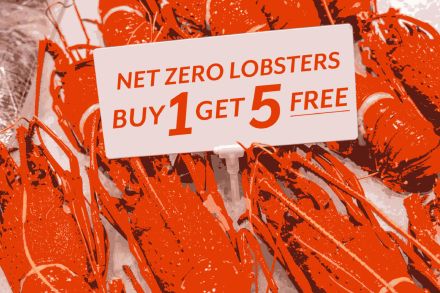
In a world of bewildering uncertainty and breakneck change, where a pack of butter now costs about the same as a small family saloon in the 1950s, there is at last some good news to cheer the soul. It concerns the lobster, that culinarily appealing crustacean which has sustained us nutritionally since the Stone Age – albeit in recent times mainly for the wealthier sort. Suddenly, the lobster has got the wind in its sails. It’s thanks in no small part to Britain’s rather quixotic, headlong dash to become, seemingly, the only net-zero country in the world, and the enormous wind turbines that have been springing up off our shores to help this take place. Because – would you believe it?

Thank goodness for the Six Nations

From our UK edition

The first months of the year are a tough time to inhabit this corner of the planet. First there’s January to contend with – darker than Himmler’s sock drawer and full to the rafters with post-festive self-flagellation. Then we’re into February, which is just more of the same: January by another name. No wonder the powers-that-be decided to shave a few days off it. Fortunately, salvation has arrived – as it does every year, just when we were nearing breaking point amid the relentlessness of winter. I write, of course, of the Six Nations, a great sporting festival devoted to genial national rivalry and daytime binge-drinking in equal double measures.

There’s nothing toxic about centrist dads

From our UK edition

‘Centrist dad’, a term that has been with us for a decade or so, has never exactly been a compliment. In 2017, even Tony Blair – then still pretty close to being political toxic waste – disavowed the label, declaring: ‘I’m not a centrist dad.’ In that same year a chap named Matt Zarb-Cousin, a spokesman for Jeremy Corbyn – who astonishingly was the leader of the opposition at the time – described centrist dads as ‘middle-aged men who cannot come to terms with the world and politics changing.’ Zarb-Cousin added hubristically: ‘They think they must know better because they are older and wiser.’ (Fortunately the centrist dads did know better, and so did the country, rejecting Corbyn in 2019.

The enduring charm of King Solomon’s Mines

From our UK edition

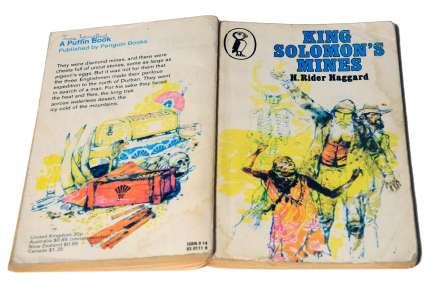
How many people under 40 in Britain today do you think have read H. Rider Haggard’s King Solomon’s Mines? Five, six… 50? It’s hard to know. If you’re lucky – or unlucky, depending on your point of view – you might have bumped into the 1985 film version with Richard Chamberlain, Sharon Stone and Herbert Lom in the unloved crevices of the TV schedule when only insomniacs or household spiders are deemed to be a risk. I ask the question because this year marks 100 years since the death of Sir Henry Rider Haggard as he was then, having been knighted in 1919, apparently for services to the British Empire – and things have obviously moved on a bit since then. Except, of course, they haven’t changed in his famous tale of adventure and lost treasure in Africa.