Alec Marsh

Alec Marsh’s latest novel, Cut and Run, is published by Sharpe Books.

Constable should be on a banknote

From our UK edition

In all the recent hoo-ha about banknotes and who or what to put on them, one name has been curiously absent – that of John Constable. Born 250 years ago this year, he was the son of a prosperous Essex miller and merchant who would rise to become probably the greatest proponent of landscape painting in history.  Where his contemporary Turner – who got the £20 note, of course – had an expressive style that took landscapes towards ethereal impressionism, Constable took nature itself to his heart and somehow made it even better – not unlike a portrait painter flattering his subject. If we weren’t British, we would probably have a major gallery in his name.


The blood of Denby pottery is on Labour’s hands

From our UK edition

I’m not sure just how quickly the Labour government is actually moving Britain towards being ‘net zero’, but it is certainly speeding us on our way to becoming 'mug zero'. Or more precisely, to being a zero creator not just of mugs, but also of plates, bowls and teapots, too. In fact, anything made of pottery or porcelain that we eat or drink from. This is all thanks to Ed Miliband’s hard-line net zero ideological zealotry, because of which another venerable name in British crockery could be about to go pop. This time the Labour bottle of doom has stopped spinning on the 217-year-old potter Denby. The firm has gone into administration – blaming energy prices and increased labour costs – with some 600 jobs now hanging in the balance.

Gail’s is Pret for the super-rich

From our UK edition

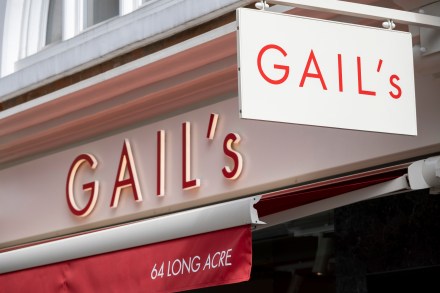
What do you consider the distinguishing marker of wealth in Britain today? Is it privately educating the kids? Is it the £60,000 Tesla parked out front with a black cable running to a gleaming box attached to the wall? Let me tell you what I think signifies real wealth today: it’s eating at Gail’s.  Because you can’t have failed to have notice the conspicuous unaffordability of Britain’s fastest rising bakery – the one that began life in London in 2005 and now has some 170 branches nationwide.   At Gail’s a box of five of their cookies costs £18. You can buy a kettle in Robert Dyas for that — and not a bad one either.

The Georgians deserve better than Bridgerton

From our UK edition

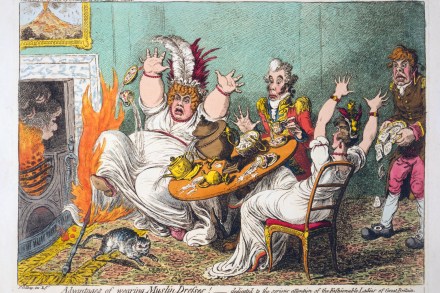
When we think of the Georgians, if we ever do, we think of them in Hogarthian terms: they are squalid, gin-soaked, syphilis-ridden and probably short of a few teeth. They are bewigged zombies without the apocalypse and either dressed in soiled, lice-ridden breeches or lying comatose in some fetid gutter.  Thanks to Bridgerton, we now see them slightly differently: as opulent social climbers who’ll happily strip off their sumptuous corsets and jewels behind the stables before gossiping about their neighbours’ misdemeanours at a ball.

Inside the world of Wes Anderson

From our UK edition

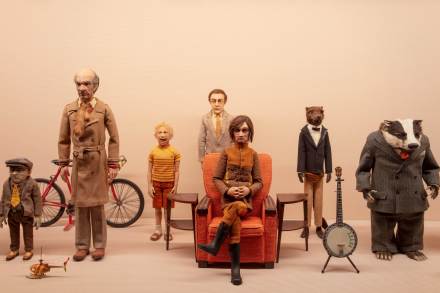
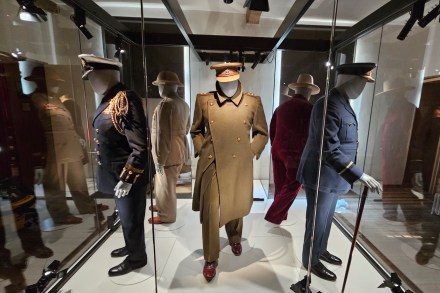
If you make your way to the Design Museum, which occupies the horned modernist structure that was once home to the Commonwealth Institute in Kensington, you are in for a surprise. And not just because it’s one of those buildings that is far more inspiring on the inside than its rather Stalinist exterior would have you imagine. No, the biggest surprise is that our national temple to design has decided to dedicate its ground floor to Wes Anderson, the American filmmaker (‘auteur’ is the word film types like to whisper) behind such idiosyncratic gems as The Royal Tenenbaums (2001) or, probably his biggest hit, The Grand Budapest Hotel (2014), which starred Ralph Fiennes, Adrian Brody, Saoirse Ronan and Willem Dafoe, among many others.

Let’s bring back elevenses

From our UK edition

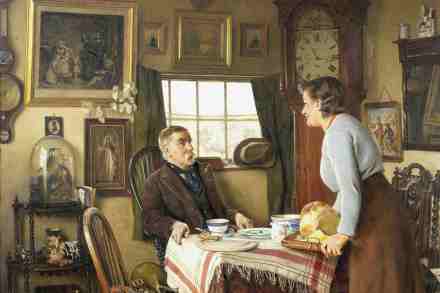
Join me, if you will, for a short stroll down the Charing Cross Road, back in the days when it was festooned with bookshops and Morris Oxfords. At Cambridge Circus, there was a large catering equipment shop owned by my great-uncle, Bill Farnsworth. He made it big when he sold water coolers to the American military. Above the enormous ground-floor showroom was his counting house, where men in tailored suits laboured over ledgers on high sloping desks, dipping their nibs into ink pots. This would have been about 1960. Were you to have a meeting with Bill in his office, say in the late morning, he would invariably turn to his walnut drinks cabinet and offer you a glass of something reviving and strong; a sherry, port or brandy, perhaps. Armagnac? It’s very good.

The overlooked brilliance of Wonder Boys

From our UK edition

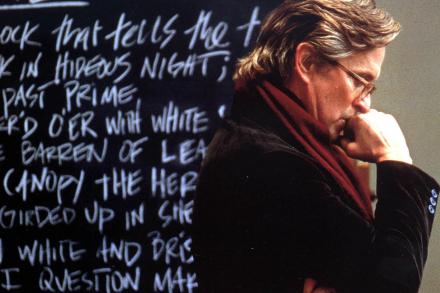
Deep in the backwaters of BBC iPlayer there lurks an American film with an all-star cast that time forgot. In its day I think it was all but forgotten, too – garnering some critical acclaim but bombing at the box office, presumably because it was too clever or just didn’t appeal enough to teenagers (I can’t see why). Fortunately, 25 years on, Wonder Boys, the campus-novel film starring Michael Douglas as a creative writing professor with writer’s block and an unravelling marriage, truly stands the test of time. You could even go so far as to say that it’s a modern classic.

Is Britain depressed?

From our UK edition

Something very strange is happening in Britain at the moment. Look at the economy. Things aren’t really too bad: for a start it’s actually growing, if only a little. At the same time, inflation is falling. Real incomes are on the rise too – with earnings going up 4.4 per cent in the year to October, while inflation was 3.6 per cent. Meanwhile unemployment is at 5.1 per cent, which isn’t terrible. The government is raking in the sorts of taxes that would make the Sheriff of Nottingham weep with joy; and yet our taxes as a percentage of GDP are still only a hair above the OECD average – so, in other words, we are plainly a pretty well-off country with plenty of money left to splash on railways and hospitals and frigates.

Put Christ back into Christmas cards

From our UK edition

It’s that time of year when the cards landing on the doormat compete for the title of most fatuous. Will it be a reindeer spouting an obscenity, or a painterly robin perched on a frosted gatepost in snowy landscapes? Might it be a sanitised cartoon of a coach and four outside a snow-encrusted inn, bright yellow lights glowing from within, a kind of Pickwickian fantasy of Victorian yuletide? Or will it be a trio of children around a scarfed snowman, or a Christmas tree, perhaps? Most likely it will be a sclerotic Father Christmas, or a bright Santa (that’s with a silent ‘t’) as he’s now increasingly known, dominating the foreground or flying through the air on his sledge over a snowy landscape, even though it never snows any more.

A Room with a View is the greatest period drama ever made

From our UK edition

It may come as surprise to discover that A Room with a View, the celebrated Merchant-Ivory adaption of the E.M. Forster novel, is 40 this month. Yes, as hard as it is to believe, the film starring Helena Bonham Carter and Maggie Smith had its premiere in December 1985 and went on general release in April 1986. Step back, if you will, from the baffling realisation that somehow A Room with a View is therefore exactly equidistant between the present time and the death of Adolf Hitler in 1945, and instead focus on a rather more cheerful point altogether. Because A Room with a View, the low-budget tale of mismatched love in Florence, is almost certainly the greatest period drama ever made. I know, it’s a bold claim.

How to save the King’s English

From our UK edition

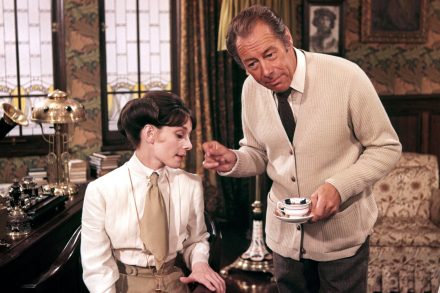
When a survey of 10,000 teachers revealed this month that Britain’s primary school pupils are increasingly relying on Americanisms (the Times front page declared ‘Trash-talking children are sounding like Americans’) I realised immediately what we needed. Rex Harrison. And if not Rex Harrison himself, then a dose of arguably his greatest role – that of Henry Higgins, the cantankerous professor of phonetics who first burst into the national consciousness in 1914 with the London premiere of Pygmalion.

Winter is coming. Thank goodness

From our UK edition

The leaves on the oak tree in the park are three-quarters brown and bring to mind the two-tone hair of a model in the ‘before’ picture of a dye advert. The tiny leaves on the apple tree over the garden wall look as though they have been individually removed and stuck in an air fryer to crisp up nicely before being painstakingly reattached. The sky is leaden, the colour of Sunday afternoons on the box in the 1970s, when the grey screen swarmed with Messerschmitts, Heinkels and Spits… It can only mean one thing. Winter is coming. And just in the nick of time. Because winter is wonderful – easily the best season, no matter what others may claim. How so?

Bring back elitism

From our UK edition

Elitism has had a bad press in recent years. The concept has, alas, been tainted by its association with the numerous elites who have corrupted it by allowing self-interest and prejudice to become self-perpetuating. It’s been sullied by its association with old school ties and masonic-style handshakes – by closed networks which work to exclude those who happen to fall outside the pre-determined in-group. So no wonder we don’t like it any more. Who would? But its gravest sin of all has been its role in pulling up the drawbridge to protect privilege in general, through a kind of unspoken fish-knife test. If you don’t know what it’s for, you don’t get in. One way people used to storm the castle of privilege was through grammar schools, of course.

Why now is the time to (re)visit Chartwell

From our UK edition

There has always been something really rather magnificent about Chartwell, Winston Churchill’s beloved country home in the Weald of Kent. Sure, it’s no Blenheim or Chatsworth; in fact – say it quietly – from certain vantage points this redbrick Tudor house is verging on unremarkable. It’s even, at a pinch, conceivably the sort of place that Kirsty or Phil might claim lacks kerb appeal. But they, just as any visitor does, would immediately recognise that the true appeal of Chartwell is not in its architecture (although all those walls Churchill built when he modernised it are handsome). No, it’s in the property’s connection to its former owner, and the view – over a seemingly unspoiled Kent arcadia which stretches for as far as the eye can see for some 40 miles.

Happy 200th birthday to our railway

From our UK edition

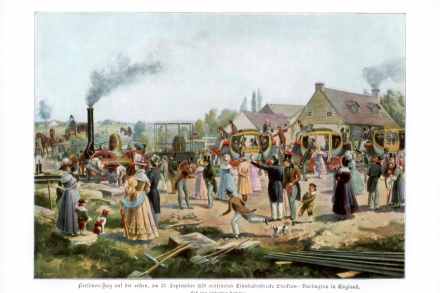
You might have missed this because it hasn’t exactly been saturated with media coverage, but this week is the 200th birthday of Britain’s railway. In fact, it’s the 200th birthday of all railways, since we invented them. It was on 27 September 1825 that service began on the Stockton and Darlington Railway. Travelling a distance of just eight-and-a-half miles at about 15mph, the world’s first public commercial rail service arrived to a crowd of 10,000 and – as would become a characteristic feature of future British rail travel – was delayed by half an hour due to engineering problems. Yes, the worldwide rail revolution began in the north-east of England – the Silicon Valley of rail. I know, not since H.G.

Bring back the big family

From our UK edition

As a species we are richer than we’ve ever been before. We live longer. We have more food to eat than is good for us. We have abundance in all things. And yet we are no happier than we were. In fact, many of us are downright unhappy. Among our woes is an epidemic of loneliness. Some 8.4 million of us are now living alone in Britain, and more than 3.8 million report being chronically lonely. We lock up more people in our prisons than ever and we can see for ourselves the signs of friction in our society, one which is clearly not entirely at peace with itself. So somewhere we have gone wrong. And I think I know where. It’s our families. They are simply too small. The average number of children born per woman in England and Wales has fallen to 1.

How to survive Florence with your family

From our UK edition

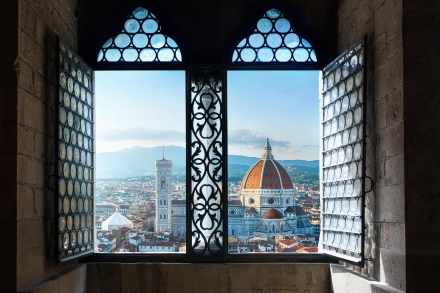
There are many destinations which spring to mind when considering the options for a weekend away with a young family. There are beaches by the dozen, theme parks and glamping opportunities galore. But there is only one Florence. And I cannot say this strongly enough: when it comes to the kids, the Center Parcs of the Renaissance will not let you down. It begins with Tuscany itself, a place so beautiful that you can get Stendhal syndrome on the bus on the way from the airport. And even if your children are glued to their screens, eventually motion sickness will force them to look up and they may glimpse its dreamy vistas, too.

Why A Dance to the Music of Time has stood the test of time

From our UK edition

Fifty years ago today, a literary masterwork of the 20th century reached its conclusion with the publication of Hearing Secret Harmonies, the final volume in Anthony Powell’s 12-novel sequence A Dance to the Music of Time. Inspired by the painting of the same name by the 17th-century French artist Nicolas Poussin (which you, like Powell, can see at the Wallace Collection), the series began with A Question of Upbringing, published a quarter of a century earlier in 1951. This introduced us to the English narrator of the whole endeavour, Nicholas Jenkins (uncoincidentally he shares the Christian name of the painter, albeit with an Anglicised aitch), who attends a boarding school – unnamed but modelled on Powell’s time at Eton.

The Mediterranean summer holiday is broken

From our UK edition

For more than 60 years it has been an annual fixture for thousands of us, a birthright enjoyed and embraced by the children of modern, pleasure-seeking, throw-away Britain. Precisely when it happened, I couldn’t say, but at some point in the 1950s or 1960s, the trains radiating from the metropolis to the coastal resorts of Clacton-on-Sea, Southend-on-Sea, Bournemouth, Frinton, Brighton and beyond stopped heaving with Londoners. In their place a whole series of new, hitherto unfamiliar resorts zoomed into the national consciousness, heralded by the tang of aviation fuel and the promise of neverending heat and chilled cerveza.

The curious allure of ‘cosy crime’

From our UK edition

Just a glance at the cast list tells you everything you need to know. Netflix’s adaptation of Richard Osman’s cosy crime sensation The Thursday Murder Club stars Dame Helen Mirren, former James Bond Pierce Brosnan (as well as a former Bond villain Sir Jonathan Pryce), the Oscar-winning Sir Ben Kingsley and the gold-plated national treasure Celia Imrie, alongside a supporting line-up which includes David Tennant and Richard E. Grant. Released today in selected cinemas before landing on the streaming service on Thursday, the film has an awful lot of talent for what appears at first glance to be a mash-up of One Foot in the Grave and Hetty Wainthropp Investigates.