Aidan Hartley

Aidan Hartley

Aidan Hartley is the Spectator's Wild Life columnist.

With Aidan Hartley

From our UK edition

23 min listen

Aidan Hartley is a writer and entrepreneur. Born in Kenya, he grew up in Africa and England and has worked as a reporter for Reuters all over the world. Aidan has also written The Spectator’s Wild life column for the past 21 years. On the podcast, Aidan talks about spending his younger years on safaris in the wilderness, where mealtimes consisted of handfuls of rice cooked from metal tins on an open fire.As a reporter, he talked about reporting on famine in Somalia and why that led him to where he is now – living on a remote family farm, as a disciple of John Seymour’s guide to self-sufficiency.

There are almost no animals left – but we’ve been here before

From our UK edition

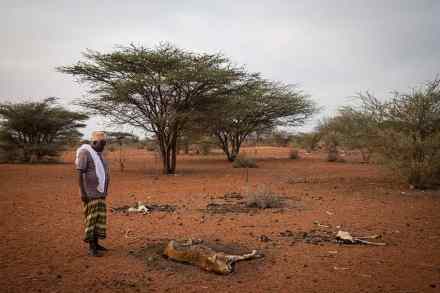
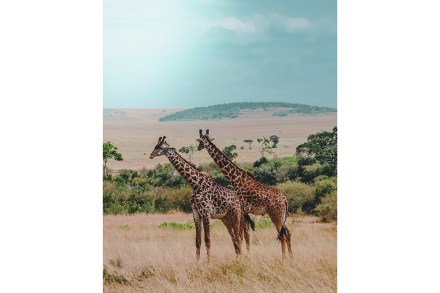
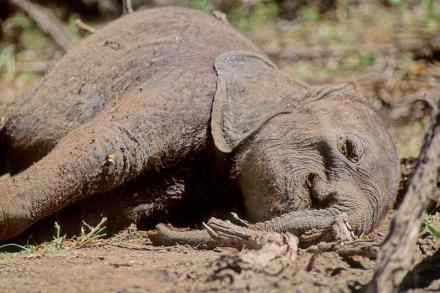
Laikipia You know things are bad when the zebras are thin. Even during most droughts, zebras are like matrons at the gym in stripey spandex stretched around plump buttocks. Pastures vanished long ago and our plains resemble Sudan’s Batn-el-Hajar – the Belly of Stones desert – so that I cannot even recall what they were like when they were last thick with green grass. The zebra foals are dying, the elephants are thin, while the buffalo disappeared a while back. The dry has killed quite mature trees which now shudder with the sound of termites and crash to the ground. To the north of us, horned skulls and dried carcasses litter the trail where the cattle-keepers trekked their animals vast distances in search of rain. Up there the countryside is silent.

What’s behind Africa’s love affair with country music?

From our UK edition

Kenya Life in the poorest continent is so hard you get a lot of knowing laughs with the joke: ‘What happens when you play a country and western song backwards? Your wife comes home, your children suddenly respect you, you get sober and your dog wakes from the dead.’ In Kenya and other parts of Anglophone Africa, country and western music is a cultural obsession for both young and old. ‘We all relate to the problems they sing about,’ says Jeff Koinange, host of the wildly popular Smokin’ Country radio show on Kenya’s Hot 96 FM. ‘Four hungry children and a crop in the field – this is everyday life for us Africans.

The long and the short of it in Africa

From our UK edition

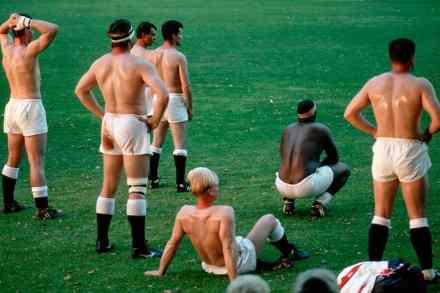
Kenya As late as the 1920s, it was believed that Africa’s tropical sun would boil a European’s brains. ‘The direct ray of the sun – almost vertical at all seasons of the year – strikes down on man and beast alike,’ Churchill had written on his visit to East Africa. ‘Woe to the white man whom he finds uncovered!’ When my father first arrived in Tanganyika he was advised to go about in a spine pad and solar topee, which he swiftly discarded. He wore a khaki drill bush shirt and shorts as long and baggy as spinnakers. In old age his face, neck, arms and legs were very dark brown, but his torso remained a much paler colour. As a boy I also went about in khaki shorts, made by the Indian tailors in old Malindi town.

The real reason Africa can’t feed itself

From our UK edition

Northern Kenya Claims that Vladimir Putin is stoking famine in Africa is a compelling red herring, which also exposes inconvenient truths about why people are going hungry in the world’s poorest continent yet again. For sure, the Russians are holding up 22 million tons of Ukrainian wheat, have bombarded grain terminals, blockaded shipping and disrupted farming. But that’s still a tiny percentage of global harvests and, though the challenges are great, crops like winter wheat are growing and there are other routes to export via Ukraine’s neighbours.

When flying was fun

From our UK edition

On the BOAC VC10 flights to Nairobi, the pilots would invite children like me up to sit in the cockpit with them. Once they put me behind the controls and I was very nervous about making a wrong move that could throw us into a tailspin. I had a BOAC badge and a Junior Jet Club book, which the captain kindly signed for me on each voyage. Attractive stewardesses served breakfast, lunch and supper with metal cutlery, the seats were huge with loads of legroom for tall men and the adults puffed away on cigarettes. The cabin was ultra-quiet because the four big Rolls-Royce engines were in the tail, rather than under the wings. Somebody up there cares about you, the advertisements said.

Michael Simmons, C.J. Farrington and Aidan Hartley

From our UK edition

16 min listen

On this week's episode, we’ll hear from Michael Simmons on some of the most ridiculous Covid fines. (00:52) After, C.J. Farrington on the light and darkness of Russian culture. (04:10) And, to finish, Aidan Hartley on the return of the buffalo. (11:07)Produced and Presented by Sam HolmesEntries for this year's Innovator Awards, sponsored by Investec, are now open. To apply, go to: spectator.

Why Kent is being bulldozed by buffalo

From our UK edition

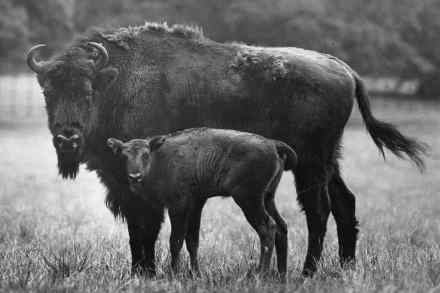
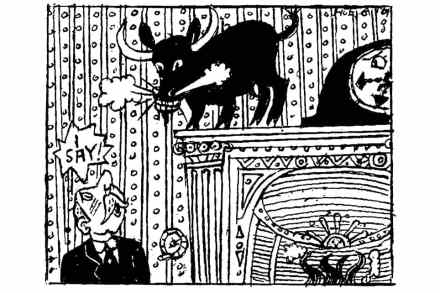
Buffalo are now living in the fens of Kent. Why – have we slipped into the metaverse of Lewis Carroll? ‘He thought he saw a buffalo/ Upon the chimney-piece.’ But these are not African buffalo, those fierce beasts that recently charged but narrowly missed killing my wife at home in Kenya. No, these are the more docile water buffalo and so this story isn’t nonsense. ‘He looked again, and found it was/ His Sister’s Husband’s Niece.’ Clever scientists on sabbatical from modelling pandemics and climate change have introduced four water buffalo to the Ham Fen nature reserve, near Sandwich. These wetlands become clogged with silt, causing floods, and the idea is that the buffalo, with their huge bodies, will bulldoze channels through the mud.

The sin of neutrality

From our UK edition

Yet again, millions of civilians across the Horn of Africa are starving. The world blames the crisis on drought and climate change, which nowadays is the way we excuse these countries for environmental mismanagement. But as ever, war is really the single greatest reason why people are killed year after year in this region. And while western countries pour billions of dollars of food aid into Ethiopia, Somalia and South Sudan, the weapons flooding those states originate mainly from Russia, China, Belarus – and Ukraine. In response to an article I recently wrote in The Spectator about why I think so few African governments condemn Russia’s invasion of Ukraine, I have had the usual deluge of ad hominem attacks so familiar to anybody who dares to criticise African governments.

Cross to bear

From our UK edition

40 min listen

In this week’s episode: How are the people of both Russia and Ukraine processing the war? Our Russia correspondent Owen Matthews writes in this week’s Spectator that he has been stunned at how easily some of his Russian friends have accepted the Kremlin’s propaganda. He joins the podcast to explain why he thinks this is, followed by journalist and author of This Is Not Propaganda, Peter Pomerantsev, who has travelled to Kyiv to celebrate the festival of Passover. (00:48) Also this week: Is Rishi Sunak politically incompetent? Until recently Rishi Sunak was a favourite to succeed Boris Johnson, but this week his popularity plummeted to new lows.

Why so many African leaders support Putin

From our UK edition

The Russian atrocities against civilians in Ukraine have been met with silence from Dar es Salaam, Harare and Juba. Not a word from Addis Ababa, Maputo or Khartoum. On Russia’s invasion of Ukraine the Ugandan President’s son, lieutenant general Muhoozi Kainerugaba, is clear: ‘Putin is absolutely right!’ Nearly half of Africa’s 54 nations refused to vote against Russia at the United Nations last month. Not only African governments but multitudes of Africans, even in countries that opposed Russia, such as Kenya, enthusiastically support Vladimir Putin. And the curious thing is that it’s the very countries that have historically received the most western aid that seem most in favour of him. In fact, they support him because he is the West’s enemy.

Hell is an English train journey

From our UK edition

Delayed, on Southern Rail Home From the Hill is a 1987 documentary by Molly Dineen about Hilary Hook, an elderly colonel who after a life in Kenya and the Far East retires to a nasty flat in England. Poor old Hilary has never had to prepare his own food and now, in his twilight years, he can’t even open a can of soup. He is horrified by Britain, its culture and bad weather. When I first saw Molly’s superb film as a young man it struck a chord. Some 35 years later, on a brief visit to England from Kenya, I can almost hear and feel myself becoming Hook. It’s not so much that neither of us can cook for ourselves. It’s more that under this dome of grey skies and public service announcements, we both miss the gaudy melon flower of home.

Who killed Dicky?

Local chief Panta wore a government-issue khaki uniform with epaulettes, beret and swagger stick. On a pleasant stroll to our farm springs, he observed how plenty of blood had been spilled over this water. We sat on the glassy-smooth black rocks around the water pools and the chief retold for me a story more infamous in its day than the Happy Valley tale of Lord Erroll’s murder, but now completely forgotten. Welshman Dicky Powys, from a family of authors and philosophers and cousin of our ranching neighbor Gilfrid, arrived in Kenya in 1931 to farm. Young Dicky learned the local Maasai vernacular fluently and got on with everybody. His employer had rented pasture in Laikipia around our springs for a vast flock of sheep and Dicky pitched camp here.

dicky

Africa’s lessons for Ukraine

From our UK edition

Kenya During Russia’s invasion of Georgia in 2008 I got a close look at Moscow’s troops and their kit. These contractniki were a ragged bunch with rotting teeth, bad boots and homemade tattoos, using weapons and vehicles that seemed like hand-me-downs from a failed state in Africa. I had expected them to be much smarter. Recently my spooky friends told me that Putin’s military invading Ukraine was now a modernised, well-trained force. Instead it appears that Moscow’s generals have stolen the diesel, supplied the mechanised brigades with ageing knock-off Chinese tyres and sacked all the dentists.

After Covid, Kenya’s flower industry is gearing up for its next challenge

From our UK edition

The alpine slopes of Kenya’s extinct volcanoes are the floral equivalent of Bordeaux. It’s there that the roses grow for the world’s weddings, funerals and Valentine’s Day bouquets. The higher the altitude, the larger your flower head, and roses raised in the shadow of Mount Kenya’s glaciers, or on the vast caldera of Mount Elgon, come in a dazzling spectrum of colours, petal shapes and scents. In normal years, billions of blooms fly out of Nairobi, destined for everywhere from Shanghai and Riyadh to Melbourne and Slough. But in 2020, the roses bloomed in vain. The world’s skies emptied of aircraft in March 2020, and Kenya’s rose growers threw away mountains of flowers that could not be exported.

Why a church in Jerusalem is the model for all family-owned holiday homes

From our UK edition

Malindi, the Indian Ocean When I lived in Jerusalem a long time ago, I often visited the Church of the Holy Sepulchre, where the Catholics, the Greeks, the Syrians and Armenians had their separate territories within the sacred complex of Christ’s Calvary, tomb and Resurrection. (The Ethiopian priests were all unfairly banished to the roof.) Every year, one of the denominations would say: ‘The ceiling is blackened by candle smoke — we should clean it.’ And all the other denominations would say: ‘Noooo — this is a terrible idea. It should not be done.’ The next year, another of the denominations would also say: ‘The ceiling is blackened by smoke, let’s clean it.

My ocean voyage from hell

From our UK edition

Kenya Wondering what this year will bring, at dawn this morning I stood in the waves in front of our beach house and watched two Swahili sailing dhows battling through monsoon surf, heading out to the fishing grounds. For 1,500 years mariners off our East African coast have voyaged in these lovely boats and now, just in the past couple of years, fibreglass hulls have started to replace teak planking, and outboard motors instead of lateen sails propel men across the ocean. I was looking at the end of a long history. In my life I’ve enjoyed wonderful sea safaris on dhows, hunting for tuna and ambergris and waves to surf — and I wonder what’s ahead.

A long-forgotten tale of sorcery and a severed head

From our UK edition

Laikipia Plateau, Kenya Our local chief Panta wore a government-issue khaki uniform with epaulettes, beret and swagger stick. On a pleasant stroll to our farm springs, he observed how plenty of blood had been spilled over this water. We sat on the glassy-smooth black rocks around the water pools and the chief retold for me a story more infamous in its day than the Happy Valley tale of Lord Erroll’s murder, but now completely forgotten. Welshman Dicky Powys, from a family of authors and philosophers and cousin of our ranching neighbour Gilfrid, arrived in Kenya in 1931 to farm. Young Dicky learned the local Maasai vernacular fluently and got on with everybody. His employer had rented pasture in Laikipia around our springs for a vast flock of sheep and Dicky pitched camp here.

When it comes to Africa, the media look away

From our UK edition

Kenya We were flown around the country, hovering low over mobs using machetes to hack each other up Each time I sit in St Bride’s on Fleet Street during the memorial of another friend, I look around at the crowds they’ve been able to pull in and feel terribly envious. Riffling through the order of service and then the church’s book of correspondents to find the faces of old comrades, I’m like a man wondering if any guests will bother turning up to one’s own hastily arranged bring-a-bottle party. Our 1990s generation of Nairobi hacks has been severely depleted. While we survivors are not a distillation of complete bastards, it’s natural to feel many of the best have gone before us. Too many were killed young on the story.