Aidan Hartley

Aidan Hartley

Aidan Hartley is the Spectator's Wild Life columnist.

The nuance of Kenya

From our UK edition

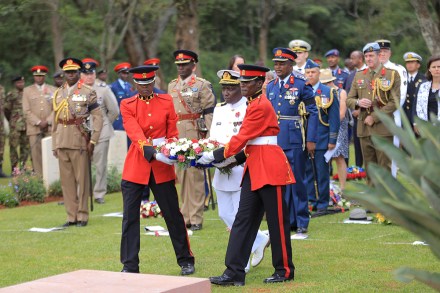
On Remembrance Sunday in Nairobi nearly a decade ago, an ancient Kenyan veteran told Sam Mattock, a British ex-cavalry officer, that he had lost his second world war service medals. Could Sam help replace them? In a culmination of Sam’s personal efforts, King Charles III, on his visit to Kenya with Queen Camilla next week, will present medals to four veterans who fought for the empire in North Africa, Madagascar and Burma. The youngest of them, Kefa Chagira and Ezekiel Anyange, are 99. John Kavai is 101 and the eldest, Samweli Mburia, is 117 and served as a corporal in Burma. One hundred thousand African troops fought the Japanese in Burma’s jungle, in a theatre that became known as the Forgotten War.
The joy of yaks

From our UK edition

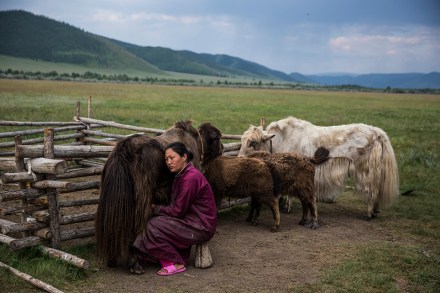
The Mongolian taiga After driving across clean, fast rivers and through forests turning golden, orange and red in the Mongolian autumn, we came upon herds of yaks grazing the taiga. The yak, or Tartary ox, is the Shetland pony of cattle, as drawn by Norman Thelwell: not much higher than a big ram at the withers, with a low-slung, fat body, an overcoat of long, shaggy hair, a woolly head and a dangling mop of a tail. The herd we alighted from our car to see was being driven down from wooded slopes by a youth riding his pony bareback, whistling and singing. As the yaks, all white and brown and black, trotted towards us, they gave out grunts reminiscent of wildebeest, but much deeper.

Hassan still has no dhow to captain

From our UK edition

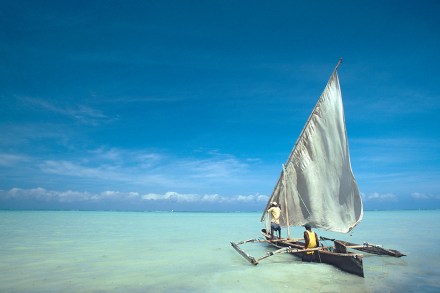
Kenya Hassan was our skipper. He’d take us in his dhow out on the Indian Ocean for trips along the Kenya coast, south among the secret wave breaks or north towards Formosa Bay. Once he took my brother on a proper voyage to Lamu island, which needed several days even in calm weather. With his big toe steering the tiller, the full lateen sail over us, Hassan told us about the fabled Bajuni islands north of the Somalia frontier, about whales and ambergris. He could neither read nor write but he could navigate by the stars. When we dropped anchor and jumped into the water to dive among the coral heads, Hassan would lie on the gunwales and to pass the time he sang tarabu Swahili folk songs.

A farewell to alcohol

From our UK edition

Laikipia Some are saved by Jesus and they are sober. For others, drunkenness is as natural as love-making, roasted meat and weekend football. In northern Kenya we brew a honey mead called muratina; then there’s a millet beer and strongest of all is a moonshine, changa’a, which you can smell from several huts away and it tastes like battery acid. Our neighbour Gilfrid produced an alcohol so pernicious the hangover hit as soon as it crossed one’s tongue Booze soaks into the corners of life in the village or the slum. I’ve been in places, on paydays for example, where the scenes resemble Pieter Bruegel the Elder’s tableaux of peasants committing all the seven deadly sins. A changa’a drinker isn’t just drunk, he’s catatonic with the onset of blindness.

The beauty of Boran cattle

From our UK edition

The Farm, Laikipia Outside the nightjars were calling and a zebra brayed in the valley. The constellations were still bright as the dogs all piled into the Landcruiser with me for the drive out to the yards. During two years of drought we’ve been unable to sell cattle, which have cost us a fortune in hay, silage and feed. After the rains came at last in April, green grass sprouted across the farm until the pastures waved like wheat on the plains, fattening the livestock and returning life to the way it used to be. At the crush I busied about the scales as cowhands arrived, twirling their cattle sticks and stamping their feet against the chill of the dawn.

Progress is coming to our remote corner of Kenya

From our UK edition

Laikipia The principal of the local polytechnic was waiting for me in the kitchen. Frequently in the kitchen there is a chief or a surveyor, or geese, or the cats Omar and Bernini, the dogs Jock, Sasi and Potatoes, foundling lambs or calves gambolling about hoping for milk, or stockmen with news of a sick cow, or armed askaris clumping in after a hard night to lay assault rifles down on the counter before slurping mugs of sugar-loaded tea. Bees try to swarm behind the fridge and one day Milka, the cook, primly announced there was a big snake coiled on the shelf of pots and pans. In her Cold Comfort Farm Miss Stella Gibbons talked of ‘clettering’ the dishes.

We survived the worst drought in a generation

From our UK edition

The Farm, Laikipia I realised the worst drought of this generation was at last over this morning when two Samburu gentlemen arrived on the farm, asking to buy rams. My nomadic neighbours sense very well when it’s time to put a tup in with the flock. In just this month a full moon and the alignment of Lokir Ai and Lakira Dorop – Jupiter and Venus – had brought six inches of downpours, equal to almost all of last year’s rain and half of the precipitation in 2021. As Mr Lemartile crouched behind my Dorper rams, happily dandling their testicles for size and girth, we caught up on gossip and everybody was in such a good mood there was no need to bargain over prices.

How Moscow can pervert the course of Africa’s future

From our UK edition

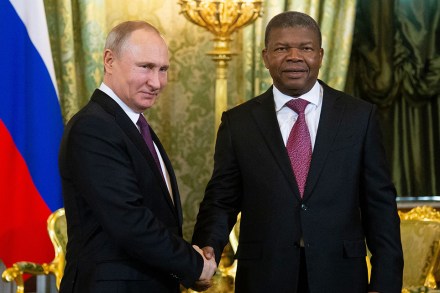
On the lengthy train ride to Kyiv I read my Plokhy as we trundled through seas of mud, passing villages with blue timber churches topped by golden domes gleaming in the spring dawn. A metastasis of Putin’s atrocities against Ukraine has been the entrenching of Russian influence, powered by guns and agitprop, across my home continent of Africa. I wanted to hear what people in Kyiv thought about this trend, since it threatens to roll back democracy in Africa three decades after the Soviet Union collapsed. Look at Africa’s UN voting patterns, what many Africans are saying, at the sudden appearance of Russian goons in the remotest corners and at the convergence of Chinese and Vatnik rhetoric.

My conversations with Wilfred Thesiger

From our UK edition

When Wilfred Thesiger arrived in the port of Al Mukalla after his foot crossing of the Empty Quarter desert with the Bedu in 1948, he wore only Arab clothes. My father lent him a pair of trousers and a razor so he could get cleaned up before going to dinner. A friend of mine this week just read Thesiger’s superb Arabian Sands and reminded me that the author claimed his razor and European clothes had been sent from Salala, with no mention of Dad’s kindness.

The man who makes money where no one else dares to go

From our UK edition

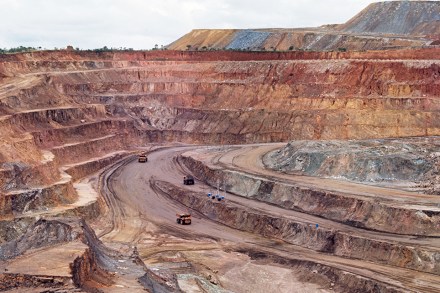
Rwanda The mineshaft is dark, the air humid and starved of oxygen. I follow Marcus Edwards-Jones out of the muddy tunnel towards a window of light and at last we emerge into the evening. The sun is going down over Rwanda’s green hills, dotted with banana groves and eucalyptus stands, with a river snaking away into the distance. Around us are men carting away lumps of rock, which on close inspection are streaked with veins of a black metal called tantalum, a high-value mineral used in the manufacture of mobile phones, nuclear reactors and spaceships. ‘I’ve never seen a deposit like this,’ says Marcus. ‘It’s all been worth it.’ I first met  Marcus in Oxford in 1985. We said hello on the stairs at a Piers Gaveston party, both of us dressed in togas.

My nonagenarian father-in-law has embraced East Africa

From our UK edition

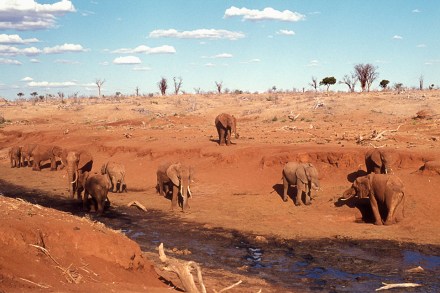
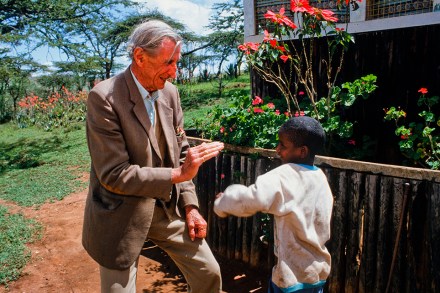
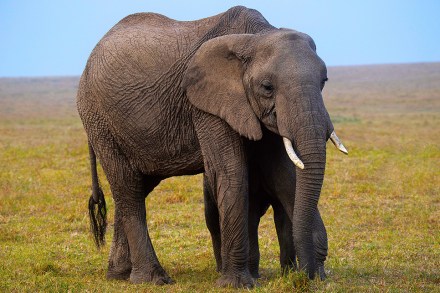
Kenya My father-in-law Gerry Taylor is 91 and walks daily on our Kenya ranch among herds of buffalo, giraffe and zebras. A few days ago he inadvertently came within 20 feet of an elephant and the both of them pretended not to see each other. He says he enjoys highland Kenya for its open spaces and endless horizons, the sense of freedom which, he points out, cannot be found in a row of English houses. Late in his life, East Africa has been his compensation for the India he lost as a youth. Born in Calcutta, Gerry was the son of a British Army officer who worked on India’s railways. He got his matinee idol good looks from his mother, whose ancestors were Indians, Burmese teak merchants and Armenian traders in the great city.

In praise of missionaries

From our UK edition

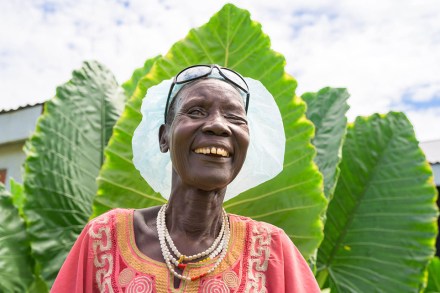
Kenya Tonj is a war-battered settlement on a river that eventually feeds into the White Nile, in South Sudan. When they are not feuding over livestock, Dinkas from remote cattle camps, dressed in garish jalabiyas, saunter down the dusty main street. For months at a time, tropical deluges turn the surrounding mud hamlets into islands, clogged with papyrus, buzzing with insects and isolated from the world. Last year, Dr Ben Roberts, an eye doctor from Alabama who works as a medical missionary in Africa, arrived in Tonj to perform cataract operations on hundreds of local people, restoring sight to those who live in darkness. News of Dr Roberts’s miracles reached a blind elderly woman named Madhieu, many days walk away.

The energy of the world is shifting south

From our UK edition

Kenya Greetings from Africa, my beleaguered cousins. I’ve written before about how in 1973, Uganda’s Idi Amin telegrammed Queen Elizabeth, promising to send shiploads of bananas to feed her subjects after ‘following with sorrow the alarming economic crisis befalling on Britain’. Now that you rival Burkina Faso in the number of times you’ve changed your leaders recently, I’m going to move out of the sunshine, take a swig of cold beer and show some sympathy once more. For a long time, those of us the British Empire left behind when you pushed off a few decades ago sniggering into your pith helmets sometimes wondered if we’d made a mistake.

Class of the 1980s: my Balliol reunion

From our UK edition

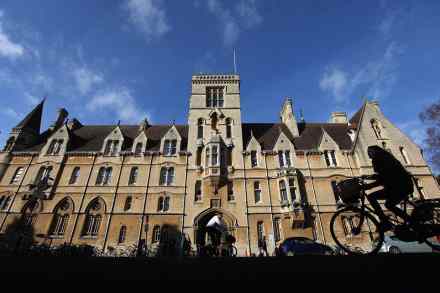
Laikipia, Kenya No portrait of Boris Johnson hangs in the hall of Balliol, his old Oxford College. Hardly a surprise, since serving prime ministers do not have their pictures painted and he has moved on only recently. But as things stand, it seems pretty clear that Boris will never go up alongside this distinguished Oxford institution’s other three prime ministers, H.H. Asquith, Harold Macmillan and Edward Heath. I worked this all out last month while attending a Gaudy, or reunion, at my old college for the years 1984 to 1988. Boris matriculated the year before I went up but as I stood in the hall before dinner looking up at the walls, I clearly remembered seeing him standing in the quad together with Macmillan and Heath halfway through my time at Balliol.

The man-eating leopard of Laikipia

From our UK edition

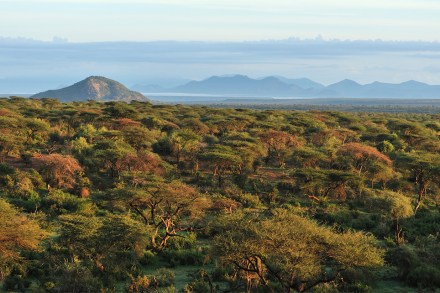
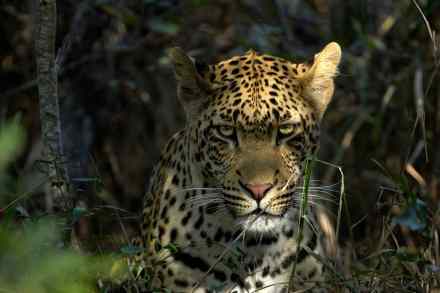
Laikipia Plateau, Kenya Until only a few years ago, the constellations blazed across the sky above the farm at night and there was not a single electric light on any horizon. On many evenings I found myself with my rangers sleeping on the tracks of cattle rustlers heading into Kenya’s wild north with no fences between us and the Ethiopian frontier. Today the wildness is gone, the tarmac almost reaches our farmstead, the phone network reaches everywhere and the good old days of gunfire and adventures and great dances of warriors with their beads and flashing spears will survive only in memory. And so it is quite surprising when even today a man gets eaten by a leopard a stone’s throw away from home.

How Kenya viewed the Queen

From our UK edition

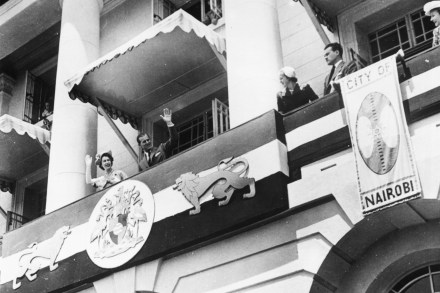
As the Union Jack was run down the flagpole at Kenya’s independence in December 1963, Prince Philip said to Jomo Kenyatta, 'Are you sure about this? It’s not too late to change your mind.' Our founding president let that gaffe pass, which was quite amazing only a few years after the British suppression of the Mau Mau insurgency, in which Kenyatta had himself been interned. To the astonishment of local Britons spooked by the recent treatment of Belgians evacuating the Congo, rather than exacting revenge Kenyatta offered reconciliation, urging families like my own to stay. 'There is no society of angels, black, brown or white,' he told an audience of European farmers: 'Let us join hands and work for the benefit of Kenya.

Lockdown files: what we weren’t told

From our UK edition

42 min listen

In this week’s episode:What has Rishi Sunak revealed about the lockdown decisions made behind closed doors?Fraser Nelson, Katy Balls and Kate Andrews join the Edition podcast to discuss (1.14).Also this week:From aid to trade: when will the West start to deal with Africa on its own terms?Spectator columnist, Aidan Hartley is joined by Degan Ali, founder and principal of DA Global (16.24).And finally: are handsy yoga teachers pushing their pupils away?Rachel Johnson makes this case in the magazine this week. She's joined by Sasha Brown-Worsham who is a yoga teacher and author of the book Namaste the Hard Way (32.32).Hosted by Lara Prendergast.Produced by Natasha Feroze.

When will the West start to deal with Africa on its own terms?

From our UK edition

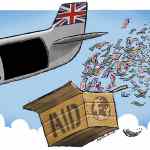
Kenya Suddenly all the great powers are courting Africa. Like emissaries to the 14th-century Malian monarch Mansa Musa in his adobe Timbuktu palaces, foreign officials from West and East compete for attention in multi-country tours across the poorest continent. Recent visitors include the US Secretary of State Antony Blinken leading caravans of Washington officials, Moscow’s Sergei Lavrov and Emmanuel Macron of France. Invitations arrive for trade summits; speeches plead forgiveness for past wrongs, pay tribute to Africa’s new influence and offer the return of artefacts looted by imperialists; while Beijing – well, the Chinese came to stay a long time ago.

Waiting for the rain that never comes – and for the elections to be over

From our UK edition

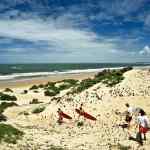
Kenya After two years of no rain, all colour has drained from the landscape on the farm so that by the time we boarded the bush plane to leave in the bright sun it was as if we were all snow blind. From the air the highlands were waterless and dead until we descended over Kenya’s north shore and the world went green. My late mother’s garden at the beach house swirls with bougainvillea, gardenia, frangipani and allamanda. Green ingots of baobab leaves hang wetly down over green grass and wild flowers which spill down to the high tide mark. We walk among clouds of butterflies with lilac-breasted rollers and eagles overhead along paths crisscrossed by millipedes and ghost crabs.

Could this election be a turning point for Kenya?

From our UK edition

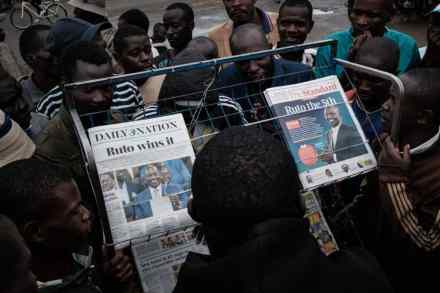
In Kenya’s latest general elections, ‘The Hustler’ William Ruto has been declared our new President after a narrow victory against ‘Baba’ Raila Odinga. Last night as the announcement was made, politicians threw chairs at each other, allegations of rigging flew and a returning officer turned up dead. Dancing broke out in some streets, while in others rioters burned tyres and threw rocks. Raila’s camp is likely to contest the result in court, meaning nail-biting weeks of petitions, posturing and more entropy for our battered East African economy. Nobody wants a return to the aftermath of our 2007 polls, when hundreds died in ethnic bloodletting after an earlier loss for Baba and, on that occasion, his running mate Ruto. https://www.youtube.com/watch?