Aidan Hartley

Aidan Hartley

Aidan Hartley is the Spectator's Wild Life columnist.

How we survived terror at Nairobi’s Westgate mall

From our UK edition

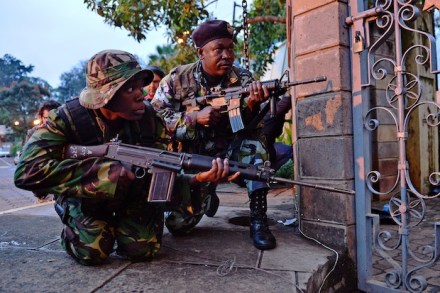
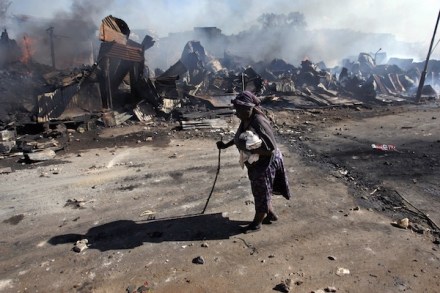
 Nairobi Kenya is one of those places where everybody knows everybody — and each one of us seems to have friends or relatives caught up in the Westgate shopping mall terrorist attack. My friends Simon and Amanda Belcher were on their way to lunch at the mall before catching a film at the cinema. They had parked their car on the top floor and walked past a marquee where a children’s ‘super chef’ cookery competition was about to start when gunfire erupted inside. Simon at first thought ‘firecrackers’. Then they heard shots from the ramp up to the car park. Walking towards them were two slim young men carrying AK-47s with their faces swathed in Arab scarves.

Aidan Hartley: I have been shot at and bombed so why do I fear a pyramid?

From our UK edition

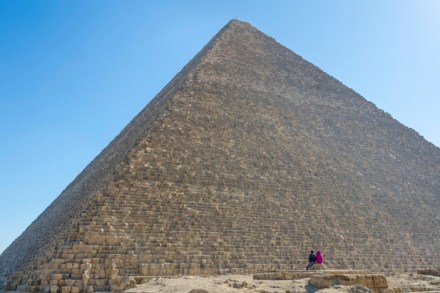
It was towards dusk by the time we had given the tourist police the slip and started climbing the pyramid of Mycerinus at Giza. It was Sebastian Barry-Taylor and I and we wore white linen suits. The 4ft blocks were easy enough to scale because erosion of the limestone had in the 4,500 years since construction weathered cavities or broken off corners so that there were plenty of hand- and footholds. We climbed quickly, looking down at the fat policemen in the desert shaking their fists up at us — but we did not rush it. To slip or stumble would be very dangerous because I could see that once one started falling down that slope there was nothing to stop one from bouncing all the way down. We did not care. We feared nothing.

Wild life | 19 September 2012

From our UK edition

He was under a tiny patch of shade under a tree in one of the earth’s remotest spots. At Nadapal, the Kenya–South Sudan border, you might expect to meet the ghost of Chatwin, but not a dead ringer for Peter Sellers dying of thirst. ‘You English? Ach great,’ he croaked as he loaded his Samsonite suitcase into our Land Rover. ‘I love the English.’ ‘Scottish, actually,’ said Ken, at the wheel next to me. I stayed quiet, immediately disliking him. ‘The name’s Eddie.’ He extended a trembling hand. We could see he was very ill. He drank pints and pints of water but wouldn’t eat though he was so clearly starving. An endless road opened out in front of us, lined by anthills with elephant-trunk chimneys pointed skywards.

Killing in Kenya: Aidan Hartley tracks the last steps of an elephant

From our UK edition

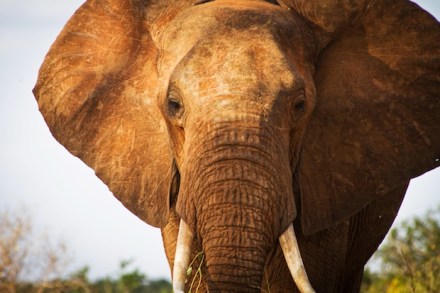
  Laikipia The bull elephant had roamed our northern marches of the Laikipia plateau for decades. I always recognised him when he passed through the farm because his handsome 65-pound tusks had a distinctive curve and a thickness that showed his ivory might have grown much larger, had he lived. Instead, armed Pokot poachers ambushed him as he browsed with two other younger bulls one afternoon in the woodland at the top of our Pinguaan valley. They sprayed a burst of bullets at him and several rounds ripped into his lungs and guts. He was mortally wounded, but staggered away bleeding.

The Ghosts of Happy Valley, by Juliet Barnes – review

From our UK edition

Rift Valley, Kenya The other day when I told the headmaster of a top British public school that I came from Kenya, he quipped, ‘Ah, still living in Happy Valley?’ We will never shake it off, this idea of a Happy Valley in the equatorial highlands where aristocrats supposedly indulged in orgies and drugs — what Cyril Connolly dubbed the three As: Altitude, Alcohol and Adultery. It culminated in Joss Erroll’s 1941 murder. ‘Perhaps Africa was to blame,’ Connolly wrote. ‘It insinuates violence.’ It is 30 years ago that James Fox, inspired by Connolly, resurrected these tawdry events in his book White Mischief. It has never been out of print since.

A binge on alcohol and meat, plus hired sex and lodging — all for £1.50

From our UK edition

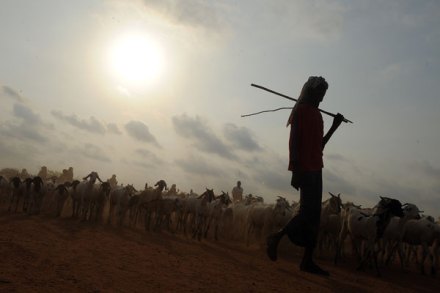
 Kenya Home is beyond the perimeter of modern Kenya and way off the grid. When the ancient generator goes off in the evening we are left with a sky of untarnished constellations reflecting down on the star-spotted nightjars. Until morning we burn hurricane lamps of the Dietz ‘old reliable’ type. These run on kerosene. When we ran out of this I asked one of the young shepherds called Captain to cycle to the nearest village, which is about 15 kilometres away, on an urgent mission to buy more. ‘Please buy ten litres of paraffin,’ I said. I gave him 1,000 bob, about £7, and asked him to bring change and a receipt.

Wild life: Could I ever revive the Pinguaan Springs?

From our UK edition

Il Pinguaan Springs When I first saw the Pinguaan Springs they were small, fetid bogs set about with papyrus, the haunt of mercury-coloured frogs and dragonflies. I wondered why they were regarded as so important that you could find them on any half-decent map of Kenya. Without water, the farm we were building could never stir into life. In those days I did not know what to do. For two years we collected water in jerricans and loaded them on to donkeys to be trekked to the tent where we lived. Baboons defecated in the spring pools. We all came down with Giardia. On many of our adventures we were alone and I was foolhardy. Our neighbours regularly had to save our lives when bandits came, charging over the hill in response to radio alarms.

Wild life: Leopard on a hot tin roof

From our UK edition

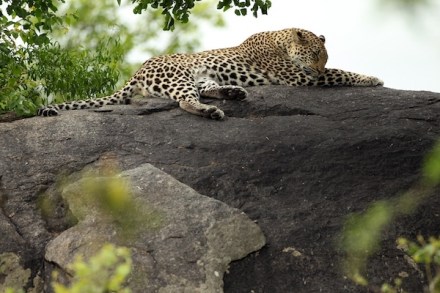
A leopard has been on the rampage night after night. We know her because she often lurks in the woods behind the farmstead, between the beehives and the old long-drop hut. Very occasionally, at dusk, she’s spotted lying on the hot tin roof of the big water tank on the hill above the woods — but for weeks around midnight she’s been prowling up to the goats’ boma. She leaps over high thorns and razor wire and dry-stone walls, struts along the top of the enclosure and then pounces. Livestock erupt in panic, the night watchmen shake themselves from their deep slumber and roar and rush about. The she leopard, out to feed a litter of cubs, I think, is disturbed, abandons the throat of her already killed prey in disgust and slinks off to hunt something wilder.

Life among South Africa’s nouveaux riches

From our UK edition

Not long ago Cyril Ramaphosa, probably South Africa’s future president and ANC leader, attempted to buy a buffalo. It was at an auction for hunters and game ranchers. He bid £1.3 million and, incredibly, lost out to another tycoon. At the same event he still managed to spend another million pounds on game species for his ranch — but later he apologised in light of the fact that South Africa is a ‘sea of poverty’. One South African who is unapologetic about his bling and conspicuous spending is Kenny Kunene, who famously held a birthday party at his ZAR nightclub in Johannesburg at which guests ate sushi off the body of a young model wearing nothing but lingerie. The bar bill came to £47,000 — for champagne and Chivas Regal, mostly.

Wild life | 18 April 2013

From our UK edition

Colobus monkeys in the forest were throat singing like Tibetan monks. Mist rose from the Kericho tea gardens above us in the gloaming. My son Rider gazed longingly at the water. For a ten-year-old boy obsessed by fishing, patience is impossible. He yearns for that trout with every atom of his being. I was just trying to coach him on the joys of fishing even if one never caught a thing when the clouds above us tore apart with the noise of a B-52 bombing run, followed by rain that came in grenade-sized drops — and then the rod in Rider’s hand quivered and bent down as a rainbow trout hit the fly and stripped out line all the way to the backing. Panic erupted as I barked orders and, realising it was a good fish, tried to grab the rod from Rider’s hands.

Wild life | 21 March 2013

From our UK edition

Rift Valley ‘We’re on the frontline,’ I said. ‘And however many guns we had, it wouldn’t be enough against the cattle rustlers.’ ‘Yes,’ replied my friend Jamie, a shareholder in our farm. ‘You’re low-hanging fruit.’ I showed him the bullet holes riddling my Land Cruiser, and told him again about the ambush, the raids, how farm manager Celestina was having a nervous collapse, how the police never came to our rescue. ‘Jamie, we might have to give up the cattle,’ I said. ‘It will break my heart — this is what I had instead of a mistress to get me through middle age.’ ‘Aidan,’ he said, ‘they’re cows.

Kenya election: bullets and the economic boom

From our UK edition

The bandit opened fire at me from a distance of about six feet. He rose out of darkness and pumped three bullets into my car as I drove slowly through my neighbour’s farmstead gate in time for supper. The shots were loud but what I remember most is the muzzle flashes showering sparks across the windscreen. I assumed that my guest from London, who was sitting in the passenger seat closest to the ambush, must be dead — until he asked calmly, ‘Are you all right?’ I floored the accelerator and as we sped away the attacker fired eight more shots at us — we later counted the bullet casings — failing to make any more direct hits though ricochets splashed off trees or walls along the garden drive and fragments peppered my car flanks and burst a tyre.

Wild life | 21 February 2013

From our UK edition

Rift Valley I am training for a half-marathon on the slopes of Mount Kenya in June and I must prepare myself for failure. I may not even make it to the starting gun because at 47 I can look back on a life littered with unfinished book projects, smashed resolutions and missed deadlines. Since I last ran cross-country at school I’ve drunk around 10,000 bottles of wine and at least 1,000 litres of vodka.For about 15 years, I smoked a pack of fags a day, so that’s 110,000 cigarettes. After school I rarely took exercise unless it involved chasing women, shooting birds, or running away from people shooting at me. Until now I have been able to delude myself that I am tough, frightfully tough, because I have ‘good genes’.

What Africa needs now

From our UK edition

Kenya: The Prime Minister has committed Britain to a struggle against the ‘existential threat’ of terrorism in Africa that he says will take ‘years, even decades’ of patience, intelligence and toughness. Well, there’s some truth in what he says, but not in the implication that this is a new threat to Africa — nor that our response should be a military one. In a way this same struggle was happening when the young Winston Churchill was covering Kitchener’s war against fanatical Muslim, Mahdist forces in the Sudan in 1898. ‘Year after year, we see the figures of the odd and bizarre potentates… It is like a pantomime scene at Drury Lane,’ wrote the young Winston in his memoir of the battle for Omdurman.

Will I survive my mid-life marathon?

From our UK edition

Rift Valley ‘I’ve got a brilliant idea,’ said Jools on the phone, his voice characteristically rising like a commentator on the Grand National as Red Rum comes in for the finish. ‘Tell me,’ I said. ‘We buy land in Kenya — and then sell it.’ ‘Genius,’ I said. Exclaimed Jools, ‘I know! And I’ll give you ten per cent!’ I have been telling Jools to buy land in Kenya for ages. Property prices are rising faster here than anywhere else in the world. I know a great deal about buying houses in these parts. It seemed natural that he would want me to advise him on such a business even if he appeared to have forgotten I’d suggested it to him in the first place.

Wild life | 12 December 2012

From our UK edition

Gilgil, Kenya Pembroke House, our children’s school, is a little slice of England set in Kenya’s Rift Valley. In the shadow of extinct volcanoes they play cricket on extensive grounds. They learn Latin within miles of soda lakes swarming with pink flamingos. The pioneering, resourceful spirit of Pembroke is symbolised in the school’s Christina chapel, with owls in the bell tower, built entirely by a former generation of under-13s. Our son Rider and daughter Eve are enjoying a privileged, magical upbringing. This week children from a rather different, impoverished background joined them for carol singing and mince pies out under the tropical night sky. These are the kids from the Restart Centre, located only a mile or so from Pembroke.

Years of living dangerously

From our UK edition

The son of a fish-paste factory manager in London’s East End, Alan Root fell in love with ornithology as a Blitz evacuee when he first clapped eyes on the pea-sized egg of a goldcrest, England’s smallest bird. After the war his father got a job manufacturing bully-beef in Kenya, where Root discovered a much richer diversity of birds. While still at school he began recording birdsong and then shot 8mm home movies of the snakes he collected. Root makes his rise to becoming the world’s greatest wildlife film-maker seem eccentric and easy. A lucky break started him working for Armand Denis, producer of the early TV series On Safari. On a flooded bridge over Uganda’s Ntungwe River a man from Anglia Television interviewed him like this: ‘Would you like the job?

Cooking for freedom

From our UK edition

A few days before I met Ahmed Jama in Mogadishu, three Islamist gunmen from Al Shabaab — al-Qa’eda’s Somali branch — burst into his new restaurant wearing suicide bomb jackets. They sprayed the place with bullets and then detonated themselves. One bomber set himself off in the dining room itself, killing 20 of Ahmed’s customers. Standing in that room, watching Ahmed’s workmen clean up, I realised what the term ‘pink mist’ really means. The bomber’s solid body had expanded outwards into an aerosol cloud of human particles that now covered every square inch of ceiling, walls and floor. The workmen were using trowels and shovels to clean up. ‘They’re scrubbing it, to get rid of the blood and human remains.

Wild life | 15 November 2012

From our UK edition

Northern Kenya If I go out in darkness I dread neither the leopard nor the lion but I recoil from the aardvark: for me a terrifying creature. The ant bear, or earth pig, is a living fossil with snout of pig, a serpent’s tongue, ears of a rabbit and a kangaroo’s tail. A sangoma’s charm made from aardvark body parts gives the wearer powers to glide throwugh walls at night; ideal for thieves and seducers of guarded virgins. But who would wish to encounter an aardvark down a dark hole at night, this creature the size of a woman with vicious talons? I think about this whenever I pass an aardvark’s hole, and I remembered it a few days ago when tribal cattle rustlers in the depths of the Rift Valley ambushed a column of Kenyan police, slaughtering dozens.

Wild life | 18 October 2012

From our UK edition

Mogadishu I return to Mogadishu to find it’s calm – only a few assassinations, hit-and-run attacks, IEDs or suicide bombs — and at last most Somalis seem ready for peace. I’ve covered events here for 21 years and love imagining an end to war in this delightful city. I also know that it’s during times of calm, when you drop your guard — forgetting that there’s one rule for Somalis and another for foreigners — you end up dead. Mogadishu is a town I know so well I could find my way around it blindfolded. Sadly, since the early 1990s I haven’t been able to wander about on my own. High seas piracy is declining, but land-based gangs and Al-Shabaab insurgents still see Westerners like me as worth a few bob in ransom.