Adrian Woolfson

The roots of humanity remain obscure

From our UK edition

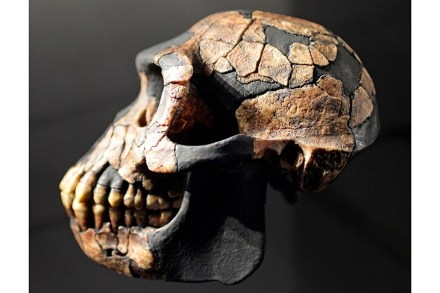
To comprehend ourselves and the future of humankind we have to understand where we came from. Unlike the approximately 350,000 known species of beetles on Earth, there is just one existing species of human. It is hard to imagine how our bodies and minds might have been constructed along different design principles or generated even a fraction of such diversity. With our growing ability to manipulate human genomes using gene editing, and the emergence of technologies that may enable human genomes to be rewritten in their entirety, the question of what we might become is no longer theoretical. Should humankind decide to redesign itself, the crapshoot of design by Darwinian evolution may become as redundant as taxi drivers in an age of driverless cars.
A ‘loneliness pandemic’ could prove as dangerous as coronavirus

From our UK edition

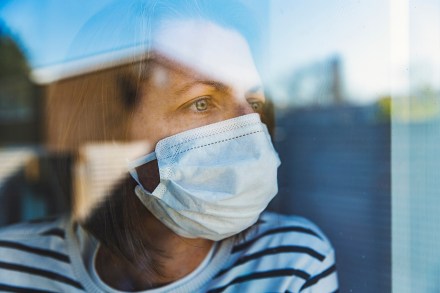
The subjugation of nature has formed a cornerstone of the human agenda. How surprising and humbling, then, to find our way of life so rapidly and unexpectedly undermined by a biological force that transcends identity and culture. Still worse, when we discover that the source of this chaos is a sub-microscopic viral particle whose genetic code — simpler than a bacterium — is barely compatible with a living entity. Yet it has brought global civilisation to a standstill.

Take heart

From our UK edition

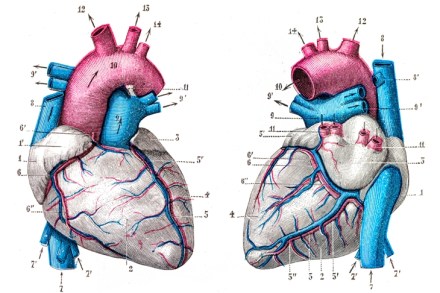
In this magnificent book, Thomas Morris provides us with a thoughtful, engaging and rigorous account of how cardiac surgeons through history have sought to undo the ravages wrought on the heart and its associated major blood vessels by abnormal genes, imperfect development, bacterial infections such as rheumatic fever, venereal diseases, unhealthy lifestyles and a host of other factors. He also offers an insight into the nature of scientific discovery, the mindsets of the characters driving it and the ever-present role of luck. It was, indeed, a simple mistake made in 1947 by a young researcher called Arthur Voorhees that led to a chance observation which resulted in the development of the first artificial grafts to replace damaged blood vessels.