Adam LeBor

Adam LeBor is deputy director of research at the Danube Institute. His latest book is The Last Days of Budapest: Spies, Nazis, Rescuers and Resistance 1940-1945.

Hungarian independence day makes me think about Britain

From our UK edition

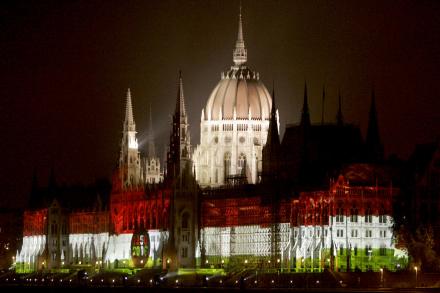
One of the most important and dramatic dates in Hungarian and European history is 15 March 1848. The dashing poet Sandor Petofi recited the stirring ‘Nemzeti dal’ (‘National song’). A group of revolutionaries seized a printing press and published the Twelve Points. Their demands included a Hungarian parliament, freedom of the press, civic and religious equality before the law, jury trials and freedom for political prisoners. A huge crowd gathered on
What Margaret Thatcher meant to Hungary

From our UK edition

It is a most fitting tribute: an iron and steel statue of the Iron Lady in a city once behind the Iron Curtain. And not just any city – but Budapest, a place that Mrs Thatcher electrified with her visit in February 1984. The statue commemorating her 100th birthday was unveiled last week in the

Giorgio Perlasca’s Christmas in wartime Budapest

From our UK edition

Artillery boomed over the Buda hills, the flashes of explosions slicing through the freezing winter dusk. The crack of rifle fire sounded nearby and the air was thick with the acrid stink of cordite. It was 24 December 1944 and Giorgio Perlasca was trying to get to the Spanish Legation villa to celebrate Christmas. The

Remembering the Roma Holocaust, 80 years later

From our UK edition

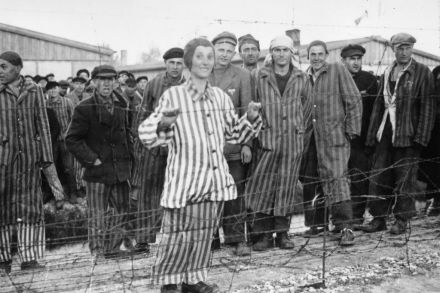
On 16 May, 1944, as the first full trainloads of Hungarian Jews trundled towards Auschwitz, the SS decided to clear out the area known as the ‘Gypsy family camp’ to make room for the new arrivals. The family camp housed several thousand Roma and Sinti (Roma with German roots) people. Like the Jews, they were

Wartime Budapest was a haven, then a hell, for Europe’s Jews

From our UK edition

One day in May 1944, in the Nagyvárad ghetto, Sándor Leitner saw an elderly man struggling to walk towards him. His face was swollen from beatings and he was barely able to stand. It was his father, returning from his interrogation by the Gendarmes. The Nagyvárad ghetto (now Oradea in Romania) was the largest in

A map of the road to Hell

From our UK edition

Few organisations reward incompetence as richly as the United Nations. Consider Kofi Annan, head of the Department of Peacekeeping Operations (DPKO) during the genocides in Rwanda and Srebrenica. In January 1994 he twice refused General Romeo Dallaire, commander of the UN peacekeepers in Rwanda, permission to raid the Hutu arms caches, despite Dallaire’s warnings of