A. N. Wilson

Larkin at 100: a tribute (1985)

From our UK edition

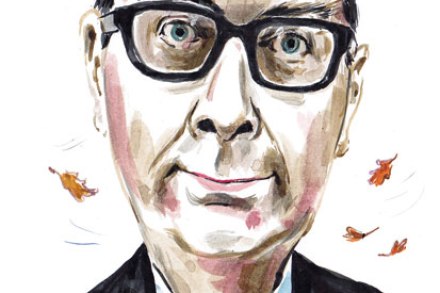
This piece is taken from The Spectator’s fully digitised archive. There are many ways of judging poets. One sure test of their personal appeal is how many lines of their poetry you can remember. Not only can I remember a lot of Larkin, I find that it has sunk very deep, and become part of my private language. This is true both of his funny stuff – My wife and I have asked a crowd of craps To come and waste their time and ours… and also the jokey sadness of What else can I answer When the lights come on at four At the end of another year? Give me your arm, old toad,  Help me down Cemetery Road.
Leni Riefenstahl is missing: The Dictator’s Muse, by Nigel Farndale, reviewed

From our UK edition

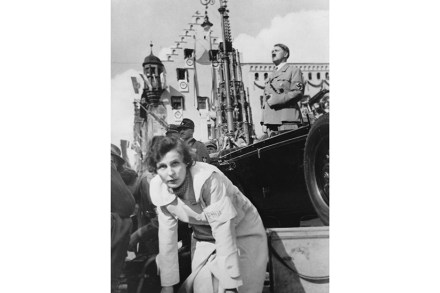
Leni Riefenstahl was a film-maker of genius whose name is everlastingly associated with her film about the German chancellor, Triumph of the Will, which won the gold medal at the 1937 Paris World Exhibition. It is an unforgettable piece of cinema, with the lonely hero descending, like one of the immortals, from the clouds. As he enters the podium at Nuremberg, we only see the back of his head as he wows the tens of thousands. In Nigel Farndale’s riveting novel, Riefenstahl remarks to one of the athletes at the 1936 Olympics that the only thing which she really cares about is film. This seems indeed to have been the case. Farndale’s story does not concern Triumph of the Will.

The new leviathan: the big state is back

From our UK edition

48 min listen

It seems we are in a new President/Prime Minister alliance of big government spending, should we be excited or concerned? (00:44) Also on the podcast: Are the UK tabloids going woke? (15:00)? And in the wake of the pandemic are we ready to have a grown up conversation about death?(31:11)With Spectator Political Editor James Forsyth, Spectator Economics Editor Kate Andrews, former Editor of the Sun Kelvin MacKenzie, former Editor of the Observer Roger Alton, writer A.N. Wilson, science journalist Laura Spinney and Palliative Care Physician Kathryn Mannix and author of a With The End In Mind. Presented by William Moore.Produced by Cindy Yu, Natasha Feroze and Sam Russell.

Covid has warped our collective attitude to death

From our UK edition

So, having been promised that normal life would recommence on 21 June, we are once again frustrated by the Covid scientists. The trouble is, of course, that as far as we know the virus is never going away, so according to the logic of the scientists, there is no reason ever to allow us to return to our old way of life. And although it looks as if we are thereby being sensible and ‘following the science’, what it actually reveals is that we are fools to follow a few boffins in white coats, rather than following the received wisdom of the human race over the past 4,000 years: namely that death is an inevitability and even if we do not die of Covid-19, we are going todie of something else.

Forlorn Plorn: The Dickens Boy, by Thomas Keneally, reviewed

From our UK edition

Parents are always terrified of bad family history repeating itself. Prince Albert dreaded his son Bertie turning into a roué like his own father, and this of course happened. Charles Dickens had fantasised in David Copperfield that the jokey version of his own father — Mr Micawber — would become a success in life by going to Australia. In real life, Dickens’s parents had been ‘hopeless’, and as he watched his own family growing up, he had a heartless fear that his dud children would be versions of parents who were sent to the Marshalsea. Sure enough, Dickens sent two of his least promising sons to Australia, hoping something would turn up.

Spectator Books of the Year: Why evolution is still a theory in crisis

From our UK edition

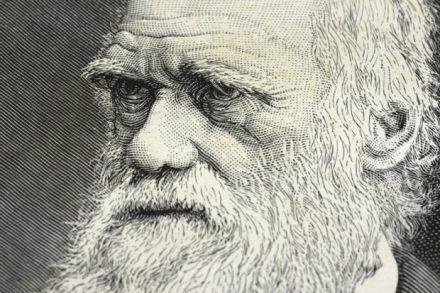
Michael Denton’s Evolution: Still a Theory in Crisis (Discovery Institute Press, £16.80). A sequel to his 1985 book — Evolution: A Theory in Crisis — this takes us up to date with the dazzling developments of life sciences over the past 30 years. Denton is a sceptic about Darwin’s theory of evolution on purely scientific grounds. It is hard to see how anyone reading his book could not be persuaded. Palaeontology provides abundant evidence of evolution within species, but none of one species morphing into another. Denton is fascinatingly clear in his exposition of the science of genetics, and how it destroys the Darwinian position. A truly great book.