Culture

Culture

Girls on film

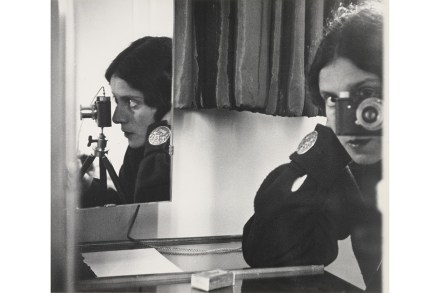
We are familiar with Dorothea Lange’s gritty photographs of Okies during the Dust Bowl. New Woman Behind the Camera, which opens this month at the Metropolitan Museum of Art, showcases Lange alongside over 120 other female photographers who refashioned modernist photography in the same years. Photography developed through an ambivalent relationship to high art: the camera was often seen as a medium for journalism or advertising. Yet the modernist works here showcase the flexibility of the form. Still, there are inherent tensions in an exhibit like this. Georgia O’Keeffe once declined an invitation to be included in an exhibit of ‘women artists’: she wanted to be seen as competing with the best, not as part of an inferior subgroup.

woman

The legend of forgotten musical genius Mieczyslaw Weinberg

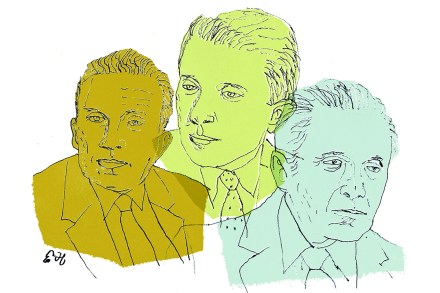
Imagine a John Le Carré thriller — one of the Cold War ones, not the tedious lefty morality tales — in which we meet Moisey Vainberg, a Polish Jewish composer who defected to Russia in 1943 while the rest of his family was wiped out in the Holocaust. He dresses like a mid-level bureaucrat and seems nervous about drawing attention to himself. That’s sensible, given that under Stalin he was thrown into jail for ‘Jewish bourgeois nationalism’. Then he’s rehabilitated, his music enjoys a brief vogue, he’s performed by Rostropovich, Shafran, Gilels, Kogan and the Borodins — but he never boasts or promotes himself. A few recordings reach the West, but the critics wrinkle their noses.

Weinberg
vacation

Vacation time

Americans are a vacationing people. We are those who mark the start of the summer with a ticket to a theme park, the end of high school with a tour of Europe and the commencement of retirement with a cruise trip. In fact, it is entirely fitting that the coronavirus pandemic first gripped the American consciousness thanks to reports of travelers marooned aboard cruise ships, or that, as virus cases at last start to flatline, many long for nothing more than for a few weeks at sea in the company of, say, Tony Orlando or Marie Osmond. Some would say that this vacationing spirit is an inheritance from our empire-making ancestors in Great Britain.

The last American video store

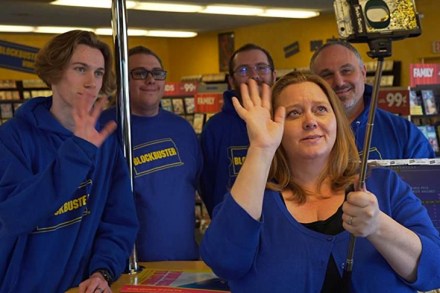
Without a space or a location, ‘the movies’ cease to exist. They become another niche interest with little to no cultural penetration. Awards-season movies, summer blockbusters, sleeper hits and all kinds of popular film phenomena cease to exist without theaters themselves. The last year has shown how much movie culture relies on the activity of going to the movies and the physical space itself. The Last Blockbuster is a documentary about the death of another space: video stores, albeit through the eyes of the last representatives of a corporation that destroyed vast swaths of mom & pop stores across America. Lloyd Kaufman, the co-founder of Troma Entertainment, an independent film distribution company, is an understandably hostile subject.

video
bill evans

Along came Bill Evans

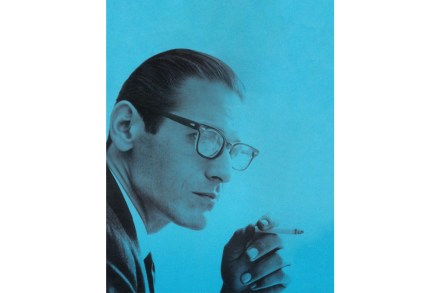
Everybody Digs Bill Evans was the title of one of the great jazz pianist’s early albums, but it wasn’t always clear that he dug himself, at least if you consider his turbulent personal life. There was, first and foremost, the lifelong drug habit, culminating in his death in 1980, which one friend deemed the ‘longest suicide note in history’. There was also the introspective streak that prompted Evans to doubt his own prowess even after he had become famous. But there is also the spellbinding music that casts as powerful a spell as ever. Small wonder that a cluster of purveyors of fine music, including Craft Records, Electric Recording Company and Acoustic Sounds, have rushed to reissue his works on CD and LP.

Meet the Medici at the Met

Someone turned up the lights on portraiture in 16th-century Florence. Lyrical poetry went hard rock. Colors became high key. Posers now scowled at the oil-on-canvas flashbulbs, giving attitude, hands on hips, codpieces a-thrusting. Not that they even cared about looking as good as they do. Sure, they got dressed for the occasion, but notice the sprezzatura, the indifference in their eyes to the whole affair. That was the maniera moderna, the new mannerism in art, and no one captured it better than Agnolo Bronzino. Whether it’s the ‘Portrait of a Young Man with a Book’ (mid-1530s), his haughty painting in the collection of the Metropolitan Museum of Art, or ‘Lodovico Capponi’ (1550-55), his side-eye romancer at the Frick Collection, these figures are boys interrupted.

Medici

Take a trip with Hawkwind

Fifty years ago this midsummer, a ramshackle convoy of vehicles — cars, minibuses, motorcycles and the odd hippie caravan — could be seen wending its way through the western counties of England in search of a patch of agricultural land near Shepton Mallet called Worthy Farm. There had already been several Sixties-era tribal gatherings in the fields beyond Michael Eavis’s now legendary homestead, but this iteration, widely advertised in the countercultural press, came billed as the very first Glastonbury Festival.

Hawkwind

A film festival fiasco in Narrowsburg, New York

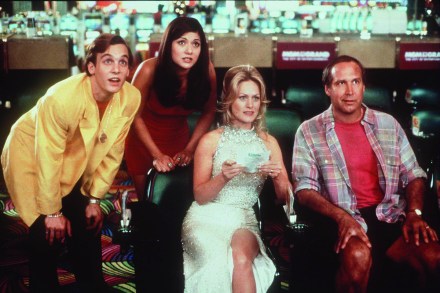
If you’ve been involved in the production of a film, you know how intoxicating it can be. The prospect of seeing your work projected in a theater is reason enough to put up with a nightmare of unrelenting stress — for some people, anyway. Others might struggle to understand how an entire town (Narrowsburg, an admittedly very small town in Upstate New York) could be so easily swindled by a cartoon mobster and a mysterious woman with a French accent who tells people she’s from South Africa or Normandy, or descended from French royalty. Then again, Richard Castellano did appear with Billy Crystal and Robert De Niro in Analyze This, and Jocelyne Castaldo, well, who in America wouldn’t be charmed by such an accent?

Narrowsburg
korean

Korean film has mastered the supernatural horror genre

There is a moment in the Jung brothers’ 2007 ghost film, Epitaph, when a young doctor in wartime Korea realizes that the wife he adores does not have a shadow. He is entertaining her with a shadow puppet show in their home when he notices the aberration. ‘Walk to me,’ he says as he waves a naked light bulb in front of her. She had been a visiting medical student in Japan a year earlier and, unbeknownst to him, had died in an accident. It’s a moment that perfectly illustrates the psychological subtlety and brilliant scene-making of Korean film. Epitaph is about a group of young doctors working in a hospital under the Japanese occupation.

Cousteau

Cousteau was the boulevardier of the oceans

For a few years in my youth, I tried to be a scuba diver. In the deep pool of the 63rd Street Y, I learned how to clean my goggles and clear my air regulators. In a lake in upstate New York, I earned my certification by swimming around a junked car in 40 feet of murky water. I went on to dive to some cold wrecks in Rhode Island and to swim among the warm sea life of Key Largo. But it wasn’t for me. The bobbing boats and the heavy equipment caused much discomfort. In one dive I banged my head against the tank of my divemate and nearly got knocked out. It was all less elegant, and quite a bit more involved, than I had expected. My inspiration, of course, had been Jacques Cousteau. The French underwater explorer dived the world’s oceans a generation ago as both celebrity and icon.

I’m turning Japanese

The history of late-20th-century Japanese pop music can seem like an impenetrable forest to western minds. But stare past the trees and there is light from a parallel universe. The Japanese Group Sounds records of the mid-Sixties (the Spiders, the Tempters and er, the Mops) were heavily influenced by the original moptops’ Budokan Temple show of 1966 and surf bands such as the Ventures. The university campus hard rock of Tokyo’s late-Sixties freak scene — Les Rallizes Dénudés, Flower Travellin’ Band, Speed, Glue and Shinki — and the lysergic rock soundtracks to Shuji Terayama’s revolutionary theater plays by the great J.A.

japanese

Dark knight of cool

‘When the legend becomes fact, print the legend,’ Maxwell Scott announces in The Man Who Shot Liberty Valance. Something like this seems to have occurred with the jazz trumpeter Chet Baker. Other members of the West Coast jazz scene such as the great saxophonist Art Pepper were often in dire straits, but Baker has come to personify the romantic figure of the tragically doomed jazz artist. Once heralded as the ‘prince of cool’, Baker’s self-destruction was lucidly chronicled by Bruce Weber in the 1988 documentary Let’s Get Lost. Even his album covers, where he gazes broodingly at the viewer, underscore his vulnerability. His meditative, halting solos formed the antithesis of the frenetic bebop movement emanating from jazz haunts on the East Coast.

chet baker
grassi

Pictures at an exhibition

Deeply learned and with a style all his own, Marco Grassi is as at home with Duccio as with Norton Simon; Bronzino as with Bernard Berenson; a painting on his desk as with a ‘Last Supper’ in Florence’s Basilica of Santa Croce. In the Kitchen of Art presents Grassi’s most memorable essays over a span of nearly 20 years. Beginning with a previously unpublished memoir of his Florentine upbringing, and continuing with in-depth critical discussions of the greats of Italian art along with recollections of the grandest collectors of the 20th century, this book shows the art world in the round.

sundance

Sundance memories

In 1969 Robert Redford purchased 5,000 acres of land in the mountains of Utah and built a ski resort. In 1981 he founded the nonprofit Sundance Institute to cultivate new voices in American independent film through annual directing and screenwriting labs (alumni include Quentin Tarantino and Paul Thomas Anderson) and to provide financial support for select projects. In 1985 Redford took over the US Film Festival, based in nearby Park City, and brought it under the Sundance umbrella. In 1989, the festival had its breakthrough with Sex, Lies, and Videotape. Sundance became a film-industry fixture for talent scouts, acquisitions executives and journalists, particularly those inclined to go skiing in their downtime.

Picking Apple

Would you sign up for a screening streaming service that only had a dozen movies? A handful of series, and no classics? You might pause and ask if it’s worth it, compared to the range of options on other streaming providers. But if you’re like many of us, you might decide to pony up — after all, it’s only $5. Of course, I’m describing Apple TV+. It’s cheaper than Netflix or Hulu. But what you get, at least for now, is pretty limited. That’s not to say what they have isn’t good: they’ve pumped in a massive budget to lure creators like Oprah and Werner Herzog to this enterprise. Their movies have major stars. There just aren’t many of them. But they could have gone the other way.

apple

Here’s looking at you, Kid

‘I learnt there was Charlie and there was Chaplin,’ Jackie Coogan, the actor’s young foil in 1921’s groundbreaking The Kid once remarked. ‘The first was the biggest movie star on the planet, the second an insecure boy from the slums of London.’ Luckily for us, both sides of the Chaplin persona meshed perfectly in The Kid, with its generous helpings of the comic and the sentimental. It may be the Little Tramp’s most perfect and most personal film. Like almost everything that’s any good in art, The Kid emerged out of turmoil. In October 1918, the 29-year-old Chaplin had married the first of his child brides, 16-year-old Mildred Harris, after she told him she was pregnant.

kid

Eyes wide open

Dear Stanley, Did I ever hear you laugh or see you smile? I like to think I amused you from time to time, but laughter was scarce among your responses. A pause was your applause. During the many months we worked together you were often friendly, always somber. You never hinted why. Private anguish was nobody else’s business; work its narcotic. Might it be that, throughout your life, success was as much revenge as pleasure? You seemed as much lonesome as autocrat; mark of the still photographer you first were; and the kid before that? As far as our script for Eyes Wide Shut was concerned, you apologized for not being able to specify what you wanted. You could promise only to recognize it when you saw it.

eyes wide shut kubrick
raised by wolves

Ridley’s game

An epic new sci-fi series executive-produced by the director of Blade Runner and Alien: who wouldn’t want to watch Ridley Scott’s Raised by Wolves? Myself for one. When I heard the name, I assumed Raised by Wolves was an update of the forgettable 2013 sitcom based on Caitlin Moran’s chaotic childhood in the industrial city of Wolverhampton, England. Caitlin’s very strong on stuff like vaginas and the importance of female empowerment, but I’d rather be stuck aboard an attack ship on fire off the shoulder of Orion than have to endure any of that. To be honest, I’m not sure that Scott’s drama is any more enticing than Moran’s sitcom.

Boys will be boys

In The Dark Knight, one of the best superhero movies, the Joker presents Batman with a serious dilemma: he must choose between saving his romantic interest, Rachel, or Gotham’s ‘white knight’ DA, Harvey Dent. Batman makes the ‘wrong’ decision and runs off to save Rachel, only to discover the Joker has tricked him, and sent him to Harvey instead. The moral gray area isn’t that rare in modern superhero movies. Tony Stark (Iron Man) is otherwise a pompous, drunken lothario. Thor and Hawkeye react to a crushing defeat in battle by becoming a fat, lazy shut-in and a vigilante, respectively.

boys

Old Masters, new look

The Old Masters at the Metropolitan Museum of Art needed a new hat. The galleries are given pride of place in the expansive Fifth Avenue building, standing at the head of its enormous Beaux-Arts grand staircase. They contain many of the Met’s most popular treasures, but they weren’t showing pre-19th-century European paintings in the best of all possible lights. In 2018, Keith Christiansen, the chairman of the Department of European Paintings, embarked on the enormous project of renovating and modernizing the skylight system for the galleries. The museum is now about halfway through the four-year, $150 million endeavor. That’s a hefty price tag, but it’s a project that was long overdue.

met museum
hype

Confessions of a hype artist

Lately you may have noticed a conspicuous absence of pop stars ostentatiously cavorting and doing stupid stuff. This is for two reasons. One, the great distraction that is the entertainment industry — ‘The Spectacle’, as the French provocateur and Situationist Guy Debord called it — has been turned off. Two, the Pop Star currently has nowhere to do his or her pop thing. This is not for want of trying. During the early days of the pandemic, a battalion of pop stars fled to the internet to broadcast acoustic renditions of their new wares from their terrible minimalist homes. This culminated in the horrendous One World Together at Home concert.

The joy of listening to old pianists

One of my friends has a freakishly sharp ear for tiny nuances in the performance of classical music. God knows how he acquired it, because his personal tastes don’t extend much beyond early Madonna and late Beyoncé (‘far more vocally secure than Rihanna’). That’s sad for him but handy for me. If I catch him in a good mood I can make him sit through five interpretations of La Mer, and he’ll give me fresh thoughts on which conductor has the best grasp of Debussy’s tonal architecture. They’re fresh because he’s coming to it without preconceptions about how the piece ought to sound: he’s never heard it before and probably never will again.

old pianists barenboim
lifeline yarlung

Songs of freedom

When President Donald Trump visited the Museum of African American History in February 2017, he observed, ‘I am very proud now that we have a museum on the National Mall where people can learn about Reverend King, so many other things. Frederick Douglass is an example of somebody who’s done an amazing job and is being recognized more and more, I notice.’ Trump added, ‘Harriet Tubman... and millions more black Americans who made America what it is today. Big impact.’ Trump’s apparent belief that Douglass is still alive created a stir, but he was right about Tubman. Though Treasury secretary Steven Mnuchin scotched plans to put Tubman’s image on the $20 bill, the former abolitionist has been coming on strong.

Bridgerton to nowhere

Bridgerton (Netflix) is just about the worst period drama I’ve seen on television, but I’ve yet to read a single review which tells it like it is. Why could that be, I wonder? Well, here’s my theory: I think it’s because this wooden, poorly scripted, horrifically set- and costume-designed, anachronistic, clunky, cringe-inducing farrago of sub-sub-sub-Jane Austen tosh has inoculated itself against criticism by deciding that about a third of the characters in the London of 1813 should be black. We’re not just talking servants and the occasional writer like Olaudah Equinao, which would have been historically accurate. We’re talking proper toffs: even the main love interest, the brooding, Mr Darcy-like Duke of Hastings is played by mixed-race Regé-Jean Page.

bridgerton

The king is dead

An inescapable insight emerges from the lockdown: today’s young are not what the young once were. Scanning western streetscapes, it is hard to miss that the ones wearing face masks are not overwhelmingly — as one might expect — the old and vulnerable, but include a disquieting number of youngsters, all but immune to SARS-CoV-2, who wear their acquiescence in the current plunge into tyranny like a pendant of courage along with their Nike Airs and Buck Mason Mavericks. It’s like rock ’n’ roll never happened. Or, rather, as if the rock ’n’ roll spirit had never proclaimed the rejection of slavery and subjugation.

rock ’n’ roll

Lullaby in Birdland

In the dressing room at Birdland, the ‘jazz corner of the world’, a singer plants her baby on the counter, an actor strips off his shirt, and a cellist leans in to apply her lipstick before a light-bulbed mirror. I slip out to the bar for just a shot or two of whiskey and await my turn. Mairi Dorman-Phaneuf, a cellist and fellow Scot, asked me if I might sing one of my songs at her show. It’s part of the ‘Broadway at Birdland’ series, the brainchild of Jim Caruso, the club’s host, producer and performer extraordinaire who, he says, can either be ‘credited or blamed’ for having brought every flavor of pop, folk, country, theater and comedy into a club that’s legendary for jazz.

birdland

Peake practice

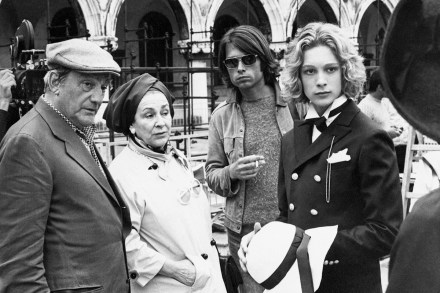
To be a good illustrator, said Mervyn Peake, it is necessary to do two things. The first is to subordinate yourself entirely to the book. The second is ‘to slide into another man’s soul’. In 1933, at the age of 22, Peake did precisely that. Relinquishing his studies at the Royal Academy Schools to move to Sark in the Channel Islands, he co-founded an artists’ colony and took to sketching fishermen and romantic, ripple-lapped coves. He put a gold hoop in his right ear, a red-lined cape over his shoulders, and grew his hair long, like Israel Hands or Long John Silver. The incredible thing was that he had yet to receive his commission to illustrate Treasure Island.

peake

Heroine problem

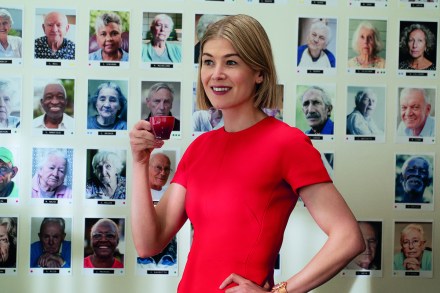
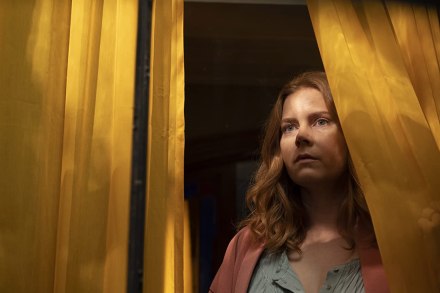
The antihero began as the ‘Byronic hero’ and was represented in the prestige television era by unlikable men in gritty dark dramas. Not completely unredeemable and usually handsome enough to catch the female viewer’s eye, this formula gave us Tony Soprano (The Sopranos), Dexter Morgan (Dexter), Walter White (Breaking Bad), Don Draper (Mad Men) and Gregory House (House). But their distaff counterparts were still villains or maidens. What we didn’t have was many antiheroines. Until quite recently, the closest thing TV had to an antiheroine was Carrie in Sex and the City. It was hard to sympathize with her: most of her problems were her own fault. She cheated on her boyfriends, then wrote narcissistic newspaper columns telling us all about it.

antiheroine

Hungry like the rabbit

In the darkest hour, there emerged a new light. It was 1940 when the double-barreled shotgun of the world first took aim at a little hole called home. At first, it seemed as if the hole’s inhabitant would be taken in by the old carrot trick. At least he would be careful enough not to stick his neck out. With an unblemished, white-gloved, four fingered hand, he feels around his immediate borders and takes the carrot. Of course, it’s a trap to draw him out. Did he know that all along? He would soon enough. The next time, it’s not a carrot but the hard steel of a gun aiming straight down his burrow. He flicks the barrels with his finger — plink, plink, plink — just to be sure. He tosses back the half-eaten carrot and pats the gun, but it is too late.

looney tunes